
How Do You Win at Mahjong? Strategy, Rules & Real Tips
Last updated: Nov 23, 2026
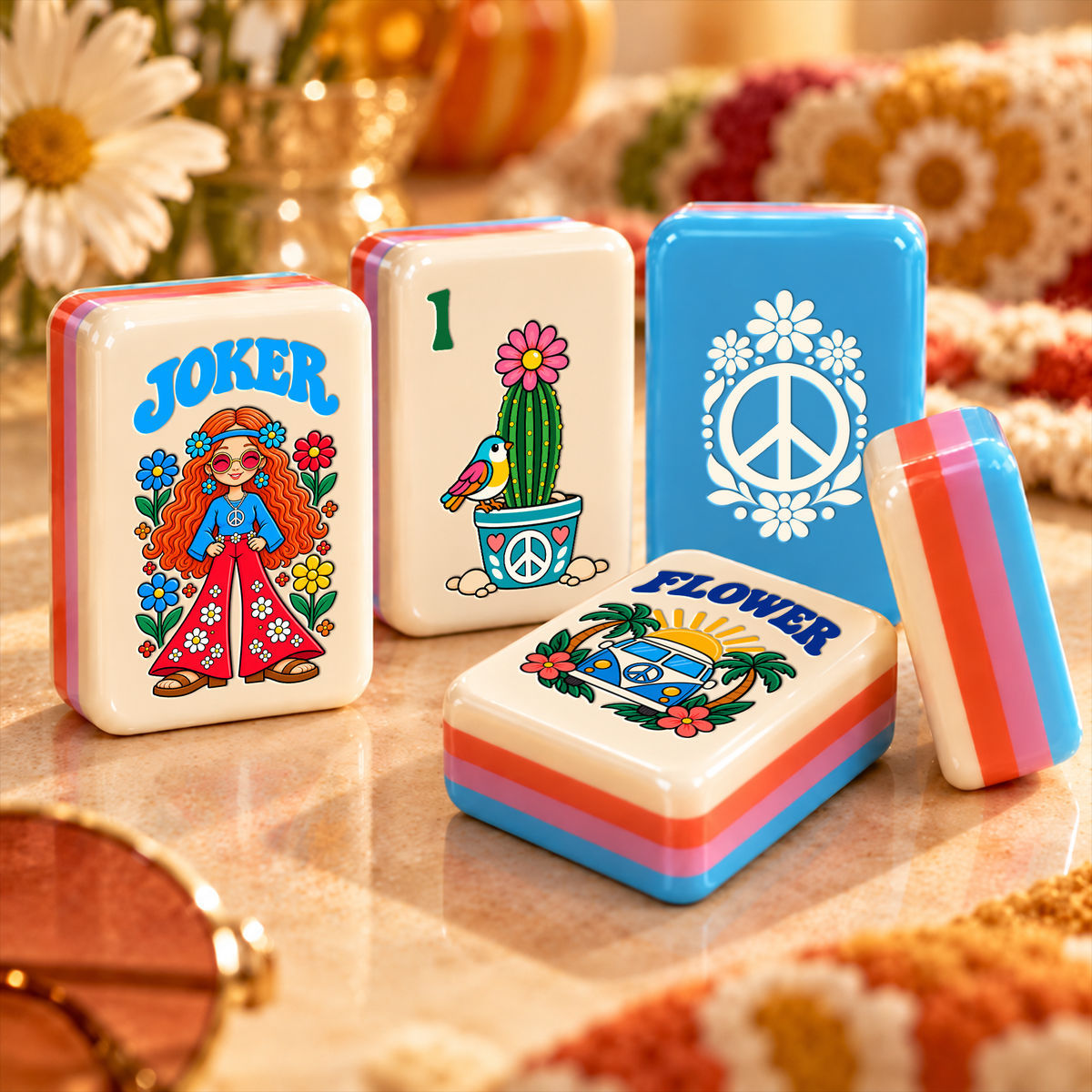
Winning at mahjong combines three core skills: memorizing the current year's National Mah Jongg League card to spot winning hands quickly, managing your tiles to keep options open during the Charleston and early play, and reading your opponents' discards to deduce their strategy. In American mahjong, you win by being the first to assemble a hand that matches one complete pattern on the card—no wildcards allowed in pairs or single tiles. The game lasts roughly 15–20 minutes per round; a session of four rounds takes an hour. Success depends less on luck and more on knowing which hands are realistic given your tiles, passing strategically during the Charleston, and adapting your draws as other players discard. Most new players rush; winners slow down, verify the card, and never chase dead patterns.
🀄 Shop best-selling mahjong sets →
Why Does the Mahjong Card Matter More Than Your Tiles?
The card is the only source of truth. Every winning hand must match a card pattern exactly—tiles, count, and joker placement. Without knowing today's card, you cannot win. Experienced players photograph or memorize sections; beginners photocopy or laminate the card. Most wins come not from drawing lucky tiles but from recognizing which card patterns your current hand can reach. Players who win consistently are card-fluent within the first 5 minutes of a game; they discard confidently and know instantly when a hand becomes impossible. The card changes every spring, so last year's strategy may not work. This is why winners always carry the current card and review it before play begins.

How Do You Read Your Opponents' Discards to Predict Their Hand?
Every tile on the table tells a story. If East discards a 1 Crak in round two, she likely isn't collecting Craks. If North discards two dragons of the same type, he probably isn't using that dragon. Watch which suits disappear fastest—that player needs those tiles. Watch which tiles linger—no one wants them. As the game progresses, the remaining tiles narrow your opponents' options and reveal their hand type. A player holding 6 Dots and a quint (5) of Dots in sequence suggests she's building a pung or quint pattern, not a run or mixed hand. When multiple players discard the same number—say, three 5s across different suits in one turn—that number is less likely to complete anyone's hand. Winners spend as much time watching the discard pile as studying their rack. This skill takes weeks to develop, but even beginners benefit from slowing down and asking: "What is that discard telling me?"
What Is the Most Common Winning Hand Shape?
The most reliable hands combine one quint or sextet (a 5 or 6 tile grouping) with one or two pungs (3-tile sets) and a pair, or three pungs and a pair with no jokers. These patterns exist on nearly every card because they're mathematically stable—fewer jokers required, easier to spot, lower risk of collision. Hands needing four jokers exist but are harder to complete because jokers are finite and other players compete for them. Similarly, hands using numbers 1–9 across one suit are easier to assemble than mixed-suit patterns because you draw from only 36 tiles of one suit, not 108. Beginners often chase exotic hands (six jokers, all dragons, rare combinations) because they seem dramatic; winners calculate probability and pick the hand that's most likely to appear on their rack first. If you're holding 1–3 Dots early in a round, a hand using low-number Dots is more likely than a high-number hand later in the game. Play the odds, not the dream.
How Does the Charleston Change Your Winning Strategy?
The Charleston—the tile-passing ritual before play starts—is your first strategic decision. You pass 14 tiles to three players in sequence (right, across, left), then receive 14 back. This is where you shed tiles you don't need and signal your direction. Pass high Dragons and Winds early if you're not using them; pass tiles that don't match any patterns you're planning. Experienced players understand the Charleston deeply and use it to eliminate options, leaving themselves with a smaller "search space" for a winning hand. If you pass all Craks, you're signaling you probably don't need Craks—other players adjust accordingly. This means your next 14 tiles (from the draw) are more likely to be Bams and Dots. After the Charleston, scan your hand and the card: if your current tiles don't match any pattern, fold mentally and wait for draws. Never force a hand that doesn't exist on the card. The Charleston is not about collecting everything; it's about narrowing your hand's possibilities so you can win quickly if the luck aligns.
What Tile-Management Mistake Costs Beginners the Most Wins?
Holding too many loose tiles. Beginners keep 1 Dot, 2 Dot, 3 Dot thinking "I might use these later." Winners organize their rack by grouping identical tiles (pungs, quints, partial patterns) and discard loose singles immediately. If your hand has a 5 Dot pung but also a random 1 Bam and 2 Bam with no nearby tiles, drop the singles. Holding 14 "different" tiles is chaos; holding 12 tiles arranged in 2–3 clear groups leaves room for new draws and keeps your mind clear. A second common mistake: refusing to discard because "I might need that tile later." You won't. If a tile hasn't completed a pattern by round 6, it's unlikely to complete anything. Discard it. The fastest winners have open racks—clear groupings, few loose tiles, confident discards. They know their hand's status after every draw. Beginners squint and count; winners glance and know. Organization beats luck every time.
🎁 See our most-loved mahjong sets & accessories →

How Many Rounds Should You Play to Improve?
Consistency emerges around 40–50 hands. That's roughly 8–10 weeks of weekly games or 2–3 weeks of daily play. In your first 10 hands, you're still learning the card and the rules; don't expect wins. By hand 20, card patterns start to recognize themselves. By hand 40, you're predicting opponents' hands and adapting mid-game. Serious players track their own stats: wins per 20 hands, discard speed, card familiarity. We see players who play weekly for two years still making rookie mistakes—they're not paying attention to the card or discards. The difference between a winner and a perennial loser isn't talent; it's habit. Dedicate at least 30 minutes before each game to studying the current year's card. Play with the same group when possible—you'll learn their habits and they'll respect your growing skill.
Skill Level | Card Familiarity | Decision Speed | Win Rate | Timeline |
Beginner (hands 1–10) | 40% | 30 sec/turn | ~5% | Week 1–2 |
Intermediate (hands 20–30) | 75% | 15 sec/turn | ~18% | Month 1–2 |
Competent (hands 40+) | 90% | 8 sec/turn | ~28% | Month 3–4 |
Experienced (hands 100+) | 98% | 5 sec/turn | ~32%+ | Month 6+ |
These timelines assume weekly 4-round play; daily play accelerates progress. The card changes annually, so all experience resets slightly each spring.
What to Check Before You Buy a Mahjong Set
Card accuracy: Verify the set includes or references the current National Mah Jongg League card. No card = no way to win.
Tile count: American mahjong requires exactly 152 playing tiles plus 8 jokers. Our best-selling mahjong sets include 160 tiles (152 play + spares), which is standard.
Tile size and weight: Tiles should feel substantial in hand, roughly 1 inch square. Flimsy or tiny tiles slow play and frustrate serious players.
Readability: Numerals and suit symbols must be clear, especially if you play with glasses off. Engraved or screen-printed designs should survive 50+ games.
Rack quality: Look for racks with pushers so you can compact your hand and see the table. Loose racks cost focus and time.
Storage: A padded bag or case prevents tile loss and keeps your set portable for weekly games.
✨ Find your Mahstead set — free US shipping →
How Do Variant Rules (Chinese, Hong Kong, Riichi) Change the Winning Strategy?
American mahjong has no sequences—only pungs, kongs, quints, and sextets. Chinese and Hong Kong mahjong allow chows (1-2-3 sequences), which means more hand combinations exist and discard patterns tell different stories. In Riichi (Japanese mahjong), you declare a closed hand early, which changes risk-reward math. In Taiwanese mahjong, bonus rounds and special tiles alter scoring and priority. Winners of one variant can't automatically win another without studying its card and hand structure first. American mahjong is arguably the most rule-dense and least forgiving because every hand must match the card exactly and you can't supplement with sequences—this is why American mahjong players develop sharper card memory. If you're switching variants, treat yourself as a beginner again and study the new card thoroughly. The skills (tile management, opponent reading, discipline) transfer, but the patterns don't.
Does Hand Luck Actually Matter, or Is It Mostly Skill?
Luck determines which tiles you draw; skill determines how you use them. In 100 hands, a purely lucky player and a purely skilled player will have different win rates, but the skilled player will win 30–35% of the time versus 25% for random play. Over 1,000 hands, the skilled player pulls far ahead. Luck is the short-term noise; skill is the long-term signal. The "lucky" tile draws are actually predictable if you understand suit distribution. If Bams have been absent for two turns, a Bam draw is more likely next turn (probability concentration). Winners don't call this luck; they call it reading the odds. Your job is to position your hand so that when favorable draws arrive, you can use them. If your hand is disorganized and you haven't studied the card, even a lucky draw won't help. Conversely, a mediocre draw combined with card fluency and opponent reading often produces a win. The best analogy: tennis players don't control where the ball bounces, but they control their position and racquet angle. Winning at mahjong is the same.

FAQ
What is the single most important thing a beginner should memorize first?
The card's hand patterns. Don't memorize tile counts or suit symbols yet. Spend 10 minutes per game studying which hands appear most often (high-pung hands, quints, mixed-number patterns). Once you recognize card patterns visually, everything else—tile management, discarding, reading opponents—becomes easier. The card is your map; the tiles are just the path.
If I hold 13 tiles that don't match any card pattern, what should I do?
Discard the tile that appeared least in your early draws or the one that's hardest to complete (high Dragons, rare Winds). Don't overthink it. Fold mentally and play defense: watch opponents' discards and aim to avoid calling any hand. Your next draw will reset your options. Patience beats forcing.
How many jokers should I aim to collect in my hand?
As few as possible. Jokers are wildcards and finite (only 8 total). A hand needing zero jokers is easiest to complete. A hand needing two jokers is doable. Anything above three jokers is risky because other players compete for them. Calculate how many jokers your target hand requires before committing to it; if it's more than two, consider a different pattern on the card.
Why do experienced players fold (meld nothing) so often when I'd call right away?
They're reading the discard pile and calculating their odds. If three players have already discarded Dots from different ranks, the 4 Dot you need is less likely to appear. They'd rather wait and adapt than commit to a hand that's 40% likely to complete. Folding isn't losing; it's defense. Calling everything is amateur play.
Should I always pass high Dragons and Winds during the Charleston if I'm not using them?
Yes, unless you're building a pure Dragon or Wind hand. Otherwise, shed them so your rack fills with Bams, Craks, and Dots. The more of those three suits you keep, the more hand options survive the initial draw. Passing high honors early signals your direction and reduces passing confusion later.
How do I know if my current hand can actually win before I waste three more turns chasing it?
Cross-reference the card. Your hand has 14 tiles (or 13 if you're waiting on one final draw). Count how many of your required tiles are in the discard pile. If you need five 3 Dots and two have already been discarded, you're waiting on three. If no 3 Dots have appeared and you need five, you're waiting on five. If four or more copies of a single tile exist on the discard pile, completing a pung or pattern using that tile is impossible—fold. Winners do this calculation silently in 5 seconds; amateurs spin wheels for 10 turns.


View More
View More
View More
