
Hong Kong Mahjong vs Siamese Mahjong: Rules, Tiles & Play
Last updated: Nov 23, 2026
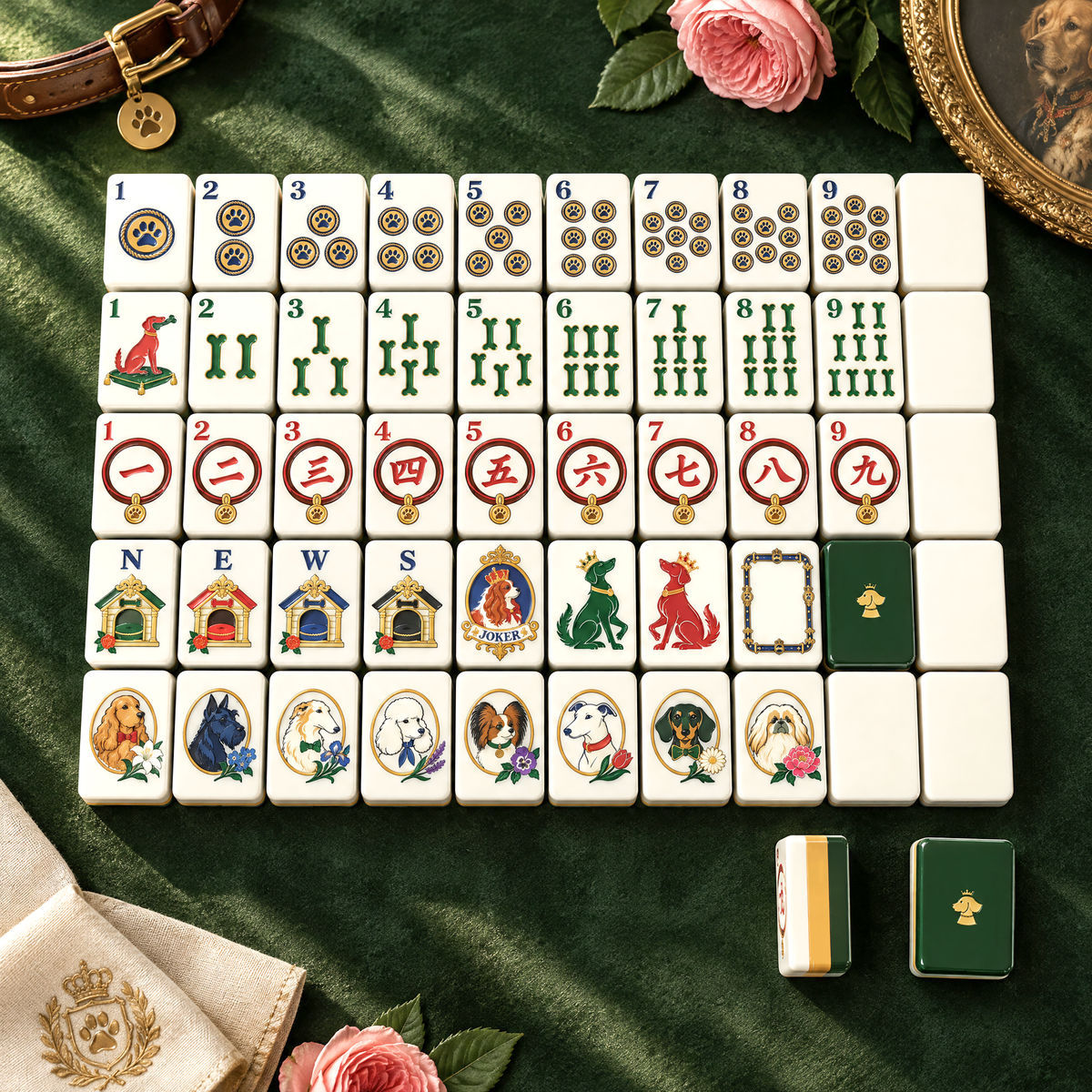
Hong Kong mahjong and Siamese mahjong are separate Asian regional variants, each with their own tile sets, hand patterns and scoring systems. Hong Kong mahjong uses 136 or 144 tiles with a focus on pung-heavy (triplet) hands and closed melds; Siamese mahjong typically uses 144 tiles and favors sequences (chows) and open play. Neither uses the rigid annual hand card that American mahjong relies on—instead, players follow traditional pattern books or regional customs passed down by communities. Both require four players, roughly 90 minutes per game, and deep knowledge of local rules. Costs vary by region; both are played socially in Asia and by diaspora communities in North America. American players familiar with structured, card-based hand lists will find these variants more improvisational and strategy-heavy. The two are not interchangeable: tile count, hand validity and calling rules differ significantly, so groups must agree on one variant before the first tile is drawn.
What tiles does each variant use, and why?
Hong Kong mahjong typically employs 136 or 144 tiles—the most common set includes four Suits (Bams, Craks, Dots, plus a fourth suit called Honours or Winds) numbered 1–9, Winds, Dragons, and Flowers. Siamese mahjong uses 144 tiles in a slightly different composition, often with added honour tiles or regional symbols that reflect Thai cultural preferences. The key difference: Hong Kong emphasizes pung (triplet) combinations; Siamese allows and encourages chow (sequence) melds from the start. If you host weekly games with friends learning either variant, mismatched tile counts will stop play immediately. Both systems demand you agree on tile inventory before shuffling. For groups playing American mahjong most weeks, switching to Hong Kong or Siamese requires buying a separate set designed for that variant—you cannot adapt an American 152-tile set to these rules.

How do hand-winning patterns differ between the two?
In Hong Kong mahjong, a winning hand typically comprises four melds (sets of three or four identical tiles, or sequences in some regional styles) plus a pair, mirroring the structure of many Asian variants. Siamese mahjong allows similar structures but places stronger emphasis on open sequences and mixed pung-chow combinations, with scoring bonuses for certain pattern types. Neither variant relies on a published annual hand card like American mahjong does. Instead, players memorize traditional pattern hierarchies or consult a regional hand book before play begins. A hand valid in Hong Kong may not be valid in Siam, and vice versa. For example, a Hong Kong player might recognize a "pung pung" (all triplets) hand as premium; a Siamese player might score higher for a "chow chow" (all sequences) combination. Both systems reward pattern mastery over luck, meaning experienced players win more consistently. If you're new to either variant, find a tutor from that community—written rules alone won't teach you the cultural conventions that matter at the table.
What role do melds, calling and claiming play?
Hong Kong mahjong permits both concealed (closed hand, unrevealed melds) and exposed (called and revealed) melds, though the game leans toward keeping melds hidden until you declare a win. When another player discards a tile you need, you can call and expose a pung or chow, but doing so signals your intent and gives opponents information—so many skilled players avoid calling unless necessary. Siamese mahjong operates more openly: players claim and display melds frequently during play, making the hand state visible to all. Jokers or wildcards exist in some regional Siamese games but are rarer in Hong Kong play. Neither variant uses the American mahjong rule set (where you cannot call or expose chows, only pungs, kongs and quints). The difference affects strategy dramatically: Hong Kong players play defensively, trying to conceal their progress; Siamese players balance openness with deception. If you're switching from American mahjong, expect to relearn when it's safe to reveal versus when silence gives you an edge.
Aspect | Hong Kong Mahjong | Siamese Mahjong | American Mahjong |
Tile Count | 136–144 | 144 | 152 (+ 8 jokers) |
Hand Structure | Pung-heavy; 4 melds + pair | Sequences + pungs; 4 melds + pair | Joker-assisted; must match annual card |
Calling/Claiming | Selective (melds often concealed) | Open and frequent | No chows; pungs/kongs/quints only |
Annual Hand Card | No (regional pattern book or memory) | No (traditional patterns) | Yes (National Mah Jongg League, spring edition) |
Wildcard Use | Rare; regional variant | Rare; regional variant | 8 jokers standard; heavy use per hand card |
Winning Speed | 60–90 min per game | 60–90 min per game | 60–90 min per game |
Cultural Footprint | Cantonese communities; Hong Kong, diaspora | Thailand, parts of Cambodia, diaspora | US-dominant; Jewish heritage roots |
Which variant is easier to learn if you already play American mahjong?
If you've spent months mastering the current-year hand card and American tile set, switching to Hong Kong mahjong is a step backward in convenience but forward in strategy depth. American mahjong is rule-intensive and rigid—you must match the card exactly, count jokers carefully, and follow strict exposure rules. Hong Kong mahjong feels freer because you don't need a card, but that freedom demands you memorize dozens of valid patterns and learn cultural etiquette around claiming. Siamese mahjong requires even more pattern knowledge and relies on regional variants that change by city or club. For a player who loves how to play American mahjong, the shift to Hong Kong or Siamese feels less like learning new rules and more like learning a new language—you keep the core tile skills but surrender the map (the hand card). Start by playing a few hands with an experienced Hong Kong or Siamese player as mentor, rather than learning from a written guide alone. The hand patterns must be shown to sink in.
Should you buy separate sets, or can you adapt one?
If your group plays American mahjong most weeks and occasionally tries Hong Kong or Siamese, you'll need at least two separate sets. An American set has 152 tiles optimized for that game's rules: eight jokers, specific Wind and Dragon counts, and Flower tiles that don't exist in older Asian variants. A Hong Kong or Siamese set uses 136 or 144 tiles and omits American jokers entirely. Mixing them is impossible. Moreover, tile designs differ: Hong Kong sets often feature traditional Chinese calligraphy; Siamese sets include Thai numerals or motifs. If you're serious about both American and one Asian variant, buy best-selling mahjong sets optimized for your primary game and store a dedicated Hong Kong or Siamese set separately, clearly labeled. This prevents tile contamination and keeps rules sharp. For casual groups, renting or borrowing a Hong Kong set from a local Cantonese community center, library or cultural organization is often smarter than buying two sets you'll each play monthly.
🀄 Shop best-selling mahjong sets →

What to check before you buy a Hong Kong or Siamese set
Before purchasing either variant, confirm with your group which specific tile count they play (136 vs. 144 for Hong Kong; some Siamese games use 108 or 120). Ask an experienced player to show you the tile faces and validate the joker/wildcard count—what works in one Thai region may not in another. Check whether your group uses plastic, bone or bamboo tiles (Thai players often prefer lighter acrylic or plastic; Cantonese players favor heavier bone-bamboo sets). If you're buying online or from a seller outside Asia, request photos of the tile faces to confirm they match your local variant's conventions. Request a tile manifest (complete list of which tiles and how many) so you can verify nothing is missing. Because these sets are less standardized than American mahjong, seller variation is common—a "Hong Kong set" from one vendor might not suit your club's exact rules.
✨ Find your Mahstead set — free US shipping →
How to host a game mixing players who know each only variant
Never force an American-only player into a Hong Kong game without coaching, and vice versa. Instead, pick one variant for the night and invite players experienced in that game to teach the newcomers. Seat the teachers across the table from learners so they can see each other's progress. Before the first hand, have the experienced players lay out three or four winning hands as examples, discussing why each pattern wins. Agree on a "no penalty" first hand—a learning round where no money or points change hands. Play slowly; pause between discards so newcomers can track tile flow. Keep the hand book or regional pattern guide visible at the table so anyone can reference it. If someone calls prematurely or melds incorrectly, treat it as a teaching moment, not a violation (for the learning round). Expect the first night to feel chaotic; the second night improves drastically. Groups that mix American and Hong Kong regularly recommend meeting bi-weekly in each variant rather than trying both in one night—that prevents confusion and respects each game's depth.
Why Asian diaspora communities in North America still prefer Hong Kong and Siamese mahjong
American mahjong thrives because it's rule-dense, social, and heavily marketed to suburban US and Jewish communities. But Cantonese, Thai and other Asian diaspora groups in major US cities (Los Angeles, San Francisco, New York, Vancouver, Toronto, Sydney) continue hosting Hong Kong and Siamese mahjong nights because the games carry cultural meaning passed down across generations. A grandmother who learned to play in Hong Kong in the 1970s teaches her grandchildren in Dallas or Melbourne using the same patterns and tile vocabulary. These games feel like home. American mahjong, by contrast, is newer (formally codified in the 1920s–1940s) and feels like an American invention to these players, even though it also draws from Asian roots. If you're joining an established Hong Kong or Siamese group through a community center, cultural association or online meetup, you're not just learning a game—you're joining a lineage. That's why switching variants mid-friendship can feel like betrayal. Respect the choice and learn to play their way.
🎁 See our most-loved mahjong sets & accessories →
A side-by-side decision framework
Use this to pick which variant suits your group:
You want rigid, card-based, annual rule updates → American mahjong. Standardized across the continent; easy to learn from books or YouTube.
You have Cantonese speakers or Hong Kong ties → Hong Kong mahjong. Deep strategy; cultural continuity; no annual card overhead.
You have Thai community members or want Southeast Asian roots → Siamese mahjong. Unique patterns; rich history; strong identity within Thai-American networks.
You want to play casually, no money → Any variant works; pick the one your group knows best.
You're buying a set as a gift for a serious player → Ask them first which variant they play most. A beautiful Hong Kong set means nothing to an American-only player.
You want to learn multiple variants → Start with American (easiest entry point with published materials), then layer Hong Kong or Siamese once you're comfortable with core mechanics.

FAQ
Can I play Hong Kong mahjong with an American mahjong set?
No. American sets have 152 tiles including eight jokers; Hong Kong sets have 136–144 tiles with no jokers. The tile inventories don't match, and the hand-winning rules are incompatible. You need a dedicated Hong Kong set.
What's the main reason Hong Kong and Siamese mahjong feel so different?
Hong Kong emphasizes concealed melds and pung (triplet) combinations; Siamese favors open play and sequences (chows). Hong Kong is strategic and defensive; Siamese is social and transparent. Neither uses an annual hand card like American mahjong does.
How long does a typical Hong Kong or Siamese mahjong game take?
Usually 60–90 minutes for four players, similar to American mahjong. Speed depends on players' experience and table chatter—casual groups often play longer because winning hands are harder to spot.
Where can I find a Hong Kong or Siamese mahjong group to join?
Check community centers, cultural organizations, libraries and online meetup boards in cities with Cantonese or Thai populations. Ask local dim sum restaurants or Asian supermarkets if they know of groups. Diaspora groups often teach newcomers if you express genuine interest.
If I learn American mahjong first, will it make Hong Kong or Siamese easier or harder?
Easier in one way (you understand tile mechanics and four-player flow), harder in another (you'll unlearn the card dependency and calling rules). Expect a 2–3 week adjustment period before the new variant feels natural.
Are there online versions of Hong Kong or Siamese mahjong I can practice with?
Yes; search for "Hong Kong mahjong online" or "Siamese mahjong app" in app stores or browser-based game sites. Quality varies. Many groups recommend learning live with a mentor before playing online, since regional rules are so localized.


View More
View More
View More
