
What Is All Honors in Mahjong? American & Chinese Rules
Last updated: Nov 23, 2026
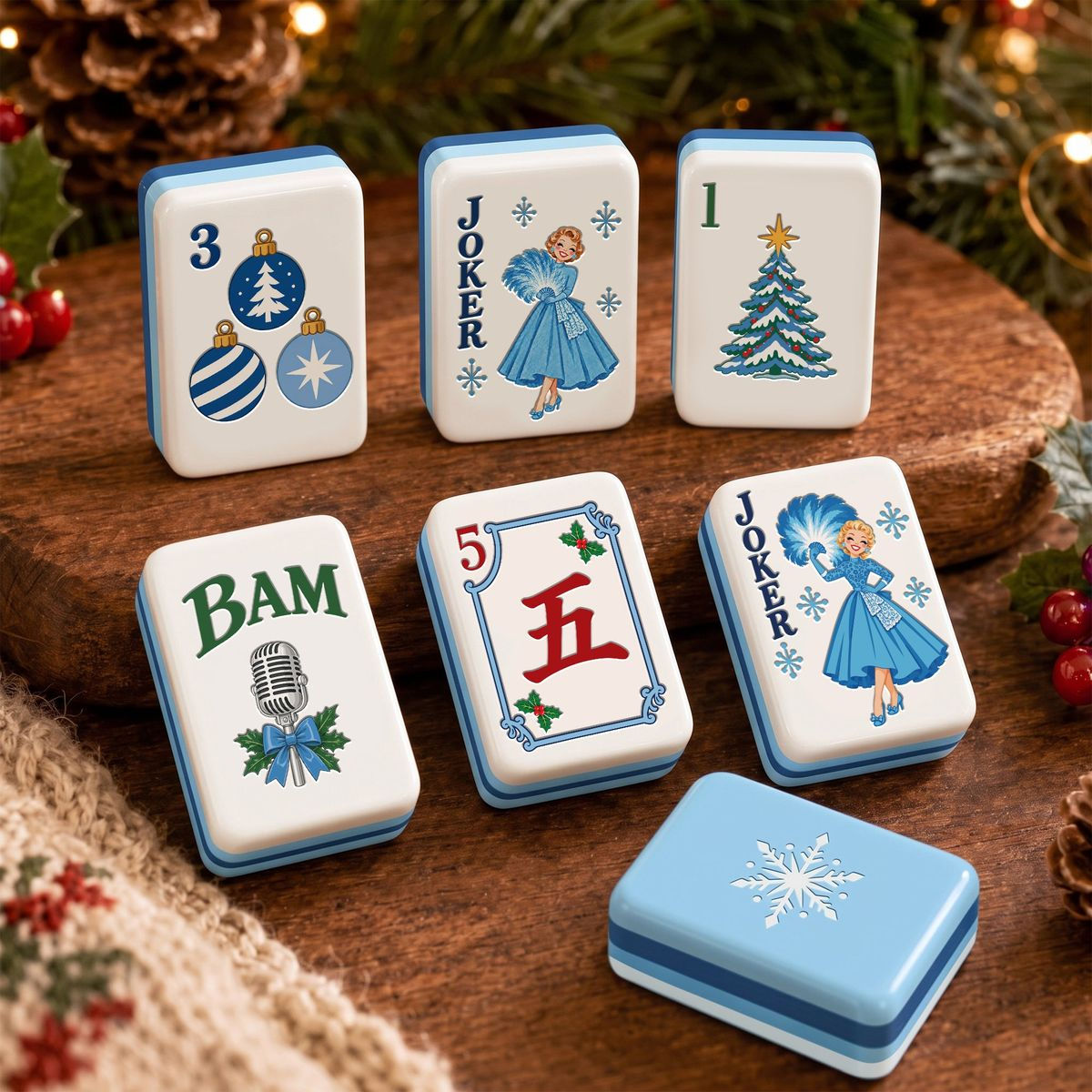
All Honors is a hand composed solely of honor tiles: the four winds (North, East, South, West), the three dragons (Red, Green, White), and flowers. In American mahjong, All Honors hands appear on the current year's National Mah Jongg League card and typically pay high points because they're rare and require no number suit tiles (Bams, Craks, Dots). In Chinese mahjong, "All Honors" (also called "All Terminal Honors") is a winning hand worth substantial fan points. The specific composition and scoring differ by variant—American versions might require a specific pung/kong/quint pattern, while Chinese versions count completed melds in any arrangement. When learning these hands, keep the official American card nearby and consult your variant's rulebook. All Honors hands typically require 13–14 tiles including at least one joker unless the card specifies otherwise. 🀄 Shop best-selling mahjong sets →
What tiles count as "honors"?
Honors are the non-numbered tiles in mahjong. In American mahjong, they include four winds (North, East, South, West), three dragons (Red, Green, White), and eight flowers (Spring, Summer, Fall, Winter, Plum, Orchid, Bamboo, Chrysanthemum). Number suit tiles (Bams, Craks, Dots 1–9) do not count as honors. In Chinese mahjong, honors are winds and dragons only—flowers are optional bonus tiles and don't contribute to hand composition the same way. The key distinction: if a hand is labeled "All Honors" on your card or rulebook, every tile in that meld group must be from the honor set for that variant.

How do All Honors hands work in American mahjong?
American All Honors hands appear on the spring-issued National Mah Jongg League card under their own section. They must be composed entirely of winds, dragons, and flowers—zero Bams, Craks, or Dots. A valid All Honors hand typically includes exposed pungs (three identical honors), kongs (four identical), quints (five), or sextets (six), plus a pair. Jokers can substitute for any tile except in a pair or single. For example, a hand might require "Pung of East Winds + Pung of White Dragons + Kong of North Winds + Quint of Flowers + pair of Red Dragons"—all honors, arranged per the card's exact layout and number. The card section shows the exact composition required each year. Beginners often mistake any honors-only hand as All Honors; instead, you must match the pattern printed on the card for that season.
How do All Honors hands differ in Chinese mahjong?
Chinese mahjong (Cantonese style) treats "All Honors" as a single winning hand type worth higher fan value—typically 3–4 fan depending on house rules. The hand needs 14 tiles: four melds (each a pung or kong of honor tiles only—winds or dragons) plus one pair (also honors). No flowers are involved in most traditional Chinese variants. There are no exposed/hidden meld distinctions the way American mahjong has; you declare "win" when melds and pair are complete, and scoring is calculated by fan count. This is much simpler than American card-driven play but also less flexible—you cannot use the card to unlock alternative patterns. A Riichi or Hong Kong variant may add or remove specific tiles from what counts as honors, so check your rulebook before counting a hand.
What mistakes do new players make with All Honors?
Mistake 1: Mixing number tiles with honors. A player includes a 5 Dot thinking it's "close enough" to honors—it's not. All Honors means zero number suit tiles.
Mistake 2: Misreading the card. On the American card, All Honors is one specific section. Some players assume any all-honors grouping wins; the card determines eligibility.
Mistake 3: Using jokers in pairs. Jokers cannot be used in a pair or single tile, even in All Honors. Your pair must be actual honor tiles.
Mistake 4: Forgetting flowers aren't always honors. In Chinese mahjong, flowers don't count toward the hand; in American mahjong, they do. Know your variant.
Mistake 5: Confusing exposed and exposed-only patterns. American All Honors hands may be exposed only (you must show them immediately, not hold them hidden until win). Check the card or rules.
When learning All Honors, print or reference the mahjong card before each game and ask experienced players at your table if you're unsure. It's faster and safer than guessing.
🎁 See our most-loved mahjong sets & accessories →

Comparison: All Honors across variants
Variant | Tiles allowed | Pair required | Scoring basis | Frequency |
American | Winds, dragons, flowers | Yes, honor tiles | Card section, high point value | Rare; seasonal card |
Chinese (Cantonese) | Winds, dragons only | Yes, honor tiles | Fan count (3–4 fan typical) | Moderate; skill-based |
Hong Kong | Winds, dragons ± flowers | Yes, honor tiles | Point multiplier | Moderate; house rules vary |
Riichi (Japanese) | Winds, dragons only | Yes, honor tiles | Yaku list, fan/points | Low; niche hand |
Key takeaway: All Honors in American mahjong is card-driven and often exposed-only; in Chinese variants it's a fixed hand worth fan points; in Japanese Riichi, it's one yaku among many. Always verify your game's specific rulebook.
Why are All Honors hands valuable?
All Honors hands score high in American mahjong because they're difficult to assemble—you have fewer tile options (16 winds + 12 dragons + 8 flowers = 36 honor tiles vs. 108 number tiles), and the card typically places them in premium sections. They're also visible to other players immediately upon exposure, raising strategic complexity: opponents know what you're collecting and may block you by holding or discarding honors. In Chinese and Japanese variants, All Honors is a recognized but not spectacular win—it's worth good points but not exceptional compared to higher hands like Small Dragons or All Simples. The prestige of All Honors in American play comes from both rarity and the card's design: the National Mah Jongg League updates patterns annually, so All Honors configurations rotate, keeping the hand fresh. Players who complete an All Honors often receive acknowledgment at the table, though never a bonus payout beyond the hand's listed value. If you're building a set for weekly games, expect All Honors to come up a few times per season—it's a goal, not a certainty.
✨ Find your Mahstead set — free US shipping →
Spotting All Honors on the mahjong card: a checklist
Before you claim an All Honors win, verify:
✓ Card section: Is your hand listed under "All Honors" on the current year's card?
✓ Tile count: Do you have exactly 14 tiles (or 13 + one drawn)?
✓ Tile type: Every tile is a wind, dragon, or flower—zero Bams, Craks, or Dots?
✓ Pair: Your pair is two identical honor tiles (not jokers, not mixed)?
✓ Melds: Your exposed melds (if any) match the card's exact pattern?
✓ Jokers: If jokers are used, they substitute for specific melds, never the pair?
✓ Exposure rule: Are you allowed to play this as exposed-only, or can it be concealed?
If any box is unchecked, hold the hand and wait for clarification—false claims result in penalties in tournament play.
What to check before you buy a set to learn All Honors
Tile legibility: Ensure honor tiles are clearly marked and easy to distinguish. Honor tiles (winds, dragons, flowers) have different symbols than number suits; if your set's tiles are small or poorly printed, you'll spend extra time reading during play.
Complete tile count: American mahjong sets contain 152 playing tiles plus spares. Verify your set includes all four copies of each wind and dragon, plus four of each flower, plus all number tiles—missing honors will frustrate your practice.
Card reference: Purchase a set that includes or is paired with access to the current year's National Mah Jongg League card (or keep a digital copy at the table). Many engraved sets designed for American play feature tile designs that match card notation exactly.
Mat and rack space: When studying All Honors hands, you'll want room to lay out all melds clearly. A good mahjong mat and racks with pushers keep tiles organized and prevent fumbles during exposure.
Sets with clear, durable acrylic tiles and printed mat guides help new players identify honors quickly and build muscle memory for All Honors recognition.

FAQ
Can flowers be part of an All Honors hand in Chinese mahjong?
No. In traditional Cantonese Chinese mahjong, All Honors uses only winds and dragons. Flowers are bonus tiles drawn separately and don't contribute to hand composition. American mahjong includes flowers as honors; Japanese Riichi does not. Always check your variant's rules.
What's the highest score for All Honors in American mahjong?
Scores vary by National Mah Jongg League card year. All Honors sections typically pay 50–70 points, but exact values depend on whether it's played with other restrictions (e.g., "concealed" or "no flowers"). Check the current card for precise scoring.
If I draw an extra tile and have All Honors, do I win immediately?
Yes, if your 14 tiles complete an All Honors pattern listed on the card, you declare and win that hand. No further draws or discards are taken. Your melds must match the card's exact layout (pung here, kong there, etc.).
Can I use a joker as part of the pair in All Honors?
No. In American mahjong, jokers cannot be used in pairs or single tiles anywhere. Your All Honors pair must be two actual identical honor tiles.
How often does All Honors appear during a typical week of games?
It depends on player skill and luck. For casual groups, expect one or two All Honors wins per week of play (3–4 games). For competitive players on the current card, it may appear more often because experienced players recognize and pursue it strategically.
What's the difference between "All Honors" and "All Terminals and Honors" in Chinese mahjong?
"All Terminals and Honors" (also called "Thirteen Orphans") uses only the 1 and 9 of each number suit plus all seven honor types (no flowers), and it's a special 1–9–1–9–… single-tile hand. "All Honors" uses only winds, dragons, and flowers (no number tiles at all). They are distinct hands with different fan values.


View More
View More
View More
