
Hong Kong Mahjong Scoring: Rules, Points & Hand Values
Last updated: Nov 23, 2026
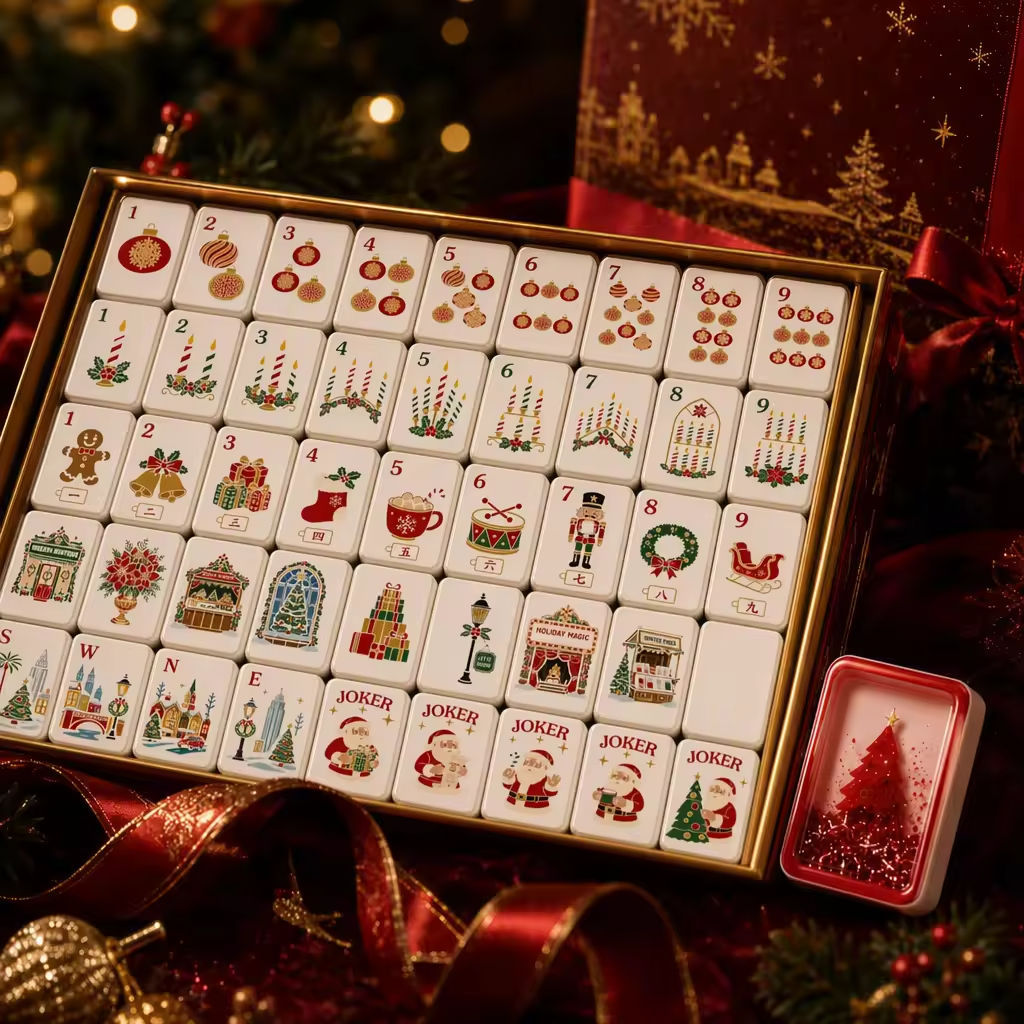
Hong Kong mahjong scoring awards points based on the winning hand's pattern, tile values, and fan (multiplier) rank—typically starting at 1 fan (simplest) and climbing to 13+ fan (rare, all-honor combinations). The base score begins as "base points" per tile (often 2–8 points depending on the hand composition: simples, terminals, honors, dragons, and winds), then multiplies by fan. A winning hand pays from all three opponents; the losers each pay the winner, or sometimes the dealer pays double. Unlike American mahjong scoring, which uses an annual card and fixed hand lists, Hong Kong play is hand-agnostic: any valid pattern (pungs, kongs, chows, pairs, eyes) counts if it meets rule criteria. Scoring is fluid, negotiated locally, and varies by region; no two gaming groups use identical point tables. Most casual games use simplified fan counting: 1 fan ≈ 1,000 points, scaling upward. Understanding fan rankings—recognizing all pungs, mixed colors, no chows, or special concealed hands—is the key to tracking your position and knowing when a hand is worth calling or folding.
How do base points work in Hong Kong mahjong?
Base points are the foundation of score calculation. Each tile in your hand contributes a point value: simples (1–9) are usually worth 1 base point, terminals and honors (winds, dragons) are worth 2, and special tiles like flower or season tiles may add bonus points. Once you add all base points in your hand, you multiply by your fan rank to get the total payout per opponent. For example, a hand with mostly simple tiles might total 10 base points at 1 fan = 1,000 points (using the common 1 fan = 100× base scale). Different tables negotiate these multipliers before play; always confirm house rules.

What are fan rankings and how do you count them?
Fan (番) are like multipliers that rank hand difficulty and rarity. A 1-fan hand is the minimum—often "no special pattern," just a winning combination. Each additional fan doubles or triples the payout depending on your table's scale. Common fan categories include:
All pungs (no chows): all four of your melds are pungs or kongs.
No terminals or honors: called "all simples," only tiles 2–8 in each suit.
Mixed terminals: honors mixed with terminal tiles (1 or 9).
Concealed hand: you win on a draw; opponents never saw your tiles.
All one suit: all melds use only one suit (Bams, Craks, or Dots) plus a pair.
Dragon pung or kong: melds containing Red (Craks), Green (Bams), or White (Dots).
Wind pair or meld: pair or pung of your seat wind or the round wind.
Higher-fan hands combine multiple patterns: "all pungs + all one suit + no terminals" might be 4–6 fan depending on house rules. Tables vary wildly; some use 0–13 fan, others cap at 8 or allow 16+. Clarify scoring before sitting down.
🀄 Shop best-selling mahjong sets →
How do payouts work with multiple opponents?
In Hong Kong mahjong, when you win, each of the three other players pays you. The discarder (the player who threw the tile you claimed) often pays double in some rulesets or triple if you declared a special win (like winning off their tile in a concealed hand). Dealer position also matters: if the dealer wins, non-dealers each pay the full amount; if a non-dealer wins off the dealer's discard, the dealer often pays double. Some tables apply a "no payment" rule for certain fan levels—paying out only kicks in at 2 fan or higher to avoid bankruptcy. Example: you win a 2-fan hand (base 10 points, so 2,000 per opponent under the 100× scale). The discarder pays 4,000; the other two pay 2,000 each. You net 8,000 for that hand. Payment direction and multipliers differ by region, so always confirm before play begins.
What mistakes do beginners make when scoring Hong Kong hands?
The most common error is forgetting to count all fan sources. A hand might qualify for multiple fan—all pungs and wind pair and all one suit—and you must add all of them, not pick one. Second, mixing up simple vs. terminal: a 1 or 9 is a terminal; 2–8 are simple. Confusing this ruins fan calculations. Third, not clarifying discarder liability: some tables treat the discarder as a special payer; others split evenly. Fourth, ignoring dealer position. If you're dealer and win, you get full payout from all three. If non-dealer, the dealer's payment might be different. Fifth, miscounting base points on honors and terminals—many beginners treat all tiles as 1 point, missing that winds and dragons are 2 each. Finally, not agreeing on the scale before play: is 1 fan = 500 points, 1,000 points, or 2,000? This single detail can turn a casual game into a grudge match. Write it down or say it aloud before the first hand.
Common Mistake | What Happens | How to Avoid It |
Missing a second fan | Underpay by 100–300% | List all fan sources; double-check before announcing |
Confusing 1/9 as simple | Wrong base points; wrong fan | Memorize: 1 & 9 = terminal; 2–8 = simple |
Unclear discarder payment | Argument mid-hand | Agree on multiplier (1×, 2×, 3×) before game starts |
Mixing up dealer / non-dealer | Wrong payout split | Confirm dealer pays different amount if your house rule applies |
No pre-game scale agreed | Major confusion | State: "1 fan = X points, base = Y per tile" out loud |
Counting tiles instead of patterns | Massive miscalculation | Focus on fan (pattern value), not individual tile value |

How does Hong Kong mahjong differ from American scoring?
American mahjong offers a fixed hand card each spring—every valid hand is listed, and scoring is binary (you either win or you don't; payouts are usually 1 unit per opponent). Hong Kong mahjong has no official hand card; any combination of valid melds (pung, kong, chow, pair) wins, but the payout depends on hand complexity. American hands are scored as presence or absence (you need that exact hand); Hong Kong scores hands on continuous fan scale (1 fan to 13+, building up). American is typically 4-player, fast, and relies on the official card; Hong Kong is fluid, regional, and negotiated by table. American uses 8 jokers within exactly 152 tiles; Hong Kong traditionally has no jokers (though modern casual games sometimes add them). American disallows chows in certain positions; Hong Kong allows chows freely. Most importantly, American teaches uniformity across venues; Hong Kong is local and social—each group tweaks rules. If you play Hong Kong regularly, save time by recording your group's exact fan rankings and point scale in a shared document.
🎁 See our most-loved mahjong sets & accessories →
What's the role of luck vs. skill in scoring?
Luck dominates tile draws, but skill shapes the hand you build toward and the fan you're aiming for. A skilled Hong Kong player recognizes fan patterns early and pivots their melds to maximize points—holding onto terminal tiles for a "mixed terminal" fan, or collecting a single suit to lock in "all one suit." Beginners often panic and settle for any win (1 fan); veterans hold hands longer, waiting for a second or third fan to arrive, accepting the risk of busting (everyone else goes out first). Scorekeeping matters: if you're down, you might chase a high-fan hand; if you're ahead, a safe 1-fan win ends the hand. Over a series, skill compounds—recognizing discard patterns, opponent habits, and safe melds pays off. Luck shuffles tiles; skill builds the hand within them.
What to check before you buy a Hong Kong mahjong set
If your gaming group plays both American and Hong Kong, verify your set has clear tile markings. Hong Kong sets rarely use English labels—many use Chinese characters or symbols—so ensure you can read them quickly. A quality mahjong mat or surface helps organize your melds visually; scoring is faster when hands are clearly laid out. If your group tracks detailed fan counts, consider dice or a scoring notebook: scoring arguments happen fast in Hong Kong play. Many players bring a small reference card (written by your group) listing your exact fan rankings and base-point scale; saves five minutes of dispute per hand. Finally, ensure tile visibility under table lighting—small or dull tiles slow scoring and invite errors.
✨ Find your Mahstead set — free US shipping →
Our best-selling collection includes sets designed for clarity and durability—tiles that read fast under varied lighting, and quality that holds up through hundreds of hands. If your group mixes American and Hong Kong rules, confirm your set's tile face: Mahstead's engraved designs are popular for American play and transfer well to casual Hong Kong games at home.

FAQ
Can I use an American mahjong set to play Hong Kong mahjong?
Yes. American sets have all the tiles Hong Kong needs (Bams, Craks, Dots, winds, dragons, flowers). The only difference is American sets usually include jokers (which Hong Kong doesn't use in traditional play) and often have English labels. Hong Kong players simply ignore jokers and read the tile suit symbols. Clarity matters—make sure tiles are readable.
What happens if everyone reaches 13 fan in one hand?
That's extremely rare. Most tables cap payouts at a fixed fan maximum (often 8, 10, or 13) to keep games affordable. If your house rule allows unlimited fan, the player with the highest fan wins full payout; others pay a reduced amount or nothing. Confirm this cap before play to avoid shock payouts.
Do I have to call my hand as I build it, or can I wait until the win?
Most Hong Kong rules let you keep your hand hidden until you declare a win. You don't announce fan or base points during play—only when winning. Some strict groups require you to state your intended hand type before calling (e.g., "all pungs, mixed one suit") so opponents can't dispute it post-win. Clarify your group's rule.
How is the dealer determined and does dealer position affect scoring?
Usually the player with the highest die roll is the dealer (East wind) for that round. Dealer rotates after each hand or every 4 hands depending on house rule. In some Hong Kong variants, the dealer's payout is higher (non-dealer wins against dealer = dealer pays 2× or 3×). In others, dealers pay or receive the same as any other player. Always agree before the game starts.
Is a chow (3-4-5) as valuable as a pung (5-5-5) in Hong Kong scoring?
No. A hand of all chows is usually lower value than all pungs because variety is easier than matching. "All pungs" is a fan point; "all chows" typically is not. Mixing chows and pungs is the standard hand and scores base fan (often 1 fan or none, depending on region). Pungs and kongs are rarer and thus worth more.
What if the dealer and a non-dealer both have the same hand and fan—who pays more?
The dealer usually does not pay more if they win; the rule often applies when the dealer loses (paying double or triple). If two players are tied in fan, the hand is resolved by a tiebreaker (often the discarder rule: whoever threw the winning tile pays extra, or the hand is canceled and redrawn). Clarify your group's tiebreaker before play.


View More
View More
View More
