
Hong Kong Mahjong Rules: Game Play and Hand Scoring Explained
Last updated: Nov 23, 2026
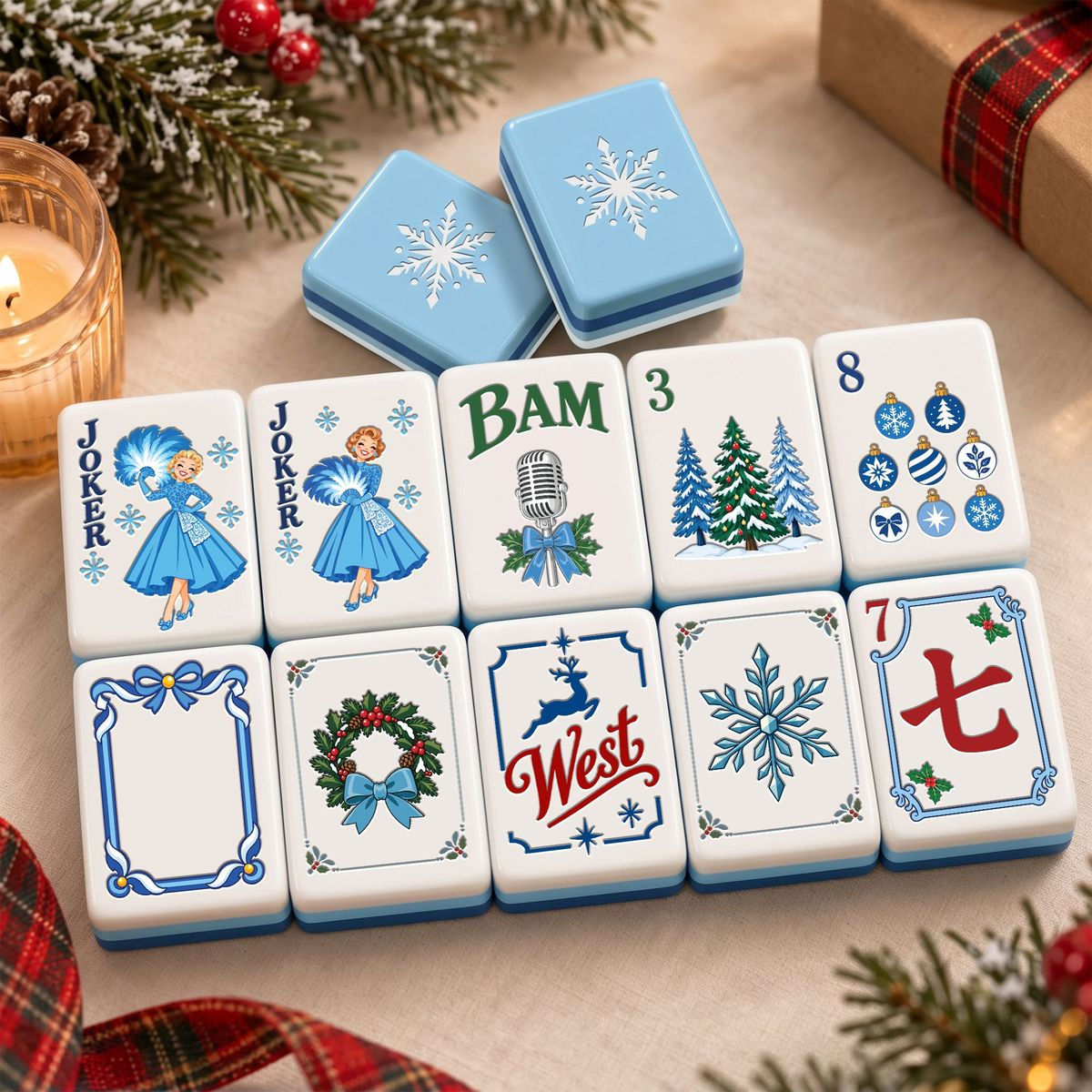
Hong Kong mahjong uses the same 152-tile set as American mahjong but plays by completely different rules. Games move faster because any player can declare a winning hand on any discard—not just pre-set patterns. Hands include sequences (chows: 1-2-3, 7-8-9) mixed with triplets (pungs), not just fixed layouts. Scoring is points-based, earned through hand combinations, and bonuses are awarded for special patterns like all one suit or concealed hands. A typical game runs 15–30 minutes per round. The main strategic difference: you're reading opponents' discards and hand speed, not hunting a yearly card. Hong Kong mahjong is perfect for players who want real-time decision-making and higher stakes.
Hong Kong mahjong is faster, looser, and more action-packed than American mahjong—you can call any hand mid-game, use chows freely, and score dramatically higher. We'll walk you through the rules, hand types, and key differences so you can play it right.
What's the core difference between Hong Kong and American mahjong?
American mahjong hands come only from the yearly National Mah Jongg League card—rigid, set layouts you must match exactly. Hong Kong mahjong has no card: any combo of pungs (triplets), kongs (quads), and chows (sequences) that totals 14 tiles wins immediately. You can pick up any discard and declare a win on the spot. In American mahjong, only the discarder's turn ends; in Hong Kong, the game pauses mid-turn for anyone to claim a tile. This makes Hong Kong mahjong far more competitive and faster-paced.

How do you build and win a Hong Kong mahjong hand?
A winning hand has 14 tiles: four sets (each 3 or 4 tiles) plus one pair. Each set is either a pung (three identical tiles like 3-3-3 Bams), a kong (four identical), or a chow (three consecutive tiles like 4-5-6 Craks). Pungs and kongs can be drawn from the wall or claimed from another player's discard. Chows can only be formed from your own draw or claimed from the player directly to your right (in some schools, only from any discard). The pair must be identical tiles. Your goal is to form this 14-tile pattern before opponents. Unlike American mahjong, jokers are rarely used—most Hong Kong schools don't allow them at all. If you pick the right tile, you declare "mahjong" and scoring begins immediately.
What hands score highest in Hong Kong mahjong?
Scoring in Hong Kong mahjong awards points (called "fan") for hand composition. A basic hand (no special pattern) is worth 1 point. Bonuses multiply the score: all one suit (3+ points), all terminals (1, 9, honors only, 8 points), all pungs (2 points), concealed hand (won without claiming any discard, 1 point), winning on the last tile of the wall (1 point). The highest hands—all one suit and all pungs, or all terminals—are worth 8–13 points. Payments scale by points: other players each pay you the point value, or you pay them if you lose. Because each hand is independent, games feel like short sprints: one hand might end in 90 seconds, the next in five minutes. This keeps energy high and decisions sharp.
How does the tile exchange (Charleston) differ?
Hong Kong mahjong often skips the Charleston entirely or uses a simpler version than American mahjong. If a Charleston happens, the pattern is often three exchanges instead of four, and some schools pass fewer tiles per exchange (three instead of fourteen). Many Hong Kong games begin with the dealer drawing 14 tiles and each other player drawing 13 from a shuffled wall—no pre-game trading. This speeds the game start and keeps the action tighter. The dealer (East) plays first, then North, West, South in order.

What should you know before switching from American to Hong Kong rules?
Common pitfalls:
Chows are live: in American mahjong you can't expose a chow mid-game; in Hong Kong, claiming a chow from the player to your right ends that player's turn instantly.
No yearly card: you're not looking up patterns; instead, you're counting points and reading the discard pile and hand speed.
Speed and hand visibility matter: Hong Kong players watch every tile played. Hesitation, tile placement, and draw timing reveal information.
Jokers are absent or ornamental: most Hong Kong games don't use jokers as wildcards, so don't expect them to rescue your hand.
Payments are direct and quick: after a win, scores are calculated on the spot and money (or points) exchanges immediately.
We recommend setting house rules before your first hand: agree on whether chows can be called from any discard or only the right player, whether a player can pass on claiming a tile, and what the base payment per point is. Write the rules down and keep them visible until everyone learns the game.
Aspect | American Mahjong | Hong Kong Mahjong |
Hand source | Yearly card only | Any combo of sets + pair |
Chows | Cannot expose or call | Can claim from right or any player (school-dependent) |
Speed | 20–40 min per hand | 1–5 min per hand |
Scoring | Tile count + bonuses | Points (fan) by pattern |
Jokers | 8 per set, used as wildcards | None, or decorative only |
Best for | Pattern memory, strategy | Real-time reading, faster play |
🀄 Shop best-selling mahjong sets →
What equipment do you need to play Hong Kong mahjong?
You need the same 152-tile set as American mahjong—four copies each of Bams 1–9, Craks 1–9, Dots 1–9, all four wind tiles, all three dragon types, and all eight flowers. Our best-selling acrylic mahjong sets work perfectly for Hong Kong play; the tiles are loud and durable enough for fast-paced games with lots of tile claiming and discards. You don't strictly need racks with pushers, but many Hong Kong players use a mat to define the play area and keep the wall organized. If you're hosting regular games, an engraved set adds personality and makes it easy to track whose tiles are whose. For travel between game nights, a padded bag protects your tiles from tile wear.
🎁 See our most-loved mahjong sets & accessories →
What to check before you buy a set for Hong Kong mahjong
Tile durability: Hong Kong play involves constant claiming and rapid discards. Thicker acrylic and hand-engraved designs resist chipping better than thin tiles.
Weight and size: lighter sets (under 4 lbs) are easier to travel to games; heavier sets (5–6 lbs) feel more premium and stay stable on any surface.
Clarity of numbers: during fast play, you need to spot 1 Bam (bird symbol), 5 Craks (flower), and 5 Dots instantly. Pick a set with bold, high-contrast engravings.
Spare tiles: a 160-tile set includes extra jokers or blanks. While you won't use them in Hong Kong play, having spares prevents mid-game stalls if a tile cracks.
Case or bag: Hong Kong games move between homes. A case with padding and a carry handle protects your investment.
✨ Find your Mahstead set — free US shipping →
How do house rules shape Hong Kong mahjong?
Every group plays a slightly different version of Hong Kong mahjong. Some schools require you to discard immediately after drawing from the wall (no thinking). Others let you hold three discards in a "safe zone" that opponents can't claim. Some award a bonus ("quint") if you draw the tile to complete a pung into a kong on the same turn. The most important house rules to clarify are:
Can a chow be claimed from any discard, or only from the right player? (This changes hand-winning odds dramatically.)
Does a player pay the whole table or only the winner? (Most Hong Kong games: the winner collects from all three losers, one point value per loser.)
Is the game "closed hand" (no one sees your tiles until you win) or "open hand" (racks visible)? (Closed hand is harder and riskier; open hand favors reading and memory.)
What tiles do you draw and discard on your first turn? (Dealer draws 14, plays and discards immediately; others draw 13 at the start.)
Write your group's rules down and post them above the table for the first three game nights. After that, new players will learn faster.

FAQ
Can I play Hong Kong mahjong with an American mahjong set?
Yes—both games use the same 152-tile set. The difference is only in rules, not equipment. Your American set works perfectly for Hong Kong play.
Do I need a yearly card to play Hong Kong mahjong?
No. Hong Kong mahjong has no card. Any hand of four sets (triplets or sequences) plus a pair wins immediately. You're free to build whatever pattern comes together.
What happens if two players claim the same discard?
The player claiming to win takes priority. If both are trying to complete non-winning sets (a pung), the player closest to the discarder in turn order claims it. Your house rules should clarify this before play.
How much faster is Hong Kong mahjong than American mahjong?
A Hong Kong hand can end in 90 seconds; American hands take 20–40 minutes. Hong Kong's freedom to call any win mid-turn and lack of card lookup speeds play dramatically.
Can I use jokers in Hong Kong mahjong?
Most Hong Kong schools don't use jokers. If your group does, clarify whether they're wildcards (substitute for any tile) or decorative only. American mahjong relies on jokers; Hong Kong typically doesn't.
What's the best way to learn Hong Kong mahjong if I know American rules?
Forget the card—it doesn't exist in Hong Kong play. Focus on: (1) any pung, kong, or chow is legal, (2) chows use sequences of the same suit, (3) a 14-tile hand (four sets + pair) wins instantly, (4) speed is expected. Play five hands with an experienced group before hosting your own game.


View More
View More
View More
