
Hong Kong Mahjong Hand Examples: Rules & Winning Combinations
Last updated: Nov 23, 2026
Hong Kong mahjong wins by assembling a hand of four melds (sets) plus a pair—14 tiles total. Melds include pungs (three identical tiles), kongs (four identical tiles), and chows (three consecutive tiles like 3-4-5 Bamboo). Unlike American mahjong, chows can be called and exposed during play, and the deck holds 144 tiles with no jokers or flowers. A player draws and discards each turn, claiming discard tiles (called or open), building toward a tiring hand. The hand ends when someone completes their 14-tile combination, declares mahjong, and scores based on hand type and tile rarity. Speed and tile-reading skill matter far more than in American play; the game typically finishes in 15–30 minutes per hand.
What is the core tile composition in Hong Kong mahjong?
Hong Kong mahjong uses exactly 144 tiles: three suits (Bamboo, Character, Dot) numbered 1–9, four copies of each (108 honor tiles); plus 16 winds (North, East, South, West, four each); 12 dragons (Red, Green, White, four each); and eight flowers (Spring, Summer, Autumn, Winter, Plum, Orchid, Bamboo, Chrysanthemum—one each). No jokers, no blanks, no extra tiles. The deck is smaller and faster than American play, with no hand card or yearly reset. You memorize winning patterns through repeated play rather than consulting a reference card.

How do chows differ from American pungs and kongs?
Chows are sequences of three consecutive tiles in the same suit—like 2-3-4 Bamboo or 7-8-9 Character. A pung is three identical tiles; a kong is four identical. In American mahjong, chows cannot be called or exposed; you may only expose pungs, kongs, and special multiples like quints and sextets. In Hong Kong play, chows are fully exposed during the hand and count as one of your four required melds. This distinction radically changes strategy: you claim discards more frequently, and the hand evolves visibly across the table. Every exposed meld signals what tiles the claiming player needs or wants to avoid.
What does a winning Hong Kong hand look like in practice?
A complete winning hand (called tiring or going mahjong) contains four melds plus one pair—14 tiles. Example: three Red Dragons (pung) + 2-3-4 Character (chow) + 5-5-5 Dot (pung) + West-West-West (pung) + two Green Dragons (pair). You might also win with all pungs and kongs: four 3 Bamboo + five 7 Dot + three 9 Character + four East + pair of 1 Bamboo. Some hands are concealed—all 14 tiles drawn from the wall, never claimed from a discard. Concealed hands score higher. Others are open—you claimed at least one discard. The mix of concealed versus open tiles and the hand's composition (pungs-only, all sequences, mixed) determine the point value.
How does claiming a discard work in Hong Kong play?
When a player discards, the three other players may claim that tile aloud if it completes a meld. Priority order: the player immediately right of the discarder (for chows), then the two remaining players (for pungs and kongs). If two players call for the same discard and it can form either a chow or pung, the pung claim takes priority. Once you claim, you place the meld face-up in front of you; the discarder sees your hand state and adjusts their discard strategy. Unclaimed tiles move to the next player. This open claiming makes Hong Kong faster and more social than American play, where all tiles remain hidden until someone wins.
What are the main scoring categories and point differences?
Hong Kong mahjong scores by hand type, not tile count like American play. High-value hands include all pungs (no chows), all terminals and honors (tiles numbered 1 and 9 plus winds and dragons), all one suit, all chows, and concealed hands. Point values typically range from 1 to 8 or higher depending on local house rules. A simple pung hand scores fewer points; a concealed all-terminal hand scores many. Players settle scores pairwise—the winner collects from each loser, or in some variants, all three losers pay the winner the full hand value. Betting stakes (unit per point) are set before the game begins, so a 6-point hand costs significantly more than a 2-point hand.
Hand Type | Composition | Concealed or Open? | Typical Point Value | Why It Matters |
All Pungs | Four pungs + pair, no chows | Either | 3–5 | Harder to build; high reward |
All Chows | Four chows + pair, no pungs | Usually open | 2–3 | Common, moderate reward |
All Honors | Only winds & dragons | Either | 5–8 | Rare, valuable |
All One Suit | Bam, Crak, or Dot only | Either | 3–5 | Focused play |
Concealed Hand | All 14 tiles self-drawn | Concealed | +1 bonus | Fastest win, highest value |
Mixed Terminal | 1s & 9s + honors | Either | 4–6 | Advanced pattern |

What mistakes do newcomers make when learning Hong Kong rules?
New players often forget that chows can be called aloud and exposed—they unconsciously play as if it's American mahjong and hoard tiles. This slows the game and costs points when they miss claiming a high-value discard. Second mistake: misreading priority—claiming a pung when the right-hand player already called for a chow, losing the tile and the meld. Third: discarding too predictably; veteran players read your exposed melds and know what you're holding or avoiding. Fourth: not noticing house-rule variations on point values, bonus melds (like flower hands in some regions), or settlement rules. Fifth: playing too slowly—Hong Kong mahjong rewards snap decisions and fast play; hesitation signals weakness and lets opponents guess your hand. Spend your first three games listening and watching, not speaking; the rhythm becomes clear.
🀄 Shop best-selling mahjong sets →
How do Hong Kong and American mahjong setups differ at the table?
American mahjong requires the current year's National Mah Jongg League card to look up legal hands before play. Hong Kong players memorize patterns and score rules; no card is needed. American play uses 152 playing tiles plus jokers and often begins with the Charleston (a three-step tile-passing ritual). Hong Kong uses 144 tiles, no jokers, and no Charleston—the tiles are simply shuffled and stacked into a wall. American players draw from a central wall and discard to a side rack; Hong Kong players often build walls in front of them and draw from their own wall-end. American rounds can last 30+ minutes if hands are complex; Hong Kong hands typically resolve in 15–30 minutes. Both use wind rotation to determine dealer and seat position, but American play resets the hand list yearly, whereas Hong Kong play remains constant.
If you're curious about American mahjong equipment—especially if you host mixed game nights—check our best-selling collection of durable acrylic sets. We design sets with clear tile markings that work equally well for learning Hong Kong or American play; the extra durability matters when tiles travel between friends' homes.
Can you win with a pair of regular tiles and three melds, or must one be special?
Yes. A winning hand is any combination of four melds (pungs, kongs, or chows) plus one pair. The pair does not need to be honors (winds, dragons) or special; it can be two 3 Bamboo, two 6 Dot, or any matching tiles. Many hands win with a simple number-tile pair. However, some regional variants award bonus points if the pair is an honor (called a pair hand or eyes of honor), or if the pair matches the current wind or season. Check house rules with your group before your first game; Hong Kong clubs often post their scoring rules on a wall sign or mention them during introductions.
🎁 See our most-loved mahjong sets & accessories →
What to check before you buy a Hong Kong mahjong set
Look for these details when selecting a set for Hong Kong play:
Tile clarity: Marks must be large and legible in low light; you'll read tiles fast.
Material: Bamboo or bone sets feel traditional but chip easily; acrylic sets endure repeated play and travel.
Size: Compact sets (smaller tiles) let you play on smaller tables; larger tiles suit aging eyes.
Markers included: A set should include wind markers and a score sheet for settling points.
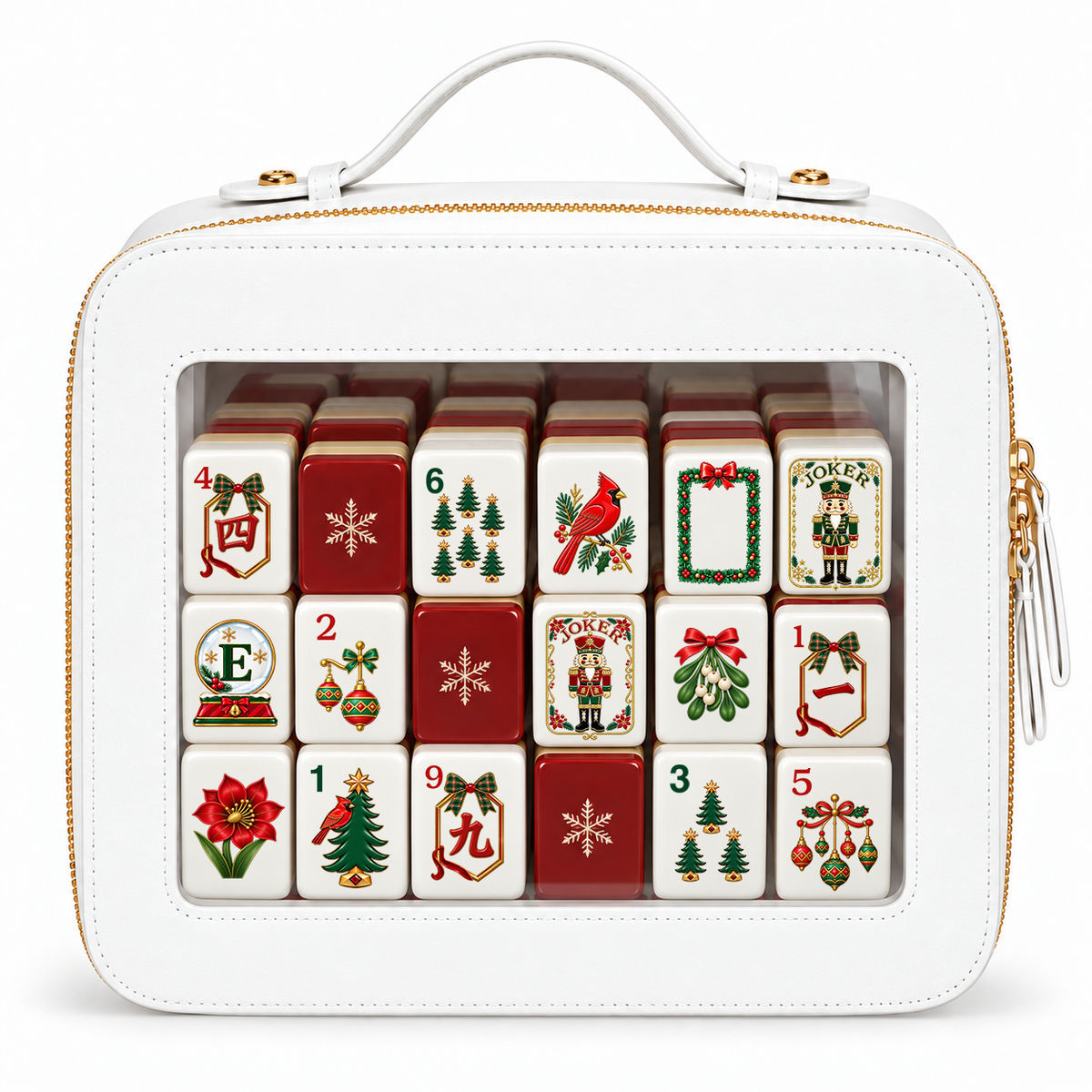
Storage: A sturdy bag or case protects tiles from damage when moving between venues.
Our mahjong bags and cases collection includes options sized for standard 144-tile decks, with compartments for markers and scoring sheets. Free shipping across the US means you can order, test, and start hosting games immediately.
✨ Find your Mahstead set — free US shipping →

FAQ
Can you win in Hong Kong mahjong if only the pair is hidden and all four melds are exposed?
Yes. An open hand is fully valid; it scores fewer points than a concealed hand, but it's a complete winning combination. You've drawn only one tile from the wall (the winning tile); the other 13 came from discard claims.
Is the 1 Bamboo tile different in Hong Kong mahjong the way it is in American play?
In most Hong Kong sets, the 1 Bamboo shows a bird illustration, just as in American decks. The tile functions identically—it's the lowest Bamboo and can start a chow (1-2-3) or stand alone in melds. Regional sets vary; some display a simple numeral.
What happens if two players both claim the same discard but for different melds—can they negotiate?
No. Priority rules are absolute: chow claim to the right-hand player first, then pung/kong to either of the other two players. If the right-hand player claims it for a pung and another player also wants it for a pung, the right-hand player wins. No negotiation; it's binding.
Do house rules ever include jokers in Hong Kong mahjong the way American play uses them?
Some casual or regional variants add jokers as wild tiles, but traditional Hong Kong play does not. A 144-tile set contains no jokers. If your group uses jokers, confirm the substitution rule (which tiles can they replace?) before betting.
How do you know when your hand is "too late" to go mahjong—i.e., when the wall is almost empty?
Hong Kong play typically continues until only 14 tiles remain in the wall (the "dead wall"). If no one has won by then, the hand ends, no winner is declared, and players pass to the next hand. Some venues play until 10 tiles remain; confirm before starting.
If I've never played Hong Kong mahjong but I own an American set, can I use it to learn?
Partially. An American 152-tile set includes jokers and flowers that Hong Kong play doesn't use; you'd set them aside, leaving roughly 144 tiles. However, American sets are often designed with card-reference features that don't help Hong Kong memory-based play. A dedicated 144-tile Hong Kong set is clearer and faster to learn with.


View More
View More
View More
