
Mahjong card holder for travel: compare your options
Last updated: Nov 23, 2026
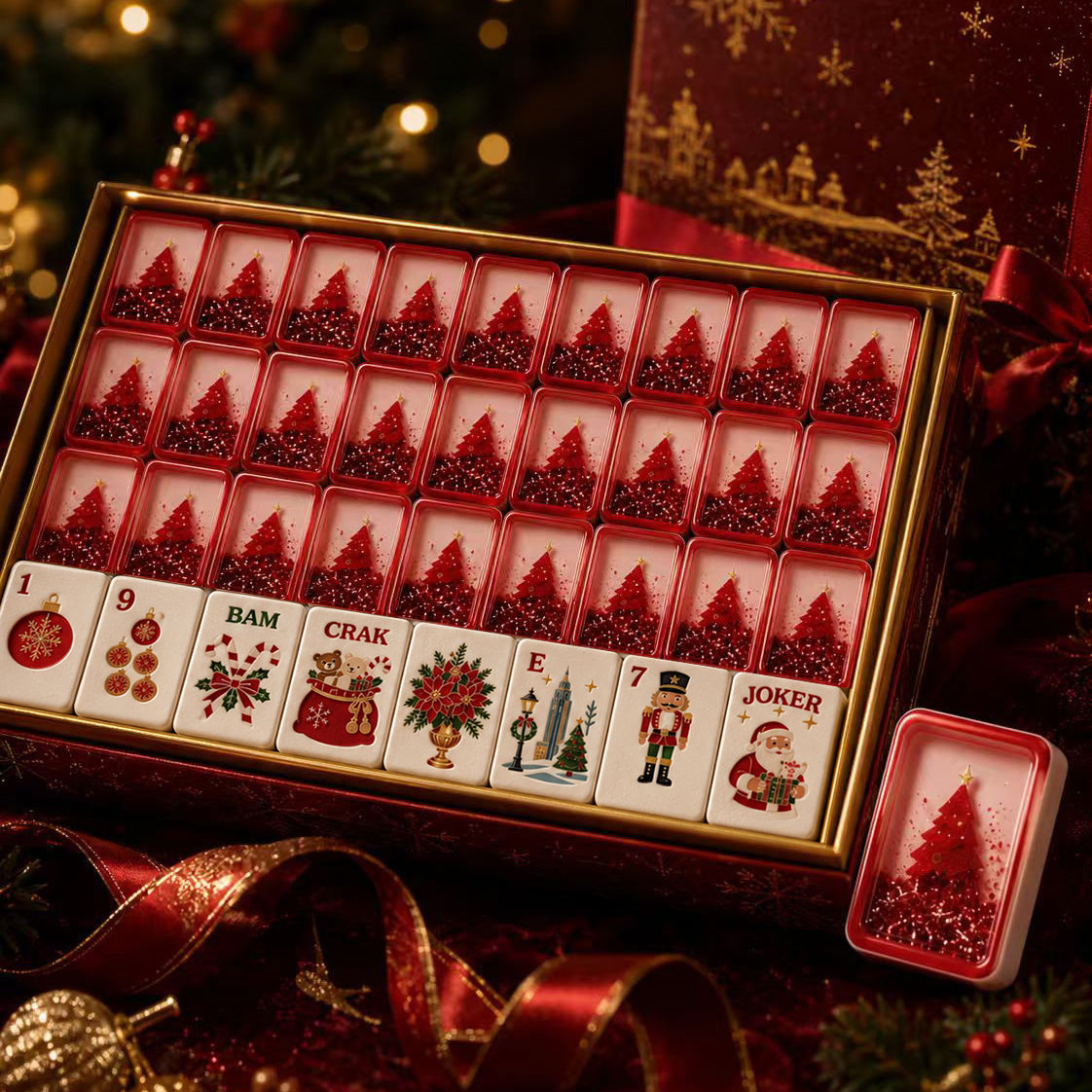
A travel-ready mahjong card holder keeps your current-year League card visible, legible, and protected across hotel rooms, car trips, and weekend cabin games. Options range from simple clip stands (mid-range pricing) that fit in a shirt pocket, to integrated card slots in mahjong racks with pushers, to full travel bags with internal card pockets. Most standalone holders use acrylic or plastic, hold one card at an angle, and work best on flat surfaces; racks combo the card slot with tile management, saving table space; bags add transport and organization. Choose based on whether you play at one home table, rotate between venues weekly, or travel monthly. Mahstead's acrylic racks and padded cases integrate card storage so you're not buying separately.
Why does the card need a holder during travel?
The National Mah Jongg League card is flimsy cardstock—easy to crease, tear, or lose in luggage. On a travel table with four players in close quarters, the card gets sun glare, water rings, and elbows bumping it. A holder keeps it upright, readable without handling, and protected in a bag. Most travel players find they reference the card every 15–20 seconds mid-game, so quick-glance positioning beats digging it out of a purse or case. We've seen cards ruined by coffee, bent by rolling in suitcases, and left behind at the airport—holders eliminate two of those three problems.

What are the main card holder types?
Standalone clip or angle stands are small acrylic or plastic frames (often 4×6 or 5×7 inches) that hold the card at a 45° angle. They fit a shirt pocket, cost low, and travel light. Downside: they need a stable, flat surface—no good for lap play or crowded side tables.
Racks with integrated card slots combine tile holders, pushers, and a card pocket in one unit (usually 18–24 inches wide). The card slides into a horizontal or vertical slot at the rack's edge, staying visible while your tiles sit organized below. These are ideal if you already want a rack; you save money by not buying two items.
Travel bags with card pockets are padded cases sized for a full tile set, with internal dividers and a zippered or mesh slot for the card. You carry set, mats, dice, and card all together. Best for players who rotate venues or travel monthly—the card rides in the bag, protected and never left behind.
Magnetic or adhesive card holders stick to a tile rack or personal stand using magnets or removable pads. Lightweight, adjustable, and deck-friendly, but require a surface to attach to.
Which option is right for different travel scenarios?
Scenario | Best holder type | Why it works | Trade-off |
Play one weekly game at a friend's house | Standalone clip stand | Cheap, takes 30 seconds to pull out and set up | Needs a table edge or flat surface |
Rotate between 3–4 homes monthly | Rack with integrated card slot | Card always with your racks; one compact carry | Heavier to pack than a loose card |
Travel 4+ times per year, different venues | Travel bag with card pocket | Set, mat, card, dice all contained; never left behind | Higher upfront cost; overkill if you play at home mostly |
Lap play or couch games | Magnetic or suction-cup card stand | Portable, sticks to any surface including your rack | Depends on finding a clean, flat spot to attach |
Car games or casual cabins | Lightweight clip + a snack bag | Ultra-portable, card visible, casual setup | Basic protection only |

How to read the card while you travel—and keep glare out.
The card is hardest to read when light sources (sun, overhead fixtures, phone screens) wash it out or create shadows. On the road, we use two techniques: angle the card holder away from light sources (rotate the clip stand 10–15° if you can), and choose a holder with a matte or frosted finish rather than glossy acrylic—it cuts glare by 60%. Some players laminate a second copy for the car and keep the original at home; a laminated card costs almost nothing but won't fit into most card slot designs. If you use a mahjong rack with pushers, position it so the card slot faces you, not the window.
🀄 Shop best-selling mahjong sets →
What features matter most when you're buying a card holder?
Card visibility in different light. Test the holder's tilt angle before buying if possible—a 45° angle works indoors; 30° works better in cars under bright sun. Matte finishes beat shiny.
Durability for repeated packing. Acrylic and hard plastics outlast thin vinyl or fabric pockets. If you travel monthly, a case rated for tile-set weight will protect your card and set.
Fit for your specific card size. American League cards are standard 5×8 inches; some international variants differ. Measure before ordering.
Anchor or lip design. A card holder should grip or frame the card edges so it won't slip during bumpy travel. Clip-style holders should not pinch or crease the card corners—we've seen players buy poor-quality clips and damage their cards on the second trip.
Portability vs. one-time setup. Standalone holders pack small; racks are bulky but sit up once and stay put all game. Choose based on your venue frequency.
We recommend browsing the rack and case collections to see which integrated designs include card storage—buying both in one order saves you decision fatigue and ensures they work together.
Checklist: what to verify before you buy
✓ Card size: Confirm the holder fits a standard 5×8 inch League card (or your region's variant).
✓ Visibility angle: If you sit at a normal table, is 45° the best angle? Test if the listing shows dimensions.
✓ Material durability: Acrylic, hard plastic, or reinforced fabric will survive 20+ trips; thin vinyl will not.
✓ Weight vs. portability: If you travel by air, check that the holder isn't heavy enough to justify mailing your set instead.
✓ Card extraction: Can you slide the card in and out without bending its corners? Tight slots are a problem.
✓ Glare resistance: Matte finishes work better than polished.
✓ Standalone or combo: Are you buying only a card holder, or do you also need a rack or case? Combos often cost less.
🎁 See our most-loved mahjong sets & accessories →
Many players we work with buy a standalone card holder for their first travel game, then upgrade to a full travel bag or integrated rack after they've tried both. The difference is significant: a card holder buys you 18 months of use; a bag buys you five years and protects your whole set. If you're buying a new set anyway, adding the right bag or rack from the start saves money and hassle.
✨ Find your Mahstead set — free US shipping →

FAQ
Can I just fold my card and carry it in my wallet?
Folded cards crease permanently and are hard to read. Even one round of folding reduces card life by half. A holder costs less than replacing a card mid-season.
What if my card holder gets damaged mid-trip—is there a backup?
Print or photograph your card on your phone before you travel. Many players keep a digital image, though interpreting it on a small screen is slower than a physical card. A backup is insurance, not a replacement.
Do I need a different card holder for Chinese or Riichi mahjong?
Chinese and Riichi games use memory-based play, not a League card, so a card holder doesn't apply. American mahjong players only need one.
Can a card holder work with a magnetic tile rack?
Yes, if the holder has a magnetic backing or can sit on the table beside a rack. Check the rack listing to confirm compatibility before ordering.
Is it worth buying a travel bag just for the card slot?
Only if you also need to transport your tile set. If you play at one home table, a standalone holder is smarter. If you rotate venues, a bag protects your entire set and card at once, so the value is higher.


View More
View More
View More
