
Hong Kong Mahjong Fan Counting Tips & Scoring Rules
Last updated: Nov 23, 2026
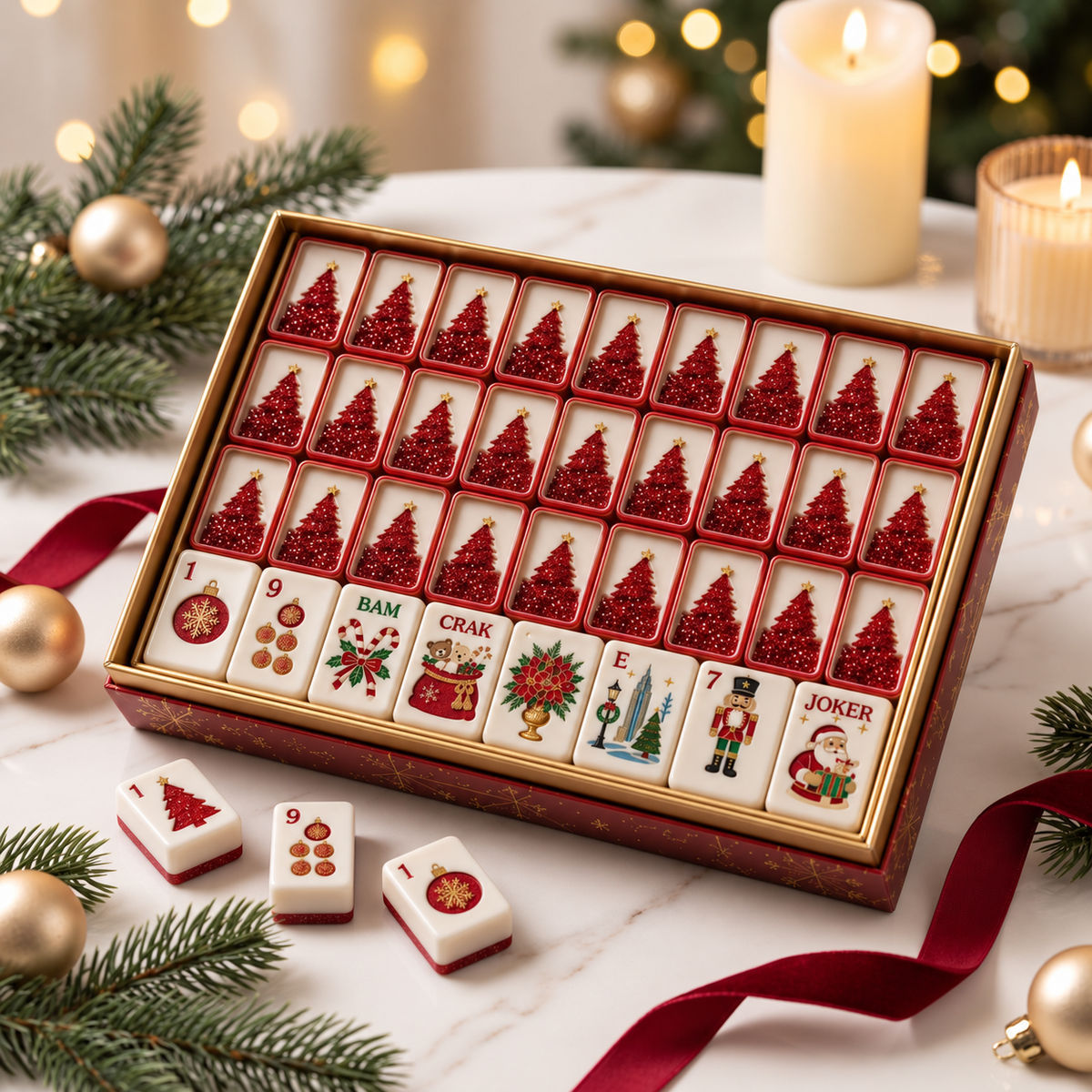
Hong Kong mahjong fan counting rewards you for pattern complexity: a "fan" is a scoring multiplier (similar to a bonus layer) that stacks to increase your hand's base value. You earn fans by completing specific tile melds—pairs of identical tiles, sets of triplets or sequences (chows), and bonus tiles (flowers, seasons). Each fan pattern you hit multiplies your base points. For example, a hand with "all simples" (2–8 only, no 1s or 9s) might earn 1 fan; adding "all one suit" earns 2 more fans; those fans multiply your score exponentially. The player who declares mahjong (a complete hand) collects points from all three opponents based on how many fans you earned. Unlike American mahjong's rigid National Mah Jongg League card, you design your own hand strategy within HK's pattern rules, making every decision about which tiles to keep and discard crucial. Knowing your fan combinations before the game starts accelerates counting and builds table confidence.
How many fans does a single hand typically hold?
Most winning hands in Hong Kong mahjong score 3 to 8 fans; rare patterns reach 13 or higher. A "limit hand" (13 fans or more) pays a fixed maximum value regardless of exact fan count, rewarding hands so rare or difficult they justify special treatment. Beginners often complete hands worth 1–2 fans, while experienced players hunt 5–7 fan combinations that balance completability and payout. The fan threshold matters: below 3 fans, payouts feel modest; above 8 fans, victory becomes decisive. Study your local table's rules—some venues cap payouts or adjust multipliers based on regional preference.

What are the most common fan-earning patterns?
The foundational patterns appear in nearly every Hong Kong game. Pung/Kong melds (three or four identical tiles) earn 1 fan for each triplet or group of four; a hand of all pungs earns bonus fans. Chows (sequences like 3–4–5 of one suit) contribute to suit-bonus combos. All one suit (all tiles from Bams, Craks, or Dots) awards 1 fan per additional suit you exclude; this is core strategy. All simples (numbers 2–8, skipping terminals 1 and 9) is worth 1 fan and speeds completion because you ignore high-risk edge tiles. Dragon pung/kong (a triplet or quartet of Red, Green, or White) adds 1 fan each. Wind tiles matched to your seat or the prevailing wind earn bonus fans. Beginners often miss terminal-heavy hands (lots of 1s and 9s), which require special patterns like "all terminals" (worth far more). Track which patterns fit your table's tile flow before committing to a slow strategy.
Which pattern combinations multiply fans most efficiently?
This decision tree accelerates hand building:
Pattern | Base Fans | Multiplier Impact | Table Speed | Why Choose It |
One suit + All simples | 2 fans | 2× base points | Fast | Few tiles excluded; easy melds |
One suit + All pungs | 2–3 fans | 3–4× base | Medium | Requires triplet commitment |
Two dragons + Winds | 2 fans | 2× base | Medium | Combo unlocks bonuses quickly |
All terminals + honors | 4–6 fans | 8–16× base | Slow | Rare completion; big payoff |
Limit hand (13+ fans) | 13+ fans | Capped payout | Varies | Speeds negotiation; no calculation |
Table example: You hold four Dots (3, 4, 5, 6) and three Bams (1, 2, 3). If you pursue "all simples" (drop the 1 Bam, focus 2–8 Bams and all Dots), you hit 1 fan fast and can complete within three turns. If you chase "all terminals" (keep the 1 Bam, hunt 1s and 9s), fans climb higher but the hand stalls—opponents discard safer middle tiles, leaving you stuck. Experienced players match pattern speed to table momentum: aggressive early, switch to multi-fan if the discard pile stays rich.
How do bonus tiles (flowers and seasons) affect fan counts?
Flowers and seasons sit outside the main tile suits but unlock hidden fan layers. Drawing a flower or season tile (eight bonus tiles total: four flowers, four seasons) immediately awards 1 fan and lets you draw a replacement tile—a strong hand boost. If you draw all four flower tiles, you earn an automatic win (some tables call this "garden complete"). Drawing all four seasons similarly triggers instant victory. A hand with flowers and matching wind or dragon patterns stacks fans: for instance, "Spring" flower + East wind + East pung = three fans applied together, multiplying your score. Conversely, holding an orphaned flower (no matching wind or dragon pung) consumes space without adding combo fans; discard it unless you're chasing an "all bonus" limit hand. Bonus tiles reward forward-thinking players who notice them early and adjust meld strategy mid-hand.

What are the most common fan-counting mistakes?
Mistake 1: Double-counting sequences within the same suit. A chow (3–4–5 Dots) does not earn 1 fan just for being a sequence; the fan comes from the all-one-suit bonus applied after you complete the full hand. Counting the chow twice inflates your score.
Mistake 2: Assuming a pung pays the same as a chow. A pung (three identical tiles) earns 1 fan per triplet; a chow earns nothing on its own. Build pungs when pursuing "all pung" hands, but don't mistake them for sequence bonuses.
Mistake 3: Forgetting wind-matching rules. Your seat wind (assigned at game start) and the prevailing wind (changes each hand) each grant 1 fan if you hold a pung of that wind tile. Many players overlook which wind is active and miss layered bonuses.
Mistake 4: Misplaying terminals. A 1 or 9 tile is "dangerous" in simple hands (all 2–8) but essential in terminal hands (all 1s and 9s). Discarding a 1 of Bams prematurely when chasing a terminal pattern costs you a 4–6 fan hand.
Mistake 5: Calling mahjong too early on low-fan hands. If you declare victory with 1–2 fans while the discard pile is still active, opponents holding higher-fan hands can discard to claim your winning tile and override your payout with their score. Wait for table control or confirm you're at a "limit" or secure score before declaring.
Mistake 6: Misreading "winning tile" conditions. In some rule sets, you must win by drawing from the wall (self-drawn), not by claiming a discard; this doubles or triples your fan count. Confirm table house rules before counting.
How do you accelerate fan recognition during live play?
Pre-game preparation is your fastest tool. Sit down 5–10 minutes before tiles are dealt and mentally rehearse the five most common patterns at your table: one suit, all simples, all pungs, dragon/wind bonuses, and terminal hands. Write them on a card (many players keep a cheat sheet for reference—not cheating, just smart). As the hand progresses, update a mental tally every time you pick or discard: "I now have 3 Bams, 4 Bams, 5 Bams (one chow), Red pung (1 fan), East wind (1 fan if prevailing). Total so far: 2 fans. Two more turns to decide: do I chase all simples (quick) or add a dragon pung (riskier but higher payout)?" This running count prevents last-second arithmetic errors and lets you weigh discard risk in real time. If a hand reaches 5+ fans before the wall runs thin, many experienced players declare immediately rather than gamble on a 7th fan and lose everything if they don't complete.
What you'll need:Best-selling mahjong sets built for durable, readable tile faces are essential—Hong Kong games move fast, and smudged or slippery tiles slow fan recognition. Mahjong racks with pushers help you organize melds clearly, letting you count fans at a glance without picking tiles up and losing table tempo.
🀄 Shop best-selling mahjong sets →
Common fan patterns: A reference checklist for new players
Print or bookmark this checklist during your first month playing Hong Kong mahjong:
[ ] One suit (1 fan): All 13 tiles from Bams, Craks, or Dots.
[ ] All simples (1 fan): Only numbers 2–8 (no 1s or 9s, no honors).
[ ] All honors (1 fan): Only winds and dragons, no number tiles.
[ ] Dragon pung/kong (1 fan each): One Red, one Green, one White.
[ ] Wind pung/kong (1 fan each): East, South, West, North (one per pung).
[ ] All pungs (1 fan): Only triplets and quarts, no chows.
[ ] Two dragons (1 fan): Two dragon pungs at once.
[ ] Mixed one suit (1 fan): One suit + honors (slightly lower payout than pure one suit).
[ ] Flower/season (1 fan per draw): Automatic bonus when drawn; bonus fans if all four collected.
[ ] Limit hand (13+ fans): Triggers capped payout; calculate quickly and declare.
Use this list before each hand to spot which patterns your tiles naturally support. Over ten games, you'll internalize recognition and stop needing the checklist.
🎁 See our most-loved mahjong sets & accessories →
Why Hong Kong fan counting differs from American mahjong
American mahjong uses a rigid National Mah Jongg League card: you must match your hand exactly to a published pattern, and scoring is fixed—either your hand is legal and pays a set amount, or it isn't. Understanding American mahjong scoring requires memorizing that year's card.
Hong Kong mahjong, by contrast, is generative: you build any hand respecting basic rules (four melds + one pair, or all honors/dragons), then count the fans you earned, which determines your payout. No card, no memorization—only pattern logic. This makes Hong Kong faster but also riskier: a miscounted fan can delay the next hand or spark disputes. American games lean on referees or the card; Hong Kong relies on table trust and pre-agreed house rules.
What to check before you buy: If you play Hong Kong mahjong weekly, mahjong mats with printed fan guides or regional scoring notes aren't standard, but a durable mat under your tiles keeps the game fast and reduces re-dealing fumbles. Ensure your tiles have clear, high-contrast numbers and suit symbols—Hong Kong play moves quicker than American, so tile legibility saves seconds per hand.
✨ Find your Mahstead set — free US shipping →

FAQ
Do chow sequences earn fans on their own in Hong Kong mahjong?
No. A chow (e.g., 3–4–5 Bams) is a valid meld but earns no fan by itself. Fans come from pattern combos: "all one suit" (chows in Bams only) earns 1 fan, or "all simples" (chows using 2–8) earns 1 fan. The chow supports the combo but doesn't pay independently.
What happens if I declare mahjong but miscounted my fans?
Table rules vary. Some venues allow a recount; others treat the miscounted hand as void and pass the turn. Best practice: count loudly and pause 3 seconds before declaring. If unsure, ask another player to verify or announce "I'm counting" and recount aloud. Integrity keeps the game flowing.
Can I claim a discard tile to complete my mahjong, or must I draw from the wall?
Both are allowed in most Hong Kong rule sets, but payouts differ. A self-drawn win (tile from the wall) often pays 2× or 3× the claimed-discard win. Always confirm your table's house rules before the game starts.
How many fans does a hand need to break even financially?
This depends on your table's stakes, which vary by region and group. Generally, hands worth 1–2 fans are modest payouts; 3–5 fans provide comfortable wins; 6+ fans are strong. Ask your table what a typical 4-fan hand pays before sitting down so you know your target.
If I hold all four flower tiles, do I still count other fans, or does it auto-complete?
Most rule sets award instant victory ("garden complete") with no additional counting. You win immediately and collect a fixed bonus payment. Confirm your table's bonus-tile rules in the first game.
Should I memorize Hong Kong fan patterns like I memorize the American mahjong card?
Yes, but differently. Memorize the ten most common patterns at your table (they shift by region). Carry a cheat sheet your first month. The beauty of Hong Kong mahjong is flexibility—you don't need the card—but pattern fluency speeds play by weeks, not years. By month two, you'll recognize patterns instantly.


View More
View More
View More
