
Mahjong Bag Reviews: What Matters When You Choose
Last updated: Nov 23, 2026
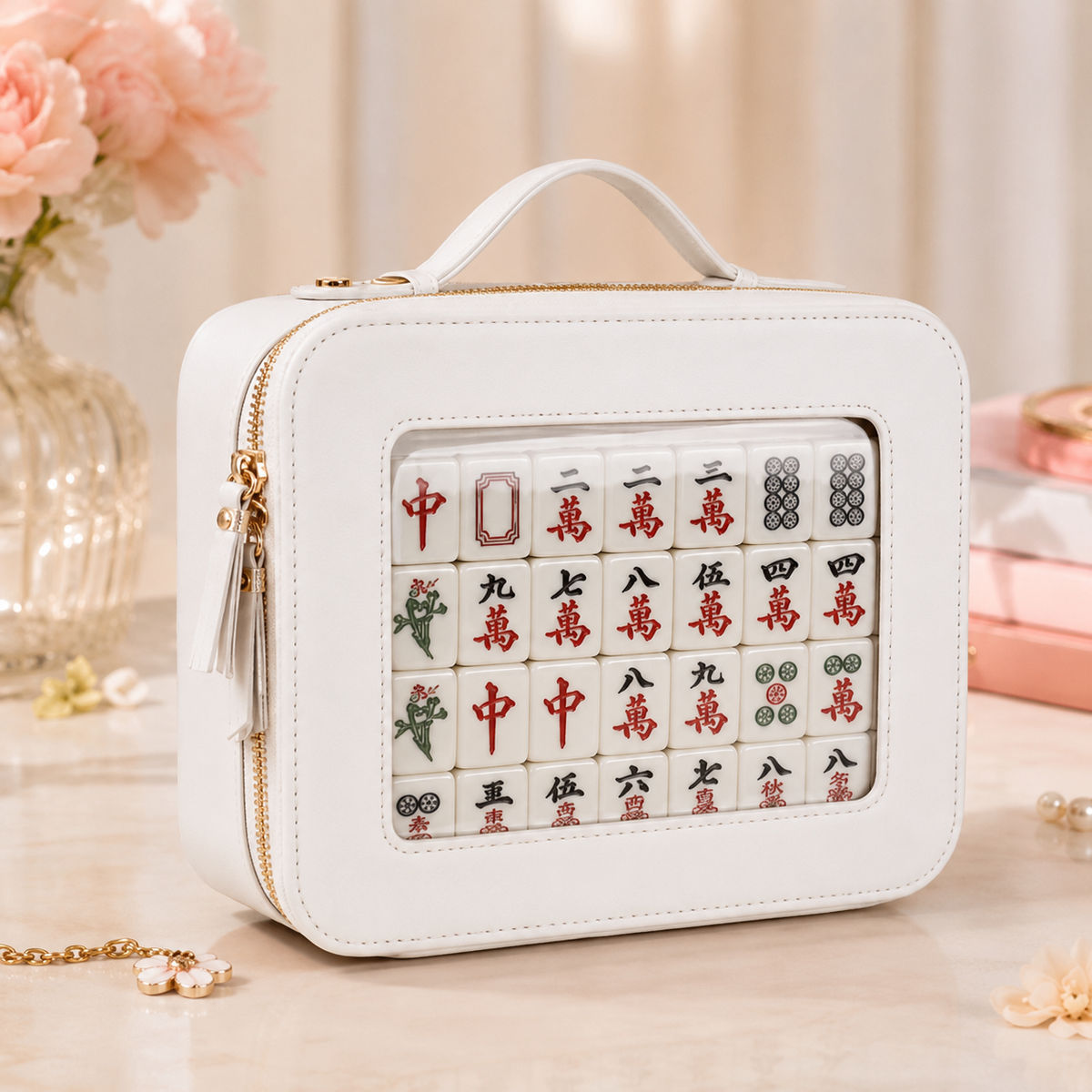
Mahjong bags fall into three categories: soft padded carriers for weekly games, hard-sided cases for frequent travel, and mat-integrated bags that hold a complete set with its playing surface. A 160-tile acrylic American set needs roughly 8–10 inches of depth, and the bag must protect tiles from humidity, dust, and crushing during transport. We recommend checking interior padding thickness (at least ¼ inch), whether it accommodates tiles plus racks and pushers, and if the closure (zipper or Velcro) seals reliably after months of use. Our travel bag collection includes carriers designed by players who knew exactly what breaks during a road game—handles that don't tear, compartments that don't shift tiles, and materials that withstand Texas heat and humidity.
When we pack a mahjong set for weekly games, we're not just tossing tiles into a shoebox. A good bag protects acrylic from scratches, keeps wooden racks and pushers from warping, and makes the set easy to carry—or it doesn't. After years of driving sets to living rooms across the region, we've learned which bags earn permanent shelf space and which ones fail after three outings.
What Size Bag Do You Actually Need?
A standard American 160-tile set measures roughly 11 × 8 × 4 inches in its original box, but that box isn't made for repeated travel. Your bag needs to hold the tiles themselves, plus racks with pushers, a mat if you carry one, and ideally a dice tower. Interior dimensions should be at least 12 × 9 × 5 inches to avoid forcing tiles together—forced packing cracks acrylic tiles over time. If you also carry a mahjong mat, you'll want a bag that unfolds flat or rolls to accommodate the mat's full width (typically 28–32 inches), or a separate slim case just for the mat. Measure your set and mat before ordering; most product pages show internal dimensions clearly.
Hard Case vs. Soft Carrier: Who Needs What?
Bag Type | Who It's For | Protection Level | Portability | Durability Check |
Hard-sided case | Tournament players, frequent flyers | Crush-proof; waterproof when sealed | Heavier; airport-checked luggage quality | Hinges, latches, corner bumpers |
Padded soft carrier | Weekly home games | Dust, minor drops; not waterproof | Lightweight; fits car seats, closets | Padding thickness (¼ in. or more), zipper teeth |
Roll-up mat bag | Mat players; car travel | Mat and tiles protected; compact | Very light; ties down easily | Seams, drawstring strength |
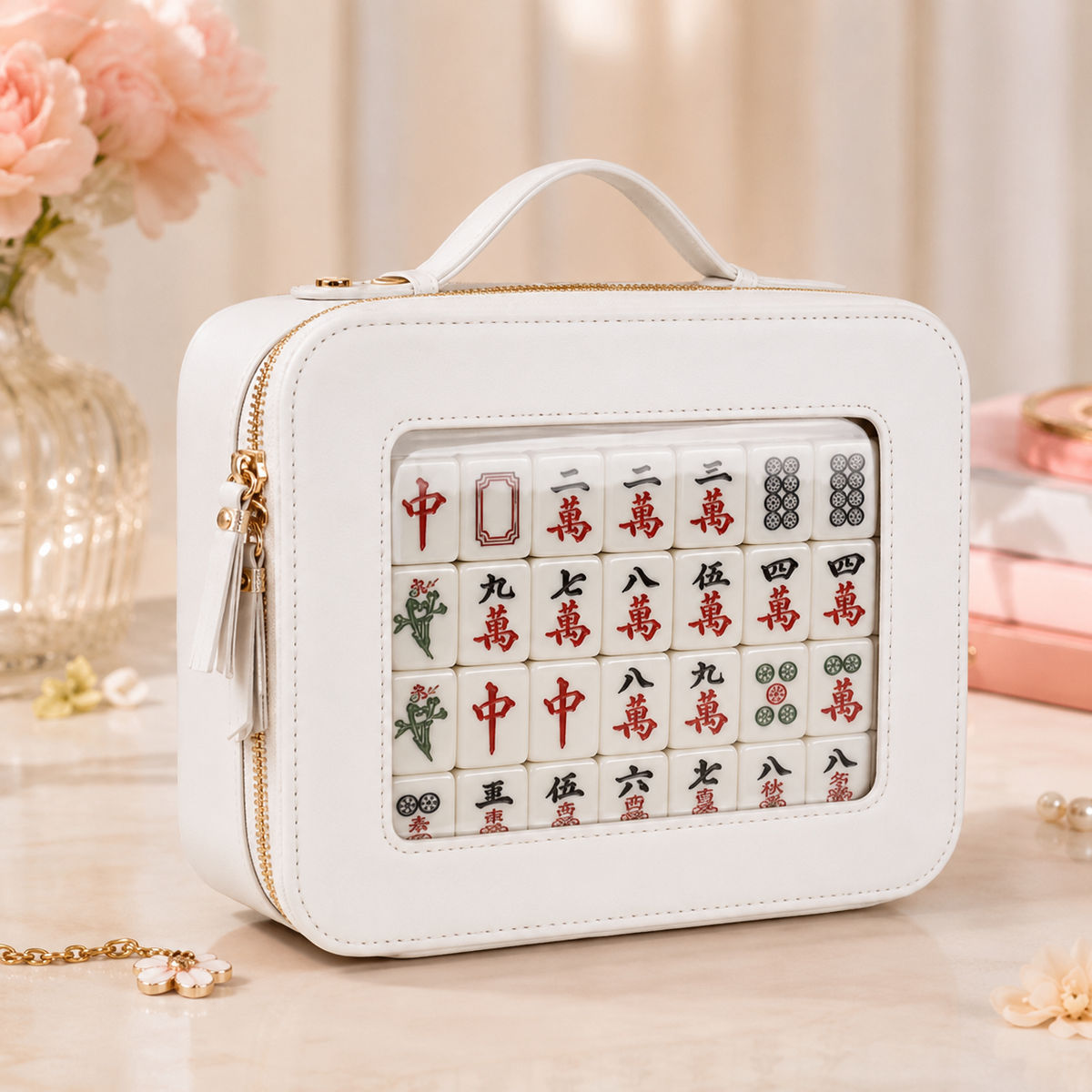
Hard cases are overkill for most home players but indispensable if you travel via car weekly or fly with your set. Soft carriers work perfectly for players who drive ten minutes to a friend's house; they're easier to store and weigh half as much. Mat bags are best for players who own a mat—they integrate the mat, tiles, and racks into one pull-along piece. Check the product photos: if the zipper looks flimsy or has only a few teeth contact the seller before buying.
What Material Holds Up Over a Full Season?
Acrylic tiles don't scratch easily, but they do collect micro-scratches if they slide against each other during bumpy car rides. A padded interior—neoprene, EVA foam, or quilted cotton—costs more upfront but saves your tile gloss over years of play. The padding should be at least ¼ inch thick and glued, not just stuffed; poor gluing causes padding to shift and bunch after a few months. Zippers fail faster than people realize: look for sliders with metal teeth and reinforced stitching around the zipper pocket. Handles should be sewn on—not glued—with thread that matches the bag material; after six months of weekly games, we've seen handles tear away from cheap bags because the thread shredded where handle meets seam.
We've tested both treated canvas and nylon exterior materials. Canvas breathes better in humid climates and looks nicer on a table, but nylon is faster to wipe clean if someone spills a drink. Neither is waterproof without a coating; if you play outdoors or near water, choose a bag with PVC or polyester backing. One original angle: check whether the bag's internal compartments are fixed or flexible. Fixed dividers limit you to a single set size; flexible compartments (or just open pockets with Velcro) let you pack racks, dice, and extra jokers without fussing.
🀄 Shop best-selling mahjong sets →

How to Avoid Humidity Damage While Traveling
Acrylic and wood swell in humid conditions, and condensation inside a sealed bag is the silent killer of mahjong sets. If you live in a high-humidity climate or play in an air-conditioned room and then move your bag to a hot car, moisture can bead inside the bag and warp wooden racks. Always let your bag sit open for 15 minutes after a game before closing it. If your carrier has ventilation holes or mesh panels, use them; if not, consider adding a small silica gel packet (available in hardware stores) to absorb moisture. Check the bag's interior after each game: if you see condensation on the tiles, wipe it away with a soft cloth and leave the bag unzipped overnight. Hard cases with sealed latches trap moisture more than soft carriers with breathable padding; if you use a hard case, do not close it immediately after play.
We also recommend storing your set in a cool, dry place year-round—not in a car trunk in August or a damp garage. Before the next game, open the bag and let air circulate for ten minutes. This simple habit has saved more sets than any single feature.
Bag Extras That Actually Matter (and Which Don't)
Pockets for scoresheets, dice, and tokens sound useful but often eat into interior space. We prefer bags with a single outer pocket for the scorecard and a deep inner compartment for tiles; shallow pockets with dividers waste room. Handles are crucial: look for padded handles at least 1.5 inches wide and stitched to both the front and back of the bag, not just one side. A shoulder strap helps if you're carrying your bag more than a few minutes; make sure it's adjustable and doesn't dig into your shoulder. Wheels and pulleys are overkill for a mahjong set unless you're traveling to tournaments in another city; for local games, they add weight and cost without real benefit.
One detail we didn't expect to matter: the smell. New nylon and foam often off-gas a chemical smell that lingers in tiles and racks. If your new bag smells strong when you open it, air it out in sunlight for 2–3 hours before packing your set. The smell fades, but it's unpleasant at first.
🎁 See our most-loved mahjong sets & accessories →
What to Check Before You Order
Before clicking "buy," answer these five questions:
Set size: Does the bag fit a standard 160-tile acrylic set plus racks and pushers? Ask the seller for internal dimensions in inches.
Your climate: Do you play in humid conditions? If yes, avoid sealed hard cases and prioritize breathable padding.
Frequency of travel: Is this a weekly drive, a monthly trip, or once-a-year tournament play? Weekly = durable soft carrier; monthly+ = hard case; yearly = basic bag is fine.
Mat integration: Do you own a mahjong mat? If yes, check whether the bag unfolds flat enough to hold both set and mat without rolling or crushing the mat edges.
Zipper and handle visibility: Can you see the zipper teeth in product photos? Are handles stitched on multiple points? If the photos don't show these details clearly, email the seller before purchasing.
We also recommend checking the return or exchange policy. A bag that doesn't fit your set is useless, and you should be able to send it back if the interior dimensions don't match the product description.
✨ Find your Mahstead set — free US shipping →
One honest note: buying a mahjong bag is not thrilling, but buying the wrong one is expensive and frustrating. Take five minutes to measure your set and read the product specs carefully. The best bag is the one you never think about—it carries your set safely, handles don't tear, and the zipper still works after a season of weekly games. That's all we ask for.
FAQ
Can I use a regular makeup bag or toiletry case for my mahjong set?
Only if it's at least 12 × 9 × 5 inches inside and has padding. Most makeup bags are too shallow and unpadded; tiles can crack if they shift during transport or get pressed against hard edges.
Do I need a separate bag for my mat, or can one bag hold both the set and the mat?
One large roll-up mat bag can hold both if the mat is rolled and the bag unfolds flat; otherwise, most players use separate bags—a mat bag for the mat, a carrier for tiles and racks—to avoid crushing either item.
What's the difference between a "mahjong bag" and just buying a padded camera bag or lunch box?
Mahjong-specific bags have internal compartments sized for tile racks and pushers, plus they're designed to protect acrylic from dust and humidity over repeated use. A camera bag or lunch box can work if it has padding and the right interior dimensions, but you're guessing; a mahjong bag is engineered for the job.
How often should I clean the inside of my mahjong bag?
After every 2–3 games or once a month, wipe the interior with a dry soft cloth to remove dust and debris. If you see mold or a musty smell, spray the interior lightly with a cloth dampened in white vinegar, let it dry completely, and leave the bag unzipped overnight.
Can I store my set in a mahjong bag long-term, or should I use the original box?
A well-padded mahjong bag is fine for 3–6 months of storage in a cool, dry place; the original box is better for long-term storage (a year or more) because it breathes more. Either way, keep the bag or box in a closet, not a damp basement or hot attic.
What should I do if my bag's zipper breaks mid-season?
Most bags allow the zipper slider to be replaced without replacing the entire zipper track; contact the seller for a replacement slider (usually available and inexpensive). If the track itself is torn, the bag is usually not worth repairing—replace it with a new one rather than tape or sewing, which won't hold up to repeated opening and closing.
Do I need a bag for dice, pushers, and racks separately, or can they all fit in one mahjong bag?
One good mahjong bag should hold your entire set—tiles, racks, pushers, and dice—in a single compartment or with internal pockets. Separate small bags are unnecessary unless you're traveling with multiple sets or organizing your game room.


View More
View More
View More
