
Girls Night Mahjong Party Cocktails: Setup & Hosting Guide
Last updated: Nov 23, 2026
A girls' night mahjong party combines the four-player tile game with drinks and laughter. You'll need a full American mahjong set (152 tiles plus 8 jokers, standard across all games), snacks, and a mat to protect your table. Plan 2–3 hours for a full evening; each round lasts 15–45 minutes depending on how quickly hands form and payouts clear. The beauty of mahjong is that it flows naturally with cocktails—players build their hands, chat between draws, and celebrate wins. Start with the Charleston (a pre-game tile-passing ritual that randomizes the hand), then play from the current year's National Mah Jongg League card. Avoid common rookie mistakes: never mix rule variants mid-session, and always agree on payouts before the first tile is drawn. Mahstead's best-selling sets are designed with clarity and durability—clear acrylic tiles read faster under party lighting, and engraved designs spark conversation between hands. 🀄 Shop best-selling mahjong sets →
Why Mahjong Beats Cards for a Girls' Night In
Mahjong draws four players into a shared puzzle where skill, luck, and bluffing matter equally—no one sits idle and everyone has stake in every hand. Unlike card games, mahjong tiles stay visible on-table in racks, so new players can follow the action and jump in mid-evening. The rhythm creates natural conversation breaks: while you wait for your turn, you can sip, joke, and strategize. A card game often ends with a winner and three people quietly accepting loss; mahjong ends with four players debating how close they were and whether to play "just one more." For groups mixing experience levels, the American variant is ideal because all hands come from a single published card—no house rules arguments—and the rule set is forgiving enough that beginners catch on by hand three.

What Cocktails Pair Best With Play?
Choose drinks that sit safely in glasses with ice and don't require two hands. Avoid heavy spirits early—a single cocktail over two hours keeps everyone sharp and laughing. Classics like gin & tonic, margaritas, or wine by the glass work well because players can set them down mid-hand without worry. Mocktails are just as welcome; the night is about the game, not the alcohol. Pro tip: assign one player to be the "refreshment timer"—ask someone to suggest a drink refill every four hands. This breaks up the focus, gives eyes a rest, and keeps energy up. Pre-batch a signature cocktail in a pitcher so the host isn't mixing drinks all evening; label it boldly (e.g., "Mah-Tai" or "Bamboo Breeze") and let guests help themselves between rounds. Keep water and snacks equally visible—pretzels, nuts, and cheese don't leave sticky fingers on tiles or racks.
🎁 See our most-loved mahjong sets & accessories →
How to Set Up Your Table for Comfort and Chaos
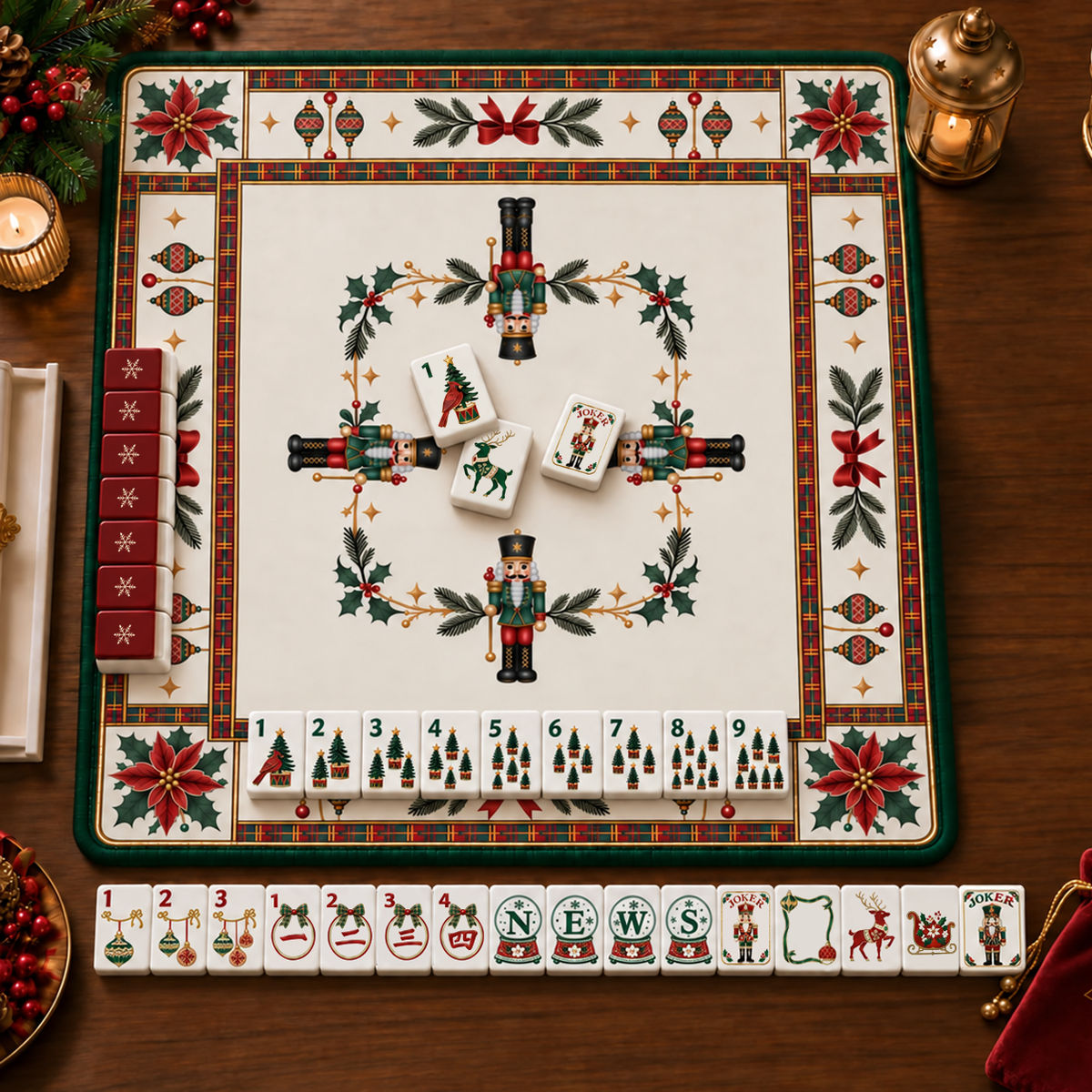
A standard mahjong table is round and seats four players evenly, but most of us play on dining tables or card tables—perfectly fine. Measure your table: you need at least 36 inches of clear, flat surface; a rectangular table works best because racks line the outer edges. Place a mahjong mat in the center to protect the table, mark compass directions (North, East, South, West), and delineate the discard zone so tiles don't scatter. This matters more than you'd think—a cluttered center invites mistakes and slows the game by 10 minutes per hand.
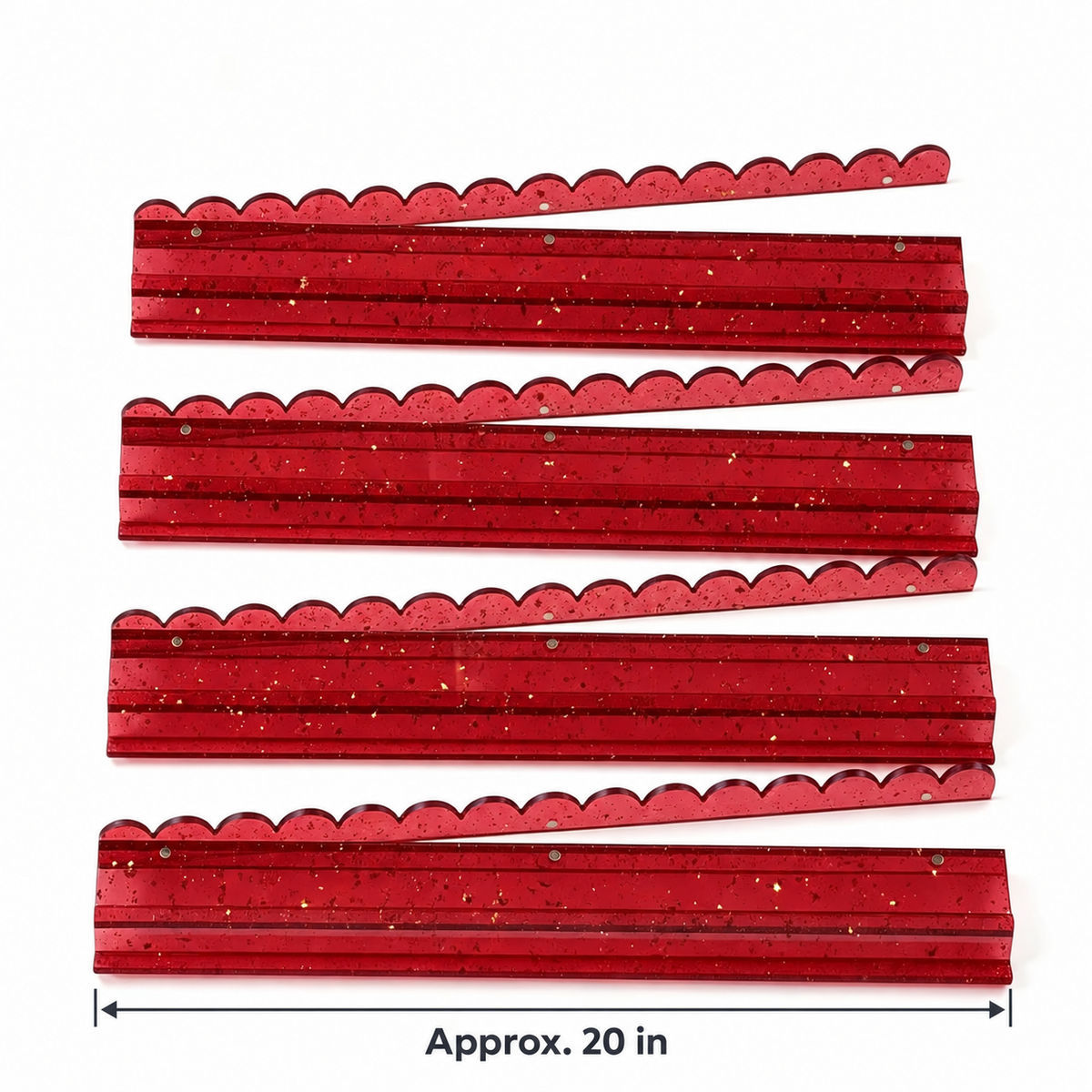
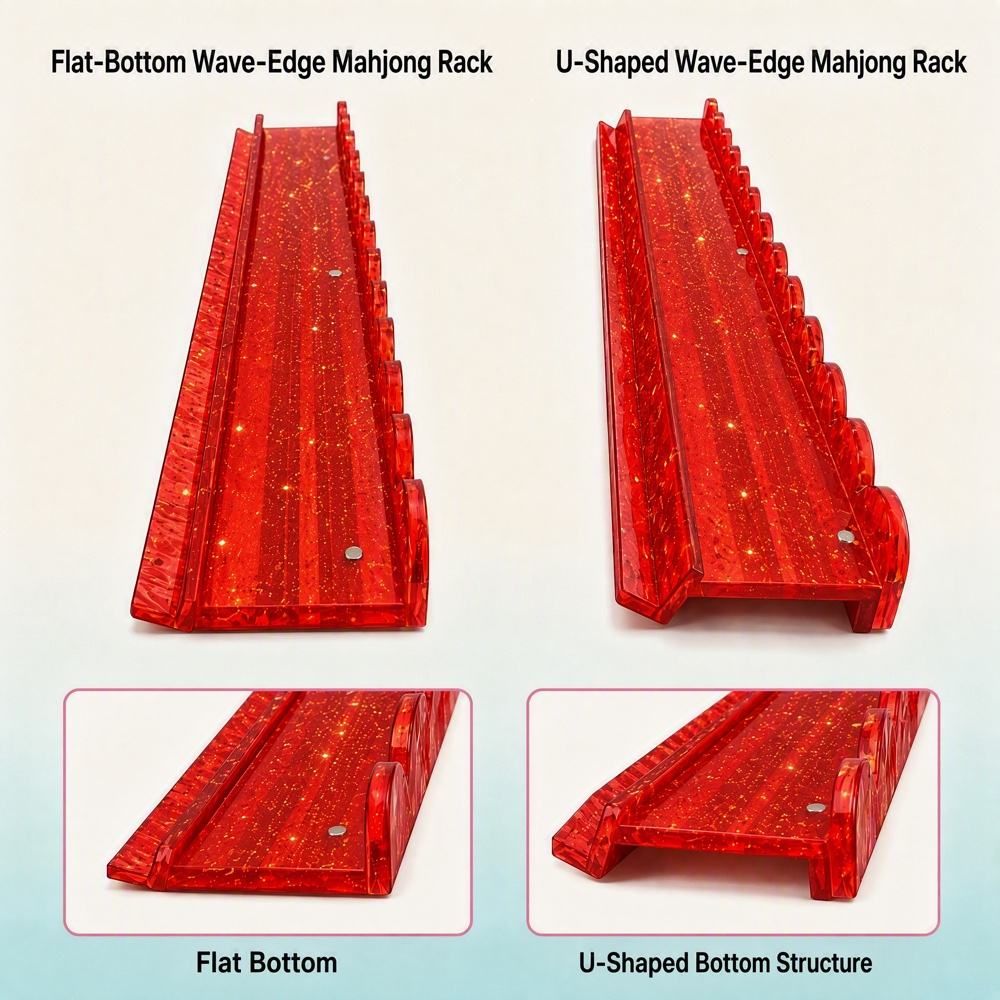
Each player sits at a corner and uses a rack with pushers to hold and organize their 13 tiles privately (the fourth player's 14th tile draws at hand-start). Racks are not optional for a girls' night: they keep tiles upright and hidden until you're ready to reveal your hand, prevent accidental exposure, and let you concentrate on strategy instead of juggling. Position a soft bag or small box at the mat center for the wall (the draw pile you'll build from). Set the National Mah Jongg League card (the one published for the current year, 2026) where all four players can see it without leaning. This card lists every legal hand that counts—print a copy or keep the original nearby so disputes resolve instantly. Cocktails go to the side, well clear of the tile area; one spill over the wall or across a player's rack derails the evening.
Lighting matters: ensure even overhead light or place a small lamp over the mat. Acrylic tiles (like Mahstead's engraved sets) are easier to read in low light than bamboo or bone—they have slight translucence and printed suit marks that catch light. If anyone at your table wears glasses or has lower vision, test readability before guests arrive; you can always move to a brighter spot.
Hosting a First-Timer-Friendly Game
New players often fear they'll slow things down, but mahjong is easier to teach than bridge and more forgiving than poker. Here's a realistic timeline:
Before anyone arrives (10 min): Set the table with mat, racks, the current year's League card, and the full set (152 tiles + 8 jokers). Check that all tiles are present and undamaged. Have snacks and cocktail gear ready. Don't explain rules yet—wait for everyone to be seated and ready.
Seating and card walk-through (15 min): Have one experienced player sit North (the "Leader"). Explain that the four suits (Bams, Craks, Dots, and honors like Winds and Dragons) build patterns on the card. Show a single example hand from the card: "Three 5 Bams, two 7 Dots, a set of Red Dragons—that's a pung (three matching tiles)." Don't overwhelm; just give the vocabulary. Mention that Jokers can substitute for missing tiles in patterns, but never stand alone.
The Charleston (5 min): This is the pre-game tile-swap ritual. Each player receives 13 tiles from the wall. Then, in turn, each player passes three tiles to the right, three across, and three to the left. It's random, it's short, and it becomes muscle memory after one round. Play it twice if energy is high; once is enough if people want to get into the game.
First hand (20–30 min): One player (traditionally the Leader) takes the 14th tile and starts discarding. Everyone draws from the wall in turn. If someone has a pattern that matches the card, they call "Mah!" and score. If no one can form a hand, the Leader moves, the wall reshuffles, and the next round begins. Expect the first hand to feel slow—people will second-guess tile combinations and flip the card three times. That's fine. By the third hand, play speeds up noticeably.
Between hands (2–3 min): Settle any payouts (often a quarter or dollar per winning hand, per player who didn't win), restack the wall, and let people refresh drinks. Use this moment to celebrate good calls or mock a bad discard—the banter is half the night.
✨ Find your Mahstead set — free US shipping →
Gear That Keeps the Night Running Smooth
A mahjong night lives or dies by details. Here's what separates "awkward first attempt" from "can't wait to play again":
Gear | Why it matters | Without it |
Racks with pushers | Tiles stay hidden and organized; prevents accidental shows | Players balance tiles in hands—slower, mistakes happen, anxiety creeps in |
Mahjong mat | Marks discard zone; protects table; marks seat positions | Tiles scatter; arguments over whose discard is whose; tables get stained |
Current year card | One source of truth for legal hands | House rules arguments; game stops for lookups; frustration builds |
Full 160-tile set (152 + spares) | All eight jokers present; no missing tiles mid-game | Game halts because a joker is lost; reshuffling wastes time |
Pushers (included with racks) | Push tiles forward to show your "pung" or "kong" | Fumbling with tile placement; people accidentally mix up exposed sets |
Avoid mixing old and new tiles, or sets from different manufacturers—size and weight inconsistencies make the game feel off. Mahstead sets come as cohesive units; you're not guessing whether pieces match.
What to Check Before You Buy
Before hosting your first girls' night, confirm that your set includes:
152 tiles for play (three Bams, Craks, Dots × 9 each, × 4 copies; 16 Winds; 12 Dragons; 8 Flowers; 8 Jokers)
A carrying bag or case (so you can transport the set to friends' houses for future rounds)
Racks or a mat (optional but transformative; racks alone will cost less than a bundled set)
Inspect tiles for cracks or discoloration before your first game; a single broken tile ruins a hand. If you buy from Mahstead, each set ships inspected, and acrylic tiles are far more durable than painted bone or bamboo.
Consider the aesthetics: do you want a set that matches your home style, or one that doubles as a statement piece for gifts? Engraved Mahstead sets come with custom designs or witty titles—"Sip & Shuffle," "Ladies Who Mah," or personalized engravings—that turn a tool into a centerpiece.
FAQ
Can I play mahjong with fewer than four players?
Yes. American mahjong has official 2 and 3-player variants with modified hand sizes and rules. Look up 2 and 3 player mahjong rules before you start; standard four-player rules don't scale directly. Most girls' nights stick to four for simplicity.
Do I need a license to use the National Mah Jongg League card?
No. The card is published every spring for public use. You may download, print, or buy copies online. Ownership of the card is not tied to membership in any club or league.
What if someone doesn't know mahjong at all?
One player teaching is better than a group chat. Ask an experienced friend to lead the Charleston and first hand; they'll narrate as you go. Most first-timers play competitively by hand four.
How much should we bet per hand?
That's up to you. Many casual groups don't bet at all—just track wins on paper. Others play for quarters or dollars per hand. Agree before the first tile drops. Keep stakes low on girls' night so the focus stays on fun, not money.
Can I use a phone app instead of the physical card?
Yes. The League card is available as a PDF and in various apps. Physical cards are easier to reference mid-game without stopping play, but apps work if everyone's comfortable with their phone at the table. --- 🀄 Shop best-selling mahjong sets → | 🎁 See our most-loved mahjong sets & accessories → | ✨ Find your Mahstead set — free US shipping →


View More
View More
View More
