
Hong Kong Mahjong Big Hand Strategy: Win by Patience
Last updated: Nov 23, 2026
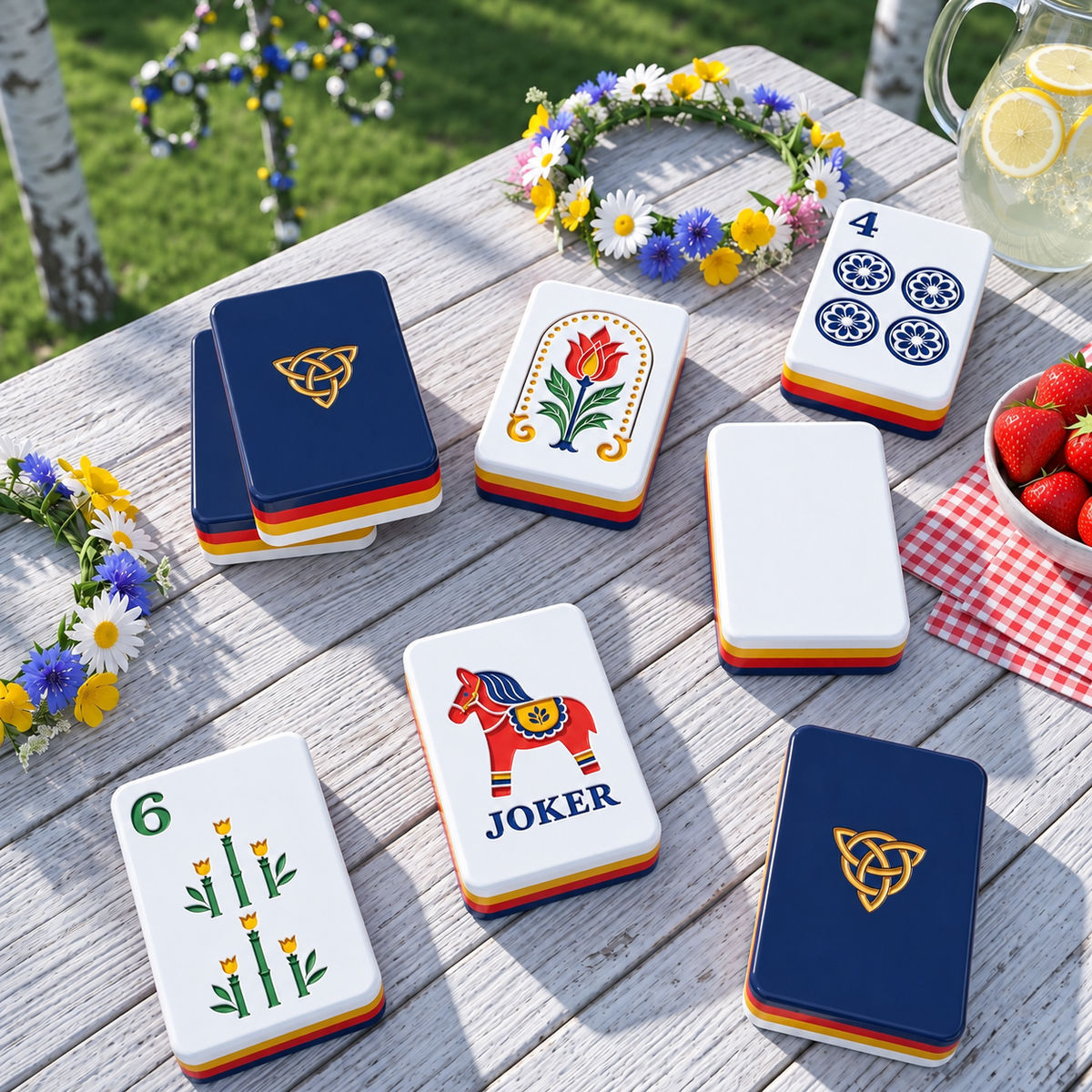
Hong Kong mahjong big hand strategy hinges on recognizing high-value tile combinations early—typically hands worth 2–8 fan (doubles)—and committing to them only when you hold a strong waiting shape. Unlike American mahjong, which uses a seasonal card to define legal hands, Hong Kong players rely on memorized patterns and quick pattern recognition. The core tactic is calculating your tile efficiency (how many tiles win, called "outs") against the hand's point value: a hand worth 6 fan is worth pursuing only if at least 8–10 different tiles can complete it; hands worth 2–3 fan demand more outs to be safe. You must also track discards to estimate opponent wait states and decide whether to push for your big hand or pivot to a faster, simpler win. Mahstead's best-selling sets work equally well for learning Hong Kong tiles under competitive timing—acrylic sets survive the rapid shuffling and tile-draw rhythms the game demands.
Hong Kong mahjong rewards players who recognize high-value tile combinations early—typically hands worth 2–8 fan (doubles)—and commit to them only when you hold a strong waiting shape. Unlike American mahjong, which uses a seasonal card to define legal hands, Hong Kong players rely on memorized patterns and quick pattern recognition. The core tactic is calculating your tile efficiency (how many tiles can win, called "outs") against the hand's point value: a hand worth 6 fan is worth pursuing only if at least 8–10 different tiles can complete it; hands worth 2–3 fan demand more outs to be safe. You must also track discards to estimate opponent wait states and decide whether to push for your big hand or pivot to a faster, simpler win.
What counts as a "big hand" in Hong Kong mahjong?
A big hand in Hong Kong mahjong typically earns 2 fan or more—roughly double the base win value. Common big hands include all pungs (刻子), all terminals or honors, quints with specific suit combos, or sequences featuring dragons and winds. The National standard Hand Lists used in competitive play define which patterns rank as big hands by their difficulty and scoring multiplier. Players memorize these patterns to spot them mid-game. In American mahjong, by contrast, every legal hand comes from the year's official card, removing the memorization burden but also the bluffing element. Hong Kong's unwritten lexicon means experience—and watching opponents' tile choices—teaches you what's possible. A hand worth 5 fan is dramatically harder to hit than one worth 2, so beginners often misjudge which hands are worth chasing.

How do you count outs and decide whether to pursue a big hand?
"Outs" are the number of distinct tile types that complete your waiting hand. If you're one tile away and 12 different tiles win (four copies each of three types), you have high efficiency; if only 4 tiles win, you're dead waiting. Calculate outs by listing which tiles complete each meld pattern you're building. For example, if you hold two 3 Bams and need a third to form a pung, all four remaining 3 Bams are outs. If you hold 4 Dots and 5 Dots and want to add a 3, a 6, or complete a pair elsewhere, count each winning tile type. A 6-fan hand is only worth pursuing if you maintain 8+ outs; below that threshold, the time cost (drawing dead tile after dead tile) outweighs the points. Track the discards: if two 3 Bams have been thrown, you have only two outs left in that meld. Discard patterns from opponents tell you whether they're waiting—heavy discard of one suit means they're not building there. Adjust your assessment constantly.
When should you abandon a big hand and pivot to a simple win?
Pivot when your outs drop below your hand's break-even point or when an opponent throws a tile that suddenly gives you a fast, safe win in a lower-value hand. Calculate your "pivot threshold" before the hand starts: if you're aiming for 4 fan, you need at least 6 outs by turn 6–7 (roughly mid-game); if you have only 3 outs by that point, fold mentally and play for 2 fan instead. When a discard gives you a new waiting option—especially one with many outs—switch immediately. For instance, if you were chasing a 5-fan hand with few outs and an opponent discards a tile that creates a 2-fan wait with 10 outs, take the safe hand. Emotional attachment ("I've been building this hand for five turns!") is the biggest mistake. Hong Kong mahjong punishes rigidity; flexibility wins. Watch players who hold risky hands too long and lose when the outs vanish—then watch players who pivot early and score steady 2-fan wins. Over a session, consistency beats one big score.
How do discards and draw patterns reveal opponents' waiting states?
Opponents signal their hand strength through discard timing and suit abandonment. A player who discards all Honors by turn 5 is not building Honors melds and won't steal from your Honor pung. A player who hesitates (slow discard) often has multiple winning tiles nearby. A player who discards one suit completely signals they've abandoned that suit—useful if you're counting outs there. The first discard from each player reveals what they're NOT playing: if East throws a 7 Bam immediately, they're not building 7 Bams. By turn 6, most players have locked their strategy; heavy discards in one suit means they're building the other two. When you see a pattern (e.g., South discarding all low Craks, all winds), mentally update: "South is building high Craks and Dots." This lets you estimate whether your big hand conflicts with theirs and whether they're close to waiting. If South is clearly waiting and you have many outs, push; if you're both chasing the same hand, one of you will lose. Read the discard wall like a book—it's the game's only public information.
What's the decision framework: chase big hands vs. play safe?
Use this table to decide your strategy mid-hand:
Your Hand Value | Outs Remaining | Opponent Discard Tempo | Your Action |
6+ fan | 10+ | Slow (safe) | Pursue aggressively |
6+ fan | 6–9 | Slow (safe) | Pursue cautiously |
6+ fan | <6 | Fast (risky) | Pivot or fold |
3–5 fan | 8+ | Any | Build steadily |
3–5 fan | 5–7 | Slow | Continue, prepare pivot |
3–5 fan | <5 | Fast | Pivot to 2 fan |
2 fan | Any | Any | Play unless waiting already |
Action guide: Opponent discard tempo = how long they pause before throwing (slow = thinking, lower threat; fast = committed to their hand, higher threat). Once one opponent appears to be waiting (fast discards, fewer suit options), lower your own hand value expectations. If two opponents are waiting, you almost certainly cannot tie or win unless you're already waiting—play defensive or go all-in on your hand.

How does Hong Kong strategy differ from American mahjong?
American mahjong provides the year's official hand card, removing guesswork and memorization—every legal hand is printed. Hong Kong mahjong demands players memorize hand patterns, fan values, and win conditions, putting a premium on experience and mental recall. American players call and expose melds (pungs, kongs) openly, signaling their progress; Hong Kong players often conceal melds until winning, creating information asymmetry and bluffing. American mahjong's seasonal card changes yearly, keeping the game fresh; Hong Kong patterns are timeless but regionally variable. American games end when one player wins (no continuation); Hong Kong often plays rounds (东风, 南风, 西风, 北风 = each player as dealer in turn). American scoring is mechanical (points on card); Hong Kong scoring multiplies by fan, creating higher variance. For learners comparing the two, our guide to how American mahjong works clarifies American rules. Hong Kong's speed and information hiding demand sharper attention and quicker arithmetic—fewer tiles are public, so you track more mentally. If you want to play both, invest in sets that suit rapid play: acrylic tiles don't chip during quick shuffles, and smooth surfaces let tiles glide quickly during draws.
🀄 Shop best-selling mahjong sets →
How do you practice big hand recognition and decision-making?
Play with a printed Hand List or app during casual games and stop after each hand to discuss: What was the hand value? How many outs did you have by turn 6? Should you have pivoted? Record your own decisions and outcomes over 10 sessions—you'll spot patterns in your over-pursuing or under-committing. Practice "outs counting" offline: deal yourself a random hand and count winning tiles for three different waiting patterns in 30 seconds. Time yourself weekly; faster outs counting = better mid-game decisions. Watch replays or videos of competitive Hong Kong games (many streamers broadcast on streaming platforms) and pause to predict whether each player should pivot. Play at consistent tables where you see the same opponents repeatedly; you'll learn their habits (risk tolerance, favorite patterns, discard timing) and adjust strategy accordingly. Record a hand you lost and a hand you won, then write down: (1) outs by turn, (2) opponent discards, (3) your pivots, (4) outcome. Over time, patterns will emerge—you'll notice "I pivot too late" or "I miss outs in this pattern." This self-auditing is the fastest skill-building tool and costs nothing.
What equipment and materials help you play Hong Kong mahjong well?
Hong Kong mahjong demands durable, fast-moving tiles because the pace is quicker than American mahjong and tiles are shuffled face-down on the mat frequently. Acrylic sets hold up best—they don't chip, warp, or stick to mats under rapid play, and they're easy to clean between sessions. Ensure your set has clear suit and number markings so you can read tiles quickly in dim light or at a crowded table. Our best-selling mahjong sets feature engraved tiles that remain legible after years of play. A padded mat with a lip keeps tiles from sliding off during quick draws, and a sturdy tile rack (optional but helpful for counting outs privately) lets you organize melds mentally. Bags designed for rapid packing/unpacking—not deep, hard-sided cases—suit players who move sets between home games and clubs. Browse our mahjong mats and racks to find gear that matches your pace.
✨ Find your Mahstead set — free US shipping →
What mistakes do beginners make when chasing big hands?
Mistake 1: Committing to a hand too early without confirming outs. You see a 6-fan pattern and build it from turn 3, only to discover by turn 7 that most winning tiles are gone. Count outs first; commit second. Mistake 2: Ignoring opponent waiting states. You pursue a big hand while South is clearly waiting and closes out discards. You eventually lose when South wins. Watch opponent behavior before locking your strategy. Mistake 3: Staying married to a hand. You've chased a 5-fan hand for eight turns; an opponent discards a tile that gives you a 2-fan win with 9 outs. You ignore it and keep chasing the 5-fan dream—and lose when outs dry up. Pivot ruthlessly. Mistake 4: Miscounting outs under pressure. You estimate 8 outs but actually have 5 because you forgot two tiles were already discarded. Slow down, count twice, discard once. Mistake 5: Playing the same hand every time you see a pattern. You always build "pung-pung-pung" hands because you find them easy to track, missing faster wins. Flexibility is strength. The strongest Hong Kong players pivot their strategy every hand based on the tiles they see.
What to check before you buy a mahjong set for Hong Kong play
Tile clarity: Engravings should be sharp and visible in low light; avoid thin paint or faded markers.
Tile surface: Smooth acrylic lets tiles glide during draws; rough or pitted surfaces slow play and frustrate players.
Weight: Heavier tiles (acrylic or resin) feel premium and resist sliding on mats; lighter tiles can feel cheap and move unexpectedly.
Set completeness: Confirm the set includes all 144 tiles (36 per suit × 3 suits, 16 winds, 12 dragons, 8 flowers) for Hong Kong play; American 160-tile sets add jokers you won't use.
Mat grip: A non-slip mat with a lip prevents tiles from sliding during rapid shuffles.
Storage: A bag (not a rigid case) suits players who transport sets to weekly games; cases are better for permanent home setups.
🎁 See our most-loved mahjong sets & accessories →

FAQ
How many tiles must win for a hand to be worth chasing in Hong Kong mahjong?
Hands worth 5+ fan need at least 8–10 outs to justify pursuit; hands worth 2–3 fan need 6+. Below your threshold, pivot or play defensive. Count outs by listing each distinct tile type that completes any meld pattern you're building.
What's the difference between Hong Kong and American mahjong strategy?
American mahjong uses a seasonal card to define hands, so strategy focuses on maximizing points from known patterns. Hong Kong demands memorized hand patterns and fan values, plus fast outs counting and bluffing—more mental load, faster pace, higher variance in scoring.
When should I pivot from a big hand to a simple win?
Pivot immediately when your outs drop below your hand's break-even threshold (usually by turn 6–7) or when an opponent discards a tile creating a new, safer win with more outs. Emotional attachment costs you points; flexibility wins over sessions.
How do I use opponent discards to predict what hands they're building?
Watch which suits they abandon early (low priority), discard timing (slow = thinking, fast = committed), and whether they're sealing off melds (few discard options = close to waiting). By turn 6, their strategy is usually locked; use it to estimate whether your big hand conflicts with theirs.
What equipment do I need to play Hong Kong mahjong well?
Durable acrylic or resin tiles with clear engravings, a non-slip mat with a lip, and a tile rack for private outs counting. A transport bag (not a rigid case) is helpful if you move sets between venues weekly. Fast-play surfaces matter more than in casual American games.
Can I use an American mahjong set to play Hong Kong mahjong?
American sets include eight jokers and often extra blanks, which Hong Kong doesn't use. You can play with the core 144 tiles (removing jokers), but the set's design and point card won't align with Hong Kong hand patterns. A dedicated Hong Kong set is clearer and avoids confusion.
How do I practice big hand recognition faster?
Play with a Hand List app, pause after each hand to review outs and pivots, and time yourself counting outs offline (goal: 30 seconds for three patterns). Watch competitive game replays and pause to predict whether players should pivot. Record wins and losses, then audit your decisions weekly.
What's the fastest way to improve my Hong Kong strategy?
Play at the same table weekly so you learn opponents' habits, habits, and discard patterns; record your outs and pivots each hand; and audit losses after every session. Consistency beats one brilliant hand; steady 2–3 fan wins compound into session victories.


View More
View More
View More
