
Is Mahjong Good for College Students? Real Benefits & Setup
Last updated: Nov 23, 2026
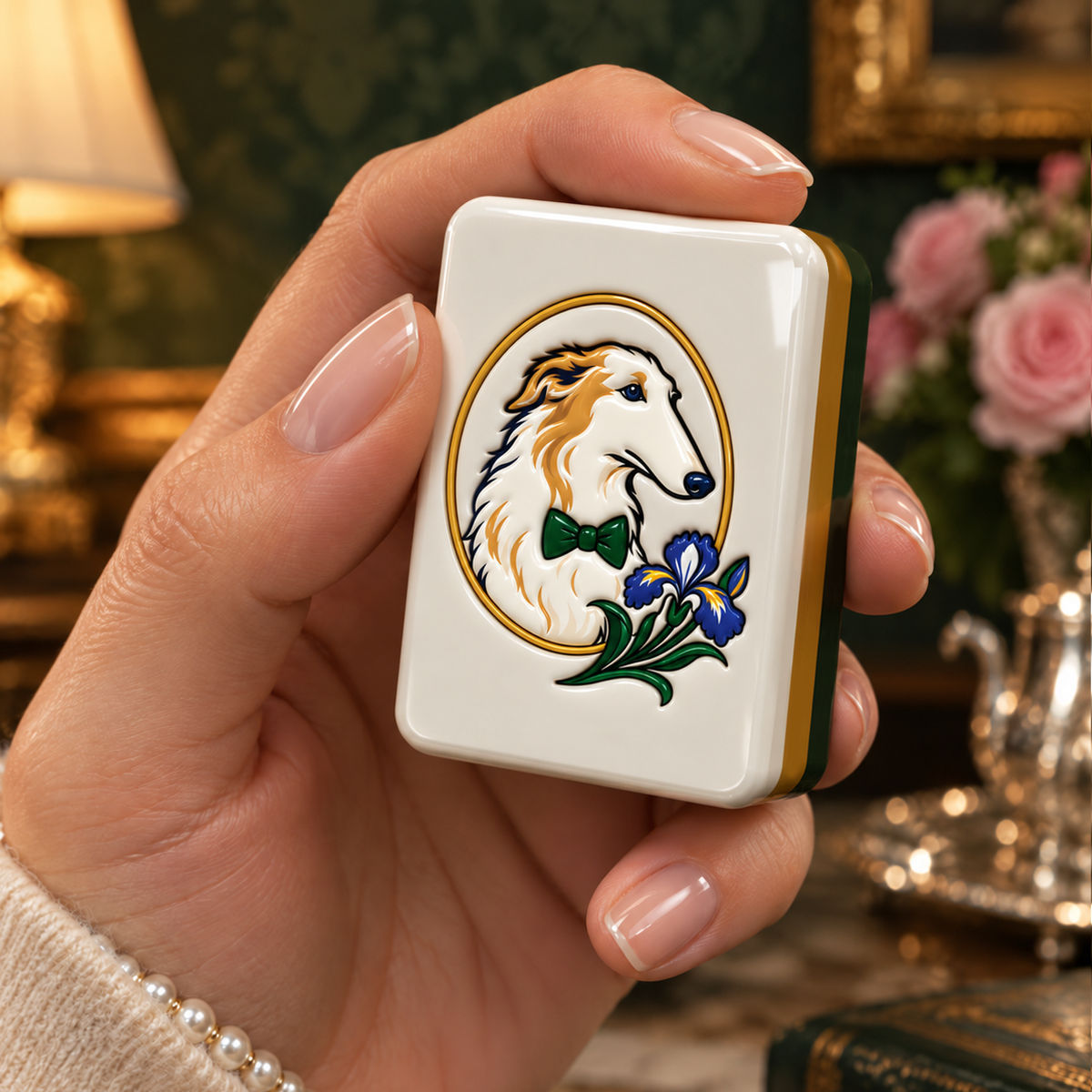
Yes, mahjong is genuinely good for college students. American mahjong develops memory, pattern recognition, and strategic thinking while creating a low-cost, screen-free social activity that fits dorm life and tight budgets. A game takes 30–45 minutes once you learn the rules (learnable in 1–2 hours), requires only a standard 152-tile set, and typically costs less per session than coffee outings. The game builds community—you need exactly four players—and offers real mental exercise: you're reading the current year's National Mah Jongg League card, tracking discards, calculating probabilities, and adapting your strategy mid-hand. Unlike chess or poker, mahjong has a built-in reset every hand and no one player dominates long-term; skill and luck balance fairly. We recommend starting with a best-selling mahjong set designed for durability and easy learning, so you can focus on the game, not scratched tiles or missing pieces.
Does mahjong actually improve your memory and focus?
Yes. American mahjong requires you to memorize which tiles exist (152 total), track what's been played, retain the current year's hand patterns from the card, and calculate odds in real time. Players report noticing sharper recall and faster decision-making after a few weeks of regular play. One study on tile-based games (East Asian populations) found measurable gains in working memory and executive function with consistent practice. For college students juggling lectures, reading, and exams, mahjong forces you to be present—you cannot scroll or half-pay attention without losing money or looking foolish. The strategic layer (choosing which tiles to keep, which to discard, when to claim an exposed tile) keeps your brain actively problem-solving for 30+ minutes straight. The benefit is real and measurable.
🀄 Shop best-selling mahjong sets →

How quickly can a college student learn to play?
Most people pick up American mahjong in 1–2 hours. The rules are straightforward: you're building combinations (pungs, kongs, pairs) to match hands printed on that year's card. The steep part is not the rules—it's learning to read the card and recognize which hand you're working toward. A strong teaching approach uses the first game as tutorial: play slowly, announce what you're doing aloud, and let beginners look at the card freely. By game two, they're independent. By week three, they're teaching friends. We've run weekly games in college dorms, apartments, and campus lounges; the fastest learners are those who've played card games or Tetris—pattern recognition transfers directly. Start with our mahjong for beginners guide to understand the core mechanics before your first session.
Is mahjong a good way to build friendships and reduce stress?
Absolutely. Mahjong creates instant micro-community. You need exactly four players, so every hand is a commitment: someone blocked their calendar for you. The game has built-in social rhythms—the Charleston (tile-passing ritual before each hand), banter about discards, collaborative confusion over the card, jokes when luck swings wildly. It's collaborative enough to feel inclusive but competitive enough to stay engaging. Stress research shows that focused, low-stakes gameplay (no money, or penny-ante at most) lowers cortisol and builds belonging. For college students isolated by major or schedule, mahjong nights become a fixture—something you know will happen, where you belong, and where the outcome doesn't follow you into next week. Unlike team sports requiring equipment and travel, you can host in a dorm common room or apartment with a mat. The time investment is also honest: 45 minutes per hand, four hands per session, then done.

What equipment do you need to start playing in a dorm or apartment?
A standard American mahjong set (152 playing tiles), a mat (optional but highly protective), racks with pushers (not required, but they organize tiles and speed play), and a copy of the current year's National Mah Jongg League card. That's it. A set fits in a drawstring bag small enough for a backpack. Total setup time: two minutes. Many new players skip racks and play tiles flat on the mat; that works fine until you're comfortable. A mahjong mat costs far less than a pizza and lasts years—it protects your tiles and your dorm table. If you're hosting regularly or playing with people new to the game, racks with pushers actually speed learning by keeping your hand organized and hidden until you're ready to reveal. We recommend starting minimal: a set, a mat, the current card. Add racks only if weekly play sticks.
Item | Why it matters | For college? | When to add |
152-tile set | You cannot play without it | Always | Before first game |
Current year card | Defines legal hands; every year changes | Absolute must | Before first game |
Mat | Protects tiles & table; shows player positions | Nice-to-have | After 2–3 sessions |
Racks with pushers | Organizes hand; hides tiles; speeds new players | Helpful, not required | If playing weekly |
Drawstring bag | Portable; no lost tiles | Yes, saves dorm space | From day one |
Are there any real downsides or mistakes to avoid?
The main mistake is buying a set without checking that it's true American mahjong (152 tiles, not 144-tile Chinese). Some sets online are mislabeled or undersized. A second mistake is not printing a copy of the current year's card—the hands change every spring, and using an old card makes the game unplayable or incoherent. Third: not explaining the Charleston (the pre-game tile-passing ritual) clearly; players get confused and lose momentum. Fourth: playing for money without clear house rules, which creates awkwardness among friends. Start with "no money, or one dollar per hand, winner takes all"; keep it light. Fifth: expecting to understand everything immediately. Mahjong has layers; you'll learn new strategy for months. That's the fun part. Lastly, don't overcomplicate hosting: you don't need fancy scoreboards, special lighting, or themed snacks. A table, tiles, and the card are enough.
🎁 See our most-loved mahjong sets & accessories →
How does college mahjong fit into your schedule compared to other hobbies?
Mahjong is time-honest. One session = four hands ≈ 2–3 hours total, including chat and setup. You're not learning an instrument (years), training for a sport (ongoing), or grinding a video game (endless). You commit to a specific block, play, and are done. For college students, that's ideal: predictable, non-negotiable, finished. Most dorm groups play weekly on the same night (Thursday after midterms, Sunday evening). It's also cheap: a good set is a one-time cost (amortized over hundreds of hands), the card is free online, and you share the mat. Compare it to board game nights (ongoing collection), intramural sports (seasonal commitment + gear), or bar trips (recurring cost). Mahjong wins on commitment-to-reward ratio. One friend learns to teach, and suddenly you have a standing activity that doesn't require apps, electricity beyond basic light, or external scheduling. It's also portable: if your group moves dorms or graduates, you bring the set with you.
✨ Find your Mahstead set — free US shipping →
What to check before you buy
Tile count: Confirm the set has exactly 152 playing tiles (American mahjong standard). Sets labeled "160-tile" include extra jokers and blanks as spares—that's fine, but don't pay extra for "more tiles"; 152 is all you use.
Tile size and weight: For dorm play, tiles should be substantial enough not to scatter when you shuffle, but small enough to manage one-handed. Standard acrylic tiles are ideal for durability and ease of cleaning.
Clarity of symbols: Ensure Bams, Craks, and Dots are distinct and large enough to read fast. New players slow down squinting at unclear characters.
Joker count: A standard set includes 8 jokers. Confirm they're clearly marked and match the tile finish (not flimsy or different colors).
Case or bag: Check if a drawstring or soft case is included. For dorm living, that's the difference between a game that travels and one that gets damaged in a backpack.
Current-year card source: Ask the seller if a card is included. If not, plan to print one free from the National Mah Jongg League or a verified distributor before your first game.

FAQ
Can I learn mahjong online or do I need in-person teaching?
In-person teaching is faster and more fun, but online videos work if you're patient. The real hurdle is learning to read the card and recognize hands visually. Watching one live game usually beats three hours of video. Find a mentor or attend a campus club game if possible; we recommend starting there rather than learning solo.
How many people in the U.S. play mahjong, and is there a college scene?
Exact numbers vary, but casual American mahjong has steady popularity in college towns, particularly on coasts and near large cities. Your college likely has a small group already—check community boards, dorm listservs, and cultural clubs. Starting your own group takes minimal effort if even three friends are curious.
Is American mahjong different from Chinese or Hong Kong mahjong? Which should I learn?
Yes, they're different games. American mahjong is simpler to start—fixed hands from a card, no sequences (chows), clearer rules. Chinese and Hong Kong variants are harder to learn but more flexible. For college, American is the right choice: easier entry, faster learning curve, and easier to teach friends on a whim. Learn one well before exploring others.
Do I need to be Asian or have cultural knowledge to play mahjong?
No. Mahjong is a logic game with historical roots in China; the tiles are symbols, not secrets. College students of all backgrounds play regularly in the U.S. You don't need to speak Chinese, know Asian history, or have family ties to the game. It's as universal as cards or chess.
What happens if someone gets really good—does the game stop being fun?
Not really. Mahjong balances skill and luck more fairly than most games. An expert player might win 40% of hands over a season, not 80%, because drawing the right tiles matters enormously. Plus, good players teach, which keeps the group sharp and fun. Beginners beat veterans regularly; that's part of why friendships stay intact.
If I graduate, can I keep playing or does the community disappear?
Mahjong communities exist beyond college. Cities have meetup groups, community centers, country clubs, synagogues, and casual home games. Your college group might scatter, but you can start new groups or join established ones wherever you land. The game travels with you.


View More
View More
View More
