
Clear Mahjong Bag: Which One Fits Your Game?
Last updated: Nov 23, 2026
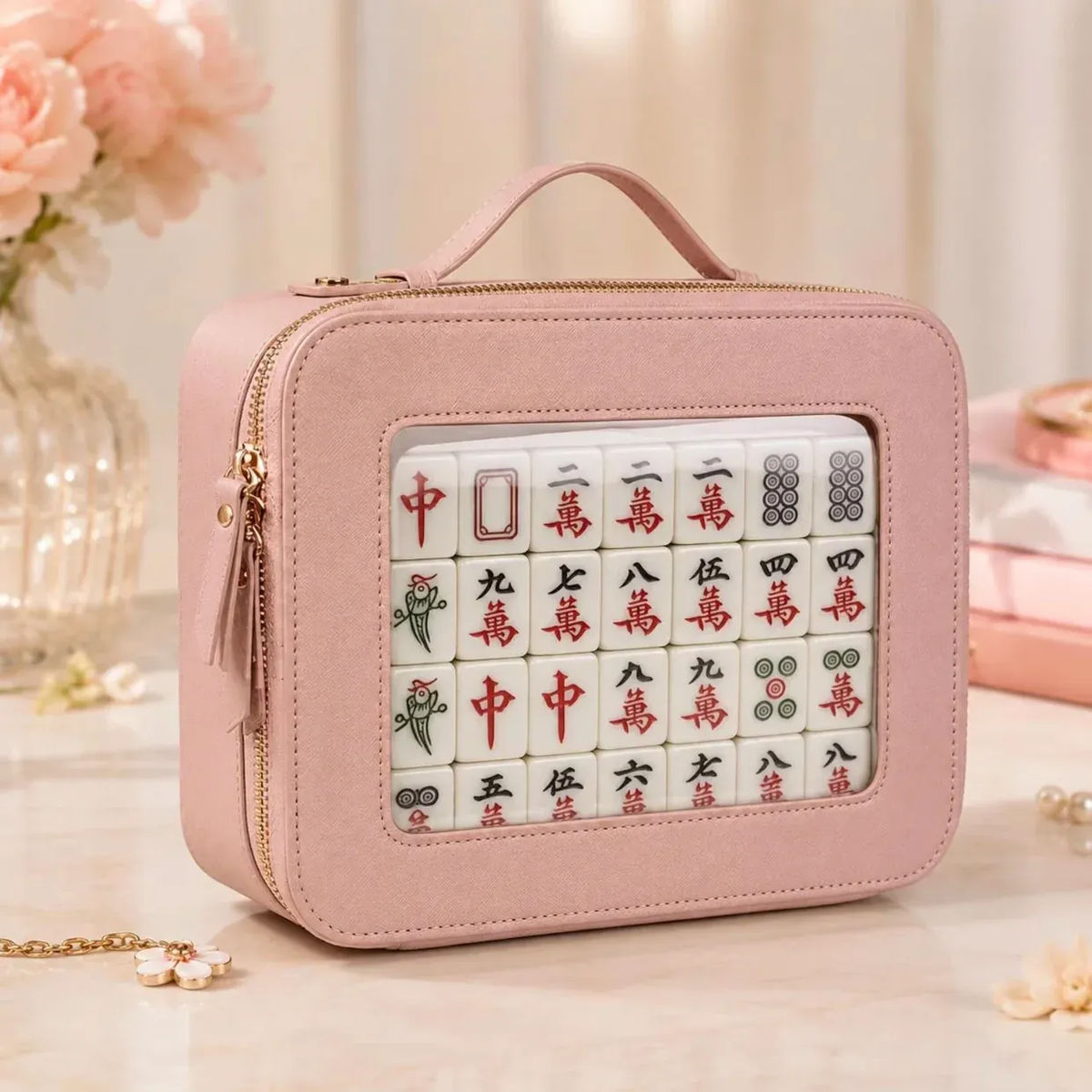
A clear mahjong bag is a transparent carrying case designed to hold a 160-tile acrylic set, mat, racks with pushers, and dice as one bundle. They're made from durable vinyl, mesh, or reinforced plastic to survive car trips, synagogue shuttles, and weekly game rotations. Most fit a full set plus a rolled mat and one pair of racks; a few accommodate two sets or multiple mats. Cost varies from budget-friendly mesh styles to padded carriers. Choose based on what you carry most weeks: if you host rotating games, you'll need room for backup racks and extra jokers; if you travel solo to one weekly game, a slim case saves trunk space. Avoid bags that don't seal or lack handles—loose tiles spill, zippers jam, and you'll regret skipping reinforced corners. Mahstead's travel bag collection includes options for every setup. 🀄 Shop best-selling mahjong sets →
Why do clear bags matter more than solid ones?
Solid bags hide what's inside, so you might pack duplicate racks or forget how many jokers you have until mid-Charleston. Clear bags let you do a visual inventory before you leave home or arrive at someone else's table. You can also verify that your tiles survived the drive without opening the case—a huge relief on humid days when zippers stick. Transparency saves setup time too: your host can see instantly whether you've brought a mat. For weekly players who carry the same set every time, this becomes routine; for occasional players or those managing multiple sets, it's essential.
What's the difference between mesh windows and full clear construction?
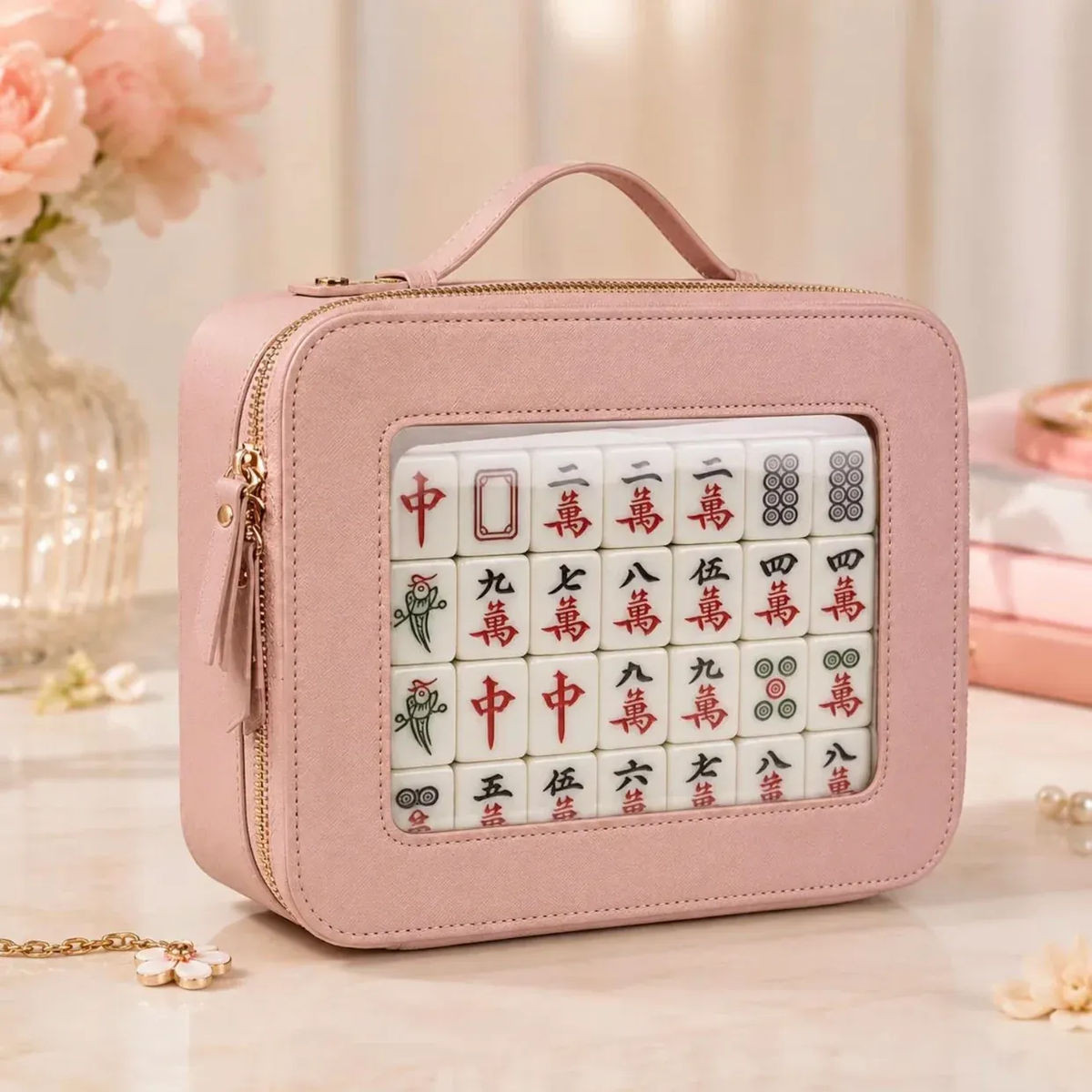
Mesh windows let air circulate around tiles but only show you what's directly visible through the opening—usually just the top layer. Full clear construction (typically heavy vinyl) shows the entire packed interior from every angle, so you catch forgotten dice or a joker that escaped the tile pouch immediately. Mesh windows cost less, weigh less, and work well if you pack the same way every time and trust your system. Full clear cases protect better in cramped car trunks (no accidental crushing of the visible section) and suit players who swap sets mid-week or travel with guests' sets. Both have sealed zippers; full clear just gives you peace of mind for a few dollars more.
How do you match bag size to what you actually carry?
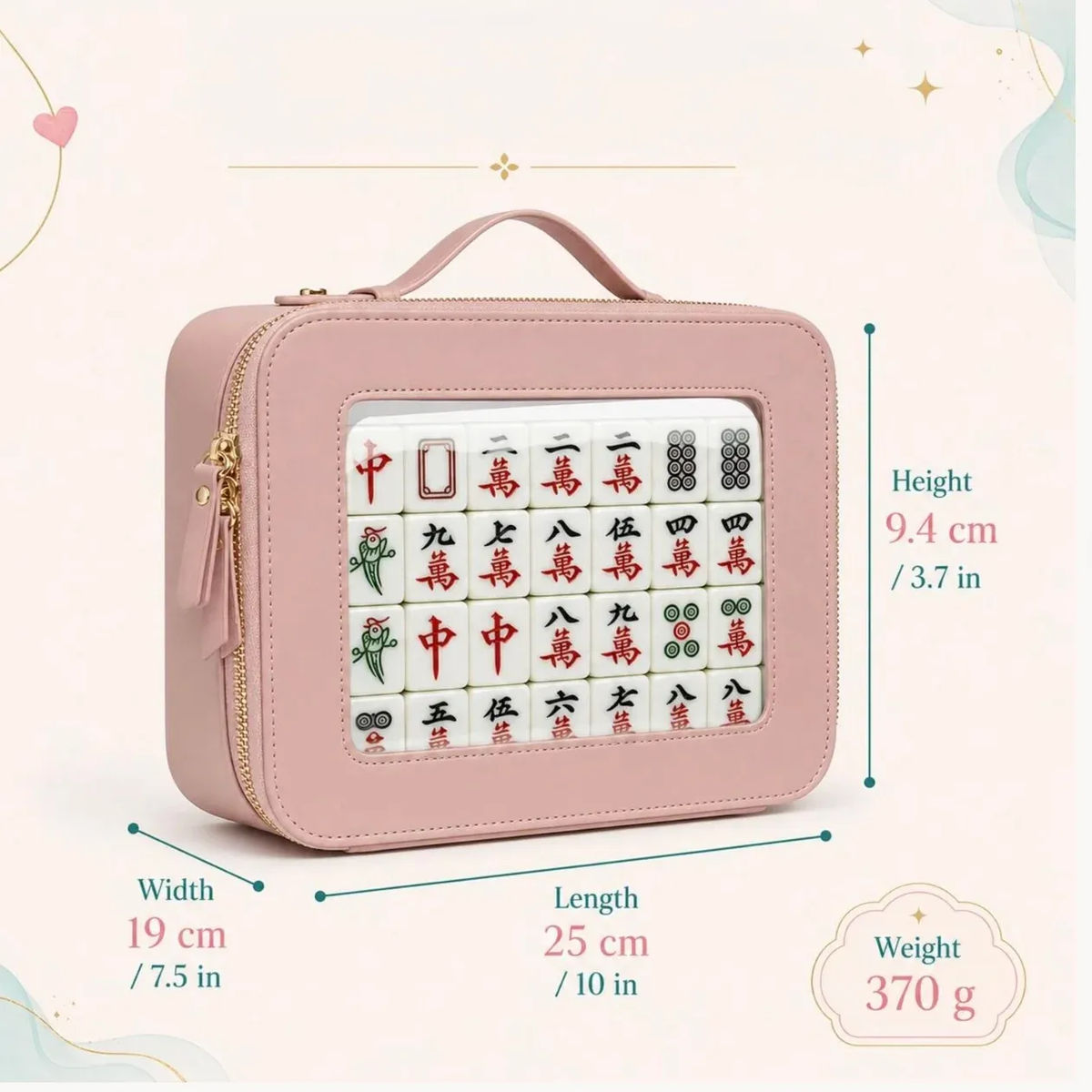
Start with your core load: one 160-tile acrylic set (roughly 7" × 5" × 4" when boxed), one rolled mat (fits alongside), and one pair of racks with pushers. This is the minimum—call it a "solo player" load. If you host games, add a second pair of racks, backup jokers, and dice in a small pouch; that's a "host load." Some weeks you might carry a best-selling set plus borrowed tiles for a guest—that's "maximum load." Measure your mat rolled (roughly 24" × 6") before you buy; some bags compress mats, which stresses the fabric. Ask yourself: Do I always carry the same mat, or do I rotate between a portable one and a felt one? Do I ever bring two sets? Do I pack my racks or trust the host has extras? These three questions narrow your choices to one or two styles.
Player Type | What They Carry | Bag Style | Why It Works |
Weekly solo player | 1 set, 1 mat, 1 pair racks | Slim clear vinyl | Fits trunk easily; no wasted space |
Host/organizer | 2 sets, 2 mats, 2 pairs racks, backup jokers | Large clear carrier | Full visibility of backup gear; sealed compartments |
Casual guest | 1 set in original box | Any clear style | Portability; no repackaging needed |
Traveling player | Set, mat, racks in compact roll | Mesh window | Lightweight; passes TSA carry-on limits |
🎁 See our most-loved mahjong sets & accessories →

What happens if your tiles shift or zippers fail mid-trip?
Tiles slide inside poorly designed bags because there's no internal structure—racks don't brace the set, loose jokers roll, and the mat unfurls into corners. Result: you arrive at game night with a tile stack leaning like the Tower of Pisa and a mat that won't lay flat for 10 minutes. Reinforced internal dividers (or a set box that stays in the bag) prevent this. Zippers fail when dust, lint, or mat fringe gets caught; inspect the seal before you buy and test it with a loaded set at home. If a bag doesn't have a smooth, wide track or slider, skip it. Some players add a small drawstring pouch for jokers and dice inside the bag—this keeps tiny pieces from rattling loose and is the single best anti-spill habit we've seen in 15 years of hosting games.
Should you buy a bag marketed as "mahjong" or just a general clear case?
Mahjong-specific bags are engineered for tile weight (they're heavier than cosmetic or craft cases) and account for mat length and mat roll thickness—wasted space is minimized. General clear cases are cheaper and wider, but they often waste room, which means tiles shift more. A lunch-sized clear case might fit a set and racks but not a mat. A travel jewelry case is too small. Mahjong-specific bags from our travel bag collection come with dividers, reinforced handles, and zippers rated for frequent use. They also ship free across the US and are designed by players, so you get features like pen-accessible pockets (for score sheets) and elastic loops for dice or a mahjong card holder. Unless you already own a case you love, a purpose-built bag pays for itself in durability.
✨ Find your Mahstead set — free US shipping →
What to check before you buy
Measure your rolled mat. Unroll a mat you own, roll it loosely, and measure length and diameter. Check the bag's interior length and width—mats should fit without compression.
Confirm the set box fits inside or beside the racks. A 160-tile acrylic set in a standard box is roughly 7" × 5" × 4"; verify the bag's base can accommodate this without you having to disassemble anything.
Test the zipper on a sample or video. Look for smooth gliding, a wide slider (not a tiny pinch-point), and a tape that doesn't snag. Avoid bags where the zipper barely closes around a packed set.
Check handle construction. Handles should be sewn (not glued) at multiple anchor points and padded for comfort on a full set's weight (roughly 8 pounds).
Read the material spec. Vinyl is more durable than thin plastic; mesh with a vinyl backing outlasts mesh alone. Ask if the bag is water-resistant (not waterproof—seams will leak in a downpour, but vinyl repels spills).
Verify the return or exchange policy. If a bag arrives and your mat doesn't fit or the zipper sticks, you want a clear path to swap it.
FAQ
Can I fit two complete sets in one clear mahjong bag?
Some large carriers will hold two 160-tile sets without mats. If you want two sets plus two mats in one bag, you'll need an oversized model or a separate mat bag. Always measure; photos can be deceiving.
Do clear bags protect tiles from cracking or fading?
Vinyl and clear plastic filter UV and provide cushioning, but they don't make acrylic unbreakable. A well-padded bag with reinforced corners will reduce damage from drops or car trunk compression far better than a flimsy one. Always transport tiles upright or flat, never on their side.
What if my mat is larger than the bag can fit when rolled?
Either store the mat separately in a flat bag or portfolio, or buy a larger mahjong bag that accommodates 30"+ rolled mats. Some players keep a portable travel mat (smaller, lighter) in the main bag and leave their felt mat at home.
Are mesh-window bags okay for long car trips or flights?
Mesh works fine for car trips; the window lets air in, which helps in humidity. For flights, ensure the bag meets carry-on dimensions; a clear vinyl bag is more durable for TSA inspection and repeated handling, but a well-made mesh case will survive.
Should I use the original set box or remove tiles to a pouch?
Keep the box inside the bag if it fits. Boxes protect tiles better than loose pouches and make the set easy to unpack at game night. If box + bag = too tight, transfer tiles to a sturdy fabric or mesh pouch with individual compartments (not one big sack—tiles shift and corners wear).
Do I need a bag if I always play at the same host's house?
Not strictly, but a clear bag makes it easy to verify you've packed everything before you arrive and lets the host see what you've brought. If you rotate between homes or occasionally bring backup sets, a bag becomes essential within a month.


View More
View More
View More
