
History of Wright-Patterson Mahjong: Origins & American Play
Last updated: Nov 23, 2026
Wright-Patterson Air Force Base near Dayton, Ohio played a quiet but significant role in mahjong's American story during the mid-20th century. Military families stationed there—many with Asian heritage or connections—maintained strong mahjong traditions in officers' clubs and family gatherings, helping preserve the game during decades when it wasn't widely visible outside ethnic communities. Unlike the Chinese and Hong Kong variants soldiers might have learned abroad, American mahjong, codified by the National Mah Jongg League in 1937, was the dialect these communities adopted. Wright-Patterson became one of several military hubs where the game persisted steadily, alongside civilian strongholds in California, Texas, and the Northeast. Today, that continuity means mahjong at Wright-Patterson and similar bases remains rooted in American League rules—the 152-tile system, the annual card, and the Charleston—keeping alive a uniquely American interpretation that bridges postwar immigration and modern recreational play. Players at Mahstead host weekly American games and see this legacy reflected in how newcomers discover the sport through family tradition rather than exotic novelty. 🀄 Shop best-selling mahjong sets →
What role did Wright-Patterson play in American mahjong's survival?
Wright-Patterson Air Force Base housed thousands of servicemembers and their families between the 1950s and 1980s. Officers' clubs and family social networks became informal mahjong centers, where women especially maintained weekly games and taught new generations. The base's diverse officer corps—many with overseas postings in Asia, Europe and the Pacific—brought mahjong knowledge home. Unlike isolated East Coast or West Coast communities, Wright-Patterson's centralised base culture meant mahjong was visible, social, and transmitted reliably to spouses and children. Military culture also ensured continuity: when families rotated to new bases, they brought the game with them, seeding mahjong in communities from Germany to Japan to stateside postings. This network effect kept American League mahjong alive in places that might otherwise have lost it.

How does Wright-Patterson mahjong differ from Chinese or Hong Kong variants?
Wright-Patterson players adopted American mahjong, the National Mah Jongg League standard, not Chinese variants. American mahjong uses 152 tiles (plus 8 jokers in play), plays hands only from the current year's League card, allows no chows (sequences), restricts exposure to pungs, kongs, and quints, and uses the Charleston ritual to exchange tiles before each game. Chinese mahjong, by contrast, uses 144 tiles, permits chows and simpler hand patterns, and allows players to pick any hand pattern on the fly. Hong Kong mahjong plays similarly but with different scoring and tile counts. Wright-Patterson's American tradition meant no mixing: players learned the League card, the joker substitution rules, and exposure discipline—creating a stable, rule-governed culture unlike the more fluid Asian variants. This standardisation helped American mahjong persist and spread as recognisable, teachable, and reproducible from week to week.
Why did military culture help mahjong survive when civilian interest waned?
Between the 1960s and 1990s, American mahjong retreated from mainstream culture as younger generations pursued new hobbies. Military bases, however, offered structural advantages for continuity. Officers' clubs held regular events, base populations were dense and stable for 2–4 years, and rotation patterns meant departing players trained replacements before leaving. The social hierarchy of military life also protected mahjong: it was an officers' tradition, a mark of cultural sophistication, and a way to bond across rank. Servicemembers' wives, especially, organised weekly games as social glue. Unlike civilian neighbourhoods where a game might die if the host moved or lost interest, base communities had formal infrastructure—clubs, activity boards, recurring events—that ensured mahjong survived generational turnover. This protected ecosystem meant Wright-Patterson and similar bases served as cultural reservoirs while civilian play declined.

What does the Wright-Patterson legacy tell us about mahjong today?
The Wright-Patterson story shows that mahjong in America was never about fashion or trend; it persisted through discipline, social structure, and family transmission. Today's revival—young players learning from grandmothers, friends discovering the game through meetup groups or online communities—echoes that postwar pattern: mahjong survives when people make space for it and teach it deliberately. The game's American League rules, standardised since 1937, also made survival possible: without a fixed card and rule set, each group might have drifted into different dialects, fragmenting the community. Instead, American mahjong remained coherent and teachable. Players who trace their games back to Wright-Patterson or military families now play alongside newcomers who find the sport through libraries, synagogues, and community centres. The legacy isn't nostalgia—it's proof that mahjong endures when it's housed in stable social structures and passed down intentionally.
How can players today honour that mahjong heritage?
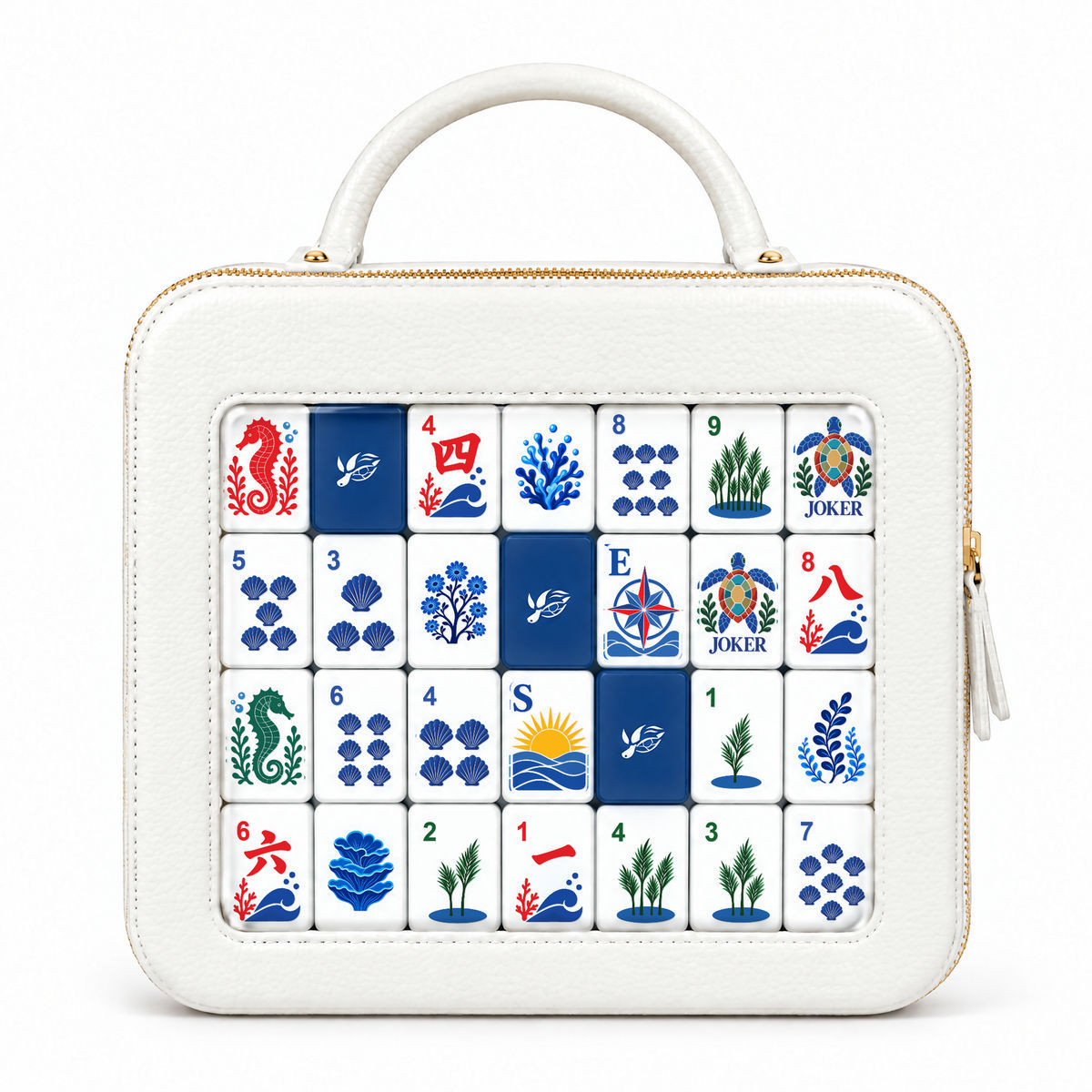
Modern players honour Wright-Patterson's quiet stewardship by treating American mahjong as a craft worth learning properly. This means studying the current National Mah Jongg League card, learning exposure rules precisely, and hosting regular weekly games where new players can apprentice. It means recognising that American mahjong rules are not arbitrary—they evolved to create stable, reproducible play across generations and geographies. It also means choosing equipment that reflects the seriousness and joy of the game. Quality acrylic American mahjong sets with clear tile faces, durable racks, and protective cases mean a game lasts decades and travels reliably, just as servicemembers' sets did. Whether you play at a base, a community centre, or a living room, using a proper set signals respect for the tradition and makes teaching newcomers easier. The most meaningful tribute to Wright-Patterson's players is simply keeping the game alive, teaching it accurately, and gathering weekly to play.
Heritage Marker | What It Means | How Players Today Honor It |
Military social clubs | Mahjong as structured, recurring play | Host weekly games with standing rosters |
The American League card | Standardised, teachable rules across communities | Learn the current year's card; study hands carefully |
Family transmission | Knowledge passed mother to daughter, officer to newcomer | Teach from the National Mah Jongg League rules; mentor beginners |
Quality tile sets | Durable equipment that survives decades | Invest in engraved American mahjong sets and cases that last |
Consistent exposure rules | No chows, no pairs as jokers, clear pung/kong discipline | Play by League rules every week; don't improvise variants |
🎁 See our most-loved mahjong sets & accessories →
What to check before you buy a set to preserve this legacy
A proper American mahjong set needs 152 playing tiles plus 8 jokers in active play. Many sets sold online claim to be American but lack precision: tiles too small to read from across the table, jokers indistinguishable from regular tiles, or racks that wobble. Wright-Patterson's players used well-made sets that stayed stable for years; today's best-selling mahjong sets should meet the same standard. Check that jokers are visibly marked and cannot be confused with numbered tiles. Verify tile sizes—acrylic tiles typically measure around 0.75 inches on a side, large enough to read numerals and suit marks without leaning in. Confirm the set includes a cloth mat or pad to prevent tiles sliding. If you're hosting regular games or mentoring beginners, a quality mahjong mat with defined walls and zones helps new players learn exposure and hand structure faster. Finally, store your set in a protective travel bag or case—the kind servicemembers' families used to move sets between bases or homes. Good equipment is an investment in the game's future.
✨ Find your Mahstead set — free US shipping →

FAQ
Did Wright-Patterson invent American mahjong?
No. The National Mah Jongg League codified American mahjong rules in 1937, decades before Wright-Patterson became a hub. The base adopted and preserved American League mahjong as its standard, alongside other military communities and civilian strongholds.
Can I play Wright-Patterson mahjong rules differently today?
American mahjong is American League mahjong—one set of rules. The current year's League card and exposure discipline remain unchanged. Playing by different rules means playing a different variant (Chinese, Hong Kong, etc.), not Wright-Patterson American mahjong.
How many tiles does a proper American mahjong set have?
A game uses exactly 152 playing tiles plus 8 jokers. Sets sold today often include 160 or more tiles to provide spares (extra jokers or blanks), but only 152 tiles go into play.
What should I tell a beginner about American mahjong's military history?
Explain that American mahjong survived the 20th century partly because military families kept it alive in base communities, where regular weekly games and stable social structures ensured the tradition didn't disappear. That heritage means the game is rule-based, teachable, and meant to last.
Where can I find people who play Wright-Patterson style (American League) mahjong today?
Search for American mahjong clubs through community centres, libraries, synagogues, and country clubs in your region. Online meetup boards and local game groups also list American mahjong sessions. Players welcome newcomers who want to learn League rules.


View More
View More
View More
