
How to Use the 1 Bam Tile in American Mahjong
Last updated: Nov 23, 2026
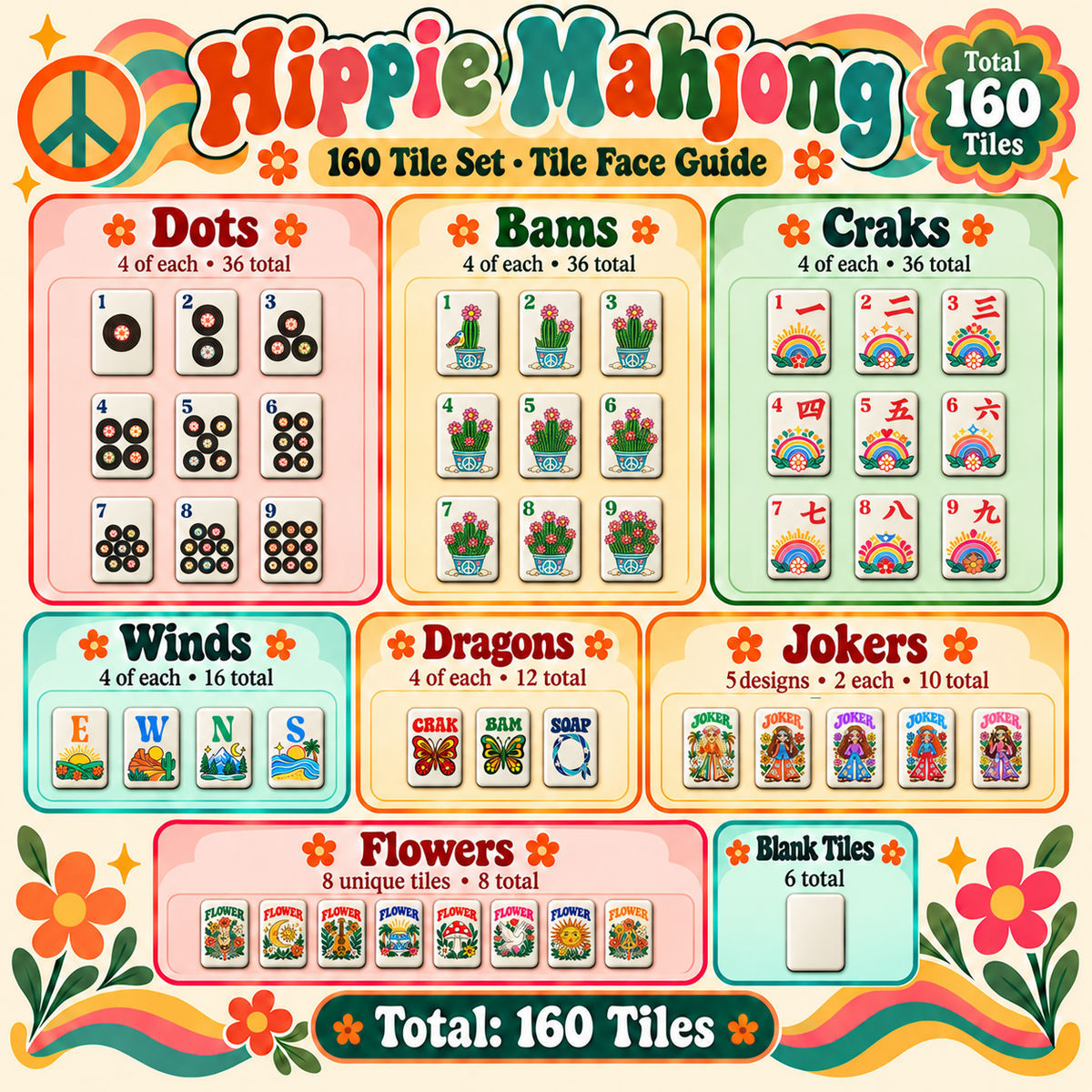
The 1 Bam is the lowest-numbered Bam tile in a 152-tile American mahjong set and features a bird image rather than one pip. On the current National Mah Jongg League card, the 1 Bam appears in hands marked as part of sequences (runs like 1–2–3 Bam), pungs (three identical 1 Bams), and quint/sextet patterns. You must hold or draw the 1 Bam as a single tile to play it; it cannot be split or used as a joker substitute in any tile or pair position. American mahjong recognizes no chow (sequence) calls—you must hold all tiles in a completed hand before declaring "mahjong." The 1 Bam's bird marking makes it easy to spot during fast play, a practical advantage when managing a best-selling acrylic set under dim overhead lights at your weekly game.
The 1 Bam tile is one of the most iconic pieces in American mahjong—instantly recognizable by its bird image and fundamental to building almost every hand type on the card. Whether you're a new player learning tile recognition or a veteran refining your strategy, understanding how the 1 Bam works will sharpen your discard decisions and help you read hands faster at the table.
Why does the 1 Bam show a bird instead of a number?
The bird marking comes from traditional Chinese mahjong symbolism. In classic sets, the 1 Bam tile depicts a flying bird to represent unity and good fortune—a nod to the game's ancient roots. American mahjong inherited this convention; all modern sets follow it. The bird design serves a practical purpose: it's the fastest visual cue during rapid play, especially when you're juggling 14 tiles and the table is moving quickly.
🀄 Shop best-selling mahjong sets →

Where does the 1 Bam appear on the card?
The 1 Bam appears in hands across all pattern types on the National Mah Jongg League card: sequences (1–2–3, 1–2–3–4–5), pungs (three or four 1 Bams), pairs, and honorific patterns mixed with winds and dragons. Each hand designation on the card shows exactly which tiles you need. You cannot play a hand unless every tile matches the card position for position. Study the card's sections before each game; the 1 Bam frequency varies by season, so your strategy shifts yearly.
What's the difference between a 1 Bam tile and a joker or blank?
A 1 Bam is a fixed, named tile with intrinsic value; a joker is a wild substitute that takes the identity of any tile you assign it. American mahjong rules forbid using a joker as a single tile or in a pair position—only in exposed pungs, kongs, quints, and sextets. A 1 Bam never substitutes; you must hold the actual tile. Blank tiles (found in 160-tile sets) are unused spares that sit out of play. The distinction matters: if you need a 1 Bam for your hand, only the bird tile counts; a joker cannot replace it.
How do you play a 1 Bam sequence versus a 1 Bam pung?
A 1 Bam sequence (1–2–3 Bam, or 1–2–3–4–5 Bam) requires exactly those numbered tiles in order; you hold all three or five tiles in hand until you declare "mahjong." You cannot call or expose a sequence during play—that's a core rule of American mahjong. A 1 Bam pung is three identical 1 Bam tiles; if you have a 1 Bam pung and the card requires it, you can expose it as a visible triplet on the table before or after you go out (depending on hand type and card rules). A pung or kong can include jokers, but a sequence never can. Plan your draws differently: sequences demand consecutive tiles held in secret; pungs reward you for collecting multiples of the same tile.
✨ Find your Mahstead set — free US shipping →

How do you avoid confusing the 1 Bam with other tiles at the table?
The bird image makes the 1 Bam unmistakable—far easier to spot than a pip-only design. However, under poor lighting or with worn tiles, the bird can blur or fade. Acrylic sets with large, engraved imagery hold detail far better than bamboo or bone. When you choose a mahjong mat, pick one with contrast-friendly colors; a light mat surface lets darker tiles stand out clearly. At your hosting setup, a single overhead light or clip-on lamp aimed at the mat eliminates shadows. Many of us keep backup sets on hand—one reliable primary set and a second for backup rounds—so tiles never degrade during a session.
Scenario | Best Practice | Why It Works |
New player learning tiles | Use acrylic set with large engraving | Bird stands out; no confusion with numerals |
Fast, competitive play | Check lighting before the game starts | Reduces misreads; speeds tile recognition |
Dim venue (bar, outdoor table) | Use a mat with light, matte surface | Reflects available light; improves contrast |
Worn, older set | Retire for casual play; use newer set for card games | Faded birds slow play and cause disputes |
Reading the 1 Bam correctly during the draw phase
When you draw tiles during play, keep the 1 Bam front-facing in your hand or rack so you can identify it without hesitation. If you use a rack with pushers, the 1 Bam slot beside a 2 or 3 Bam is obvious—the bird breaks the visual rhythm. New players sometimes misread the 1 Bam as a blank or assume all low-number tiles look alike; they don't. Spend a minute before your first game handling all numbered Bams (1–9) from your set. The bird is instant recognition after one round.
🎁 See our most-loved mahjong sets & accessories →
What to check before you buy a set with clear 1 Bam markings
Tile size: Ensure tiles are large enough to engrave detail legibly (most acrylic sets meet this; check product dimensions).
Engraving depth: Raised or deeply engraved characters hold their shape after years of play; shallow printing fades.
Surface finish: Matte or satin finishes reduce glare and make tile markings easier to read than high-gloss surfaces.
Bag and storage: Store your set in a padded bag to prevent tile chipping and marking wear during transit between games.
Lighting setup: Test your home table or venue lighting; if you host weekly, invest in a focused lamp to keep the bird visible.
Concrete example: reading a 1 Bam on the card and executing the hand
Let's say the card shows a hand in the "Quints" section calling for:
1 Bam, 2 Bam, 3 Bam, 4 Bam, 5 Bam (a five-tile sequence, or "quint")
6 Dot, 7 Dot, 8 Dot, 9 Dot (a four-tile sequence)
Various winds, dragons, and other patterns to fill the remaining slots.
You must hold all five Bam tiles (1 through 5) in hand, including the 1 Bam with the bird. You cannot draw them one at a time and expose them. You keep them private until you have the full 14-tile hand (including pair and all other required tiles) and can declare "mahjong." The bird on the 1 Bam is your first visual check—if you don't see it among your Bams, you know you're still searching for it. This speed of recognition is why the bird marking exists.
American mahjong's tile recognition speed separates casual players from confident ones. The 1 Bam's bird is your first tool. Master it, and you'll read hands faster, spot discards quicker, and play with confidence. Whether you're hosting weekly games or joining a community group, a high-quality acrylic set with clear engraving removes ambiguity and keeps the game flowing. We recommend starting with a best-selling mahjong set and pairing it with a solid mat and rack setup so every tile—especially the iconic 1 Bam—stays visible and legible for years.

FAQ
Can a joker replace a 1 Bam in an American mahjong hand?
No. Jokers cannot substitute for any single tile or pair position. If a hand requires a 1 Bam, only the actual bird tile counts. Jokers can only fill exposed pungs, kongs, quints, and sextets—never in sequences or incomplete sets.
Why does the 1 Bam have a bird and other tiles don't?
The bird is a symbol from traditional Chinese mahjong representing unity and fortune. American mahjong inherited it as both cultural homage and practical design—the bird is the fastest visual marker during fast play, especially under poor lighting.
What if my 1 Bam's bird marking is worn or faded?
If the engraving is too faint to read quickly, retire that tile or set to casual, non-card play. For weekly games or card play, use a newer set with clear engravings. A worn bird slows play and creates disputes at the table.
How many 1 Bam tiles are in a standard American mahjong set?
A standard 152-tile American set contains four copies of every numbered tile, including four 1 Bam tiles. You'll draw, discard, or hold one or more during play depending on the hand and card design.
Does the 1 Bam count as a zero or special tile?
No. The 1 Bam is the first numbered Bam tile, nothing more. The White/Soap dragon tile is the only tile that serves a secondary role (representing zero in some contexts). The 1 Bam is always one Bam.
How do I spot a 1 Bam quickly if I'm new to the game?
Look for the bird image first—it's the only Bam tile with a picture instead of pips or numerals. Handle a complete Bam suit (1–9) before your first game. After one round, bird recognition becomes automatic.


View More
View More
View More
