
History of Mahjong: From Ancient China to Your Game Night
Last updated: Nov 23, 2026
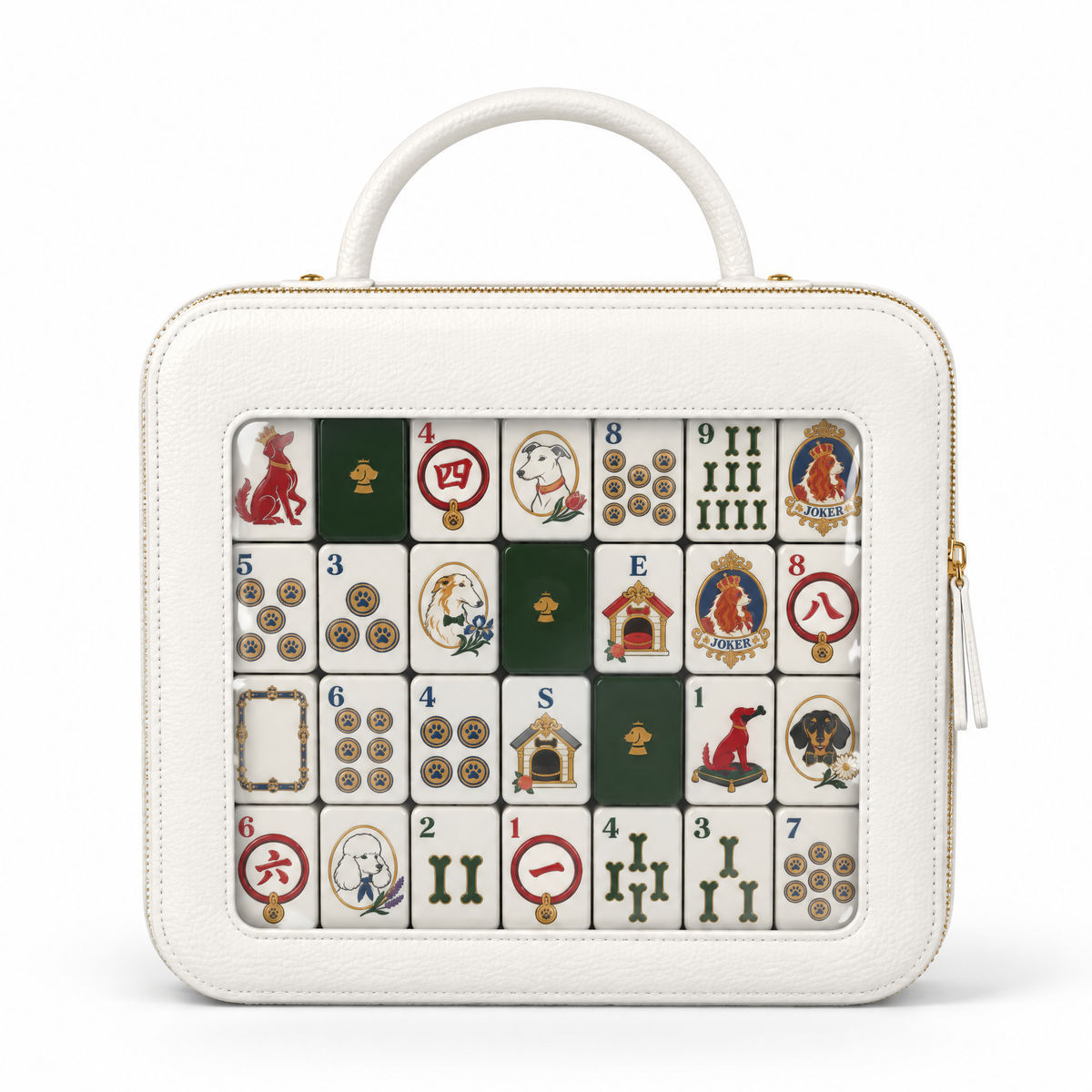
Mahjong emerged in China during the 1800s, likely in the Yangtze River region, and was inspired by card games played among the Chinese upper class. By the 1920s, the game reached the United States and was quickly adopted by affluent American communities, especially women in California and Texas. American mahjong diverged sharply from Chinese rules: it uses exactly 152 tiles, the Charleston pre-game tile exchange, hands from the National Mah Jongg League card (reissued each spring), and strictly no sequences—only melds of identical tiles (pungs, kongs, quints, sextets). Today, four regional variants (American, Chinese, Hong Kong, Riichi) coexist globally; American mahjong remains the most social and rule-standardized format. Understanding this history helps new players appreciate why American mahjong feels so different from what they might see online or abroad, and why a quality best-selling American mahjong set with a clear NMJL card and smooth tiles makes the tradition live on.
What did mahjong look like in 19th-century China?
Mahjong likely evolved from the Chinese card game Mǎ Jiàng (牌九, "horse tiles") played among aristocratic circles in Anhui Province around the 1800s. Early tiles were carved from bone and bamboo, decorated with hand-painted symbols: characters for numbers and seasons, designs for dragons and winds. The game spread quickly through merchant networks along the Yangtze, and by the early 1900s was played across urban China with regional rule variations. Unlike modern American mahjong, early Chinese play had no standardized hand list—players memorized traditional winning combinations passed down orally.

How did mahjong travel to America in the 1920s?
Chinese merchants and diplomats brought mahjong to San Francisco during the 1920s; it became fashionable among wealthy American women in California and later Texas, often played in country clubs and living rooms. American players, unfamiliar with Chinese rules and eager for structure, began writing down standardized hand lists and simplifying gameplay to appeal to newcomers. By 1930, mahjong was so popular in the U.S. that American-made tile sets flooded department stores. This American reinvention—more organized, rule-bound, and accessible—created a distinct identity that persists today and is the direct ancestor of the game played in American living rooms every week.
What makes American mahjong different from other variants?
American mahjong uses exactly 152 tiles (three suits of 36, 16 winds, 12 dragons, 8 flowers, 8 jokers), while Chinese and Hong Kong variants use 136–144 tiles with simpler suit structures. American mahjong forbids sequences (chows); only identical-tile melds count. The Charleston—a ritualized tile exchange before play—is uniquely American and social. Most distinctively, every American hand must match the current year's National Mah Jongg League card, which resets each April; no freestyle hands are allowed. This standardization makes American mahjong easier to teach and creates a shared language across clubs nationwide.
Variant | Tiles | Suits | Can call sequences? | Hand source | Social feature |
American | 152 | 3 + winds + dragons | No | NMJL card | Charleston |
Chinese | 136–144 | 3 + winds + dragons | Yes | Memory/tradition | Rapid play |
Hong Kong | 136 | 3 + winds + dragons | Yes | Memory | Flexible scoring |
Riichi (Japanese) | 136 | 3 + winds + dragons | Yes | Melds matter | Draw timing |
This comparison shows why American mahjong appeals to new players: fixed hands, no improvisation, and a clear weekly ritual make it predictable and welcoming.
Why has American mahjong survived and thrived?
American mahjong thrived because it solved a problem: players wanted structure and fairness. The NMJL card ensures every player nationwide plays from the same rulebook, so a hand won in Dallas works in Denver. The Charleston ritual creates a moment of levity and bonding before the serious game begins. Most importantly, the game appeals to social players who value community over competition: four-player American mahjong is rarely high-stakes and is often played for fun, snacks, and weekly friendship. Unlike Chinese variants, which reward lightning-fast speed and memory, American mahjong welcomes deliberate play and banter. This social-first DNA kept the game alive through decades when it might have faded.

How do today's regional variants differ in rules and appeal?
Chinese mahjong allows calling and exposing sequences (chows), hands are freestyle, and winning relies on quick thinking and memory. Play is fast-paced and often competitive. Hong Kong mahjong uses simpler rules, encourages flexible play, and emphasizes scoring edge over strict hand-matching. Riichi (Japanese) mahjong adds draw timing (riichi declaration) and a focus on hidden hands; it's popular in anime and online. American mahjong stands alone: slow, card-driven, non-competitive, and intrinsically social. Each variant reflects its culture: Chinese speed, Japanese precision, American fairness and friendship. New players should choose based on pace and community; if you want a relaxed weekly game with friends, American is the natural fit.
🀄 Shop best-selling mahjong sets →
What does a complete modern American mahjong set contain?
A standard American mahjong set holds 160 tiles: 152 playing tiles (three suits numbered 1–9 in four copies each, 16 winds, 12 dragons, 8 flowers, 8 jokers) plus spare tiles. Each tile is marked clearly—Bams show bamboo stalks, Craks show Chinese coins, Dots show circles. Jokers and spare tiles are included so players can replace worn tiles during play. Tiles are usually acrylic, plastic, or bone; acrylic tiles with precision-etched characters and a smooth finish are easier to read and push than rough-cast plastic. A complete set also includes racks (wooden or acrylic holders) to organize your hand, pushers (small sticks to advance tiles onto the rack), a mat to protect the table and define play area, and often a padded bag or case for travel. Quality matters: poor tiles jam in racks, jokers get mixed up, and cheap mats wear through in a season.
Our best-selling collection includes complete sets with engraved acrylic tiles, racks with pushers, mats, and cases—everything you need to host a game or give a thoughtful gift.
What should you check before buying your first set?
Before purchasing, verify the set includes exactly 152 playing tiles (not 136, 144, or 166 without understanding the difference), an instruction card or access to the current year's NMJL card, and hardware: racks and pushers for at least four players. Check that Bams include the bird image (Bam 1), Craks show a coin motif, and Dots are simple circles—these make play intuitive. Confirm jokers are clearly marked (usually red or bright-colored) so they don't get confused with numbered tiles. If you plan to host weekly, choose a mat with a non-slip backing and a padded bag so you can transport the set safely. Acrylic tiles are the sweet spot: durable, easy to clean, and precise. Avoid sets with missing tiles, unclear printing, or flimsy racks—these frustrate beginners and make the game feel chaotic.
🎁 See our most-loved mahjong sets & accessories →
What role did World War II and immigration play in mahjong's American survival?
During the 1940s–1960s, American mahjong nearly faded as fashion shifted and new generations pursued other hobbies. The game's survival came from Chinese and later Vietnamese immigrant communities, who maintained weekly play and taught American neighbors—especially in Texas, California, and the Northeast. Jewish communities in urban areas also embraced mahjong as a social staple, often hosting games in synagogue communities and country clubs. This blend of cultural stewardship and broad social appeal kept mahjong alive; by the 1980s, as players aged and their children grew curious, mahjong was experiencing a modest revival. Today, young players discover the game through grandmothers, cultural pride, and online communities, proving that mahjong endures because it's fundamentally about people gathering to play, laugh, and build ritual together.
✨ Find your Mahstead set — free US shipping →

FAQ
Is American mahjong the same as the mahjong played in China?
No. American mahjong forbids sequences, uses 152 tiles with a fixed hand card (NMJL), and includes the Charleston pre-game ritual. Chinese mahjong allows sequences, uses 136–144 tiles, and relies on freestyle hands and fast play. American variants are slower, more standardized, and designed for social play.
Can I play American mahjong using a Chinese tile set?
Not well. Chinese sets usually lack flowers and jokers, have only one or two copies of each tile, and use different suit symbols. American mahjong requires exactly 152 tiles with four of each number-suit combination. Invest in an American set to ensure correct gameplay and avoid confusion during the Charleston and play.
Why does the NMJL card change every year?
The National Mah Jongg League updates the card each spring to keep the game fresh and ensure fair play across all skill levels. New hands reflect changing strategy and community feedback. Always use the current year's card when hosting or joining a game—old cards won't match hands being played at that table.
What's the best beginner's mahjong set?
Look for a set with clear, engraved acrylic tiles (easy to read and move), racks and pushers for four players, a padded mat, and the current NMJL card or access to it. Many best-selling sets bundle these items together. Avoid plastic tiles that stick or scratch, and flimsy racks that collapse during play.
How long does a typical mahjong game take?
A single hand (one deal) usually lasts 5–20 minutes depending on player speed and luck. A full game typically involves six to eight hands and runs 1–2 hours. American mahjong rewards thoughtful play, so expect time for strategy and conversation rather than rapid-fire tile clicking.
Can I host American mahjong with fewer than four players?
Yes, but rules change. Two-player and three-player variants exist with modified melds and hand lists. Standard American mahjong is designed for exactly four players. If you play with fewer, search for rule guides specific to your player count, or consider trying a shorter version for practice before a full table game.


View More
View More
View More
