
Green Dragon Mahjong Tile: Meaning and Game Role
Last updated: Nov 23, 2026
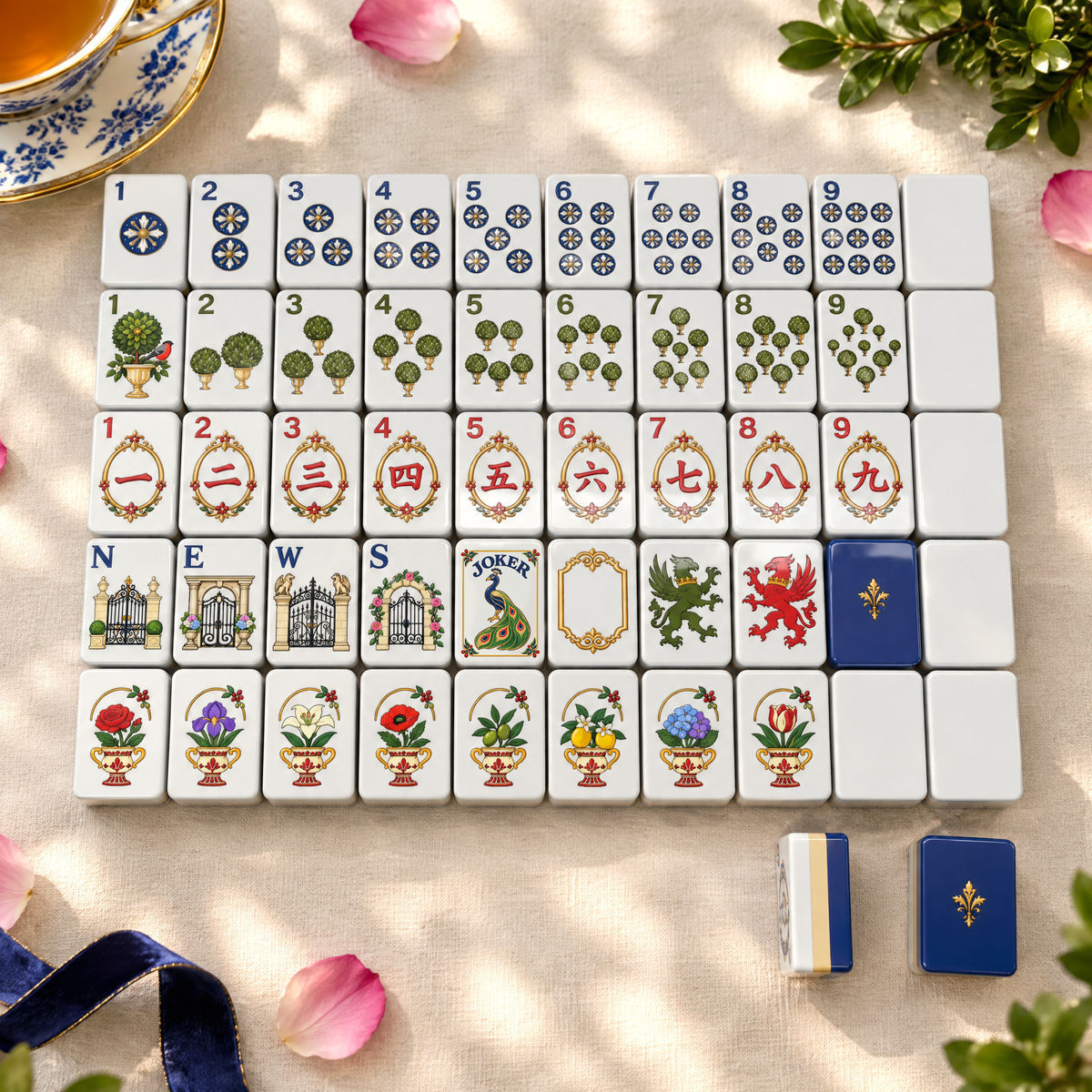
The Green Dragon is a honor tile in American mahjong, one of twelve dragons (four Red, four Green, four White) in every 160-tile set. It traditionally pairs with Bam suits in classical symbolism. Unlike numbered tiles, it has no numeric value—it's played as a standalone honor for pungs, kongs, or other melds defined by the National Mah Jongg League card. The Green Dragon cannot form a sequence with other tiles and has no special function beyond pattern completion. Its value depends entirely on which hand you're building that round: it might be critical one game and surplus the next. Players track dragons as distinct tiles separate from suits, making them useful for flexible hand construction and strategic holdings.
In American mahjong, the Green Dragon is an honor tile that sits apart from the numbered suits—a tile that means something beyond counting or sequence. It's fundamental to understanding what's in an American mahjong set, and knowing its role helps you read hands and make smarter discards.
What does the Green Dragon symbol represent?
The Green Dragon belongs to the three-dragon honor system rooted in Chinese tradition. Red Dragon pairs with the Crak suit (and represents power or fortune), Green Dragon aligns with the Bam suit (growth or prosperity), and White Dragon (called Soap in American play) connects to Dots and acts as a zero. The Green Dragon tile displays a simple green-colored dragon glyph or character—on modern acrylic sets, it's unmistakably green to distinguish it from Red and White. It carries no numeric identity, no number printed on it, unlike the 1–9 Bams, Craks, or Dots.

How does the Green Dragon function in a hand?
The Green Dragon appears on the current year's National Mah Jongg League card only in specific patterns, never in every hand. When a hand calls for Green Dragons, you need multiples—always a pung (three identical Green Dragon tiles) or a kong (four)—never a pair on its own, and never in a run or chow. Because American mahjong has no callable sequences, dragons can only be exposed in completed sets of three or more. A joker can be used in place of a Green Dragon within that pung or kong, but it must stand for a specific, identifiable tile—you cannot use a joker as "any dragon." Once you've built your winning hand, any Green Dragons in it count toward your score based on the hand's total value.
Why is the Green Dragon considered strategically useful?
Players favor dragons because they're flexible wildcards for hand construction. Since dragons don't belong to a suit, they're easier to hold without committing you to a single strategy. Early in a round, carrying a Green Dragon keeps your options open—you could build a hand that needs it, or pivot to a hand that doesn't. Conversely, if no one is playing hands with Green Dragons that week, holding three becomes a liability. Experienced players watch which dragons and honor tiles appear frequently on the card each year and adjust their aggressive draws accordingly. The National Mah Jongg League issues a new card every spring, and dragons' usefulness shifts with the hand designs.
🀄 Shop best-selling mahjong sets →

What's the difference between Green, Red, and White Dragons in American play?
All three dragons follow identical play rules—none can form a sequence, all require a pung or kong to be exposed, and all use the same strategic logic. The difference is purely symbolic and traditional: Red Dragon traditionally connects to Craks, Green to Bams, and White to Dots. However, the White Dragon has a secondary role: it's also treated as a zero in certain numeric contexts, a quirk unique to American mahjong. This doesn't change how it plays—it's still an honor tile—but it can occasionally matter when reading a hand closely. Our best-selling mahjong sets include all three dragons clearly marked in color, so confusion is minimal once you've seen them on the table a few times.
How do you avoid common mistakes with the Green Dragon?
New players often confuse the three dragons at first glance or misremember whether dragons can be used in sequences. Here's what trips people up:
Treating dragons like numbered tiles: Dragons cannot form a 1-2-3 sequence or any run. A hand calling for "Dragon-Pung" means three matching dragons, period.
Misreading the card: Always double-check the card before calling a Green Dragon hand—if the hand lists "Green Dragon Pung" and you have exactly that, you're good; if it says something else, you've misread.
Joker confusion: A joker can substitute for one Green Dragon within a pung or kong you're building, but never as a standalone "any dragon" tile.
Discarding dragons too early: Early in a round, don't dump dragons carelessly—check the card first to see how often they're used that season.
Mixing up White Dragon's dual role: White Dragon is a tile and also represents zero in numeric patterns, but this doesn't make it special during play—treat it like Red or Green.
How does the Green Dragon differ across mahjong variants?
American mahjong operates differently from other global variants. Chinese and Hong Kong mahjong, for example, do allow dragons in sequences and have different tile counts and hand-building rules entirely. Riichi mahjong (Japanese) and Taiwanese mahjong use dragons but follow separate scoring systems and hand structures. If you're learning American mahjong, focus only on the National Mah Jongg League rules and card—the Green Dragon works exactly as described above. If you play another variant at a different table, the rules may shift. Learn how to play American mahjong to build confidence in the rules specific to this game.
🎁 See our most-loved mahjong sets & accessories →
Quick reference: Dragon and honor tile comparison
Tile | Suit connection | Play rules | Joker allowed | Strategy note |
Green Dragon | Bam | Pung or kong only | Yes, within the set | Hold early; check card frequency |
Red Dragon | Crak | Pung or kong only | Yes, within the set | Same flexibility as Green |
White Dragon | Dot + zero | Pung or kong only | Yes, within the set | Dual role; treat as honor tile |
Winds (N/E/W/S) | None | Pung or kong only | Yes, within the set | Suit-independent like dragons |
What to check before you buy a mahjong set for your game
Make sure your set clearly distinguishes all three dragons by color—acrylic sets from Mahstead's collections are printed in vivid green, red, and white so there's no squinting at the table. If you're replacing worn tiles or gifting a set, confirm it's a full 160-tile American mahjong set with all 12 dragons included. Check that the set comes with an instruction guide or access to the current year's League card—you'll need it to read hands correctly. Some players prefer engraved sets if they host regularly; personalization doesn't change how Green Dragons play, but it can make your game feel more intentional.
✨ Find your Mahstead set — free US shipping →

FAQ
Can a Green Dragon be used in a pair or as a single tile in a hand?
No. In American mahjong, dragons (including Green) only appear in completed pungs (three) or kongs (four). Never as a pair on its own or as a single exposed tile. Jokers can substitute for dragons within those melds.
Does the Green Dragon have a number value like the 1–9 tiles?
No. The Green Dragon is an honor tile with no numeric value. It's identified only by its color and dragon symbol, not by a number.
If no hands on this year's card use Green Dragons, should I discard mine immediately?
Not immediately. Early in a round, holding a Green Dragon doesn't hurt—you may switch hands. But watch the card closely; if no hand lists Green Dragons, prioritize discarding it once you've committed to a hand that doesn't need it.
Is the Green Dragon the same in all mahjong games?
No. American mahjong follows National Mah Jongg League rules: dragons appear only in pungs or kongs. Chinese, Hong Kong, Riichi, and Taiwanese mahjong have different tile counts, hand structures, and dragon rules entirely. Always clarify which variant you're playing.
How many Green Dragon tiles are in a complete American mahjong set?
Four Green Dragon tiles are in every 160-tile American set, matching the count for Red Dragons and White Dragons—12 dragons total.


View More
View More
View More
