
Gang Mahjong Meaning and Points: American Rules Explained
Last updated: Nov 23, 2026
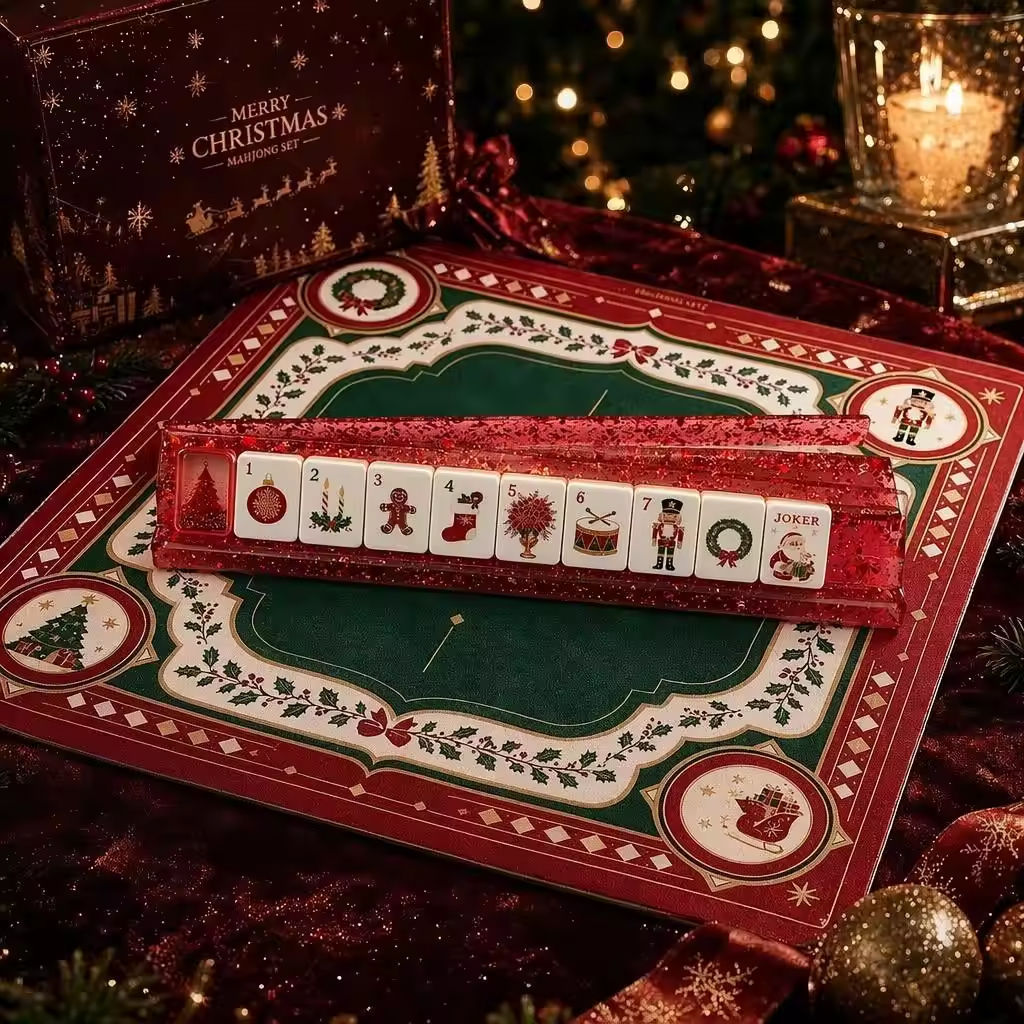
In American mahjong, a gang (or quint) is an exposed group of five identical tiles: five 3 Bams, five Red Dragons, five North Winds, or any five-of-a-kind combination. You expose it face-up on the table during play, and it counts as a single pattern unit in your hand when you go mah jongg (win). A gang scores according to the National Mah Jongg League card for that year; point value depends entirely on which hand pattern on the card contains your gang and what section it occupies (Limit, Value, or Pair). Unlike a pung (three identical) or kong (four identical), a gang is worth more points because it uses more tiles. Jokers can replace missing tiles in a gang, making it easier to complete. The gang is one of the few ways to create a more valuable exposure, and understanding when to build one instead of a smaller group directly affects your scoring strategy. Mahstead's best-selling mahjong sets come with clear tile markings that make spotting and organizing your gangs much easier at the table.
What exactly is a gang in American mahjong?
A gang is an exposed group of exactly five identical tiles—all the same number and suit, or all the same wind or dragon. It lives on the table in front of you, separate from your closed hand. You call it when another player discards a tile you need to complete it, or when you draw the right tile yourself. Once exposed, it stays visible until the hand ends or you go mah jongg. A gang is the only five-tile exposure allowed in American play; you cannot expose a sequence (chow) or any mixed group.

How many points is a gang worth?
Gang points depend entirely on the hand pattern you've chosen from the current year's National Mah Jongg League card. The card lists hundreds of winning combinations, each with a specific point value (usually ranging from 20 to 40+ points, though variations exist). Your gang's points are baked into the pattern itself—you don't calculate extra points for it. For example, if your winning hand pattern includes a specific gang and the card says that pattern is worth 30 points, that's your whole hand's value. The gang isn't a bonus; it's part of the structure. Point value also depends on whether you're playing Limit, Value, or Pair hands, as these sections on the card assign different scores to the same tile combinations. American mahjong scoring explains how the card's sections work in detail.
How does a gang differ from a pung or kong?
A pung is three identical tiles, a kong is four identical tiles, and a gang is five. All three must be identical—never mixed numbers. A pung and kong are standard exposures in every hand; a gang is less common because you need to commit five tiles to one group, leaving fewer tiles for other patterns. A pung is smaller and less valuable on its own, but easier to assemble. A kong is the next step up—four matching tiles. A gang demands more tiles but can unlock higher-value hands on the card. Kong and gang are both four- or five-tile exposures, while pung stops at three. The scoring reflects this: more tiles usually means more strategy required but not always more points, since the card defines each pattern's value independently. Jokers can substitute in any of these three groups to fill missing tiles.
Why would you build a gang instead of smaller groups?
You build a gang when the card pattern you're targeting requires it. If your chosen hand has a gang listed as part of its structure, you must expose exactly five matching tiles—no more, no fewer—to complete that pattern. You cannot substitute a pung or kong in its place. Sometimes the card offers higher-value hands with gangs than hands with the same tiles in smaller groups, making the extra tile worth the commitment. Other times, a gang forces you to use jokers, which can be riskier if another player needs one. The decision hinges on your exposure strategy: do you announce your goal hand to other players by exposing a gang, or do you keep more options hidden in your closed hand and build smaller, mixed exposures? Experienced players weigh whether the gang's point value justifies the loss of flexibility.
🀄 Shop best-selling mahjong sets →

What role do jokers play in a gang?
Jokers are wild tiles in American mahjong. You can use one or more jokers to substitute for missing tiles in a gang, pung, kong, or any other exposure—as long as the majority of the tiles are real (not jokers). For example, a gang of five 2 Dots could include three real 2 Dots and two jokers filling in. This makes gangs easier to complete if you're missing one or two of the required tiles. However, jokers also signal to other players that you have an incomplete group, potentially tipping off your hand pattern. Using too many jokers in one exposure can exhaust your joker supply for later in the hand. Every 160-tile set includes eight jokers and spare tiles so you always have what you need during play. How jokers work covers the full strategy and rules.
Exposure Type | Tiles Required | Identical? | Joker Substitution | Relative Points | When to Use |
Pung | 3 | Yes | Yes | Lower | Quick wins, low commitment |
Kong | 4 | Yes | Yes | Medium | Standard play, balanced risk |
Gang | 5 | Yes | Yes | Highest available | High-value patterns, full commitment |
Common mistakes with gangs—and how to avoid them
Mistake 1: Confusing a gang with a sequence. Sequences (1-2-3, 5-6-7, etc.) do not exist in American mahjong. You cannot expose a chow. A gang must be five identical tiles, not five consecutive ones. Check the card before calling your hand.
Mistake 2: Exposing a gang too early. Once you expose a gang, all players know your tile direction. If you expose a 4 Bam gang on Turn 3, opponents will stop discarding Bams they think you need and may pivot their own strategy. Expose only when you're confident you can reach mah jongg without relying on too many more draws.
Mistake 3: Using too many jokers in one gang. A gang of five 3 Craks where only two are real Craks and three are jokers burns through your joker supply. Later, when you need a joker for a pair or another exposure, you're out. Balance joker use across your whole hand.
Mistake 4: Forgetting the gang is part of your completed hand pattern. A gang is not a bonus or a separate score. It's part of your winning hand structure on the card. If the card shows your pattern with a gang, you need that gang and all the other melds to win. You cannot win with just the gang.
Mistake 5: Building a gang when a pung or kong would work. Not every hand requires a gang. If the card lists multiple winning patterns and two of them use the same tiles but one has a pung and another has a gang, compare their point values. Sometimes the pung pattern scores higher or requires fewer jokers, making it the smarter play.
Gangs in other mahjong variants (not American)
Chinese classical and Hong Kong mahjong do not use the term "gang" in the same way. In those games, a kong (four identical tiles) can be declared during play, and the player draws an extra tile as compensation. The scoring system is entirely different—based on hand composition and luck factors, not a pre-set card. There are no jokers in traditional Chinese play.
Riichi mahjong (Japanese) also has no jokers and uses sequences freely. It has no "gang" as a named exposure type. Winning is based on specific hand patterns called yaku, and the scoring table is fixed, not card-dependent.
Taiwanese mahjong borrows some American elements (card-based hands) but scoring and gang rules can vary by region and house rules.
American mahjong's gang is unique to the American game because of the joker system, the pre-printed card, and the emphasis on exposure strategy. If you play multiple variants, clarify the rules before you start.
🎁 See our most-loved mahjong sets & accessories →
What to check before your next game
Confirm the hand card. The NMJL card changes every spring. If your group is using last year's card, gang point values and patterns may differ. Print or display the current year's card at the table.
Agree on joker rules. Some friendly groups allow partial joker substitution in gangs; others require a majority of real tiles. Agree before the first hand.
Know your set's joker count. Mahstead's 160-tile sets include eight jokers, which is standard. If your set is older or from an unknown source, verify joker count to avoid mid-game surprises.
Keep a mahjong mat clear. A mat with defined spaces for exposures helps you and your opponents quickly see your gang, pung, and other groups without confusion.
Review the card layout. Spend five minutes before play learning how to read your card's section tabs (Limit, Value, Pair, etc.). This speeds up hand verification when someone claims mah jongg.
✨ Find your Mahstead set — free US shipping →

FAQ
Can I expose a gang on my first turn?
Yes. If you draw five identical tiles on your first turn or if the opening discard and your hand luck align, you may call and expose a gang immediately. However, exposing early telegraphs your strategy to all players.
What if I expose a gang but then realize it's not part of my winning hand?
Once exposed, a gang stays on the table for the rest of the hand. If it turns out not to be part of your final winning pattern, your hand is invalid and you cannot win. Always double-check the card before exposing.
Is a gang always worth more points than a kong?
Not necessarily. Point value comes from the specific hand pattern on the card, not the exposure size alone. A 30-point hand with a kong can outscore a 25-point hand with a gang. Check the card before deciding which exposure to build.
How many gangs can I expose in one hand?
As many as your hand pattern requires and as many as you can assemble. Some hands have two or three gangs, though this is rare. Each gang follows the same rules: five identical tiles, exposed, part of your winning pattern.
Do I need special equipment to play gang mahjong?
No. Any American mahjong set with 152 playing tiles and eight jokers works. Mahjong racks with pushers make organizing your closed tiles and gangs much easier, especially during longer games, but they are not required.
Can beginners use gangs, or should they start with smaller exposures?
Beginners can and should learn gangs alongside pungs and kongs. Start by studying the card and identifying one or two hand patterns that include a gang. As you gain confidence, you'll recognize when a gang is the best choice. Mahjong for beginners covers foundational strategies.


View More
View More
View More
