
What Does the 9 Crak Tile Look Like in Mahjong?
Last updated: Nov 23, 2026
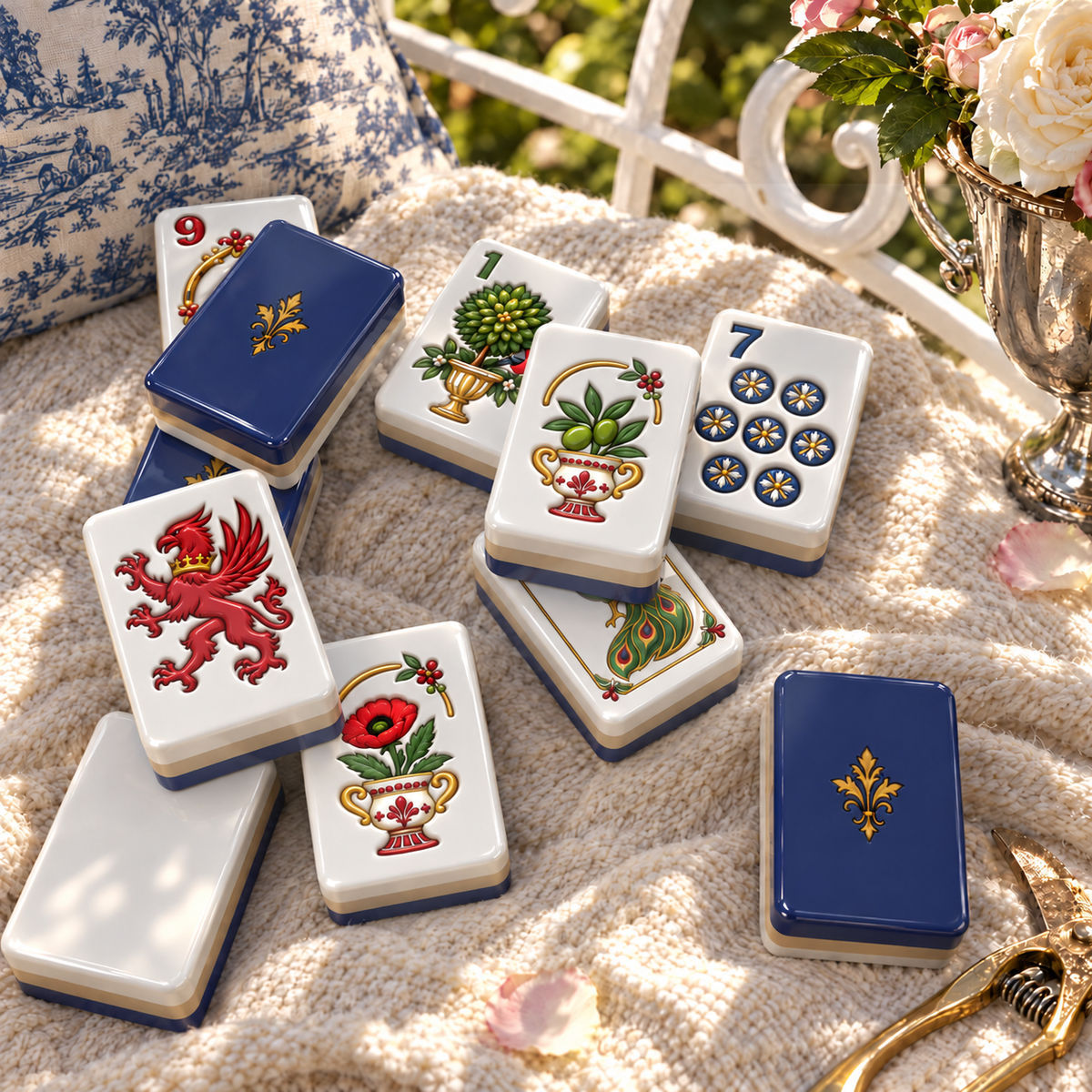
The 9 Crak tile features nine circles (craks) arranged in a 3×3 grid on a bamboo-textured background. Like all numbered Craks, it's part of the Crak suit—one of three number suits in American mahjong. Understanding tile faces matters because speed and accuracy are everything when you're sorting your hand between turns.
How does the 9 Crak compare to 9 Dot and 9 Bam?
All three "nines" use identical circle layouts, but each belongs to a different suit with its own background. The 9 Crak sits on a bamboo pattern, the 9 Dot on a plain background with a thin border, and the 9 Bam on a solid field. During fast-paced games, players often glance at background texture or suit color rather than counting circles. Many of us keep our hand in suit order (all Craks together, then Dots, then Bams) to spot tiles instantly without looking at every symbol.

Why does the 1 Bam look different from other "1" tiles?
The 1 Bam shows a bird illustration rather than a single circle. The 1 Crak and 1 Dot both display one symbol each, so the bird is the exception that confuses beginners most. Knowing this quirk helps you sort your hand correctly and prevents the embarrassment of calling the wrong tile during play—especially in your first few games.
What size are the tiles, and how does that affect readability?
Standard American mahjong tiles measure approximately 1⅛ inches square (the size varies slightly by maker, but industry standard is close to this). Larger tiles mean clearer symbols, while smaller travel sets sacrifice readability for portability. We recommend checking the tile dimensions before ordering if readability matters to you—players with vision concerns or those hosting larger tables often prefer bigger tiles or acrylic sets with deep engraving.
How are tile symbols engraved or printed on acrylic sets?
Mahstead acrylic sets feature engraved symbols that are routed into the tile surface and filled with color or left as contrast. Engraving is more durable than printing because it won't fade with repeated shuffling or spills. Some players prefer solid-color tiles with minimal engraving (cleaner look), while others want bold, high-contrast symbols for speed during play. Both styles are available—the choice depends on your table's lighting and personal preference.

What mistakes do players make when identifying Craks?
Common mix-ups during the Charleston:
Confusing 9 Crak with 9 Dot because both show nine circles (look at the background texture, not just the count)
Passing the wrong suit accidentally because you're moving tiles too fast
Miscounting during hand-sorting, especially with honors (winds and dragons) mixed in
Prevention tip: After the Charleston, spend 10 seconds arranging your hand by suit and then by number. This costs seconds but saves points.
Comparison: Tile Identification by Suit
Suit | Symbol | Background | Common Mix-up |
Crak | 9 circles | Bamboo texture | Confused with 9 Dot |
Dot | 9 circles | Plain/bordered | Confused with 9 Crak |
Bam | 9 sticks | Solid field | Rarely confused |
Wind (N/E/W/S) | Chinese character | Varies by color | Different characters, hard to rush |
Dragon (Red/Green/White) | Chinese character or blank | Colored field | Red/Green similar in dim light |
🀄 Shop best-selling mahjong sets →
How does tile quality affect long-term gameplay?
Acrylic tiles with engraved symbols outlast bamboo or bone tiles (which crack or stain over years of weekly games). Engraved craks stay legible even after thousands of shuffles because the symbol is cut into the material itself, not applied to the surface. If you're hosting regular games, investing in durable acrylic is smarter than cheap plastic—we've seen sets deteriorate after a single season of heavy use. Check whether the maker engraves all symbols or just some; inconsistent detail suggests lower build quality.
Why do some players struggle to read the 9 Crak in dim lighting?
If your game table lacks good overhead lighting, the bamboo-textured background of Craks can blur together with Dots in peripheral vision. High-contrast sets with clear engraving and distinct suit colors (some makers use blue-tinted backgrounds for Craks, for example) solve this problem. We recommend playing under bright, diffuse light and choosing tiles with high symbol contrast if you or your group are over 50 or have vision concerns.
What to check before you buy:
Tile size: Verify dimensions match your hand size and table space.
Engraving depth: Run your finger over sample tiles; deeper engraving means longer life.
Suit colors/textures: Confirm Craks, Dots, and Bams are visually distinct, not similar shades.
Joker and blank count: Standard American play uses exactly 152 tiles + 8 jokers; extras are spares (not added to the game).
Packaging: Check that tiles arrive sorted by suit and type, not jumbled—this saves setup time.
🎁 See our most-loved mahjong sets & accessories →
How does learning tile faces improve your game speed?
The faster you recognize the 9 Crak (and all other tiles) without counting, the faster you sort your hand and call tiles. Competitive players memorize each tile's exact appearance, not just its number. Beginners often waste seconds counting circles; intermediate players glance at background and immediately know the tile. This muscle memory is why many of us shuffle our own sets at home for 10 minutes weekly—it trains your eye and hands together.
If you're setting up your first regular game group, starting with our best-selling acrylic sets means everyone learns on identical, readable tiles. Mixing old and new sets at the same table creates chaos because symbol styles vary—tiles look different, players hesitate, and the game slows down.
✨ Find your Mahstead set — free US shipping →

FAQ
Is the 9 Crak tile worth more points in scoring than other numbered tiles?
No. In American mahjong, all numbered Craks (1–9) score the same per hand based on the current year's card. The suit and number matter for hand patterns, not individual tile value.
Why do some older mahjong sets show the 9 Crak with a different symbol?
Vintage sets (pre-1970s) varied in design by region and maker. Modern American mahjong standardized on nine-circle symbols for all numbered tiles. Today's commercial sets follow this standard.
Can I use the 9 Crak in a winning hand by itself, or must it be part of a group?
The 9 Crak only counts as part of a hand pattern on the current year's National Mah Jongg League card—never as a solo tile. Check the card to see which hands include Craks and in what combinations (usually pungs, kongs, or sequences within a pair).
How do I tell the 9 Crak from a 9 Dot if my eyesight isn't great?
Feel the tile's texture: Craks have a bamboo-grain background, Dots have a smooth border. Alternatively, sort your hand under bright light immediately after the Charleston so you're reading larger hand groups, not individual tiles.
Do engraved acrylic 9 Craks fade or wear out if played weekly?
No. Engraved symbols are routed into the acrylic material and don't fade with shuffling or light spills. Acrylic sets last decades if stored in a case and kept away from extreme heat.


View More
View More
View More
