
Fujian Mahjong Tips: Rules, Hand Patterns & Setup
Last updated: Nov 23, 2026
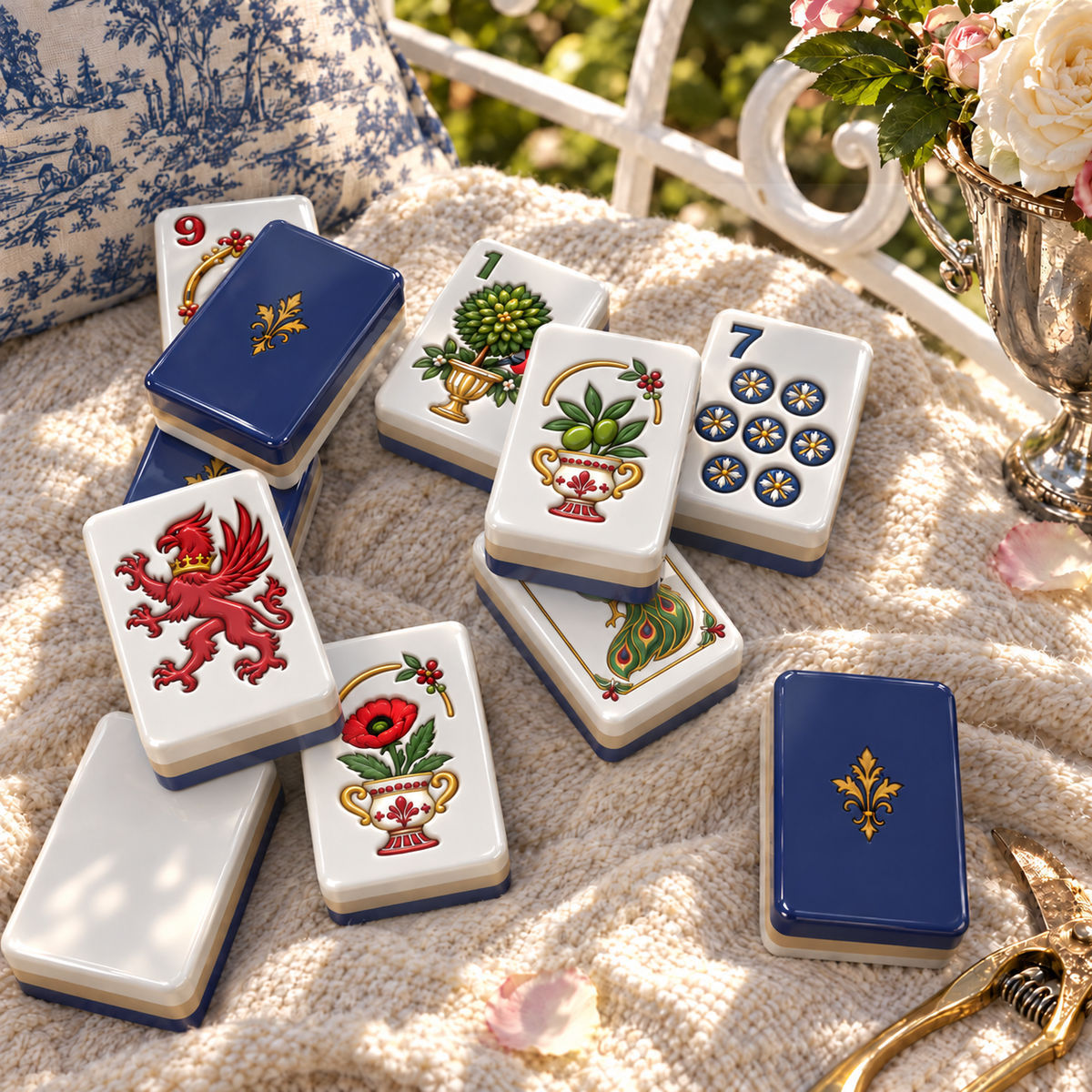
Fujian mahjong (福建麻将) is a southern Chinese regional game played with a standard 144-tile set (three suits—Bams, Craks, Dots—numbered 1–9 in fours, plus winds, dragons, and flower tiles). The core difference from American mahjong: hands are built by drawing and discarding, not from a licensed card; melds can include sequences (chows), not just pungs and kongs; and jokers do not exist. Games typically take 30–60 minutes per round, and rounds continue until players agree to stop. Scoring varies by local house rules—wins award points based on hand composition and method. Common beginner mistakes include misunderstanding when sequences are exposed versus concealed, and confusing hand-end conditions (all four melds complete + a pair, or "eye"). We recommend starting with a standard 144-tile set and learning your table's exact scoring ruleset before sitting down; rules can vary dramatically between provinces and households.
Fujian mahjong sits at the crossroads of Chinese regional play. Unlike American mahjong (which is built from a fixed card and uses only pungs, kongs, and jokers), Fujian play is entirely hand-driven, allows sequences, and plays faster. If you're moving between American and Fujian tables, you'll need to rewire how you think about melds, winning, and tile safety. We've hosted enough cross-game nights to know where the friction points are—here's how to avoid them.
What makes Fujian mahjong different from American play?
American mahjong is a card-based game: a licensed National Mah Jongg League card is used every season, hands are fixed, and only pung/kong/quint melds are called and exposed. Fujian mahjong is hand-driven: no card, no fixed patterns, and both sequences (like 1–2–3 Bams) and pungs (three identical tiles) can be formed, exposed, and counted toward a win. Jokers don't exist in Fujian; tiles are drawn and discarded in classical rhythm. Scoring is local—your table sets the point values for concealed hands, sequences, terminal sets, and honors. This flexibility makes Fujian feel improvisational to American players but liberating to regional players who prize speed and adaptability.

How do sequences (chows) work in Fujian play?
In American mahjong, a sequence like 1–2–3 Dots cannot be called; in Fujian, a chow (顺, shùn) is a meld of three consecutive numbered tiles in the same suit—1-2-3, 4-5-6, 7-8-9. A chow can be melded openly (exposed on the table), claimed from a discard (called chi), or held concealed. Sequences cannot wrap (9-1-2 is not a valid chow). If a tile is discarded that completes your chow, you can claim it, but the standard "first come, first served" rule applies: if another player needs that tile to win, the win takes priority over your chow claim. This rule difference catches American players off guard—always check your table's policy on claim hierarchy before your first hand.
What are the winning conditions in Fujian mahjong?
A win in Fujian requires four melds (any combination of pungs, kongs, or chows) plus a pair (two identical tiles, called the "eye"). This is identical to most Chinese variants. A pung is three identical tiles; a kong is four identical tiles. Once four melds are complete and a pair sits in your hand, you win by drawing a tile (self-drawn win, or zimo) or by calling a discard from another player (winning off a discard, or hu). Scoring multipliers apply based on how the win occurs and the types of melds involved—a concealed hand is usually worth more than an exposed one. The hand must be complete in a single turn; no "waiting" is allowed. If no one wins after the wall is depleted, the hand is drawn (or "dead," called 流局 in some regions), and play typically moves to the next round.
How do honors and terminals affect scoring in Fujian?
Honor tiles include winds (North, East, South, West) and dragons (Red, Green, White). Terminal tiles are the 1s and 9s of each suit. In Fujian, a pung or kong made entirely of honors or terminals is called a zung or yao (荣 or 幺) and scores higher than a regular pung. A hand composed entirely of terminals and honors—sometimes called a "all terminals and honors" hand—is a premium win and scores double or triple in most house rules. However, sequences cannot use terminals or honors; you cannot make a chow with 9-1-2 or with three wind tiles. Check your table's specific scoring before play to know whether concealed zung pairs, pure sequences, or mixed meld hands earn bonuses. Scoring inconsistency is the leading source of disputes; always agree on point multipliers and special hand values upfront.
What's the tableau setup and tile-passing ritual like?
Fujian play typically uses a deal and rotation model: one player (the dealer, or banker) deals 13 or 14 tiles face-down to each of the four players in a prescribed order. After the dealer deals, players begin either by drawing from the wall (if 14 tiles dealt) or passing (if 13). Some tables do a brief tile pass (similar to the American Charleston, though less elaborate); others begin drawing immediately. The dealer draws first and discards, then play rotates counterclockwise (or clockwise, depending on region). No tile may be drawn until the previous player has discarded. If you discard a tile, it remains in front of you (called the discard zone or 弃牌) so that claims can be verified. Unlike American mahjong, there is no protracted Charleston; the game starts once tiles are dealt and verified—this is why Fujian rounds feel faster. Mistakes in the deal or tableau are typically corrected by returning tiles to the wall and redealing.

What are the most common beginner mistakes?
Mistake | Why It Happens | How to Avoid It |
Calling a chow on a tile that completes another player's win | Forgetting that win claims override meld claims | Ask your table's priority rule before dealer begins |
Discarding a concealed honor when others have exposed honors | Not tracking which tiles are safe | Watch what others pung/kong; learn your table's discard patterns |
Misunderstanding "eye" requirements (using a joker or exposed tile) | Applying American mahjong rules | Remember: the pair must be two identical, hidden tiles in your hand—never exposed |
Assuming the 1 Bam is automatically a bird | Variant decks may use other designs | Check your specific tile set's artwork before assuming |
Trying to form a 9-1-2 sequence | Confusing sequences with American quints | Chows are always consecutive within the suit; 9-1-2 wraps and is invalid |
Each table's house rules can override these—always confirm what counts as a valid win, what multipliers apply, and what happens on a draw before sitting down.
🀄 Shop best-selling mahjong sets →
How to choose a tile set for Fujian play
If you're hosting or joining a Fujian game, a standard mahjong set from our best-selling collection works well as a foundation. Fujian games use the full classical tile inventory (no American-specific jokers), so any complete 144-tile set will serve. However, look for:
Clear tile markings: Fujian tile design often includes Chinese numerals and large suit symbols; ensure the 1 Bam, dragon distinctions (Red/Green/White), and wind labels are legible under table light.
Smooth shuffling: Resin or acrylic tiles shuffle easily; wood or bone feel premium but wear unevenly over time.
Durable racks: If playing regularly, racks with pushers help conceal your hand and speed play—many Fujian players use racks with pushers to keep melds organized and private.
Protective case: A travel bag or case keeps tiles safe if you're moving between venues, and a mat or table cover protects the tile faces and playing surface.
We sell 160-tile sets (152 playing tiles plus spares) that work across all variants, American or Chinese. For Fujian, the extra tiles are a buffer—you won't use them in play, but they're invaluable if a tile breaks or gets lost during a long session.
House rules checklist before your first Fujian game
Before sitting down, agree on these five points with your table:
Win conditions: Must a win include a pair of concealed tiles? Can "eye" be any pair, or only specific ones (e.g., dragons or honors)? Is a self-drawn win (zimo) worth more than a discard win (hu)?
Meld priority: If your discard completes another player's chow and another player's winning hand, which takes precedence? (Typically, the win is called and no chow meld is taken.)
Scoring: How many points for a concealed hand? For a hand of all honors and terminals? For a kong of dragons? For a pure sequence hand?
Discard verification: Can discards be challenged after the next draw? Or are they locked once a new tile is drawn?
Wall depletion: If the wall runs out and no one has won, is the hand a draw, or does play continue in some other manner (e.g., one player draws from a reserve)?
Write these down or ask the dealer to confirm before the first hand is dealt. Disputes about unspoken rules are the fastest way to end a friendly game.
🎁 See our most-loved mahjong sets & accessories →
What to check before you buy a Fujian mahjong set
Tile count: Confirm you're buying a 144-tile set (not 152, which adds American jokers). Our standard sets are 160 tiles, which include 152 playable tiles plus spares—suitable for any variant.
Language and markings: If you're playing with Mandarin-fluent players, sets with clear Chinese numerals and suit symbols are preferred; English/numerical markings work equally well for mixed groups.
Tile material: Resin acrylic tiles are consistent, durable, and affordable; higher-end materials (bone, bamboo) are beautiful but require more care and cost more.
Racks and accessories: If you're hosting weekly Fujian games, engraved sets with matching racks or a dedicated mat signal that you're committed to the game and help organize the table.

FAQ
Can I use an American mahjong set for Fujian play?
Technically, yes—American sets include all the same tiles (Bams, Craks, Dots, winds, dragons, flowers). However, American sets include jokers, which Fujian doesn't use; you'll simply ignore them. The bigger issue is that American sets are often designed with card-based hand patterns in mind, so tile markings may prioritize American aesthetics over clarity for classical play. A 144-tile standard Chinese set is clearer and faster to learn on.
What's the difference between Fujian and Cantonese mahjong?
Both allow sequences and both are hand-driven (no card), but they differ in scoring, winning conditions, and meld priorities. Fujian typically uses simpler scoring; Cantonese (Hong Kong style) adds a much richer point system with special hands and fan multipliers. If you're new to both, start with Fujian—it's faster and more forgiving for learners.
How long does a Fujian game take?
A single hand usually lasts 10–20 minutes, depending on player speed and how many tiles are drawn before someone wins or the wall depletes. A full session (multiple hands until players agree to stop) typically runs 1–3 hours. Fujian is noticeably faster than American mahjong because the Charleston is minimal and hands are recognized immediately rather than verified against a card.
Are there regional variations within Fujian mahjong?
Yes. Different cities and provinces within Fujian province may use slightly different scoring systems, meld priorities, or even tile designs (some use simplified numerals, others use traditional symbols). Always ask your table leader or the dealer about their specific house rules before your first hand—this is true even if you've played Fujian elsewhere.
What happens if I discard a winning tile by accident?
In most Fujian tables, the player who needs that tile to win claims it immediately; play stops, and the hand ends. You don't get a second chance. This is why watching discards and being aware of what others have melded is essential—it helps you avoid throwing a tile someone is waiting for.
Can I teach someone American mahjong who already plays Fujian?
Yes, but they'll need to unlearn several habits: no sequences are allowed, jokers are required, hands come only from a licensed card, and the Charleston is a formal ritual. It takes most experienced Fujian players 2–3 sessions to feel comfortable with American rules. Start with the differences and play a few practice hands before a scored game.


View More
View More
View More
