
Fujian Mahjong Special Hands: Rules, Patterns & Play
Last updated: Nov 23, 2026
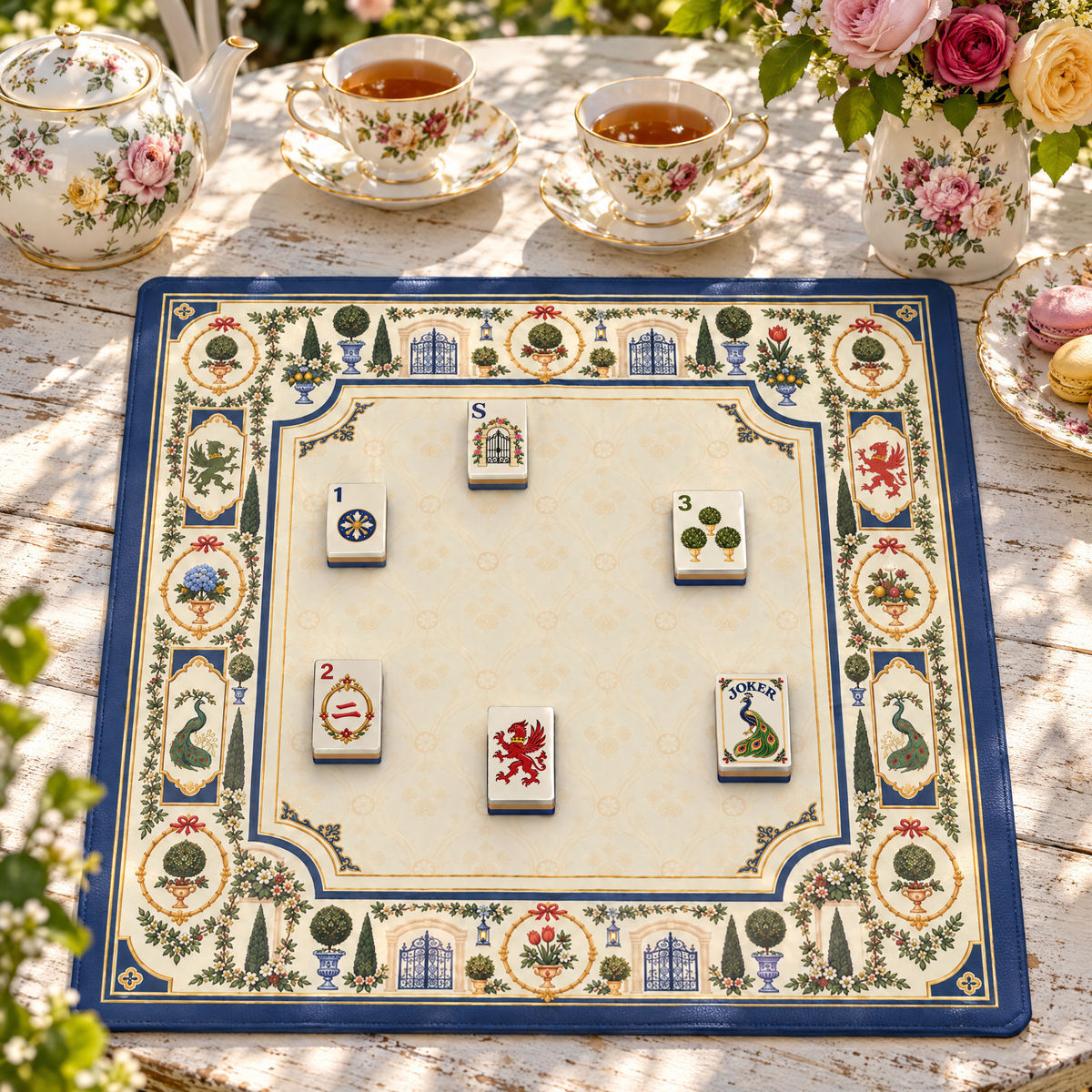
Fujian mahjong is a regional Chinese variant played primarily in Fujian Province and among diaspora communities. It uses a standard 136-tile set (34 tiles × 4 copies: 1–9 in three suits plus honors). Unlike American mahjong, Fujian allows chows (sequences like 4-5-6), requires completing a pair, and features no jokers in standard play. Special hands include "all pung" (melds only), "all chow" (sequences only), "terminals and honors only," and "seven pairs." Scoring varies by hand type and winning condition (self-drawn vs. discard). Games typically end when one player declares a legal winning hand. Fujian mahjong is faster, simpler rule-wise than American, and has no pass ritual equivalent to the Charleston. Many Fujian players in North America also learn American mahjong to join regular game groups.
Fujian mahjong (闽南麻将) is a regional Chinese variant played primarily in Fujian Province and among diaspora communities. It uses a standard 136-tile set (34 tiles × 4 copies: 1–9 in three suits plus honors). Unlike American mahjong, Fujian allows chows (sequences like 4-5-6), requires completing a pair, and features no jokers in standard play. Special hands include "all pung" (melds only), "all chow" (sequences only), "terminals and honors only," and "seven pairs." Scoring varies by hand type and winning condition (self-drawn vs. discard). Games typically end when one player declares a legal winning hand. Fujian mahjong is faster, simpler rule-wise than American, and has no pass ritual equivalent to the Charleston. Many Fujian players in North America also learn American mahjong to join regular game groups.
How does Fujian mahjong's tile set differ from American?
Fujian mahjong uses 136 tiles: four copies each of 1–9 Bams, Craks, and Dots (108 tiles) plus 28 honor tiles (four each of East, South, West, North, Red Dragon, Green Dragon, White Dragon, and a fourth honor that varies by regional rule). American mahjong uses 152 tiles with eight flowers and eight jokers that function as wild cards in melds. Fujian has no wild tiles and no flowers. The smaller Fujian set plays faster and requires memorizing which honor is present in your region before sitting down.

What are the main Fujian special hands?
Fujian recognizes several named hands beyond basic melds. All Pung (对对胡) means your entire winning hand uses only triplets; no sequences allowed. All Chow (清一色) means sequences only, often in a single suit for higher value. Terminals and Honors (字一色) uses only 1, 9, and honor tiles, never middle numbers. Seven Pairs (七对) awards a win if you hold seven unrelated pairs instead of the standard structure. Concealed Hand (暗胡) means winning on a tile you drew yourself, not a discard. These hands often carry multiplier bonuses (commonly ×2, ×4, or ×8 depending on house rules). American mahjong, by contrast, has no named hands—only patterns locked into the current year's National Mah Jongg League card, which changes every spring.
Can you use sequences in Fujian the way you do chows elsewhere?
Yes—and this is the largest rule divergence from American mahjong. In Fujian, chows (sequences) are legal, exposed melds. A valid sequence like 4-5-6 Dots counts as a complete meld toward your winning hand. You may declare "chow" when another player discards the tile that completes your sequence. In American mahjong, no sequences are allowed at all—your exposed melds must be pungs (three identical), kongs (four identical), quints (five identical), or sextets (six identical). This single rule change makes Fujian fundamentally different: you must study which suits and number runs are common and plan for them, while American play focuses only on identical-tile groupings.
How do winning conditions and scoring differ in Fujian?
In Fujian, you win by completing one of two structures:
Standard Win (胡): four melds (pung, kong, or chow) plus one pair.
Special Hands (see above): seven pairs, all pung, all chow, or other regional patterns.
Scoring is usually points-based, calculated by the hand's complexity and bonus multipliers. Self-drawn wins (winning on a tile you drew) often score higher than discard wins. House rules vary widely by region and family tradition, so always confirm the scoring table before starting. American mahjong uses a fixed score sheet published in the current year's League card; every hand from that card has a printed point value that never changes during that year's season.
Aspect | Fujian Mahjong | American Mahjong |
Tile count | 136 | 152 (4 jokers, 8 flowers) |
Sequences allowed | Yes (chows) | No |
Wild tiles | None | 8 jokers (in melds only) |
Jokers in pairs | N/A | Never (rule violation) |
Named hands | 10+ (all pung, all chow, etc.) | None (patterns on League card only) |
Pair required | Yes (always) | Yes (always) |
Hand source | Regional rules | Current-year League card |
Winning structure | 4 melds + pair | 4 melds + pair (from card) |
Multipliers | House rules vary | Fixed per-pattern point value |

What mistakes do new Fujian players make when learning?
Calling sequences before you're ready. Many beginners declare a chow prematurely, then realize they lack a legal winning structure afterward. Count your remaining discards carefully before calling. Forgetting the pair requirement. Every legal Fujian win must end with exactly one pair; if you have two pairs and no fourth meld, you cannot win. Mixing Fujian and American rules. If you play both games weekly, write down or verbally confirm which rule set you're using before the first hand—sequences allowed vs. forbidden, joker use, and scoring method. Not verifying house multipliers. Before money changes hands, all four players must agree on the scoring table. Regional variations mean a "Seven Pairs" hand could be worth ×2, ×4, or ×8 depending on your group's tradition.
When hosting regular Fujian games, we post the agreed scoring sheet at the table so no one claims ignorance later. If you're mixing players from different regions, ask each person to teach their home variant's multipliers; vote on which to use and write it down. This avoids disputes that sour friendships faster than losing money.
🀄 Shop best-selling mahjong sets →
Should Fujian players invest in American mahjong too?
Yes—if you plan to join weekly clubs in North America, learning American mahjong greatly expands your game pool. Many cultural centers, libraries, and community groups host American mahjong games (not Fujian) because the National Mah Jongg League card standardizes rules across the continent. American sets use best-selling mahjong sets with clear tile marking and often come with racks and pushers to organize your hand, making the learning curve gentler. Fujian is enjoyed at home or in tight regional communities; American is the gateway to club play. If you learned Fujian first, switching to American requires only relearning the hand patterns (from the card) and joker placement (in groups, never alone or in pairs)—the core counting and tile-reading skills carry over.
What equipment works for both Fujian and American games?
Mats and racks work for both: a durable mahjong mat protects tiles from wear and gives a consistent playing surface regardless of rule set. Racks with pushers organize your tiles neatly and speed play for both variants. Tile sets are variant-specific: you need a 136-tile Fujian set for Fujian, and a 160-tile American set for American play (the 160-tile count includes spares). Dice, scorepads, and bags are universal—a quality travel bag protects your set whether you carry Fujian or American tiles to your friend's house. We recommend owning one set per variant if you play both seriously; swapping tiles between games invites confusion and slows setup.
🎁 See our most-loved mahjong sets & accessories →
What to check before you buy a Fujian set
Tile count: Confirm the seller lists 136 tiles (or verify by counting at pickup). Many online listings mislabel regional sets.
Tile size and marking clarity: Fujian tiles are often smaller than American; check that characters are legible without a magnifying glass, especially the honor tiles.
Case or bag durability: A 136-tile set is portable; ensure your case has padding and separable compartments so tiles don't shift during travel.
Regional rule sheet: Ask the seller if a scoring guide or hand-naming chart comes with the set. If not, research your group's specific rules online before your first game.
Weight and feel: Hold a tile if possible. Cheaper Fujian sets feel plastic-y; better sets use bamboo or bone-composite and feel substantial.

FAQ
Is Fujian mahjong harder to learn than American?
Fujian is easier rule-wise (fewer special hands to memorize), but American is more standardized—one rule set applies nationwide. Fujian varies by region, so you must relearn scoring when you join a new group.
Can I use an American mahjong set to play Fujian?
No. American sets have 152 tiles, flowers, and jokers; Fujian needs exactly 136 with no flowers. The tile composition is incompatible.
What happens if someone calls a chow illegally in Fujian?
The hand is void—that player cannot win that round. House rules vary on whether they forfeit their turn or continue playing. Clarify this before starting.
How long does a typical Fujian game take?
30–60 minutes per round (quicker than American), depending on how fast players count melds and make decisions. A full session of 4–8 rounds runs 3–4 hours.
If I know American mahjong, will Fujian confuse me?
Initially yes—sequences are allowed in Fujian but forbidden in American; this is the biggest mental shift. Play a few practice hands rule-by-rule before wagering.
Why don't American clubs play Fujian?
The National Mah Jongg League standardized American rules in the 1930s; American mahjong is now the dominant competitive variant in North America. Fujian thrives in home groups and Fujian diaspora communities.
Do Fujian games use jokers like American does?
No. Standard Fujian has zero jokers—tiles are literal only. Some modern casual variants add jokers as house rules, but traditional Fujian never uses them. ✨ Find your Mahstead set — free US shipping →


View More
View More
View More
