
Fujian Mahjong: Rules, Tiles & How It Differs from American
Last updated: Nov 23, 2026
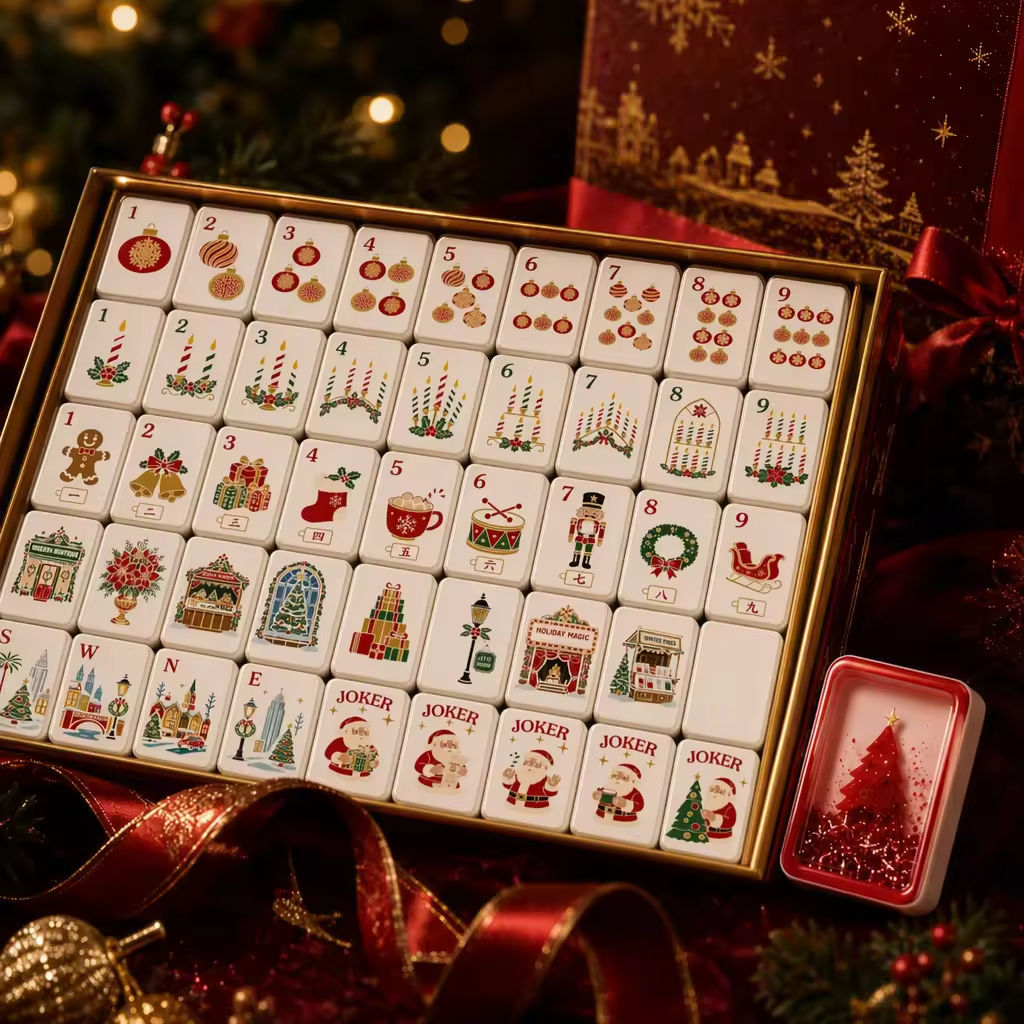
Fujian mahjong is a regional Chinese mahjong variant played primarily in Fujian Province, Southeast China, featuring distinctive hand-painted tiles and unique local rulesets that differ significantly from American, Cantonese, and standard Mandarin play. Games use 108 tiles (Bams, Craks, Dots numbered 1–9, Winds, Dragons, and Flowers), played by four players without jokers. A round typically lasts 30–60 minutes depending on house rules. Fujian sets emphasize artisanal tile craftsmanship—traditionally ceramic or bone with hand-applied ink—and favor "closed" play where melds stay in hand rather than exposed on the table. Regional scoring systems vary by city and household. Unlike American mahjong, Fujian has no standardized annual card and no formal National League rulebook, making it essential to clarify house rules before sitting down to play.
Fujian mahjong is one of China's oldest regional variants, shaped by centuries of local gaming culture and passed down through family networks rather than commercial standardization. If you've played American mahjong, you'll recognize the tile types—but the gameplay, strategy, and social role are distinctly different. We'll cover the core rules, how it compares to what most Western players know, and what you need to understand before joining a Fujian game.
What tiles does Fujian mahjong use?
Fujian mahjong begins with 108 standard tiles: three suited ranks (Bams, Craks, Dots) numbered 1–9 with four copies each; four Winds (North, East, South, West); three Dragon honor tiles (Red, Green, White); and eight Flowers (Spring, Summer, Autumn, Winter, plus four seasonal variants). There are no jokers or blank tiles—every tile in play has a fixed role. The 1 Bam typically depicts a bird, the White Dragon is sometimes called "Soap," and Flowers carry cultural significance tied to the lunar calendar. This 108-tile structure contrasts sharply with American mahjong's 152-tile deck (which includes jokers and extra honors), making Fujian games inherently more structured and less flexible in hand composition.

How do Fujian melds work differently?
In Fujian mahjong, players form three types of melds: pungs (three identical tiles, e.g., three 5 Dots), kongs (four identical tiles), and chows (three consecutive numbered tiles in the same suit, e.g., 4-5-6 Bams). Unlike American mahjong—where chows cannot be called or exposed—Fujian players openly declare chows as part of their winning hand. Melds are typically kept concealed in hand until a player declares "mahjong" (a winning hand), at which point all melds are revealed and verified. This closed play emphasizes secrecy and reading opponents' discards, whereas American mahjong encourages early exposure of large melds (pungs, kongs, quints) to demonstrate progress toward a specific card-listed hand. A winning hand in Fujian consists of four melds plus one pair, mirroring Cantonese and standard Mandarin play.
What are the main rule differences from American mahjong?
American mahjong is governed annually by the National Mah Jongg League, which publishes a standardized hand card listing all legal winning combinations—players must match a hand exactly to score. Fujian mahjong has no such card; instead, players follow regional or household rulesets established by tradition and verbal agreement before play. American requires the Charleston (a pre-game tile-passing ritual) and uses eight jokers to increase flexibility and speed; Fujian uses zero jokers and is typically slower, more deliberate, and more reliant on memory and probability. Scoring systems differ radically: American uses a point table based on hand rarity and suit composition; Fujian typically awards fixed points per win, with bonuses for special circumstances (all honors, all suited, all pung, etc.). American games always use exactly 152 tiles and 8 jokers; Fujian uses only 108 tiles. These differences mean that a player skilled in American mahjong must completely reorient their strategy when learning Fujian.
How do you win at Fujian mahjong?
A winning hand consists of four melds (pung, kong, or chow) plus one pair. The first player to complete a legal hand, whether by drawing from the wall or claiming a discard, declares "mahjong" and wins the round. In many Fujian rulesets, a player may also "go out" by drawing a single tile that completes an existing hand structure. Unlike American play—where a hand is predetermined on the card and drawing continues until someone matches it—Fujian is more fluid: players adapt to available tiles and must continuously evaluate whether a draw brings them closer to any legal four-meld-plus-pair combination. Discard strategy is critical because opponents can use any discard to complete a chow or pung. Most Fujian games penalize the player who discarded a tile claimed by the winner, creating strategic tension around tile safety and timing.
Where did Fujian mahjong originate and how is it played today?
Fujian Province's mahjong tradition dates to the late Qing Dynasty, when the game migrated from Shanghai and adapted to local preferences. The coastal region's merchant culture and long history of strategic games shaped a version emphasizing hand-painted artistry and oral transmission of rules rather than printed standardization. Today, Fujian mahjong remains strongest in cities like Fuzhou, Xiamen, and Quanzhou, where it's played in homes, community centers, and informal clubs. The game has not commercialized to the degree of Cantonese mahjong or Riichi (Japanese) variants, so rulesets remain fragmented by locality and household. If you travel to Fujian or join a family game, always ask: Are chows called or concealed? What tiles count as honors? Is there a flower bonus? Do we play with 16 or 8 flowers? Confirming these details prevents misunderstandings and ensures everyone's playing by the same rules.

How do Fujian tiles differ aesthetically from other mahjong sets?
Traditional Fujian mahjong tiles showcase exceptional hand-painting craftsmanship. Ceramic or bone bases are painted with ink characters and colored details—Bams often feature bamboo stalks with careful brushwork, Craks show intricate crack patterns, and Dots display radiant dot designs. Flowers and dragons receive special attention, with artists adding subtle shading and gold leaf accents. This artisanal approach contrasts with mass-produced American or generic modern sets, which use printed graphics or engraved acrylic. Hand-painted tiles feel distinctive in the hand, develop character through use (color softens, patina builds), and reflect regional pride. Many Fujian families own tiles passed down through generations, treating them as cultural artifacts rather than mere game equipment. If you're seeking engraved American mahjong sets for personal use or gift-giving, you'll find a different philosophy: durable acrylic with laser-engraved designs that emphasize clarity and longevity over painterly tradition.
Fujian vs. Cantonese vs. American mahjong: a quick comparison
Aspect | Fujian | Cantonese | American |
Tiles | 108 (no jokers) | 108 + wind variants | 152 (8 jokers) |
Chows allowed | Yes, declared openly or hidden | Yes, typically declared | No chows at all |
Melds exposed? | No, until win | Variable by house | Yes (pung+, early) |
Standardized rules | No; regional/household | Semi-standardized by region | Yes; League card annual |
Jokers | Zero | Zero | Eight mandatory |
Winning hand | 4 melds + 1 pair | 4 melds + 1 pair | 4 melds + 1 pair (card-specific) |
Gameplay pace | Slow, memory-heavy | Moderate | Fast, turn-based Charleston |
Geographic stronghold | Fujian Province, diaspora | Hong Kong, Guangdong, diaspora | North America, Australia |
This table shows that Fujian and Cantonese share structural similarity (hand format, chow rules, no jokers), while American mahjong operates under a fundamentally different framework—annual card dependency, joker integration, and forbidden sequences.
🀄 Shop best-selling mahjong sets →
Where to find Fujian mahjong sets and how to learn the rules
Fujian mahjong sets are less widely available than American or Cantonese variants in Western markets. Online Chinese retailers, antique dealers, and diaspora communities in San Francisco, Vancouver, and Toronto often stock hand-painted ceramic Fujian sets; expect higher prices than mass-produced modern decks due to craftsmanship. To learn rules, connect with Fujian community associations, local Chinese cultural centers, or family members familiar with the game—oral transmission is still the norm, so written rulebooks in English are rare. Many YouTube channels demonstrate play, though subtitles may be incomplete. If you're hosting Fujian players and want to provide comfortable, neutral equipment while they bring their own tiles, a high-quality mahjong mat with a smooth surface and clear tile boundaries ensures fair play regardless of tile type. We also offer mahjong bags and cases durable enough to protect heirloom hand-painted sets during transport.
What to check before you buy or join a Fujian game
Before purchasing a Fujian mahjong set or sitting down to play:
Ask about local rulesets. Fujian Province alone has multiple city-level variations (Fuzhou, Xiamen, Quanzhou differ). Confirm which "style" your group plays.
Clarify flower scoring. Some households award points for flowers; others treat them as ornamental. Some count all eight flowers; others exclude duplicates.
Understand kong rules. Can you declare a kong immediately, or only at your turn? Does drawing a replacement tile give you an extra draw?
Confirm discard penalties. Who pays if you discard a winning tile—only you, or does liability spread across players?
Check if melds can be opened. Some Fujian variants allow announcing pung or kong during play; others keep all melds private until win.
Verify winning conditions. Do you need to win on your own draw, on a claimed discard, or both? Is going out on the final tile a special hand?
Inspect tile condition. If buying a set, ensure hand-painted tiles are intact—cracked or faded paint reduces playability and aesthetics.
Getting these answers in advance prevents friction and ensures everyone enjoys the game.
🎁 See our most-loved mahjong sets & accessories →
Why learn Fujian mahjong if you already play American?
American mahjong offers speed, standardization, and a clear annual rulebook—ideal for competitive league play and newcomers seeking predictable structure. Fujian mahjong rewards patience, memory, and cultural immersion; it's slower, more social, and deeply tied to family tradition and regional identity. If you have Fujian heritage or family connections, learning the game deepens cultural bonds and opens access to multi-generational play at home or during visits to China. If you're a general mahjong enthusiast, Fujian play sharpens your probability assessment (no jokers mean tighter hand construction) and forces you to read opponents through discard patterns rather than exposed melds. The two games aren't competitors—they're different ecosystems. Many experienced players enjoy both, switching between American league nights and Fujian family sessions. Hosting both communities? Invest in mahjong racks with pushers that work equally well for any tile set and high-quality mats that provide a neutral, professional playing surface regardless of variant.
✨ Find your Mahstead set — free US shipping →

FAQ
Can I play Fujian mahjong with an American mahjong set?
No. American sets have 152 tiles with jokers; Fujian requires 108 tiles and no jokers. The tile ratios and game structure are incompatible. You'll need a dedicated 108-tile Fujian set.
Is Fujian mahjong harder than American mahjong?
Different, not harder. Fujian is slower and more memory-dependent (no jokers, no card reference); American is faster and more rule-dependent (League card, Charleston ritual). Skilled American players new to Fujian typically struggle initially because the absence of jokers and chow restriction changes tile probability and hand formation fundamentally.
Where can I buy an authentic hand-painted Fujian mahjong set in the US?
Chinese community retailers, antique dealers specializing in Asian tiles, and online marketplaces serving diaspora communities often stock hand-painted ceramic Fujian sets. Expect to research reviews carefully and verify tile quality before purchasing, as availability and pricing vary widely.
Do all Fujian households play by the same rules?
No. Fujian mahjong lacks a centralized rulebook (unlike American League play). Rules vary by city, district, and family. Always confirm house rules verbally before playing with a new group.
Can I learn Fujian mahjong from online videos if I don't speak Mandarin?
Partially. YouTube and online tutorials demonstrate tile types and basic hand formation, but explaining regional rules and strategy is harder without fluency. Pairing video learning with a native speaker or community mentor is ideal.
What's the main strategic difference between Fujian and American mahjong?
American mahjong is pattern-matching (find the exact card hand); Fujian is probability-weighted (form any legal four-meld-plus-pair while reading opponents' discards). Fujian rewards memory and reading; American rewards card knowledge and joker efficiency.


View More
View More
View More
