
Fujian Mahjong How to Count Points: Scoring System Explained
Last updated: Nov 23, 2026
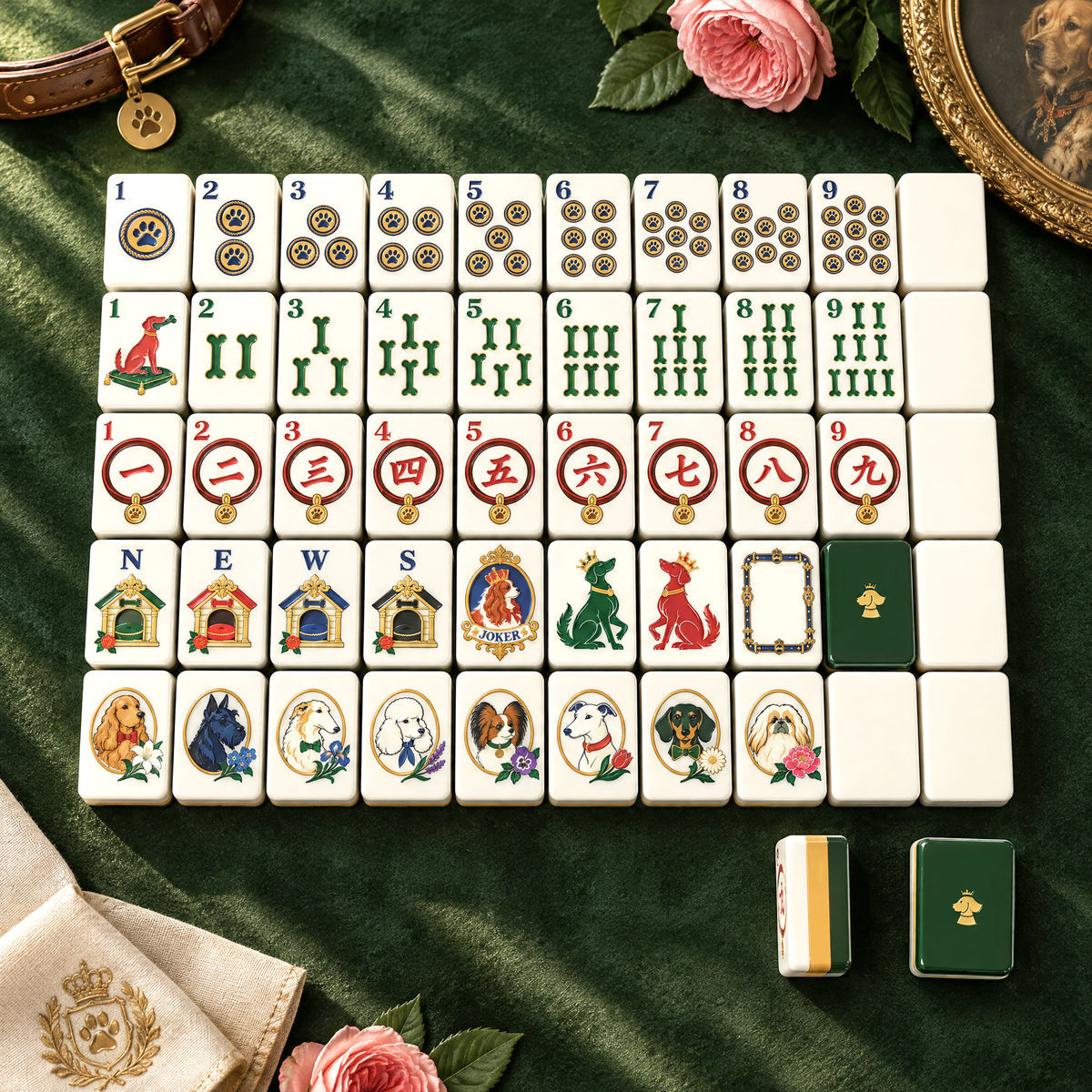
Fujian mahjong (also called Min or Fukien mahjong) scores points based on the melds you expose and combinations in your hand when you win. Unlike American mahjong, which ties all scoring to the published League card each year, Fujian uses a straightforward base-point system: a pung (three identical tiles) is worth one point, a kong (four identical tiles) worth two points, and eyes (the final pair) add one point. Winning adds bonus points depending on who paid. The total score multiplies by the wind round number (East round = ×1, South round = ×2, etc.). Games typically end after four rounds. Jokers are limited and cannot be used in eyes or single tiles, similar to American rules. If you're learning Fujian alongside American mahjong, expect simpler arithmetic but stricter rules about which melds you can claim on your turn—Fujian often requires declaring immediately or forfeiting the meld. A full game with four players lasts 1–2 hours; keep paper and pencil handy, as mental math compounds quickly across rounds.
How do you count base points in a Fujian win?
Base points come from melds you declare during play and the combination in your final hand. Each pung (three identical tiles) = 1 point; each kong (four identical tiles) = 2 points; the eyes (winning pair) = 1 point. Add these before multiplying by round. If you self-draw (win from the wall), add 1 bonus point; if someone discards the winning tile, add 0. Jokers count as the tile they substitute for but do not add bonus points themselves. Write down every meld as it's declared so disputes don't derail the game.

What do the wind round multipliers mean?
Each of the four rounds corresponds to a compass direction (East, South, West, North) and carries a multiplier. East round = ×1; South = ×2; West = ×3; North = ×4. Your total base points multiply by that number. If you score 5 base points in the East round, you earn 5 points; the same hand in the South round earns 10 points. Players typically rotate seats after each round so everyone gets a turn at each wind. Some Fujian variants let East round repeat if East wins again; check house rules before starting. The multiplier system rewards players who win during later rounds—strategy shifts as the game progresses.
How do bonus tiles and special combinations affect the score?
Terminal tiles (1s and 9s) and honor tiles (Winds and Dragons) often earn bonus multipliers in Fujian, though rules vary by region. A pung of all terminals or all honors might be worth double or triple a regular pung. Honor eyes (Winds or Dragons) sometimes earn +1 bonus point. Joker substitutes in a meld may or may not carry the bonus—house rules differ, so agree before the first hand. All 100s (all four suits in a single number: four 5 Craks, etc.) is often a special hand worth a fixed high payout. Read your rulebook or group's house rules sheet before play; Fujian scoring assumes transparency about bonuses.
What's the difference between Fujian and American mahjong scoring?
Aspect | Fujian | American |
Base system | Fixed points per meld (pung = 1, kong = 2) | Points tied to annual League card patterns |
Scorekeeper role | Player with paper/pencil | Often one caller/scorekeeper per table |
Multipliers | Wind round (×1 to ×4) | None in standard American rules |
Joker use | Limited; cannot be in eyes or single tile | Cannot be in eyes or single tile; more abundant |
Timing | Must declare melds immediately or lose claim | Can hold tiles and claim later in sequence |
Hand complexity | Simpler: melds only | Complex: hand must match published card pattern exactly |
Game length | Typically 4 wind rounds (~1–2 hours) | 1 game = 4 rounds per player as East; varies by group |
Fujian rewards consistent pung-building and quick decision-making, while American demands pattern recognition and strategic hand manipulation within one year's card. If you play both, expect a mental gear shift: Fujian is arithmetic-heavy; American is card-logic heavy.
🀄 Shop best-selling mahjong sets →

How do you settle payments at the end of a hand?
The loser(s) pay the winner. If the winner self-drew, all three opponents pay the full base score (multiplied by wind round). If the winner won on a discard, the discarder pays double; the other two pay single. Example: East round, base score 4 points. If winner self-drew, each of three players pays 4 points (12 total). If winner won on discard, discarder pays 8, others pay 4 each (16 total). Keep a running sheet across all four rounds; at the end, settle net balances (one player may owe, another may be owed). Some groups use a "points bank" where all payments go into a pool and are redistribed at the end. Agree on payment method before hand one to avoid confusion.
🎁 See our most-loved mahjong sets & accessories →
What common scoring mistakes should you avoid?
Forgetting the wind multiplier. Always multiply base points by the round multiplier before settling. Writing it down prevents mental-math errors.
Mis-counting joker melds. Jokers substitute for a tile but do not add bonus points on their own. If a joker is in a pung of 5 Dots, count it as a regular pung (1 point), not more.
Claiming a meld out of turn. In Fujian, if you miss claiming immediately, you forfeit the meld. American mahjong allows delayed claims; Fujian does not.
Disagreement on bonus rules. Before the game starts, clarify: Are terminal/honor bonuses active? Are all-100s in play? What about concealed hands? Write the house rules on the scoresheet so no one second-guesses later.
Losing the scoresheet. Disputes arise when no one remembers the total. Assign a scribe or snap a photo of each round's tally.
What to check before you buy or join a game?
House rules document. Ask the host for a written list of bonus rules, payment method, and round count. Fujian has many regional variants; clarity saves frustration.
Tile set condition. If using your own or a friend's set, ensure all tiles are legible and no jokers are missing. Worn or unclear tiles slow play and trigger arguments. Our best-selling mahjong sets use durable acrylic that stays readable through hundreds of games.
Scorekeeper agreement. Decide before play who keeps score and confirm they have paper and pen. If you're hosting Fujian regularly, a mahjong mat with a built-in scorepad area keeps everything organized.
Time commitment. A four-round Fujian game with breaks takes 1.5–2 hours. If anyone needs to leave early, agree on a "final round" cutoff before starting.
Language barrier. If playing with speakers of different Chinese dialects, agree on a single scoresheet format (numbers only, no regional terms) to avoid confusion over pung vs. kong or wind names.
✨ Find your Mahstead set — free US shipping →
How does Fujian fit into the broader mahjong family?
Fujian is one of dozens of regional Chinese mahjong variants, each with its own tile count, melds, and scoring. American mahjong is a 20th-century Western standardization using 152 tiles and the annual League card. Hong Kong mahjong uses 136 tiles and allows chows (sequences). Taiwanese mahjong combines elements of both. Riichi (Japanese) plays with 136 tiles and a closed hand until winning. All share the same core concept—match melds and eyes—but diverge in execution and scoring. Learning Fujian alongside American gives you mental flexibility: you train two different scoring logics and see how geography and history shape game design. Most casual players stick to one variant, but competitive or culturally curious players often learn two or three. If you're hosting a mixed group, clarify which variant you're playing at the table; a simple sign or scoresheet notation prevents tile-counting errors mid-game.

FAQ
Do jokers have a point value in Fujian mahjong?
Jokers are substitutes only and carry no bonus points. A pung with one joker is still 1 point. Jokers cannot be used in the eyes (final pair) or as a single tile. Count them as the tile they replace.
How many rounds does a full Fujian game have?
Four rounds, one for each wind (East, South, West, North). Each round uses a different multiplier (×1 to ×4). Some house rules allow East to repeat if East wins; confirm before starting.
Can you claim a meld on another player's discard in Fujian, or must you play immediately?
You must claim and declare immediately or forfeit the meld. Unlike American mahjong, Fujian does not allow delayed pung or kong claims. If you hesitate, the next player's turn begins and your chance is gone.
What's the difference between a "self-draw" win and a "discard" win in scoring?
Self-draw: you take the winning tile from the wall. All three opponents pay you the base score (×wind multiplier). Discard: someone threw the winning tile. The discarder pays double; the other two pay single.
Are terminal and honor tiles worth more points in Fujian?
It depends on house rules. Some regions award bonus multipliers (e.g., a pung of 1s or Winds = 2 points instead of 1). Always confirm bonuses with the host or scorekeeper before the first hand.
How do you record scores across four rounds in Fujian?
Keep a running tally sheet with one row per round and four columns (one per player). Add each hand's base score (×multiplier) to each player's round total, then sum all four rounds at the end. Settle net balances last.
If two players go out on the same discard, who wins in Fujian?
The player closest to the discarder in turn order (moving left in most rule sets) claims the tile. Check your local rules; some variants allow simultaneous wins where both players split the payout.
Can you use a joker as the eyes (final pair) in Fujian mahjong?
No. Jokers cannot be used in eyes or as a single tile. Your final pair must be two identical regular tiles (e.g., two 5 Dots, two East Winds). This rule matches American mahjong.


View More
View More
View More
