
Floral Mahjong Pushers: Which Design Works Best for Your Game
Last updated: Nov 23, 2026
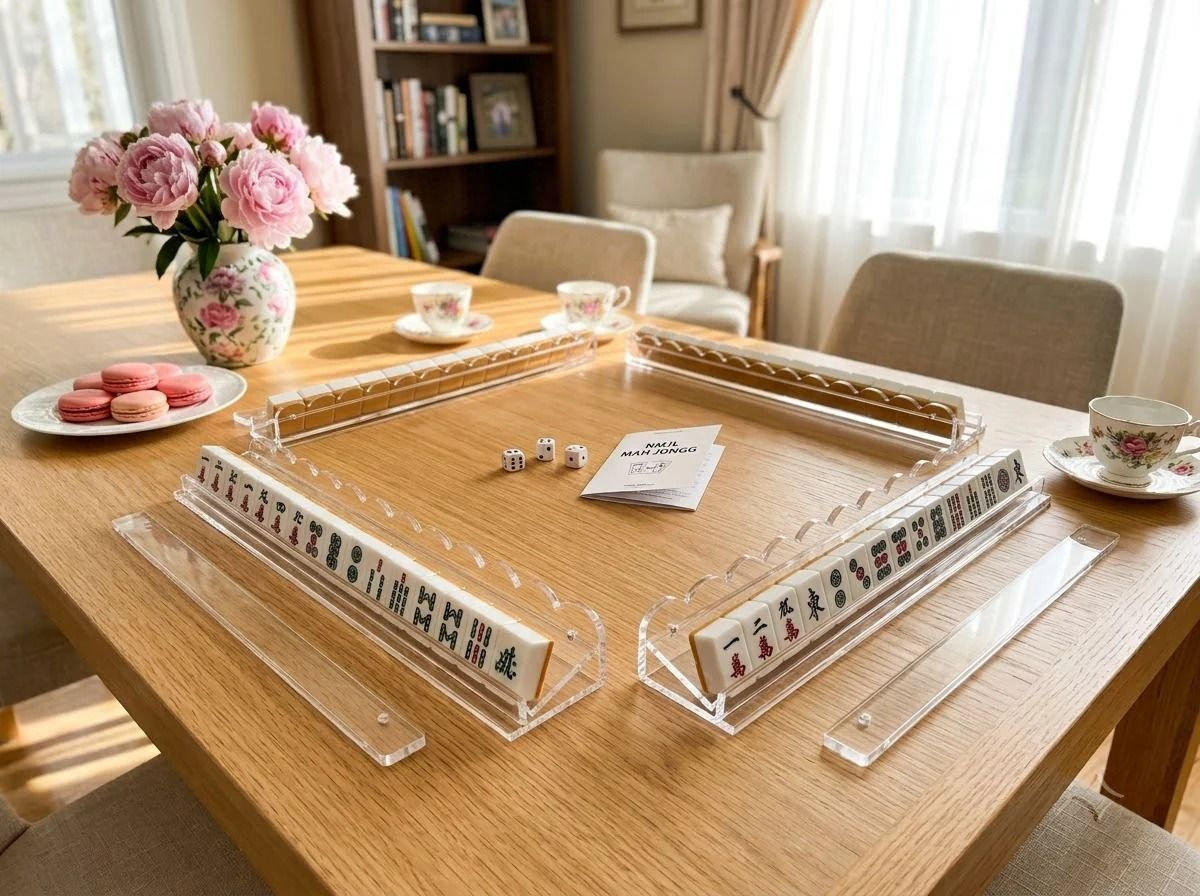
Floral mahjong pushers are decorative tile-moving tools featuring botanical designs—flowers, leaves, or garden motifs—laser-engraved or painted onto acrylic or wood handles. They serve the same purpose as plain pushers: helping you manage your hand and expose melds neatly during play. Floral designs appeal to players who want their racks with pushers to reflect personal taste while keeping tiles organized and visible to all four players. The choice between design styles (watercolor florals, line art, bold botanical prints) depends on table lighting, your hand size, and whether you prioritize visual impact or minimal distraction during gameplay. At Mahstead, floral pushers come paired with matching acrylic racks as part of complete hand-management sets; the design influences grip texture and durability but not functional performance. Expect to spend more than plain pushers but less than custom engraved sets—see current pricing on the product page for exact options.
🎁 See our most-loved mahjong sets & accessories →
How does pusher design affect your grip and tile control?
Floral designs can add surface texture—raised engraving or paint buildup—that changes how pushers sit in your hand. Smooth watercolor florals (light engraving) maintain the original acrylic feel and won't catch on tiles or rack edges; bold line-art flowers often have deeper cuts, which increases friction and helps you control tiles during fast exposure. If you have small hands or play at high speed, minimal-relief florals work better; larger hands and casual tables often prefer tactile designs that slow tile movement for precision. Test a pusher sample during your weekly game before committing to a full set—hand fit varies widely, and a beautiful design means nothing if you can't move tiles confidently.
Which floral styles work best with different tile colors?
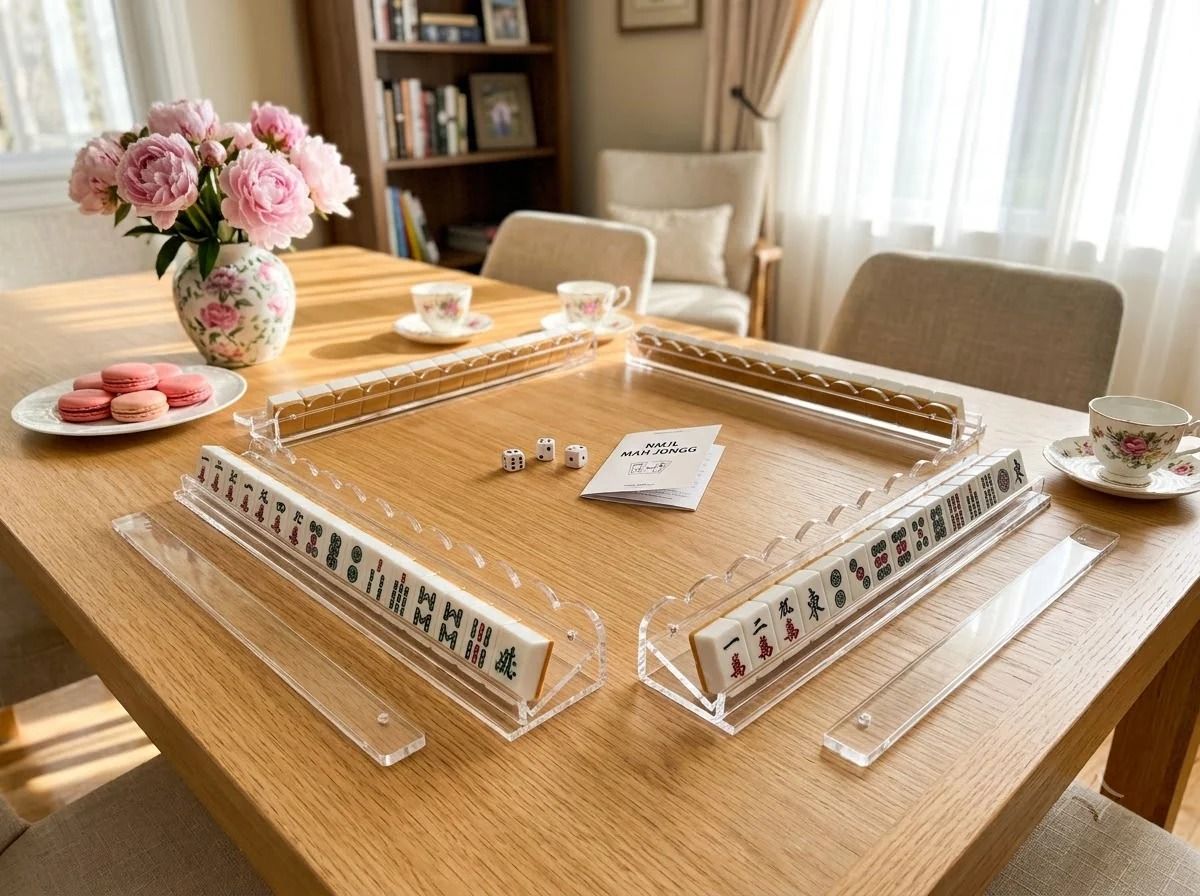
Coordinating pusher design to your tile palette elevates the whole table. Warm-tone florals (rust, coral, deep red flowers) pair naturally with best-selling engraved American mahjong sets that use ivory or cream-colored tiles—the flowers echo the tile warmth. Cool florals (lavender, teal, soft greens) suit translucent or frost-colored acrylic tiles and create visual separation, so pushers don't blend into the hand. Monochrome line-art florals work with any tile color and won't distract during quick decisions. Avoid pushers with more than three colors—busy designs fragment attention when you're scanning for tiles during the Charleston or face-down discards. One player in our weekly group uses sage-green watercolor florals with ivory tiles; the understatement lets everyone focus on play, not decor.
What's the practical difference between engraved and painted floral pushers?
Engraved florals are lasered or routed into acrylic or wood, creating permanent channels or relief. They resist wear, won't fade with handling, and feel slightly textured but don't peel. Painted florals are applied as a topcoat and can chip if pushers are dropped or stored carelessly—avoid if your group plays weekly and packs sets frequently. Engraving costs slightly more but outlasts painted designs by years; at our table, we've had engraved floral pushers in rotation for three years without degradation. If you travel with your set or loan pushers to other games, engraving is the safer investment. For home-only play where pushers stay in your case between sessions, either works—choose based on design availability and personal preference.
Should you match pushers to your mahjong set style?
Coordination creates a cohesive look, but pushers are functional accessories, not decor. If you own a set with personal engraving (names, initials, or a year), you can choose floral pushers that echo a color or motif from that design—reinforcing the "this is my set" feeling. For standard sets, you have full freedom: florals actually stand out more if they contrast with tile colors or themes. A player with a classic bamboo-themed set uses bright wildflower pushers to signal "this is serious play, not nostalgia"; another uses subtle cherry blossom pushers that nod to Asian aesthetics without repeating the tile design. Mix-and-match is acceptable—there's no rule requiring pushers to match tiles. The goal is confidence: use whatever design makes you want to play.
What should you check before ordering floral pushers?
Check Point | Why It Matters | Red Flags |
Handle length | Must fit your hand and tile height in rack | Too short = weak grip; too long = catches on neighbors' racks |
Weight | Heavier pushers (wood) slow tile exposure; lighter (acrylic) allow quick flicks | Unbalanced pushers twist in hand; buy a pair to test |
Floral detail visibility | Design must be clear under your table lighting | Engraving disappears under dim light; test a sample first |
Relief depth | Deeper engraving adds friction; smooth designs let tiles slide freely | Catches on rack corners; ask for specifications |
Pair matching | Both pushers must be identical in design, weight, balance | Asymmetry causes inconsistent tile control |
Acrylic color | Must coordinate with your tile set and mat | Transparent vs. opaque changes how design reads |
Before ordering, confirm that pushers come as a matched pair (not singles) and that the floral design is consistent across both. Some sellers include pushers in rack bundles; others sell separately. At Mahstead, floral racks with pushers are sold as complete sets, so you know everything coordinates. Ask the seller for close-up photos of engraving or paint finish and clarify the pusher weight—acrylic is lighter than wood and handles differently under fast play.
🀄 Shop best-selling mahjong sets →
Which floral styles pair with different mahjong play styles?
Casual, social games benefit from playful floral designs—bright wildflowers, garden scenes, or whimsical botanical illustrations that spark conversation and set a relaxed tone. Serious tournament or weekly league play calls for understated florals (minimal line art, soft watercolor, single-bloom designs) that don't distract during quick decisions or when reading the card. If you host beginners, floral pushers that match mats with complementary patterns create a welcoming, complete table setup; the beauty signals "this is cared for" and reduces newcomer anxiety. Players in our group who teach mahjong often use gentle floral pushers paired with a matching mat—the coordination helps students remember the game has rhythm and beauty, not just rules. Choose design intensity to match your game's pace: slower play allows busier designs; faster games need simplicity.
✨ Find your Mahstead set — free US shipping →
How do you care for floral pushers to keep designs lasting?
Engraved designs are nearly maintenance-free—they're permanent. Wipe with a soft, dry cloth after play to remove tile dust and skin oil that dulls engraving visibility. Store pushers in your mahjong case or bag away from direct sunlight; UV exposure can fade paint on any toplayer designs over time. Never use abrasive cleaners or alcohol on engraved acrylic; it causes crazing (fine cracks in the surface). If pushers get sticky (from spilled drinks at the table), a damp cloth works; dry immediately. For painted floral pushers, avoid heat and humidity extremes; temperature swings cause paint to separate from the base. One player stored pushers in a hot car and the paint bubbled; keep them at room temperature. Replace pushers if engraving wears smooth or paint chips—worn pushers slide unpredictably and affect tile control during critical turns.
FAQ
Can I use any pusher style with a 160-tile American mahjong set?
Yes. Pushers are separate functional tools; floral designs work with any set. Confirm the pusher handle height matches your rack depth so you can control tiles without the pusher getting stuck or falling out during play.
Do floral pushers cost more than plain pushers?
Yes, typically more because engraving or painting adds production steps. See current pricing on the product page for exact comparisons between plain and floral options.
Will a floral design distract me during the Charleston or fast discard plays?
Not if you choose understated florals—line art or minimal watercolor won't pull attention. Busy multicolor designs do distract some players; test during a casual game before using in league play.
What's the most durable option: engraved or painted floral pushers?
Engraved lasts longer—permanent designs that resist fading and won't chip. Painted can peel if dropped or exposed to heat; fine for home-only players but risky if you travel with your set.
Can I mix floral pushers with a non-floral mahjong mat?
Absolutely. Floral pushers pair with any mat; coordination is optional. Many players use bold pusher designs to add personality to a plain mat without overwhelming the table.
How do I know if a floral pusher will fit my hand size?
Test one before buying a full pair. Most handles are 4–5 inches long and weigh between 2–4 ounces; if you wear small gloves or have wide palms, confirm dimensions with the seller or ask for a sample.


View More
View More
View More
