
Filipino mahjong tips: play Sakla, card-free style
Last updated: Nov 23, 2026
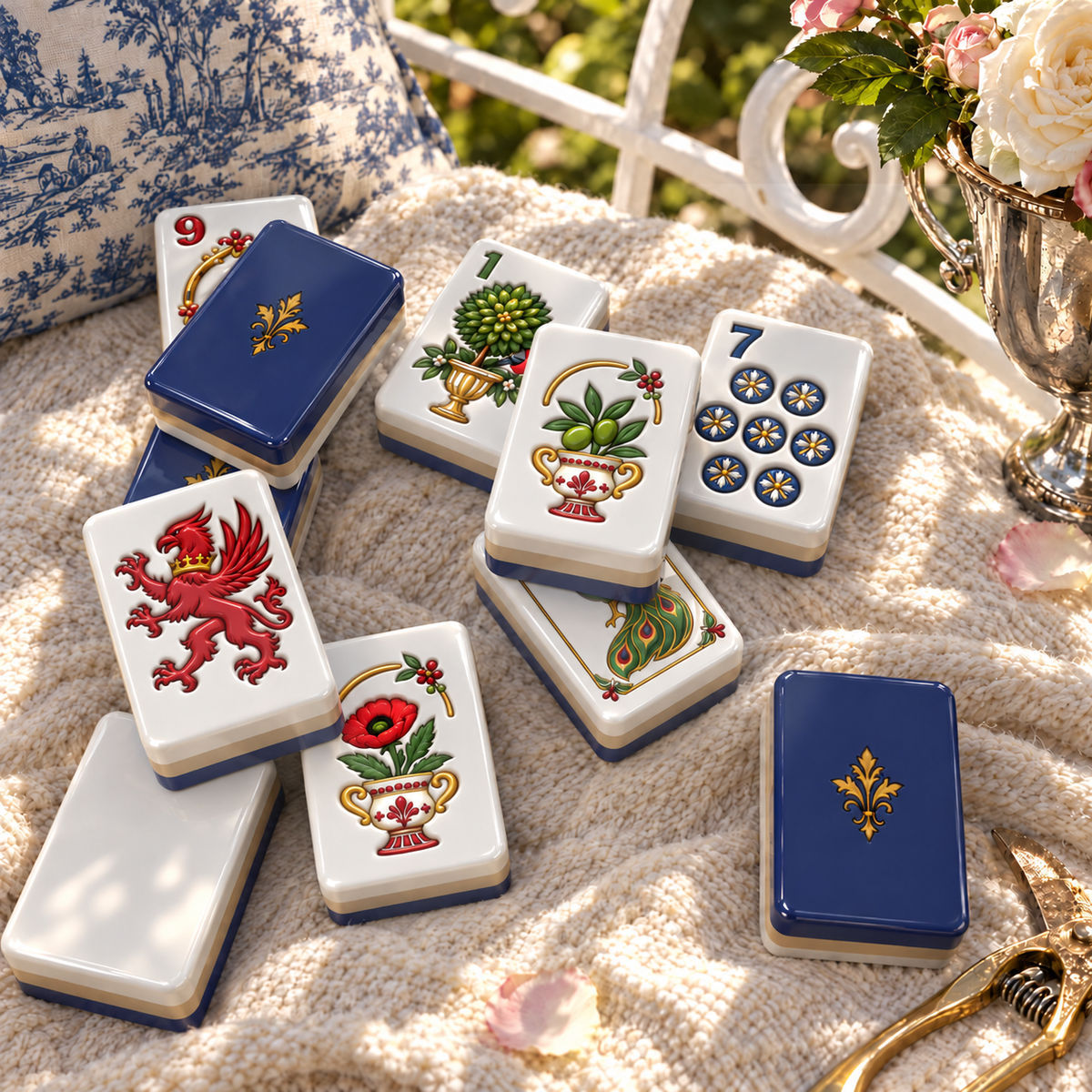
Filipino mahjong (called Sakla in many regions) is a memory-based variant played without the National Mah Jongg League card—you memorize winning patterns before play. It uses the same 152-tile American-style set (Bams, Craks, Dots, winds, dragons, flowers, jokers) but emphasizes fast recall and flexible hand-reading instead of card lookups. Games typically last 30–45 minutes per round. You play four-handed, just like American mahjong, but with looser hand validity rules and no formal Charleston in many versions. Beginners should practice common patterns offline first—standard pairs, triples, and runs—before joining a live game. Sakla rewards memory over rule-checking, so expect faster play and more table talk. Our best-selling acrylic mahjong sets are durable enough for the rapid tile-flipping Sakla demands.
What is Sakla and how does it differ from American mahjong?
Sakla is Filipino mahjong played without a reference card—players memorize winning hand patterns instead of looking them up mid-game. American mahjong (played with the annual League card) lets you pause and check; Sakla demands you know the patterns cold. Both use identical tiles (Bams, Craks, Dots, winds, dragons, flowers, jokers), but Sakla feels faster, looser, and more social because there's no card lookup delay. Sakla also often forgoes the formal Charleston (tile-passing ritual) or shortens it, jumping straight to play. The real difference is mental load: Sakla shifts mastery from card-reading to hand memory and quick decision-making.

What are the core winning patterns in Sakla?
Filipino Sakla players typically memorize around 20–40 core hand patterns, far fewer than the hundreds on the American card. Standard winning hands include pairs of identical tiles plus five melds (three-tile or four-tile combinations), mostly simples: three identical tiles (pung/triplet), four identical tiles (kong/quad), or runs of mixed suits. Most patterns do not use sequences of consecutive numbers across one suit (those are rare or house-ruled). Winning hands often follow a theme—all Bams and Craks, all honors (winds and dragons), or mixed with one wild joker. Ask your table group for their specific pattern list before you sit down; house rules vary by neighborhood and family.
How do you read your own hand fast in Sakla?
Speed comes from organizing as you draw. Sort tiles by suit and number immediately—all Bams together, then all Craks, then all Dots, then honors. Look for partial melds (two tiles that could become a triplet, or three of the same). Identify your pair first—that's your anchor, and you build around it. Count jokers in your hand early; each joker wild-sub for one tile in a meld, so know where they fit. On each turn, ask: Can I complete a meld with my draw? Can I see a full winning pattern forming? Discard your most "lonely" tiles first—singles with no matching pairs or near-melds nearby. This way, you stay ready to call win (or go "Sakla") on almost any draw. Practice arranging a practice hand for 60 seconds before your first game.
What are the most common beginner mistakes?
Hoarding jokers. New players save jokers "for later," but Sakla rewards using them early to complete melds and pivot your hand toward winning patterns faster. A used joker is live capital; a saved joker is dead weight.
Discarding middle numbers. Throwing away 4s and 5s first seems safe, but they're the most useful for completing runs and mixed patterns. Save 1s, 9s, and honors (which don't run) for last.
Not listening to discards. When your opponent throws a 3 Crak, note it—you now know they don't need 3 Craks. Shape your reads around the table's discard patterns; Sakla is as much about reading opponents as managing your own hand.
Calling too early. Unlike American mahjong, Sakla doesn't penalize you for not declaring a ready hand, so wait until you're genuinely one tile away from a concrete pattern. Premature "nearly ready" calls cost tempo and signal weakness.
Forgetting house rules. Bonus points for certain colors, joker limits per hand, or whether flowers count as melds vary by table. Ask at the start, even if you think you know.
How should you practice Sakla before your first game?
Practice Method | Best For | Time | Why It Works |
Solo hand drill (20 random hands) | Memory under pressure | 20 min | Trains pattern recognition without table stress |
Two-player demo (no scoring) | Understanding flow | 15 min/round | Slower pace lets you focus on reads and timing |
Study your table's pattern list | Specific house rules | 10 min | Eliminates confusion on game day |
Watch one live round | Table rhythm and talk | 30 min | Primes you for real game speed |
Full four-player practice | Full simulation | 1 hour | Closest match to actual play; you see all four positions |
Honest take: most Sakla tables welcome brand-new players at a relaxed game, so don't over-study. Sit in as a kibitzer (observer) for one round, ask questions, and jump in round two. Sakla players are generally patient teachers.

What equipment do you need for Sakla?
You need one American mahjong set (152 tiles + 8 jokers, 160-tile total), a mat or table with good grip (tiles slide less), and optional racks or pushers to keep tiles upright and organized. Sakla is faster than American mahjong, so durable acrylic tiles hold up better than bamboo under rapid re-dealing. A mahjong mat with a smooth, matte surface prevents tiles skidding across the table when players discard with energy. Many Sakla players also use racks with pushers to keep their concealed hand stable during fast play—your hand doesn't shift mid-turn, and you read quicker. You do not need a reference card, scorepad (many play for small stakes and settle verbally), or a dealer marker, though some groups keep a simple slip to track dealer rotations.
🀄 Shop best-selling mahjong sets →
How do scoring and winning work in Sakla?
Most Sakla games use simplified scoring or no formal scoring—play is often friendly, for bragging rights or small ante stakes. When you achieve a valid winning hand, you declare "Sakla!" and reveal it; the other three players pay you a fixed amount (e.g., 1 unit each from the pot, or directly to you). Some tables award bonuses: concealed win (no one had called a discard), winning off the wall (drawing your winning tile), or matching your discard to a specific pattern earn double or triple payout. Unlike American mahjong, Sakla rarely uses a complex League scoring sheet. Ask your group for their payout rules before sitting down. If you're playing casually, you can skip scoring entirely and just play for the pleasure of pattern-solving and table talk.
What to check before you buy a set for Sakla
Tile grip and surface: Acrylic tiles are less slippery than bamboo and hold up to Sakla's faster gameplay. Check product photos for matte (non-glossy) finish.
Tile size and weight: Standard American mahjong tiles (roughly 1¼ inches) are easier to read and handle quickly than smaller or oversized sets. Heavier tiles (acrylic, not plastic) shuffle without chipping.
Number of jokers and spares: A 160-tile set includes 152 playing tiles + spares; that's your entire toolkit. No need to buy extra.
Case or bag: If your Sakla group plays at rotating homes, invest in a travel bag or case that protects tiles and keeps them organized—a 30-minute commute to game night is routine.
Mat condition: If the set comes without a mat, add a durable mahjong mat; it prevents tiles from sliding and speeds up your reads.
🎁 See our most-loved mahjong sets & accessories →
Why memory matters more than rules in Sakla
Sakla culture prizes quick thinking and social play over rigid rule-checking. Because there's no card to consult, your brain becomes the reference—you learn patterns through repetition, not lookup. This also means Sakla is more forgiving in some ways (no one's policing card alignment or joker usage as strictly) but less forgiving in others (you can't plea "the card says so"). Players who win at Sakla combine pattern memory, table observation, and fast discard psychology. You'll improve fastest by playing often, not by cramming rules. After 5–10 games, you'll have most patterns locked in and can focus on reading your opponents' hand speed and discard tells.
✨ Find your Mahstead set — free US shipping →

FAQ
Is Sakla the same as Chinese mahjong?
No. Sakla is Filipino and uses American-style tiles (Bams, Craks, Dots, winds, dragons, jokers); Chinese mahjong uses different tiles and hand-winning logic. Sakla is card-free and memory-based; Chinese mahjong has its own rule set. They're distinct games played on the same tile hardware.
Do you have to memorize *all* winning patterns, or just a few to start?
Start with 5–10 core patterns (all same suit, mixed suit, dragons and honors). Most beginner games use a narrower pattern list. Ask your table for their "starter" patterns; you'll add 10–15 more after 3–4 games without stress.
Can you play Sakla with only three people?
Technically yes, but it's awkward. Sakla is designed for four players; with three, dealer changes break the rhythm, and the discards feel sparse. If you must play three-handed, use house rules (e.g., skip one dealer position each round, or add a "dead hand" that rotates).
What's the typical bet or stake in Sakla?
Most casual games are playful—small coins, a dollar per Sakla win, or just bragging rights. Some family games don't use money at all. Ask your group upfront; never assume stakes or join a game without knowing.
How long does one round of Sakla usually take?
15–25 minutes for experienced players, 30–40 minutes for mixed groups with new players. A full session is usually 4–6 rounds (1–2 hours). The pace is faster than American mahjong because there's no card lookup.
Can you use a rack with pushers for Sakla, or is that too formal?
Absolutely. Racks are even more helpful in Sakla because fast play means your hand can shift mid-turn if not secured. Many Sakla players use simple racks to keep tiles upright and organized—it actually speeds up your reads.


View More
View More
View More
