
Wooden Mahjong Racks: Which Style Fits Your Game?
Last updated: Nov 23, 2026
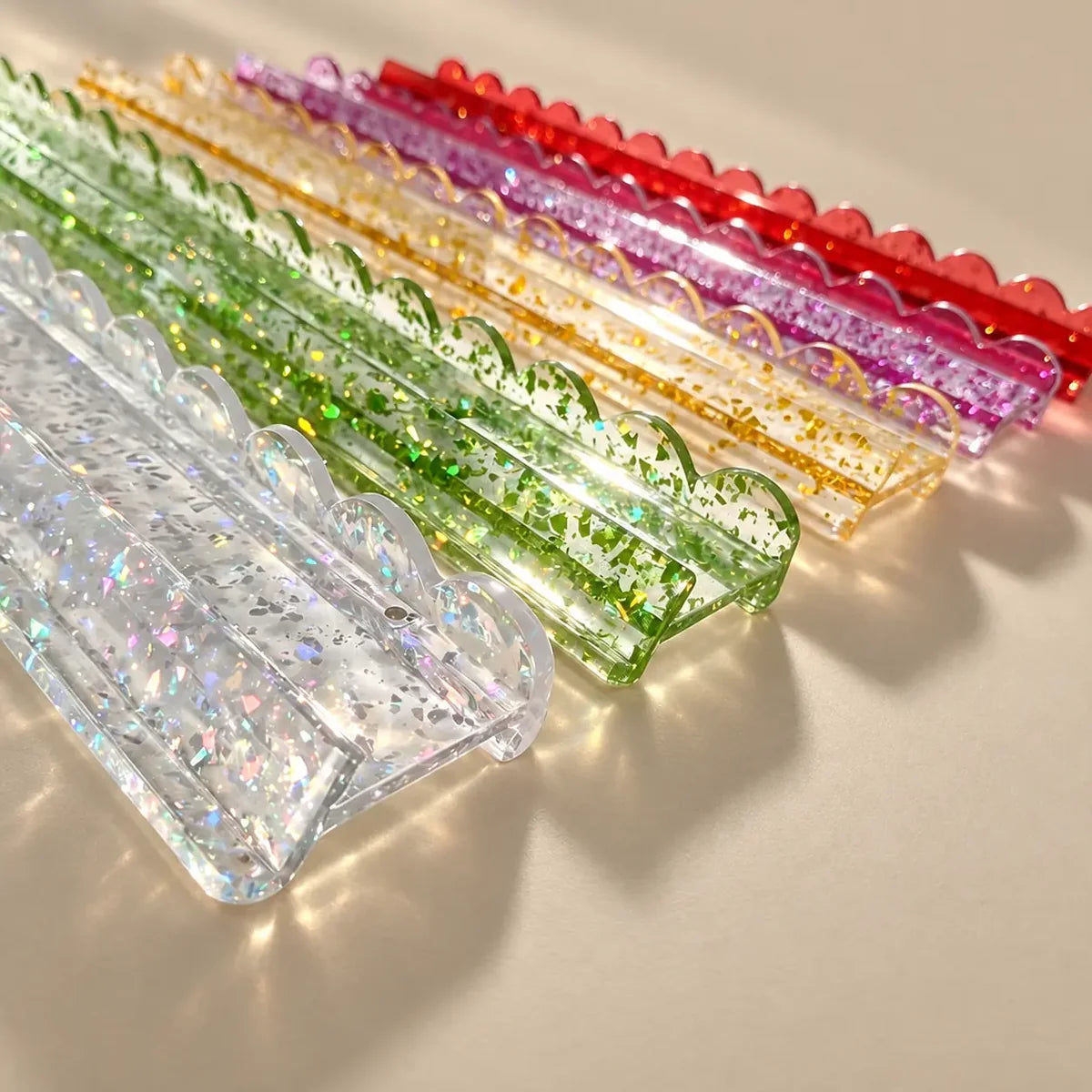
A wooden mahjong rack is a tilted holder that displays your hand of 13 tiles vertically, keeping them hidden from opponents while you play. Most racks are made from bamboo, pine, or hardwood and sit at an angle so tiles lean back against a lip. Racks come in lengths from 12 to 20 inches to hold standard American tiles (or other sizes), often paired with pushers—small sticks that help move tiles smoothly. We recommend mahjong racks with pushers because pushers prevent dropped tiles and repetitive hand strain during long games. Wooden racks range widely in price depending on wood type and finish; you'll find options from budget-friendly bamboo to premium hardwood sets. Look for smooth interior grooves, stable feet, and pushers that won't splinter or warp—these details matter after 20 weeks of weekly play. 🀄 Shop best-selling mahjong sets →
What Size Wooden Rack Do You Need?
Rack length determines how many tiles fit comfortably per player. Standard American racks hold 13 tiles in a single row (the size of a hand before your draw). A 14–16 inch rack works for most adults; if you play with oversized tiles or prefer loose spacing, measure your longest hand first and add 2 inches. Undersized racks (under 12 inches) force tiles to tilt steeply, risking slides. Oversized racks (over 18 inches) waste table space. Check the product listing for exact interior groove width—tiles should slide without jamming or rattling.
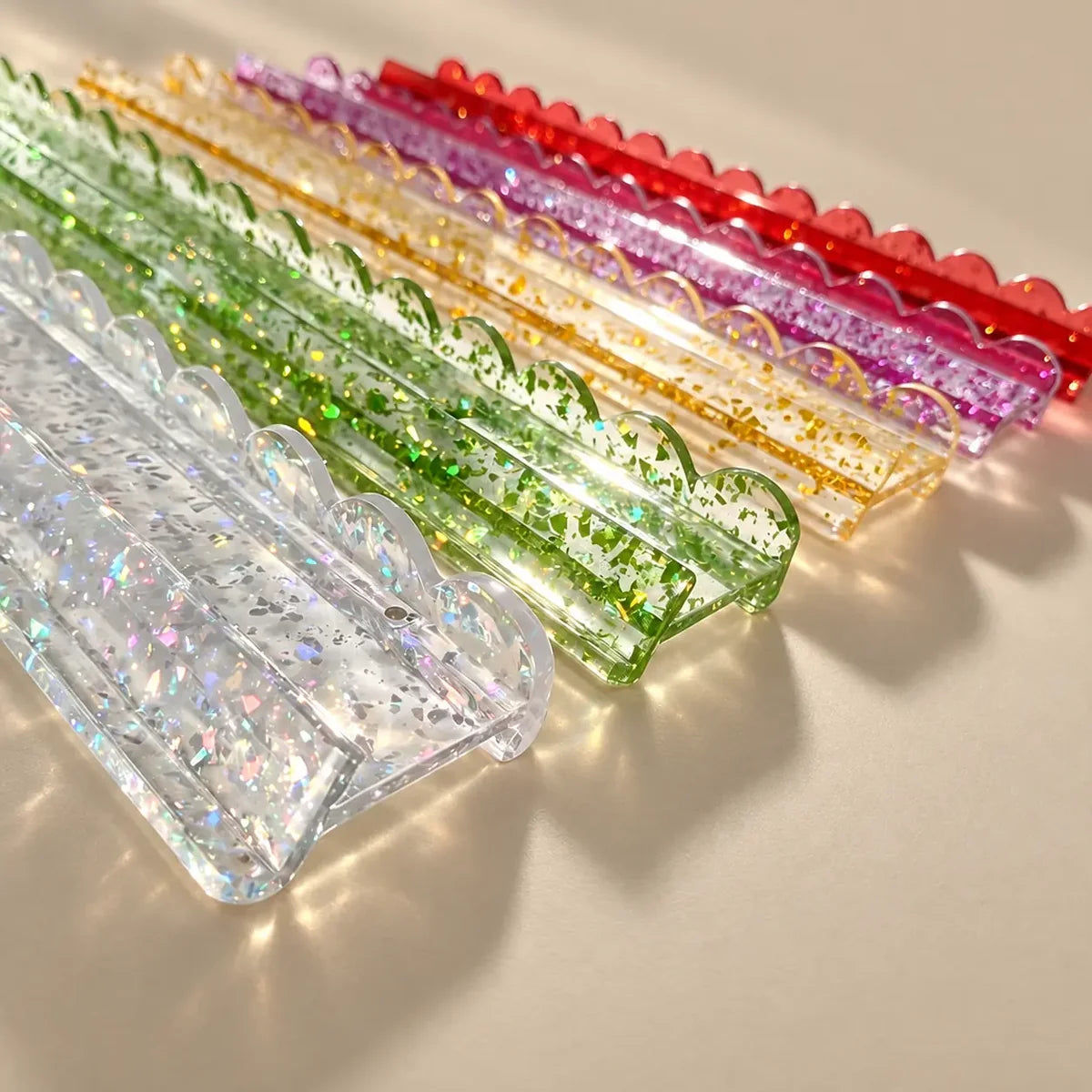
Bamboo vs. Hardwood: Which Lasts Longer?
Bamboo racks are lightweight, affordable, and eco-friendly, but they soften over time if exposed to spills or humidity swings. Hardwood (cherry, walnut, oak) resists moisture, holds a sharper edge, and looks elegant in a formal game room; they also weigh more and cost more upfront. If your game rotates between a kitchen table and a climate-controlled den, hardwood is worth the investment. For casual, covered play indoors, bamboo works fine. Neither wood is "better"—it depends on your setting and how often tiles contact the wood.
Rack Type | Best For | Durability | Maintenance | Table Feel |
Bamboo | Budget games, casual play | 3–5 years | Wipe dry; avoid prolonged wet | Light, stackable |
Hardwood | Serious weekly players | 10+ years | Occasional oil finish | Premium, stable |
Bamboo + hardwood edges | Mixed use | 5–7 years | Standard care | Hybrid strength |
✨ Find your Mahstead set — free US shipping →
Do Pushers Come With the Rack—and Do You Need Them?
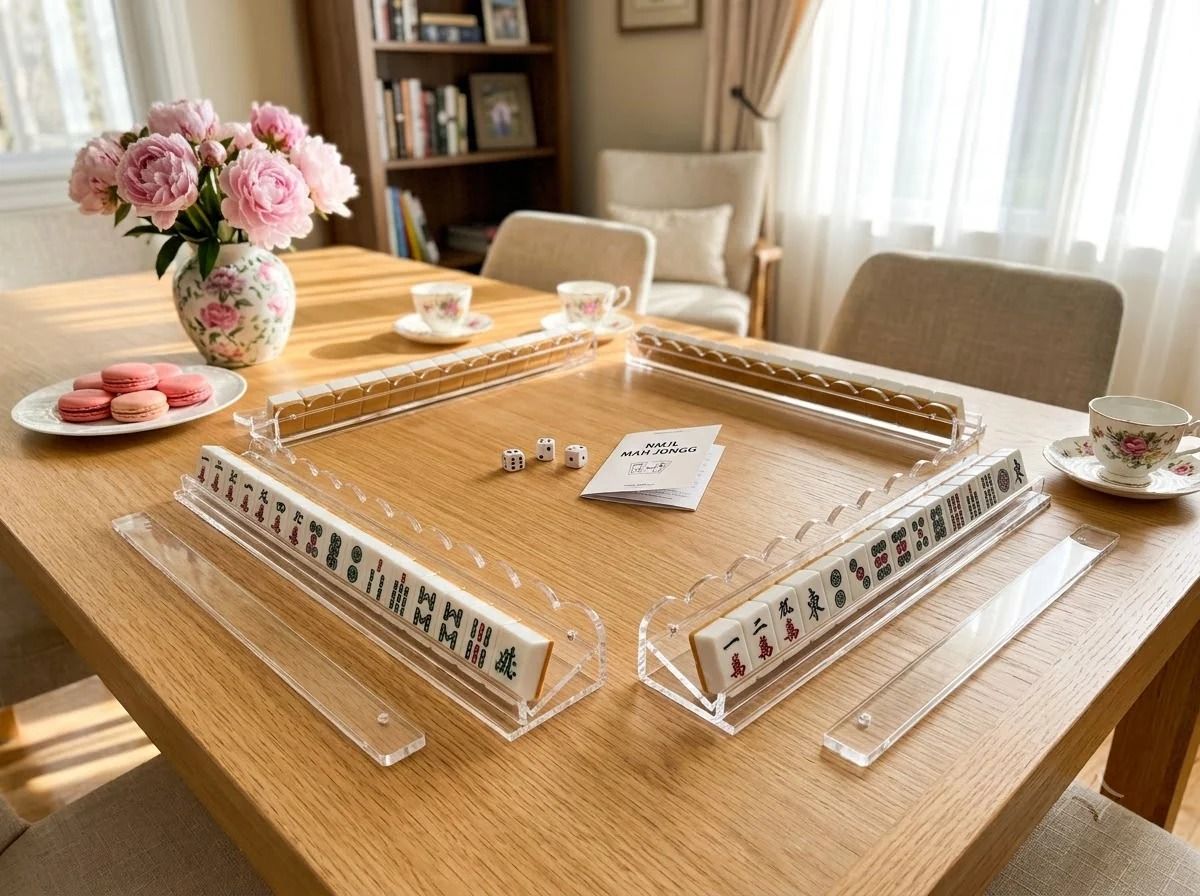
Pushers are small wooden or acrylic sticks that move tiles horizontally across the rack without lifting them, reducing hand fatigue and preventing spills. Some racks ship with one or two pushers per player; others bundle all four together. A few budget racks include no pushers at all—you'll manually slide tiles by hand, which is slower and harder on wrists during a long night. If you're playing more than twice a month, pushers are essential. Check the product page to confirm pusher count; if you need extras, they're often sold separately. Our racks with pushers collection details exactly what's included.
How to Prevent Tiles Sliding Off Mid-Game
The biggest complaint we hear is tiles tilting too far back or sliding forward when bumped. This happens when the rear lip is too low, the grooves are too smooth, or the rack's feet aren't stable on an uneven table. Before ordering, check that the lip height is at least 1 inch (high enough to stop a 1-inch tile from rolling backward). Grooves should have a slight texture or ridges to grip tiles—a polished, frictionless channel is a red flag. Verify that the feet are rubber or cork-padded, not bare wood, so the rack won't slip on cloth mats. Set your rack on a level mat before play, and if tiles still slide, add a thin rubber pad under the front feet to increase the angle slightly.
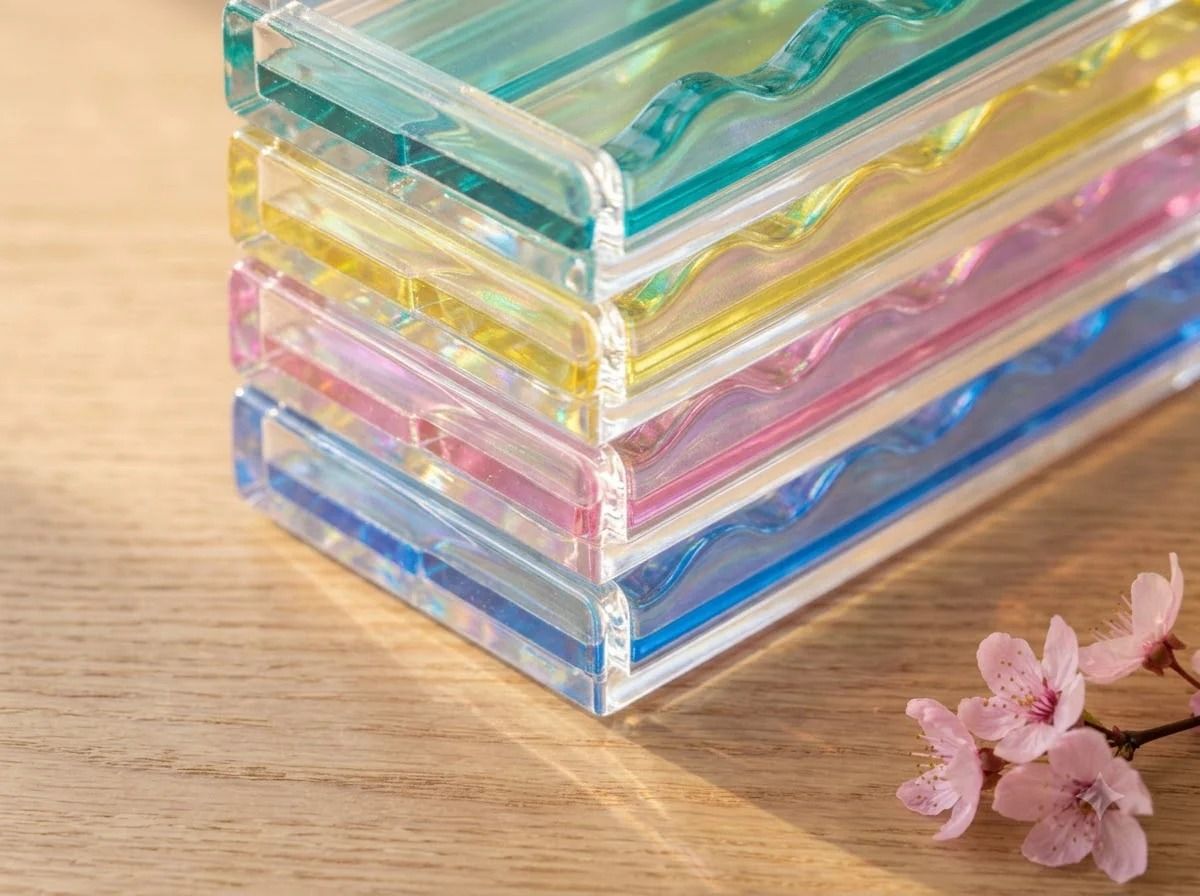
What to Check Before You Buy
Interior groove width: Match your tile size (standard American tiles are about 1 inch wide).
Pusher material: Smooth wood or acrylic; avoid plastic that cracks or splinters.
Lip height and depth: At least 1 inch tall, grooved or textured to grip tiles.
Foot grip: Rubber or cork pads, not bare wood; check for wobble on your table.
Seams and finish: No rough edges, splinters, or gaps where tiles can catch.
Pusher count: Confirm how many come with each rack; you need four total (one per player).
Warranty or returns: Some makers offer a 30-day test; if the product page says so, use it.
Our best-selling mahjong sets often include racks, so compare bundle prices if you're buying both at once.
Wood Finish: Stained, Natural, or Engraved?
A natural finish shows wood grain and ages gracefully; it requires occasional wiping but no refinishing. Stain adds color (walnut, cherry, honey) and hides minor scratches; stained racks look formal and match dark tables. Engraved or inlaid racks feature names, lucky symbols, or family crests—a great option if the rack is a permanent part of your game room or a gift. Engraving doesn't affect function, only appearance. High-gloss polyurethane finish resists stains but can feel slippery and may yellow over time. Matte or satin finishes are more forgiving. Check product photos carefully—what looks smooth online might have a slick feel that affects tile grip.
🎁 See our most-loved mahjong sets & accessories →
How Often Do Racks Need Replacing?
With weekly play and good care, a wooden rack lasts 3–10 years depending on material. Bamboo racks show wear first (grooves flatten, finish dulls) and may need replacement after 4–5 years. Hardwood racks often outlast the players—a walnut rack from 20 years ago still works perfectly. Pushers wear faster than racks; they may need replacement every 2–3 years if used daily. Signs of aging: tiles roll unpredictably, grooves feel sticky or slick, feet are loose, or wood is warped. If your racks are older than 5 years and you're playing serious weekly games, investing in new ones often improves your experience more than any other accessory. Check our racks with pushers guide for signs to watch.
Shipping and Setup: What to Expect When Your Racks Arrive
Wooden racks ship well-packed (usually wrapped in foam or paper, nestled in a cardboard box). They arrive ready to use—no assembly needed. Inspect immediately for loose feet, splinters, or finish defects; if something looks wrong, photos help if you need to follow up. Racks may smell slightly of wood or finish for the first week; air them in a open space if the smell is strong. Once unpacked, wipe with a dry cloth and let sit overnight before play so any moisture from transit evaporates. Stack racks horizontally during storage to prevent warping. We ship across the US free of charge, so factor that into your total cost.
FAQ
Can I use a plastic rack instead of wood?
Yes—acrylic and resin racks are durable and affordable, but wood feels more premium and grips tiles better. Plastic can feel cheap after years of play, though it resists moisture and staining.
Do I need a pusher for each player or can we share?
Each player needs their own pusher. A four-player game requires four pushers. Sharing one slows the game and frustrates players waiting to move tiles.
What if my tiles don't fit snugly in the groove?
Your tiles are larger than standard (jumbo or mahjiang-sized). Measure your tiles' width and compare to the rack's groove width before ordering—product pages list groove dimensions.
Can I oil or stain a wooden rack myself?
Yes, but only after confirming the current finish. If the rack is already sealed with polyurethane, light sanding and a fresh coat works. Bare wood accepts stain easily but requires more maintenance.
How do I know if a rack is stable on my table?
Place it on your game mat or table and gently rock it side-to-side. No wobble means the feet sit flat. If it rocks, the table is uneven or the rack's feet are warped—try a thin shim or pad under one foot.
Are engraved racks worth the cost?
If it's a permanent fixture in your home or a gift to someone serious about mahjong, yes. Engraving adds sentimental value and durability is the same as plain wood; if it's temporary, save the money.


View More
View More
View More
