
Filipino vs. Siamese Mahjong: Key Rules & Tile Differences
Last updated: Nov 23, 2026
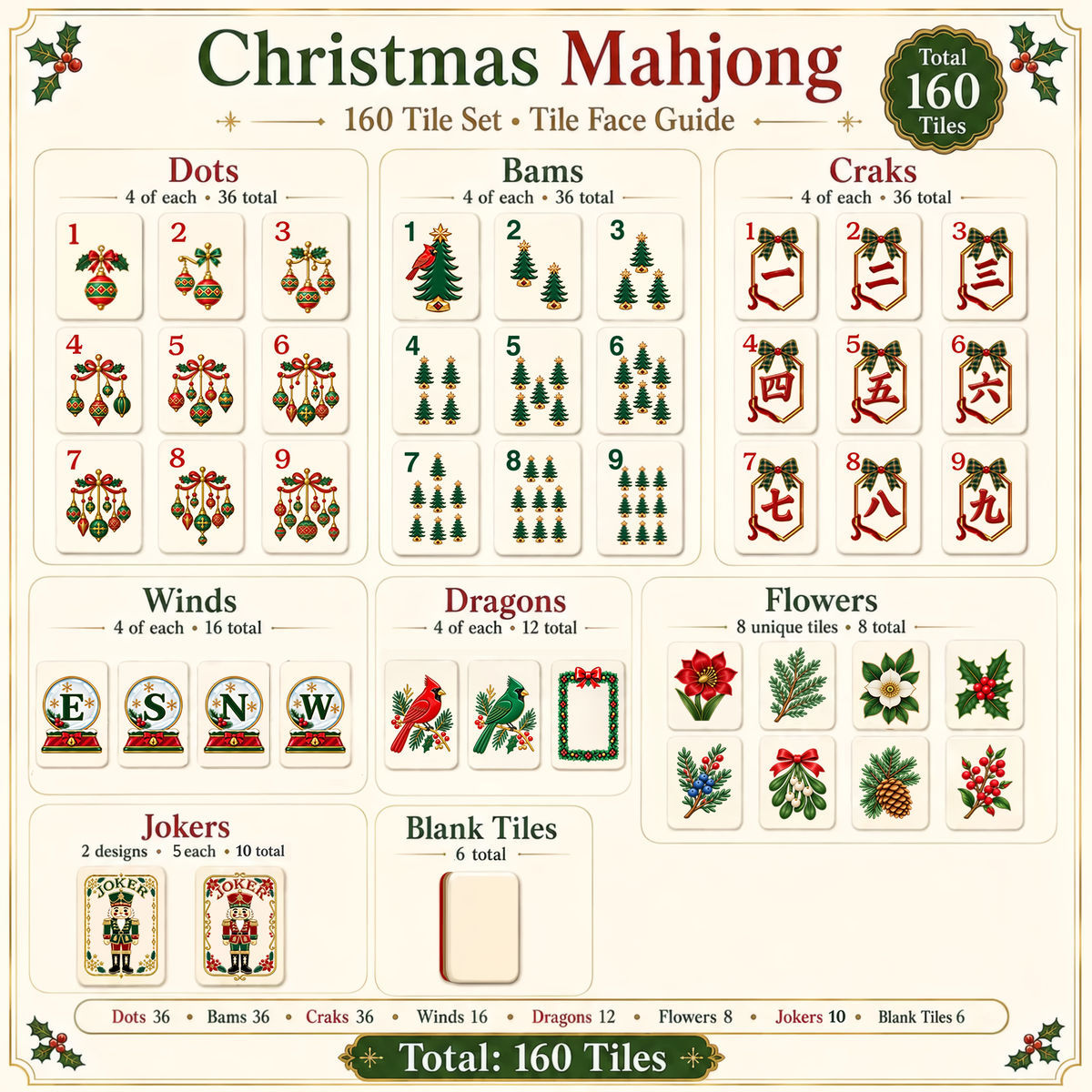
Filipino mahjong uses 144 tiles (three suits × nine numbers × four copies, plus winds and dragons in simplified sets) and features fast paced, predominantly melded hands with "hulas" (calls). Siamese mahjong uses 144 tiles as well but emphasizes concealed play: players build and discard to complete hands largely hidden from opponents, revealing only final melds. Filipino games prioritize social speed and visible strategy; Siamese rewards patience and tile reading. Both differ sharply from American mahjong, which uses 152 tiles, no chows, and hands drawn solely from an annual official card. If you host weekly games and want to try regional variants, you'll need a 144-tile set (neither Filipino nor Siamese uses the American 160-tile format). Check your local Asian community centers or mahjong clubs for rule cards specific to your region before purchasing tiles.
Filipino and Siamese mahjong are distinct regional variants with different tile sets, hand structures, and scoring rules. Understanding these differences helps you pick the right game for your table.
What tile count do Filipino and Siamese games use?
Both use 144 tiles: three suits (Bams, Craks, Dots) numbered 1–9, with four copies of each (108 tiles) plus 16 winds (East, South, West, North—four each), 12 dragons (typically Red, Green, White), and 8 flowers or blanks. This 144-tile standard is the historical baseline for Asian mahjong before American variants expanded to 152. Neither supports the larger joker-heavy American format. If you own a best-selling set from Mahstead, it contains 160 tiles (152 play tiles plus spares) designed for American mahjong only and will not work for Filipino or Siamese play.

How do Filipino mahjong hands differ from Siamese ones?
Filipino mahjong emphasizes melds you announce as you form them—players declare pungs, kongs, and chows openly during play. Hands are typically four melds plus a pair, and "hulas" (calls) let you claim a discard from any player to complete a meld immediately. This creates constant interaction, rapid scoring, and visible strategy. Siamese mahjong, by contrast, requires hands to be mostly concealed until the final win: players draw and discard silently, and melds stay hidden. When someone wins, they reveal the complete hand (usually four melds and a pair, with specific point patterns). Siamese play rewards tile memory and quiet observation; Filipino rewards quick reaction and negotiation. The social rhythm is completely different—Filipino games are louder and faster; Siamese games are meditative and strategic.
What are the winning hand patterns in each variant?
Filipino mahjong accepts a broader range of hand shapes. A standard win is four melds (pungs, kongs, or chows in any combination) plus a pair. Bonus points often come from specific tile combinations, "all honors," "all terminals," or "all one suit." Some groups play "limit hands"—specific rare patterns worth fixed points. There is no annual card; winning patterns are taught locally and vary by region.
Siamese mahjong also uses four melds and a pair but adds strict requirements: the pair is often called the "eye," and certain hands require specific suit combinations or honor tiles. Winning patterns follow regional rule sets, sometimes published in local guidebooks. Both variants allow "Kong" (drawing replacement tiles after declaring four identical), but the timing and scoring differ sharply from American mahjong, where Kongs are drawn in a fixed order and jokers cannot appear in Kongs.
How does discard strategy differ between the two?
In Filipino mahjong, your discard is semi-public strategy. Because players can claim your discard with a "hula" call, you must balance keeping useful tiles with avoiding giving away melds to opponents. Discards are often chosen to block opponents' likely hands. The table hears every call, so information travels fast.
In Siamese mahjong, discard strategy is silent and personal. You discard one tile per turn, and only when someone wins do you see what they needed. This creates a deduction puzzle: skilled players track which tiles are discarded, who drew from the wall, and what hand type each player might be building—all without explicit calls. A risky discard can go unnoticed for many turns, then suddenly cost you. Siamese play rewards patience and observation; Filipino rewards speed and communication.
Which variant is easier to learn as a beginner?
Filipino mahjong is usually more forgiving for newcomers because the open-play style—melds declared aloud, calls announced—makes strategy visible. Beginners see what's being built, can ask questions mid-game, and learn patterns quickly through live feedback. Rules are taught by example and vary by group, so a local teacher or club is essential.
Siamese mahjong has a steeper learning curve because you must infer opponents' hands from subtle clues (tiles discarded, timing of draws, position of wall tiles) and hold information in memory. Beginners often feel lost because no one is calling out their strategy. However, once the deduction click happens, Siamese play becomes deeply rewarding. Both require a local community to learn well—rule variations between regions are significant, and online video alone cannot capture the nuances.
Quick Comparison: Filipino vs. Siamese at a Glance
Aspect | Filipino | Siamese | Why It Matters |
Tile Count | 144 | 144 | Both are standard Asian; not compatible with American 152/160-tile sets |
Melds | Open, called aloud | Mostly concealed until win | Affects game pace and social style |
Discard Strategy | Public information | Private deduction | Determines how much you learn mid-game |
Social Feel | Fast, loud, negotiated | Quiet, thoughtful, observant | Choose based on your group's personality |
Pair Name | Pair (eye) | Eye / Kong pair | Minor naming difference; same function |
Learning Curve | Moderate (rules vary) | Steep (memory-heavy) | Beginners: try Filipino first |
Scoring | Bonus point sets, local rules | Specific patterns, regional guides | No universal card; find your local rule sheet |

What to check before you buy tiles for Filipino or Siamese play
Tile set size: Both games use exactly 144 tiles. American mahjong sets (160 tiles) will not work.
Suit markings: Confirm the set clearly shows Bams (circles), Craks (lines), and Dots (spots)—some overseas sets use unclear symbols.
Winds and dragons: Check that all 16 winds and 12 dragons are present and readable.
Local rule card availability: Before purchasing, connect with your local Filipino or Siamese mahjong club to get a rule card for your specific region. Rule variations between groups are real and significant.
Tile durability: Both variants involve frequent, rapid tile movement. Look for solid acrylic or bamboo/wood sets that won't crack under heavy play.
Storage: Neither game requires the mat or racks designed for American mahjong, but a good tile bag is essential to keep 144 tiles organized between games.
If you are looking to build a serious collection and often host games with mixed variants, our best-selling acrylic sets are designed specifically for American play and include free US shipping—but for Filipino or Siamese mahjong, you'll need to source a 144-tile set from a vendor specializing in those regional formats.
🀄 Shop best-selling mahjong sets →
How do I know which variant my local club plays?
Ask directly. Mahjong clubs in Filipino, Thai, Cambodian, Laotian, and Vietnamese communities often post rule sheets online or at their meeting location. Libraries and community centers in areas with large Asian populations usually have contacts for local groups. Watch a few hands before committing to buy tiles—the play style (open calls vs. silent play) tells you immediately. If you're building a set collection, ask the group what other variants they play; some clubs rotate between Filipino, Siamese, and Chinese mahjong depending on who shows up that week.
Can I play Filipino or Siamese mahjong with American mahjong sets?
No. American sets have 152 tiles (not 144), include eight jokers (which don't exist in Filipino or Siamese play), and are built around American hand patterns from the National Mah Jongg League card. The tile distribution, flowers, and scoring are fundamentally incompatible. Trying to adapt will confuse hand counting and scoring. Buy the correct tile set for your variant.
Are there other regional variants I should know about?
Yes. Chinese mahjong (Cantonese style) uses 144 tiles but adds "flowers" and "seasons" as bonus tiles, and allows chows (sequences). Hong Kong mahjong is similar but with stricter hand patterns. Riichi mahjong is the Japanese variant, played with concealed hands and a complex tile-discard progression. Taiwanese mahjong uses 144 tiles but adds draws and penalty scoring. Each is a complete rule system. If your group plays multiple variants, you'll need separate tile sets for each—and a local rule card for each variant.
🎁 See our most-loved mahjong sets & accessories →
What's the history behind these regional differences?
Mahjong originated in 19th-century China and spread throughout Asia, adapting to local gaming cultures. Filipino mahjong evolved in the Philippines with fast-paced, social emphasis, integrating Spanish gaming language ("hula" is related to "juela," a call or shout). Siamese mahjong developed in Thailand with a focus on quiet strategy and tile observation—reflecting cultural preferences for contemplative play. American mahjong, created in the 1920s–1930s, standardized rules and added jokers and an annual card to make the game more accessible to Western players. These regional variants remain distinct and are usually not mixed—each has its own community, rule tradition, and social ethos.
✨ Find your Mahstead set — free US shipping →

FAQ
Can I use a mahjong mat designed for American mahjong with Filipino or Siamese tiles?
Yes, the mat size doesn't depend on tile count. A standard mahjong mat works for any 144-tile or 152-tile set. The mat provides a playing surface and usually has position labels; as long as it fits your table, it's fine. Choose based on your table size, not the variant.
Where can I find Filipino or Siamese mahjong rules in English?
Ask your local club—they usually have printed rule sheets or can email them to you. Some regional associations publish rule cards online. Facebook groups for Filipino American or Thai American communities often share rule documents. Your library or community center may also have contacts for local mahjong clubs with English-language guides.
Do Filipino and Siamese mahjong use the same dragon tiles?
Yes, both use the standard three dragons: Red, Green, and White. However, the way dragons are scored or used in winning hands may differ by regional rule. Always check your local rule card—the tile appearance is the same, but the point value or hand requirement may not be.
Is it hard to switch between American and Filipino mahjong?
Yes, because the hand structures, melds, and tile usage are completely different. American mahjong has no chows; most regional variants do. American hands come from a published card; Filipino hands follow local oral tradition. Most players stick to one variant per night to avoid confusion. If you host mixed groups, schedule "American nights" and "Filipino nights" separately.
Why do some Filipino mahjong groups allow "hula" calls and others don't?
Regional and family traditions vary widely. Some groups play "all concealed" (no calls), others allow claims on any discard. Rules are passed down and often unique to a specific club or family. Before joining a game, ask whether calls are allowed and what types of melds can be claimed—this is a core rule that changes the entire game pace.
What's the best tile material for Filipino or Siamese mahjong?
Acrylic, bone, or bamboo are all durable. Acrylic is affordable and lasts through heavy play; bone and bamboo feel premium and authentic but require more care. Avoid plastic—tiles crack and chip quickly with repeated use in fast-paced Filipino games. Check vendor reviews for tile weight and click-sound; heavy tiles with a solid click wear better over years of weekly play.


View More
View More
View More
