
Mahjong Tournaments in Oklahoma: How to Find & Join Them
Last updated: Nov 23, 2026
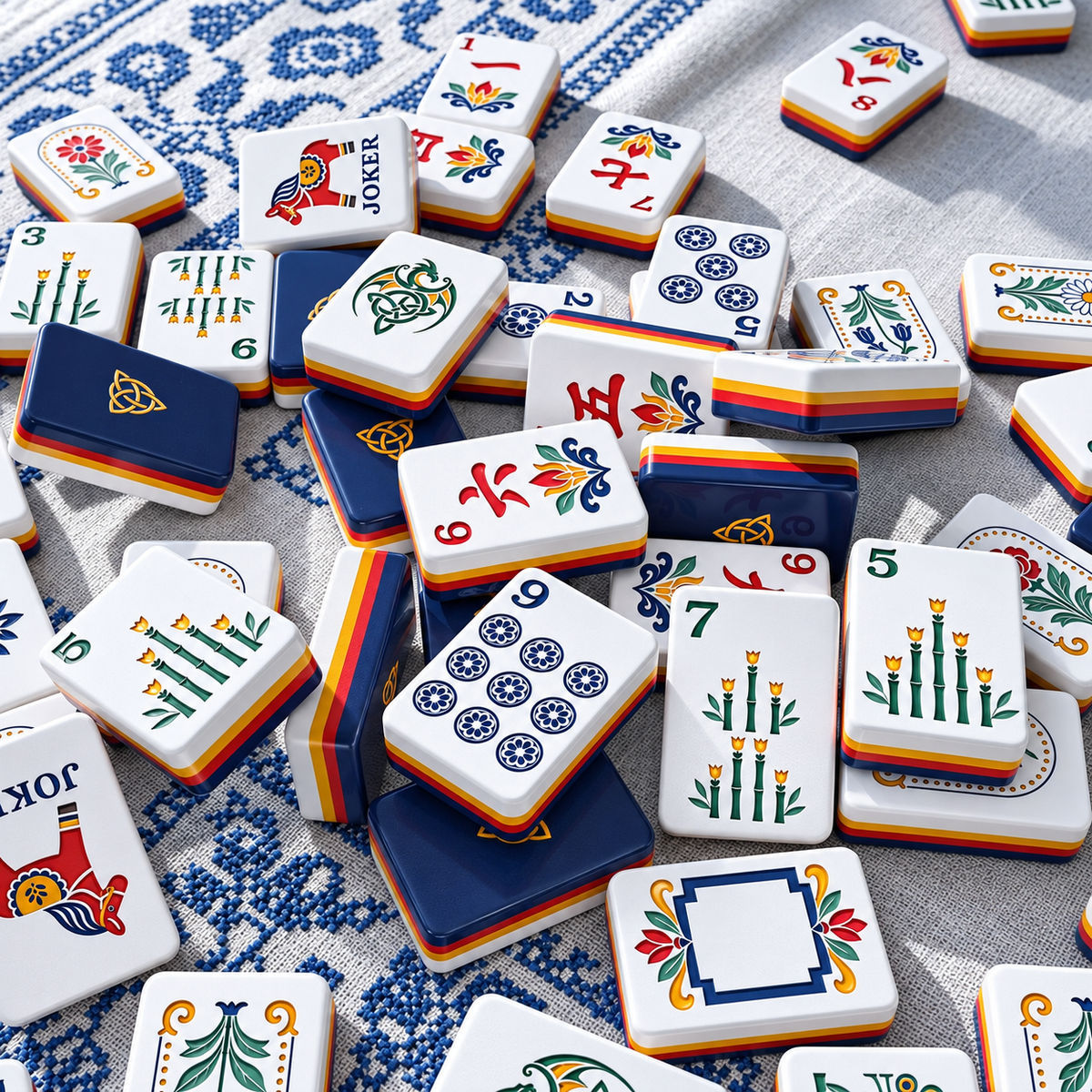
Oklahoma mahjong tournaments exist in Oklahoma City, Tulsa, and suburban areas, organized mainly through libraries, community centers, synagogues, and informal player meetup groups. Most tournaments follow American mahjong rules (152 tiles, four players, hands from the National Mah Jongg League card). Competitions typically run 4–8 rounds over a half or full day; entry costs vary but are usually modest. Players need a full American mahjong set, a mat for personal play space, tile racks with pushers, and a scorepad. To find tournaments, call your local library, check community center bulletin boards, ask synagogues with active Jewish cultural programs, or search Meetup and Facebook groups for "mahjong Oklahoma City" or "mahjong Tulsa." Many tournaments welcome beginners as long as you know the basic rules; Mahstead's best-selling mahjong sets arrive complete with tiles, racks, and mats for competitive play.
Where do Oklahoma mahjong tournaments happen?
Oklahoma's mahjong tournaments cluster in Oklahoma City and Tulsa, with satellite games in Norman, Edmond, and larger suburbs. Libraries and community centers host open tournaments most often, usually on weekends. Synagogues in both cities often run annual or seasonal events; call ahead or check their event calendar. Private clubs and retirement communities sometimes hold invite-only or member tournaments. Facebook groups and Meetup boards list upcoming dates; search by city name and "mahjong" for current schedules. Online Oklahoma mahjong groups post updates weeks in advance, so joining one or two is your fastest path to a tournament.
🀄 Shop best-selling mahjong sets →

What format and rules should you expect?
Most Oklahoma tournaments use American mahjong (not Chinese, Hong Kong, or Riichi variants). Games are four-player only, with players rotating tables each round. Each round lasts 15–20 minutes. Tournaments run 4–8 rounds; winners are tallied by total points across all rounds. All hands must come from that year's National Mah Jongg League card—players bring their own card or buy one on-site. The Charleston (tile-passing ritual) happens before each round. Jokers are wild and cannot be used as a single tile or in a pair. Pungs (three identical tiles), kongs (four identical), and longer combinations are called and exposed; chows (sequences like 1-2-3) do not exist in American mahjong. Scoring follows League rules, and disputes are settled by tournament director.
How do you prepare for your first Oklahoma tournament?
First, learn American mahjong rules if you haven't already; the beginner's guide to mahjong covers tile names, hand structure, and how the Charleston works. Second, get a complete, reliable American mahjong set—confirm it has 152 playable tiles, all four winds, three dragons, all suits numbered 1–9, and 8 jokers. Third, buy or print the current National Mah Jongg League card (updated every spring) and spend a few hours learning to read it; the layout shows available hands for that year. Fourth, practice scanning and calling hands quickly during casual play with friends. Fifth, invest in a mahjong mat and tile racks with pushers—these are not required at tournaments but many players bring them for consistency and speed. Finally, arrive 15 minutes early to confirm your entry, get your scorecard, and meet the tournament director.
What gear do you need to bring to a tournament?
You must bring a complete, clean American mahjong set (152 tiles + jokers). You'll need your own mahjong mat if the venue doesn't provide tables—most community centers have bare tables or cloths, so a personal mat protects your tiles and yours alone. Bring racks with pushers to organize and display your hand quickly; faster setup and calling means fewer errors and smoother rounds. Carry the current League card, a pen, and a small notebook. Bring a mahjong bag or case to transport everything safely; a padded bag protects tiles during the drive and keeps your gear in one place. Wear comfortable clothing and bring water; rounds move fast, and you'll want to stay alert across 4–8 games. Arrive with your entry fee in cash or check (confirm accepted payment with the organizer beforehand).
Item | Why you need it | Bring? | Where to get it |
American mahjong set (152 tiles) | Required; no tournament without one | Always | Best-selling collections online |
Mat | Protects tiles; marks your space | If venue unclear | Mahstead mahjong mats |
Racks with pushers | Speeds up hand organization and calling | Recommended | Mahstead racks collection |
Bag or case | Safe transport; professional appearance | If traveling | Mahstead travel bags |
League card (current year) | Required to verify hands; organizers may have extras but bring yours | Always | National Mah Jongg League or print |
Pen + scorepad | Record wins; referee uses for tallies | Pen yes, pad optional | Office supply store |
🎁 See our most-loved mahjong sets & accessories →

How do you find and sign up for specific tournaments?
Start with a phone call: contact libraries in Oklahoma City and Tulsa and ask the reference desk if they host or advertise mahjong tournaments. Community center websites often list events by category—search "games" or "seniors" sections. Visit synagogues' event pages or call their main office; many run tournaments during spring and fall. Search Facebook for groups named "Oklahoma Mahjong," "OKC Mahjong," or "Tulsa Mahjong Players." Check Meetup.com and search by city and "mahjong"—groups post regular game times and seasonal tournaments with links to sign-up. Some tournaments have a registration deadline (usually 1–2 weeks before); late entries are sometimes accepted on the day if space allows. Confirm entry fees, start time, location, and parking details before you go. If you know one person in the Oklahoma mahjong scene, ask them to introduce you—word-of-mouth is how most new players discover events. Begin searching 6–8 weeks before tournament season (typically spring and fall) so you have time to prepare.
What mistakes do first-time tournament players make?
Newcomers often bring incomplete or mismatched tile sets—confirm before you leave home that your set has all four of each wind, all three dragons (Red, Green, White), all numbers 1–9 in each suit (Bams, Craks, Dots), and eight jokers. They forget or misread the current League card, leading to called hands that don't match that year's list—study the card's layout (hand number, suit, numbers, jokers) for at least one hour before your first tournament. Players fumble the Charleston rhythm and slow down the game; practice the passing sequence at home with friends so you know the hand movements by reflex. Many don't understand that in American mahjong only pungs (three identical tiles) and kongs (four identical tiles) can be called—new players expect chows (1-2-3 sequences) to exist and get confused during play. Beginners arrive late, which disrupts seating and makes the director's job harder. Some bring sets with unmarked or damaged tiles, slowing down play; inspect your tiles before the tournament and replace any with worn faces. Finally, players panic when they can't find a hand on the card—remember that not every collection of tiles is a valid hand; slow down, recount, and ask the director for help. The National Mah Jongg League card takes practice to read; don't skip this step.
✨ Find your Mahstead set — free US shipping →
What to check before you buy tournament-ready gear
Before purchasing a set, confirm it's a full American mahjong set (152 tiles) with all winds, dragons, and jokers. Verify the tiles are thick acrylic or composite, not thin plastic—tournament-grade tiles last through hundreds of games. Check that racks are deep enough to hold 14 tiles standing upright and have secure pusher mechanisms. For a mat, measure the table size at the venue you'll use; most Oklahoma community center tables are 36–48 inches, so a mat around 24 inches square works well. Confirm the mat has a non-slip backing so tiles don't scatter. For a bag or case, test whether it fits your set, mat, racks, and card with a little room to spare; overstuffed bags wear out faster and tiles can shift during transport. If buying gear for the first time, choose a best-selling collection that bundles sets, mats, and racks—this saves money and guarantees compatibility. Shop now for free US shipping.

FAQ
Can I play mahjong in Oklahoma if I'm a complete beginner?
Yes. Many Oklahoma tournaments have beginner-friendly games or newcomer rounds. Call the organizer beforehand and ask; most welcome learners if you've read the rules and understand hand structure, the Charleston, and how to call tiles.
What's the age requirement for Oklahoma mahjong tournaments?
No strict age rule exists across all tournaments; it varies by venue. Libraries and community centers typically allow ages 13+, though some have no minimum. Retirement community tournaments are 55+. Always ask the specific organizer.
How much does it cost to enter an Oklahoma mahjong tournament?
Entry fees vary. Community center and library tournaments usually cost $10–$25 per player. Synagogue events may be $15–$30. Some retirement communities charge $5–$10 for members. Confirm the fee when you sign up.
Do I have to own my own mahjong set, or can I borrow one at the tournament?
You should bring your own. Most tournaments require each player to own a complete set to avoid disputes and delays. Some venues have spare sets for emergencies, but don't count on it; it's safest to arrive with your own.
How often do mahjong tournaments happen in Oklahoma?
Regular tournaments occur in spring and fall, usually monthly in Oklahoma City and Tulsa. Casual weekly games happen year-round at libraries, community centers, and private groups. Check your local venue's calendar or join a Facebook group for current schedules.
What's the difference between casual weekly play and a tournament?
Casual play is relaxed, unlimited rounds, and social. Tournaments have fixed round counts (4–8), a timed structure (rounds end on the clock), a tournament director enforcing rules, and a final ranking by total score—more formal and competitive.


View More
View More
View More
