
American Mahjong Set Under 100: Budget Buys That Don't Sacrifice Quality
Last updated: Nov 23, 2026
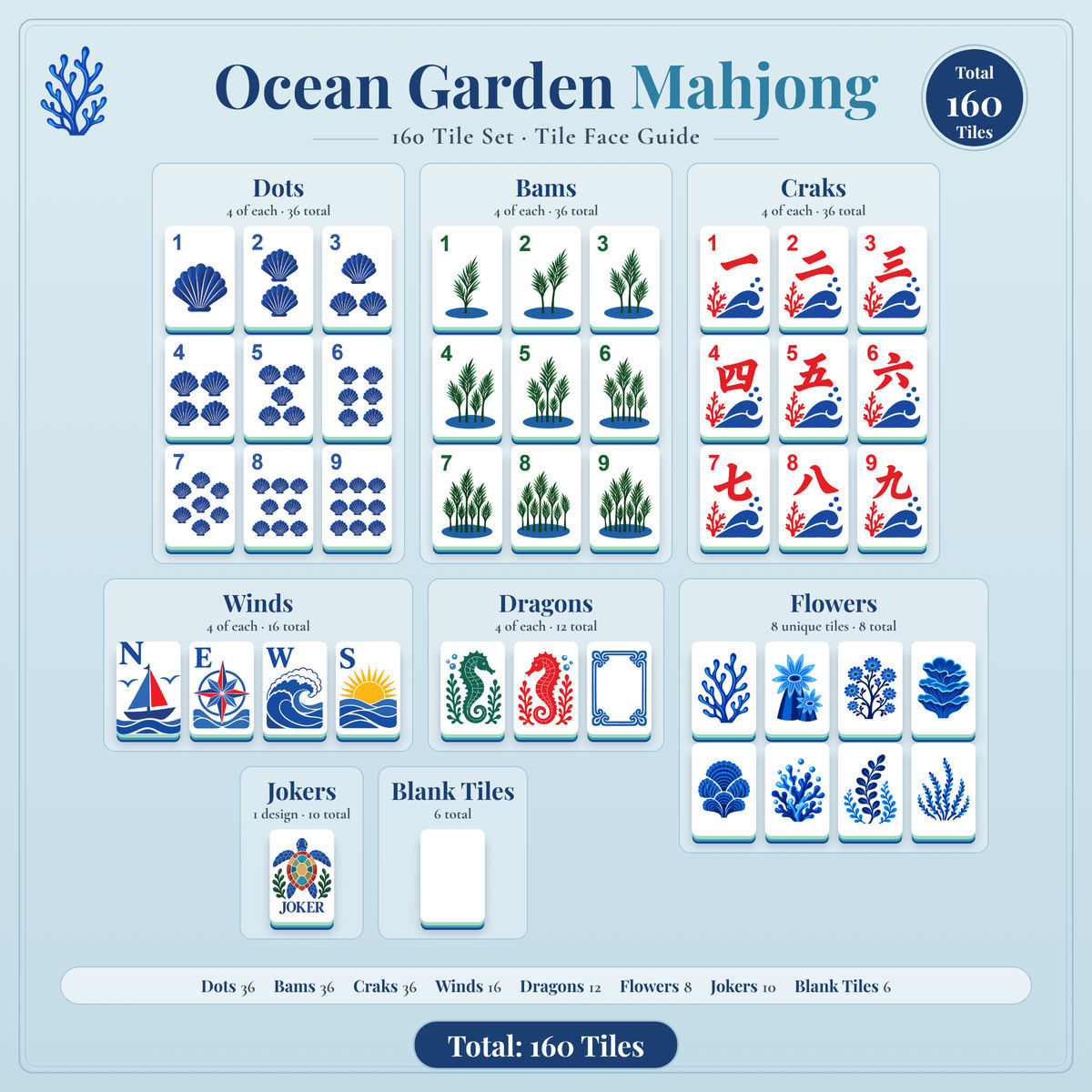
American mahjong sets in the under-budget range come in acrylic or resin, with 160 tiles (152 playing tiles plus spares), and retail from entry-level to mid-tier. Mahstead's best-selling mahjong sets in this range include solid acrylic designs with clear face printing, smooth pusher racks, and protective carrying bags. What you're really paying for: tile weight (heavier = better feel), pusher quality (cheap pushers jam), and face durability (cheap paint chips in two seasons). Avoid sets with paper stickers or tissue-thin racks. The sweet spot for regular weekly players is mid-range acrylic with weight comparable to bone-and-bamboo but without the fragility. Most reputable sets include all 160 tiles, two racks per player, pushers, and a mat or bag. Check the tile material before ordering—if the listing says "plastic" without specifying acrylic or resin, ask. Shipping within the US is free, so compare designs across collections rather than settling for the first option. 🀄 Shop best-selling mahjong sets →
What tile material actually makes a difference under budget?
Acrylic and resin are the two workhorse materials for budget sets. Acrylic is lighter, cheaper to produce, and prints faces cleanly; resin is denser and slightly heavier, giving a more premium feel but costs a bit more. Neither is fragile if made correctly. The real difference you'll feel: acrylic sets from solid manufacturers have smooth edges and consistent weight per tile, while poor-quality acrylic warps or feels gritty. Resin sets rarely warp but scratch more easily if shuffled roughly on unpadded tables. For weekly game hosting, acrylic holds up just as well as resin if you use a mahjong mat to protect the playing surface. Test a set by lifting all four winds or dragons—tiles should feel identical in heft, not wobble.

Should you buy a set with engraved tiles or plain faces?
Engraved tiles look stunning and are easier to read during long sessions because the character sits in a recessed groove—your eyes don't strain. Engraved American mahjong sets cost a bit more but last longer because the engraving can't fade or chip like printed faces. Plain printed faces are cheaper and perfectly functional for casual play; they suit players who host monthly games or beginners learning the card. Engraved tiles shine if you play weekly or have lighting issues at your table. One honest catch: engraving adds cost, so true budget sets rarely include it. If you're considering engraved, you're likely moving into mid-range pricing. The question to ask yourself is whether you host enough games to justify the durability. For hosts running a weekly game, engraved pays for itself in four seasons.
🎁 See our most-loved mahjong sets & accessories →
What's the real cost difference: budget set vs. mid-tier vs. premium?
Here's a practical comparison based on what we see in regular play and what our players report:
Category | Tile Material | Rack Style | Face Type | Durability (Seasons) | Who It's For |
Budget acrylic | Acrylic, lighter | Basic plastic racks | Printed | 2–3 | Casual, monthly players; gift-givers |
Budget-plus | Acrylic or resin | Composite racks with decent pushers | Printed or light engrave | 3–5 | Weekly hosts; beginners upgrading |
Mid-tier | Resin or thick acrylic | Wooden or reinforced plastic | Engraved or premium print | 5–7+ | Serious weekly players; tournament prep |
The jump from budget to budget-plus is about 20–30% more; that leap gets you racks that don't jam and tiles that survive shuffling without edge wear. Weekly hosts almost always prefer budget-plus because cheap racks frustrate players mid-game. Mid-tier sets are for players who've hosted for 2+ years and know they want longevity. All Mahstead sets include 160 tiles and free US shipping, so compare your actual play frequency against durability, not just upfront cost.

How do you spot a low-quality set before you open it?
Watch for these red flags in listings or product photos: tiles that look thin or translucent (good acrylic is opaque), pushers that are clearly flimsy or warped, racks with visible gaps or rough edges, faces that are dull or barely legible in the product image, and no mention of tile count (real sets always say "160 tiles" or "152-tile playing set"). Ask the seller if the set includes a mat, bag, or pushers—budget sets sometimes skimp on accessories, leaving you to buy a protective travel bag separately. Another test: does the product page show close-ups of tiles and racks? Manufacturers confident in quality do. Cheap sellers hide details. If the listing only shows the box, hold off until you find better photos. Before ordering, confirm that printed faces are UV-protected or sealed—unsealed prints fade fast in sunlight. Read the materials list carefully. "Plastic tiles" is vague; "acrylic tiles" is honest.
What's the best way to compare sets if you're torn between options?
Make a simple decision table. For each set you're considering, note: (1) tile material and weight, (2) rack style and pusher mechanism, (3) face type (printed vs. engraved), (4) what's included (mat, bag, dice, extra jokers), (5) whether it ships free in the US, and (6) your expected play frequency (casual, monthly, weekly, daily). Score each on a scale of 1–3 for your needs. A casual player's priority might be design and included accessories; a weekly host's priority is rack durability and tile clarity. Check whether the set includes racks with pushers that feel smooth—a cheap pusher that sticks after 10 games will frustrate your entire table. Visit the best-selling mahjong sets collection and filter by your priorities: some players choose by color, others by tile weight or included accessories. Don't just buy the lowest-priced option; buy the best value for your hosting pattern. If you're unsure between two sets, ask yourself: "Will I still want to play with this in 18 months?" That's your signal.
✨ Find your Mahstead set — free US shipping →
What to check before you buy
Material & weight: Confirm the tile material (acrylic or resin) and, if possible, compare against a set you've already played. Heavier isn't always better, but consistent tile weight across all 160 is non-negotiable.
Rack fit: Check that racks are tall enough to hold a full hand (14 tiles) and wide enough for your grip. Cheap racks are often too narrow, forcing tiles to stick up above the rack edge.
Face legibility: In the product photo, can you read the faces clearly without squinting? Printed faces should have high contrast; engraved faces should sit visibly in a groove.
What's in the box: Confirm 160 tiles, four racks, pushers, and at least one mat or bag. Don't assume—read the product description.
Shipping: All Mahstead sets ship free across the US; factor that into your comparison if shopping elsewhere.
Return clarity: Understand the return window in case the tiles feel cheap or racks jam immediately.
FAQ
Can I really get a playable American mahjong set under budget?
Yes. Best-selling acrylic sets offer solid tiles, working racks, and printed faces at budget-friendly price points. They're best suited to casual hosts or gift-givers. Weekly players often upgrade to mid-tier for durability, but budget sets absolutely work for learning or monthly games.
Is acrylic as durable as bone and bamboo?
Acrylic is more durable than bone and bamboo for most home players because it won't crack, warp, or splinter with normal use. Bone can chip if dropped; acrylic bounces. Acrylic requires a mat to prevent scratching during shuffles, but with one it lasts years. Bone and bamboo are heirloom-quality but fragile.
What makes a pusher cheap or good?
A good pusher slides smoothly without catching the rack teeth and doesn't rattle or break after 20 games. Cheap pushers jam, have rough edges, or are made from thin plastic that cracks. Test by holding it horizontally and sliding it gently—it should glide without friction. Check product photos for pusher thickness and reviews that mention jamming.
Should I buy a set with included mat and bag, or buy them separately?
Buy them together if the bundle price is reasonable. A protective travel bag keeps tiles safe between games; a mahjong mat protects both your table and your tiles during play. Some budget sets skip the mat, so confirm before ordering. Buying later usually costs more per item than a bundle.
How do I know if a set will work for my game group?
Check your table size and height, plus player count (always four in American mahjong). Make sure racks fit your hands and aren't too narrow. If anyone at your table has vision issues, choose engraved tiles or sets with large, high-contrast printed faces. Test on a quality mat so tiles shuffle quietly and don't scratch. If you're uncertain, ask us—we've matched hundreds of sets to home games.
Is a budget set OK for teaching beginners?
Absolutely. Beginners don't need premium tiles; they need clarity, working racks, and a full 160-tile set to learn the game properly. A budget acrylic set checks all three. Once they're comfortable, they can upgrade. Many regular players started with a budget set and still host great games.
What's the difference between "160-tile" and "152-tile" sets?
American mahjong is played with exactly 152 tiles and 8 jokers (160 total per game). Sets sold as "160 tiles" include 152 playing tiles plus extra jokers and/or blanks as spares. Sets marketed as "152 tiles" are the exact playing set only. Both work; 160-tile sets give you spares in case a joker wears out or gets lost. Mahstead sells 160-tile sets.


View More
View More
View More
