
Filipino Mahjong with 3 Players: Rules, Setup & Tips
Last updated: Nov 23, 2026
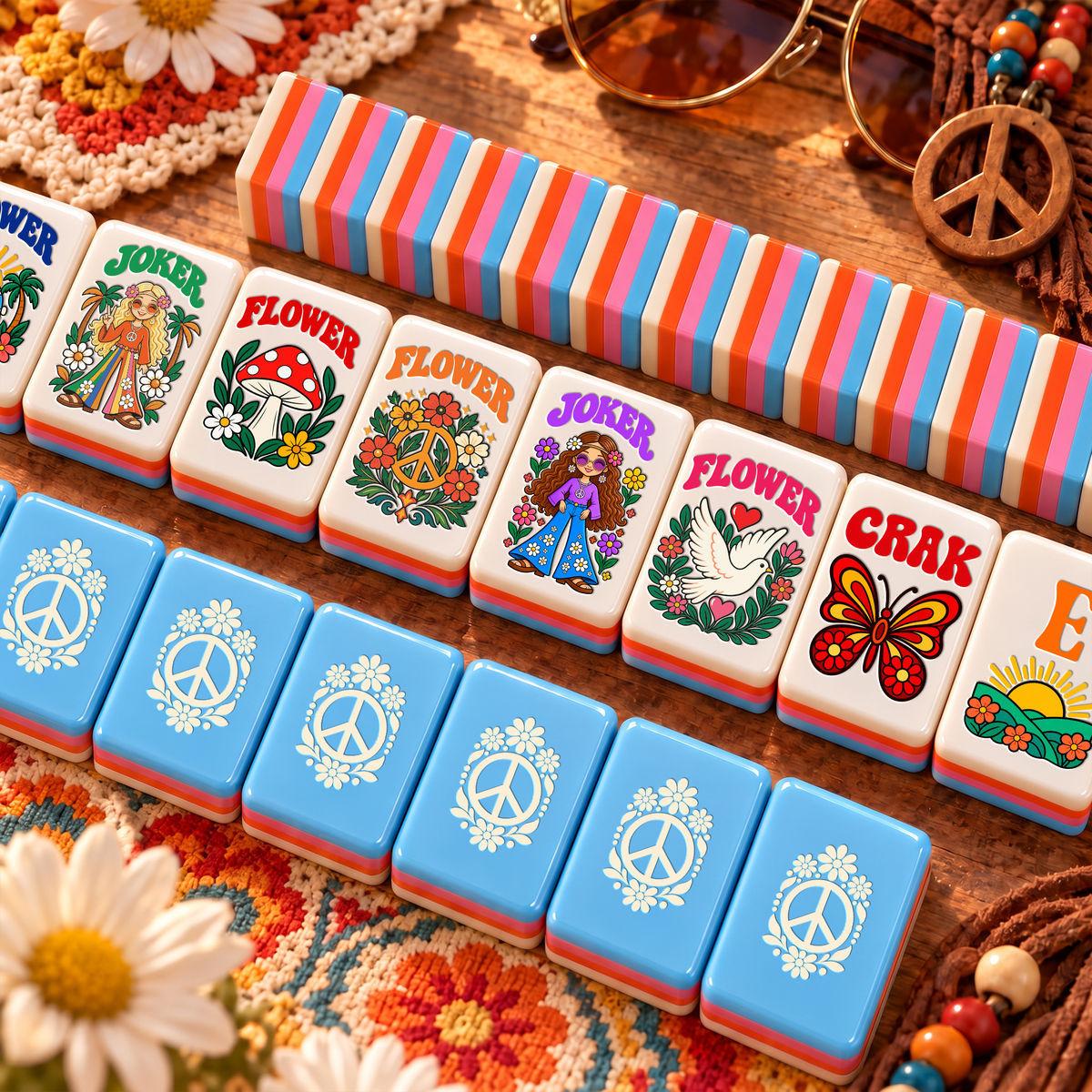
Filipino mahjong with three players is a direct adaptation of American mahjong that removes the fourth player entirely—no "dead hand" or ghost seat. Players sit at three sides of the table; the Charleston (tile pass) happens only between the two seated players on your left and right. Each player draws 13 tiles at game start instead of 14, then draws one tile per turn. Walls are set at 152 tiles total, same as standard American play. Hands come from the current National Mah Jongg League card, and winning conditions mirror four-player rules—match your 13 tiles exactly to a hand on the card, using three melds (exposed sets of 3+ tiles) plus a pair, or all jokers. Scoring adjusts so payoffs go only to and from the three active players. This variant thrives in households where a fourth player isn't available, and it plays faster than four-player games. Your best-selling mahjong sets work perfectly for three-player Filipino games.
How does three-player setup differ from four-player American mahjong?
In three-player Filipino mahjong, only three seats are occupied around the table. Remove the fourth player position; there's no dead hand or rotating ghost seat. Wind assignments stay traditional—East, South, West—and you rotate positions between rounds so each player gets East wind eventually. Walls are built with all 152 tiles, split into four stacks of 38 tiles each (one per compass direction), exactly as in four-player American mahjong. The main difference: after the Charleston pass, each player draws only 13 tiles, and East draws first (14 tiles on East's opening turn). This compressed setup shortens game rounds and reduces complexity since fewer tile combinations exist with three active hands instead of four.

What happens to the Charleston in three-player games?
In three-player Filipino mahjong, the Charleston (the pre-game tile exchange) is simplified. Players seated to your immediate left and right are your only exchange partners—no fourth player means no center exchange in the middle of the Charleston round. Each player passes three tiles to their left neighbor, then three tiles come back from their right neighbor. After those two passes, you keep the tiles you received and discard to start play. Some house rules skip the second Charleston pass entirely (where you normally pass to your left's left), since you can't create a fair four-way pass with only three people. The result is a shorter, tighter exchange that still breaks up predictable tile clusters and keeps the game honest. Each house should agree on Charleston format before the first hand begins.
How do draws, melds, and winning work in three-player Filipino mahjong?
Drawing and playing follow standard American rules with a three-player twist. East draws 14 tiles; South and West each draw 13. On your turn, draw one tile from the wall, declare any legal melds (three or more identical tiles, or quints/sextets with jokers), then discard one tile face-up. A meld must be exposable—pungs, kongs, quints, or sextets only; American mahjong has no chows (sequences). When someone discards a tile you need, you call it, add it to your meld, and the turn passes to the next player in rotation. To win, your hand must match exactly one line on the current year's National Mah Jongg League card: three melds (exposed or hidden) plus a pair of identical tiles. Jokers can never be used as a single tile or in a pair. All-joker hands are valid if they match the card. Winning off a discard is called "mah jongg on the table"; winning off the wall is "mah jongg from the wall," and scoring differs slightly between the two.
Aspect | Four-Player American | Three-Player Filipino |
Players seated | 4 (E, S, W, N) | 3 (E, S, W) |
Opening tiles per player | East: 14; others: 13 | East: 14; others: 13 |
Charleston passes | 3 full rounds | 2 passes (left, then right) |
Walls per table | 152 tiles ÷ 4 = 38 per side | 152 tiles ÷ 4 = 38 per side |
Turn order | E → S → W → N → repeat | E → S → W → repeat |
Hand structure | 3 melds + 1 pair | 3 melds + 1 pair |
Card reference | Current NMJL card | Current NMJL card |

What scoring rules apply when only three players are in the game?
In three-player Filipino mahjong, scoring payoffs simplify because only three active players exist. The standard four-player American scoring system awards points to the winner (mahjongg player) from all three losers; each loser pays the winner a base amount, then multiples stack for special hands and bonus conditions. Since no fourth player sits at the table, payoffs don't split or redirect to an absent position—winners collect from three opponents instead of three. Some house rules cap payoffs per loser (e.g., a limit of 500 points per hand) to keep stakes manageable over long sessions. Other players often use the same National Mah Jongg League scoring reference, adjusting only the number of payers. Agree on your table's payoff structure and any limits before starting; writing it down prevents arguments. Read more on American mahjong scoring for the full point breakdowns.
🀄 Shop best-selling mahjong sets →
Why is three-player Filipino mahjong faster, and what tactics change?
Three-player games move faster because fewer tiles are in other players' hands—with 39 tiles held across three players plus the wall, fewer unused tiles exist than in four-player games. This means discards are picked up more quickly, and rounds conclude in fewer turns. Tactically, you face higher pressure to expose melds early or risk losing tempo; holding everything hidden is riskier when only two other players can discard. Tracking discards becomes more critical with three players—you'll see the same tiles again more often, so memory of what's been thrown helps you predict what's left in the wall. Defensive play (discarding "safe" tiles that your opponents can't use) tightens because you have fewer opponents to confuse. The wind assignments cycle through faster too, so East position rotates every four hands instead of staying with one player for longer. Speed and attentiveness define successful three-player Filipino mahjong.
What equipment do you need for a serious three-player Filipino game?
For regular three-player Filipino mahjong at home, you need one standard mahjong set with 152 playing tiles and jokers, a tile wall divider or rack system to organize the wall at each side, a mahjong mat or table surface large enough for three players (a standard mat accommodates four but works fine for three), and a score sheet or small notebook to track points across hands. Mahjong racks with pushers help players organize their tiles neatly and prevent accidental exposure. Many three-player groups keep a mahjong bag or case to transport tiles safely if you move the game between homes or events. A single set of acrylic or bone tiles (acrylic is lighter and lasts longer in home play) with clear suit markings works best for newer players; engraved sets add personality for regular groups. Dice are optional but helpful for determining who goes first or breaking ties in betting.
🎁 See our most-loved mahjong sets & accessories →
Common mistakes in three-player Filipino mahjong and how to avoid them
Error: Forgetting to adjust the Charleston for three players. Fix: Decide before play whether you'll use a two-pass Charleston (left, then right only) or skip the Charleston entirely. Write it down so all players remember the house rule.
Error: Mixing four-player and three-player scoring. Fix: Establish whether payoffs are fixed amounts per loser or if you're using a cap. Confirm before the first hand.
Error: Calling a meld with fewer than three tiles. Fix: In American (and Filipino) mahjong, only pungs (3), kongs (4), quints (5), and sextets (6) can be exposed—never a pair alone or a two-tile meld. Jokers cannot form a single-tile or pair position.
Error: Not tracking discards. Fix: Keep a mental note of what tiles each opponent has thrown. With fewer active players, the wall runs out faster, and prediction matters more.
Error: Using a four-player card line on a three-player board. Fix: All hands must match the current National Mah Jongg League card, regardless of player count. The card doesn't change; your hand structure stays the same.
What to check before you buy a mahjong set for three-player games
Tile count: Purchase a set with exactly 152 playing tiles (plus spare jokers). Mahstead's 160-tile sets include extra tiles for peace of mind.
Suit clarity: Choose a design where Bams, Craks, and Dots are visually distinct. Avoid sets with tiny or hard-to-read characters if your group includes players with vision challenges.
Material durability: Acrylic is lighter than bone and won't crack if tiles are dropped frequently; it also ships safely and handles humid climates well.
Rack or mat compatibility: If you already own racks or a mat, confirm the tile size matches (typically 1.25" × 1" standard size).
Joker count: Ensure your set includes at least 8 jokers. Some players prefer extra jokers in the spare tile bag if house rules allow joker substitution.
✨ Find your Mahstead set — free US shipping →
For regular three-player Filipino mahjong sessions, a standard best-selling mahjong set is your foundation. If your group rotates between venues—Filipino community centers, church halls, or home game nights across the neighborhood—a travel bag or case protects tiles from damage during transport. A mat sized for three players keeps the play area organized and reduces disputes over tile positions. Racks with pushers let each player manage their 13 tiles cleanly and prevent accidental reveals—especially useful for newer players learning to track discards and defend tactically.

FAQ
Can you play American mahjong with exactly three people?
Yes—three-player Filipino mahjong is a direct adaptation of American rules. Players sit at three positions (East, South, West), the Charleston shortens to two passes, and each player draws 13 tiles initially. Winning hands, melds, and the National Mah Jongg League card are identical to four-player American mahjong.
Do you remove any tiles from a standard set for three-player games?
No. Always use the full 152 playing tiles plus jokers. The wall is built and drawn from normally; three-player games simply have fewer tiles held in players' hands, so the wall depletes faster.
How does the discard pile work differently with three players?
It doesn't—discards are placed face-up in a discard area (usually in the center of the table), and any player can claim a discard to complete a meld or win. With three players instead of four, fewer tiles are in play, so discards appear more frequently.
Is scoring the same in three-player as in four-player American mahjong?
The base scoring system stays the same, but the winner collects from three opponents instead of four. Agree on payoff caps and any house rules before the first hand to prevent confusion.
What's the biggest tactical difference between three-player and four-player Filipino mahjong?
Fewer tiles in play means the wall empties faster, so tracking discards is critical. Defensive play tightens—discarding safe tiles matters more because two opponents see every tile, and melds are exposed more often to maintain tempo and avoid losing the round.
Where can I find three-player groups in my area?
Check community centers, libraries, and Filipino cultural centers in your city—many host weekly or monthly mahjong nights. Online meetup boards and local Facebook groups often list casual game gatherings. Church groups and retirement communities also frequently organize three- and four-player sessions.


View More
View More
View More
