
Cantonese Mahjong FAQ: Rules, Hand Patterns & How It Differs
Last updated: Nov 23, 2026
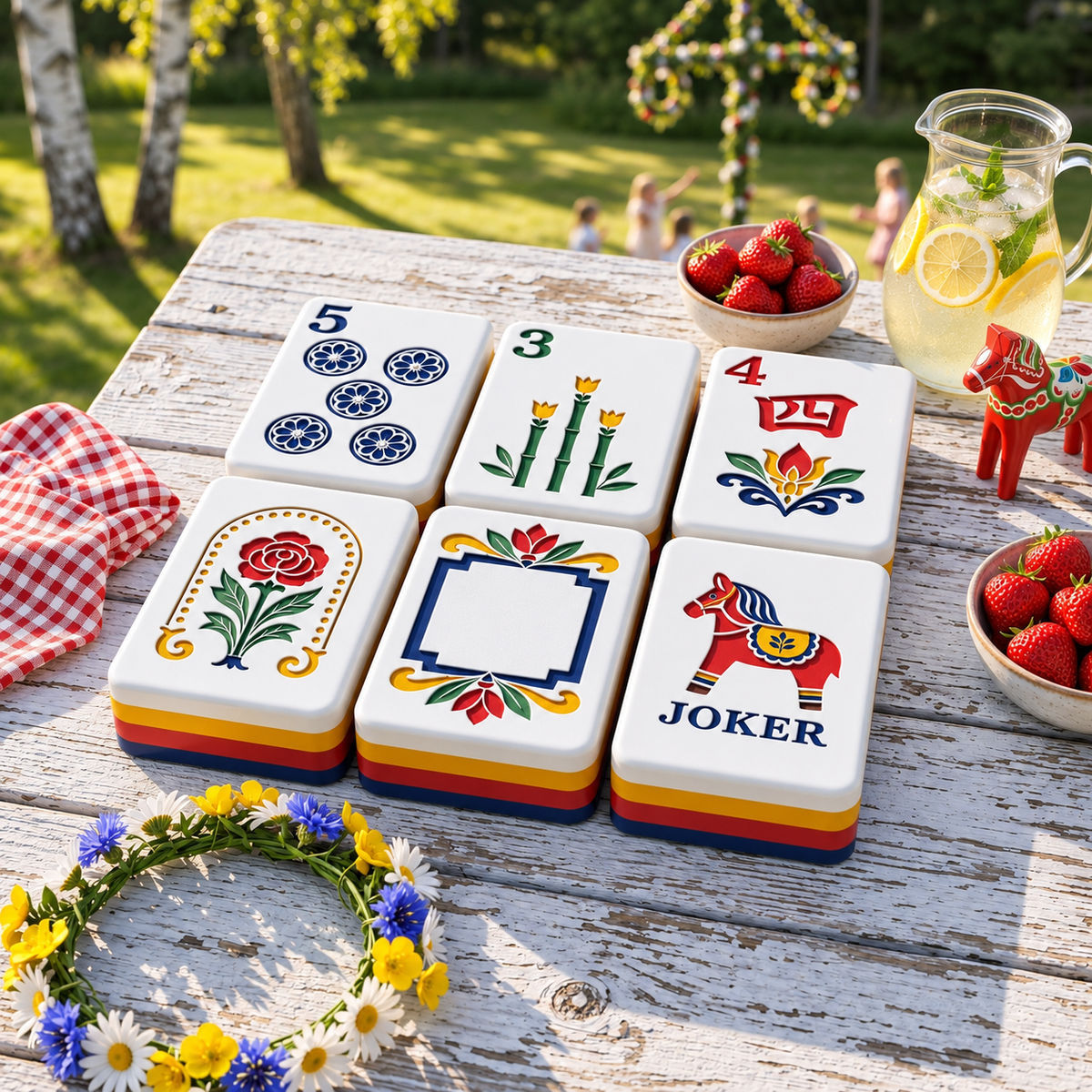
Cantonese mahjong (also called Hong Kong mahjong) uses a 144-tile set drawn from a wall, with players discarding simultaneously until someone completes a winning hand. Hands consist of four melds (chows, pungs, or kongs) plus a pair; unlike American mahjong, Cantonese players follow traditional pattern books, not a seasonal card. Winning typically requires at least one scoring modifier, such as a pung of dragons or honors. The game moves faster—no Charleston, no jokers, no multi-year card updates. A round takes 10–20 minutes. Tiles are identical in standard sets; players build racks and read patterns from memory and learned hand charts. Mahstead offers American-mahjong-specific 160-tile sets with engraved tiles and acrylic racks, not Cantonese sets, but our guides explain how American and Cantonese rules diverge so you can play either variant confidently.
Cantonese mahjong is a centuries-old game that prioritizes speed, pattern recognition, and hand structure over the season-based card system of American mahjong. If you've played American mahjong and want to try Cantonese, or you're learning from Cantonese players and curious about American rules, this guide clarifies the core differences and answers real questions from players switching between variants.
What tiles are in a Cantonese mahjong set?
A standard Cantonese set contains 144 tiles: three suits (Bams, Craks, Dots) numbered 1–9, four copies of each (108 tiles total); 16 winds (four each of North, East, West, South); 12 dragons (four each of Red, Green, White); plus 8 flowers. There are no jokers, no blanks, and no eighth joker—the set is complete with exactly 144 tiles, always. Play uses all tiles drawn from the wall, and play ends when the wall is exhausted or someone wins. Many players learn Cantonese mahjong with sets that have printed Chinese characters and numerals; racks are optional but helpful for tracking your hand visually.

How do winning hands work in Cantonese mahjong?
In Cantonese mahjong, a winning hand contains four melds plus one pair. A meld can be a chow (a sequence of three consecutive numbers in the same suit, e.g., 3–4–5 Bams), a pung (three identical tiles, e.g., three 7 Dots), or a kong (four identical tiles). The pair must be two identical tiles of any type. For example: three 2 Craks (pung) + 5–6–7 Dots (chow) + four East winds (kong) + 8–9–1 Bams (chow) + two Red dragons (pair) = a valid winning hand. To score points, most hands must include at least one scoring modifier—a pung of dragons, a pung of winds, a hand with all one suit, or other pattern bonuses described in Cantonese scoring guides. A pung of the prevailing or player's own wind carries extra value. This differs sharply from American mahjong, where hands come only from the current year's National Mah Jongg League card and chows are never called or exposed.
What is the difference between Cantonese and American mahjong rules?
Aspect | Cantonese | American |
Tile count | 144 tiles, no jokers | 152 tiles + 8 jokers |
Chows allowed | Yes; called and exposed freely | No; not permitted |
Hand source | Memory & pattern books | Current year's NMJL card only |
Tile-passing ritual | None; walls are drawn | Charleston (ritual exchange) required |
Meld types | Chows, pungs, kongs, pairs | Pungs, kongs, quints, sextets, pairs only |
Joker rules | No jokers in play | Jokers used to fill gaps; never as single tile or pair |
Scoring base | Hand pattern + honors/dragons | Hand pattern only from card |
Typical round time | 10–15 minutes | 20–30 minutes |
Learning method | Chart memorization, pattern books | Annual card study, league resources |
The two games are cousins, not siblings. Cantonese mahjong rewards pattern knowledge and fast decision-making; American mahjong rewards card literacy and strategic tile management. If you play both, note that an American "pung" (three identical tiles) works the same way in Cantonese; chows—sequences—are where the core rule split happens.
Can I use an American mahjong set to play Cantonese?
Technically, yes, if you remove the jokers and ignore the blank tiles. An American set contains 160 tiles (152 playing tiles plus spares); if you set aside the 8 jokers and any blanks, you have your 144 Cantonese tiles. However, this is cumbersome and wastes equipment. American sets are engineered with American rules in mind—thick acrylic tiles designed for racks with pushers, bold numerals for fast card reading, often engraved with American season names. Cantonese sets use lighter materials, smaller tiles, and simpler numerals. If you plan to play Cantonese regularly, acquire a Cantonese-specific set. If you play both variants, keep each set separate—your American mahjong set is worth preserving for American games, and a Cantonese set is an inexpensive, dedicated investment.
How do you draw and organize your hand in Cantonese mahjong?
Players sit around a table and face a wall of 144 tiles arranged in stacks of two tiles per stack, four across per player (36 tiles per player's wall). The dealer draws 14 tiles (two stacks) and arranges them into melds. Each player draws two tiles (one stack) in turn, then discards one tile. Play continues until someone completes a winning hand or the wall is exhausted. Hand organization is critical: arrange your tiles into rough melds (chows, pungs, near-chows, near-pungs) so you can track progress toward a win. Unlike American mahjong with its racks and pushers, Cantonese play often uses simple tile stands or bare table space. Some players use shallow racks designed for Cantonese tiles. The pace is faster because no one waits for a card lookup or Charleston; draws and discards flow continuously. Beginners often feel overwhelmed by the speed—play several rounds to build your rhythm.

What scoring modifiers give a hand value?
Cantonese mahjong assigns point values based on the hand's "limit" (a ceiling cap) and bonus conditions. Common scoring modifiers include:
Pung of dragons (Red, Green, or White): +1 point or "1 fan"
Pung of winds (the player's own wind or the prevailing round wind): +1 fan
All one suit (melds in Bams, Craks, or Dots only; no honors): +1 fan
All honors (melds in winds and dragons only): +2 fans
Two pungs + pair (no chows): varies by region
Fully concealed hand (no exposed melds, self-drawn winning tile): +1 fan
Winning on your own discard vs. a discard from another player: higher value if self-drawn
Scoring systems vary by region (Hong Kong, Guangzhou, Singapore each have slight differences). The most common competitive system uses a "limit" of 5 fans = win. Once you hit 5 fans, the hand pays maximum, encouraging players to block high-value patterns. Ask your Cantonese mahjong group for their specific scoring sheet—it's your roadmap. This contrasts with American mahjong, where scoring comes entirely from hand patterns on the annual card; there are no separate "modifiers."
What's a common beginner mistake in Cantonese mahjong?
New Cantonese players often discard honor tiles (winds and dragons) too early, thinking they're less valuable. In fact, honors are often the fastest path to a scoring hand because a pung of dragons or winds immediately qualifies a hand as scoreable. Another mistake: holding too many "wait" tiles (tiles that could complete a chow or pung but don't yet). Cantonese mahjong punishes indecision—the wall is finite, and if play reaches the final draws, you lose the round. Beginners also forget that chows require consecutive numbers in the same suit; a common error is mentally treating 1–2–3 Bams + 1–2–3 Craks as interchangeable, when only identical sequences work. Finally, new players misread wind values: if East wind is the prevailing wind, a pung of East is worth more than a pung of North, which matters in scoring. Study your group's scoring guide for one session before playing for stakes.
🀄 Shop best-selling mahjong sets →
How does Cantonese mahjong hand complexity compare to American?
Cantonese hands are more varied because chows are allowed; American hands are fixed by the yearly NMJL card. In Cantonese, the same four tiles can form multiple valid hand patterns depending on what your fifth-hand melds are; in American, a specific hand sequence like "3–3–3 1–2–3 1–2–3 1–1" exists on the card or it doesn't. Cantonese players memorize pattern books (often regional variants); American players carry or reference the seasonal card. Both demand tactical tile management—discarding safely and reading opponents' draws. Cantonese rewards intuition and speed; American rewards card familiarity and strategic planning. If you excel at spotting patterns quickly and love speed, Cantonese will feel natural. If you prefer deliberate strategy and rule reference, American mahjong suits you better. Many players enjoy both because they exercise different mental skills.
What should you check before learning Cantonese mahjong?
Find your regional ruleset: Hong Kong, Guangzhou, Cantonese-Malaysian, and Taiwanese versions have different scoring caps and fan structures. Ask your teacher or group which they use.
Obtain a scoring chart in your language: Cantonese scoring is visual and pattern-based; a printed or digital chart saves confusion.
Learn from a live player, not just video: Cantonese speed and tile-reading are best absorbed by watching and playing alongside experienced players.
Practice with the same group: Hand values and etiquette vary slightly by region; consistency matters.
Don't mix American and Cantonese tile sets: Keep them separate to avoid confusion. If you need an American set for American games, our best-selling acrylic mahjong sets are engineered for reliable, durable American play.
🎁 See our most-loved mahjong sets & accessories →
When should you go "all in" versus "play safe" in Cantonese?
Cantonese mahjong strategy hinges on risk. Early in a round (first 5–8 draws), most players play conservatively, discarding honor tiles and obvious safe cards. Mid-round (draws 9–15), the wall is halfway gone; strong hands show themselves, and players begin blocking and pushing for high-value patterns. Late round (final wall), plays accelerate—holding onto one tile hoping for a chow becomes less viable because fewer draws remain. If you sense a opponent is close to winning, switch to defensive discarding: throw tiles that are less likely to be part of a common hand (isolated numbers, unpaired honors). If you have two dragons, a near-complete pung, and a chow in progress, push forward; if you have fragmented tiles with no clear melds forming, fold and play defensively. The best Cantonese players read the table's energy and the wall's depth simultaneously. Unlike American mahjong, where the card's hand list is your guide, Cantonese demands on-the-fly assessment.
✨ Find your Mahstead set — free US shipping →

FAQ
Can I learn Cantonese mahjong from watching videos alone?
Videos teach rules, but Cantonese speed and tile intuition are learned best by playing alongside experienced players. Join a local group (community centers, libraries, or online play communities) for hands-on practice and real-time feedback.
Is Cantonese mahjong harder than American mahjong?
Difficulty depends on your strengths. Cantonese demands pattern memory and fast decision-making; American requires card literacy and strategic planning. Most players find one variant clicks faster than the other based on their learning style.
What is "going kong" in Cantonese mahjong?
A kong is a meld of four identical tiles. If you have four of the same tile during play, you can declare a kong, remove it from your hand, and draw a replacement from the wall's end (the "kong box"). This is a legal and common move.
Why do some hands in Cantonese need a scoring modifier to win?
Cantonese mahjong values pattern complexity. A basic four-meld-plus-pair hand has zero scoring value unless it includes honors or a special arrangement. This encourages players to pursue interesting patterns, not just any four melds.
How do I know if my Cantonese hand is scoreable before declaring a win?
Use your group's scoring chart—look up each meld type and pattern combination to confirm you hit the minimum scoring threshold (usually 1 fan). Always verify before calling a win; declaring a non-scoreable hand may carry a penalty.
Can I play Cantonese mahjong with a 152-tile American set?
Yes, if you discard the jokers and blanks. However, this is inefficient for regular play. Cantonese sets are designed for Cantonese rules; American sets are optimized for American play with racks, pushers, and acrylic durability. Keep sets dedicated to their variant.


View More
View More
View More
