
Filipino Mahjong Special Hands: Rules, Examples & Strategy
Last updated: Nov 23, 2026
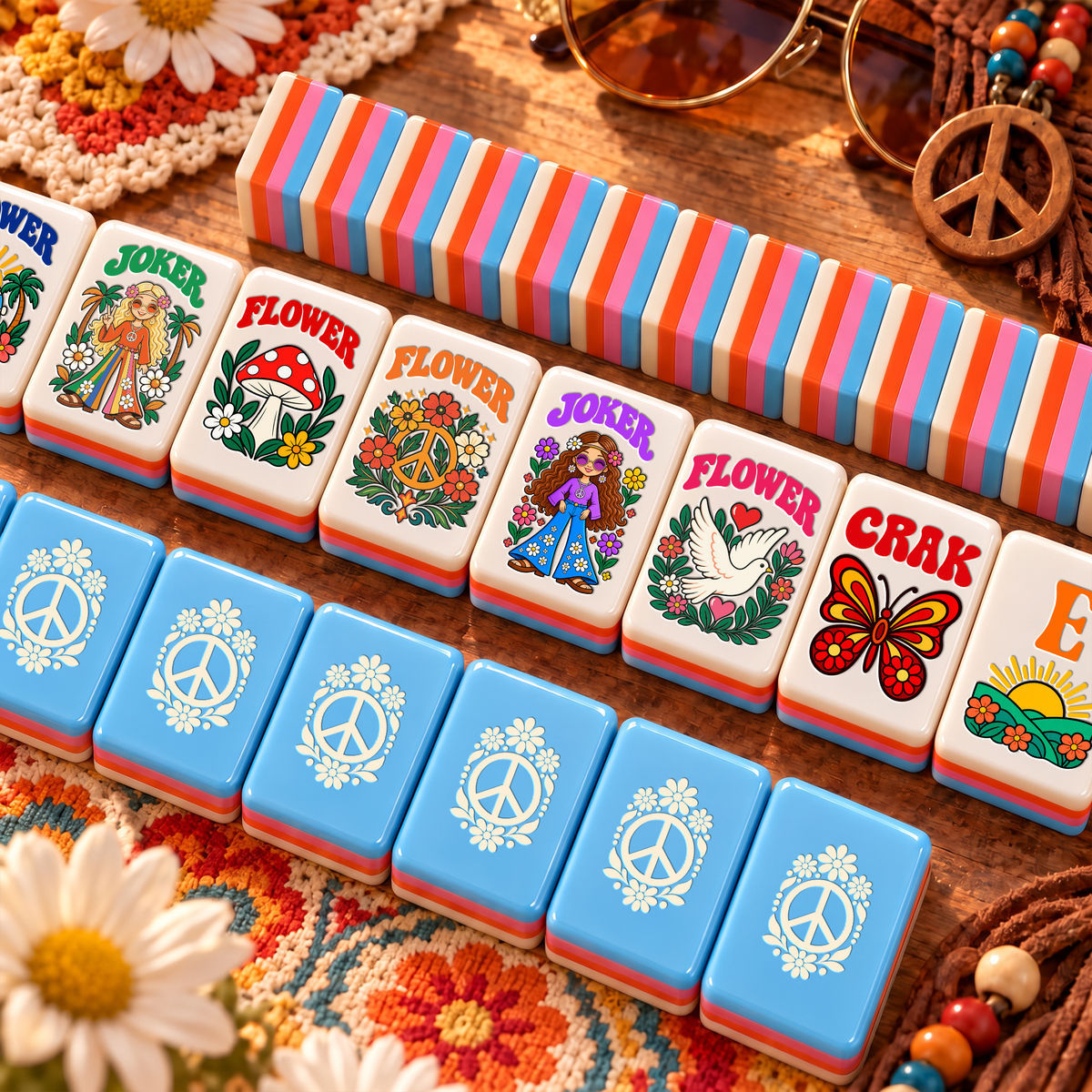
Filipino mahjong, common in the Philippines and Filipino diaspora communities, uses the same 152-tile structure as American mahjong but applies a completely separate hand catalog with unique special hands (called "patterns" or "melds"). Unlike American mahjong's season-based card, Filipino hands are standardized year-round and emphasize speed: most special hands require only two to four melds plus a pair, making declarations faster and blocking more aggressive. Hands include "Heavens," "Hongs" (triplets of the same rank), "Fives" (all tiles ranked 5), and "Simples" (numbered tiles 1–7 only). Filipino play is typically informal—played among family and friends—so house rules vary widely; always agree on the hand list and scoring multipliers before the game starts. Special hands score higher than "Straights," making them the primary win strategy.
What makes Filipino special hands different from American hands?
Filipino mahjong offers a fixed, year-round hand catalog instead of the seasonal National Mah Jongg League card used in American play. Filipino hands are usually simpler: most require only two melds (not three), one pair, and no exposed jokers in the pair. This speeds up play dramatically—a Filipino game often runs 60–90 minutes versus 2+ hours for American. Because hands are easier to form, discards become more aggressive and blocking is fiercer. The trade-off is that advanced players memorize fewer total combinations, so the meta-game centers on reading opponents and timing your declarations strategically.

Which special hands appear most often in Filipino games?
The most common Filipino special hands are Hongs (three identical triplets, e.g., three 1 Bams, three 2 Bams, three 3 Bams plus a pair), Fives (all eight tiles across the four suits ranked 5, plus a pair from the remaining tiles), Simples (numbered tiles 1–7 only, no honors), and Straights (also called "Straights" or "Runs," though jokers often fill gaps since sequences aren't naturally calleable). Many groups also play Heavens (East player draws the winning tile on their first draw) and Earth (any player wins on the first discard by another player). A local hand list governs specifics; some groups add region-specific or family hands, so always confirm before the first game.
How do jokers work in Filipino special hands?
In Filipino mahjong, jokers are wild tiles that substitute for any tile you're missing in a pung, kong, quint, or sextet—exactly as in American play. However, the strategic role differs: because Filipino hands are simpler and faster, jokers become the primary defensive tool. Holding jokers late in the game signals threat; experienced players discard risky tiles earlier to avoid feeding a joker-rich opponent. Many Filipino groups forbid jokers in the pair—the hand-winning two tiles—mirroring American rules. Some house rules also restrict jokers in "pure" hands like All Honors (only wind and dragon tiles) or Simples. Always ask at the table before your first discard.
What's the step-by-step process for declaring a Filipino special hand?
Collect your melds. Form two to four triplets, quads, or quints; the most common special hands need exactly two melds, one pair.
Check the hand list. Confirm your combination matches a named hand on the group's list (Hongs, Fives, Simples, Heavens, etc.).
Verify no invalid joker use. Ensure jokers don't appear in the pair and comply with any purity rules your table enforces.
Declare clearly. Say the hand name aloud and lay tiles face-up on the mat in front of you (or in your rack if played closed).
Settle the score. The hand's multiplier (usually 2× to 8× base) is multiplied by the number of rounds played that session; confirm the payout before you draw tiles for the next hand.
Pass tiles for the next game. Most Filipino games use a simplified pass (often a single side-pass or no pass at all, unlike the American Charleston).
🀄 Shop best-selling mahjong sets →
How do you block a Filipino special hand before it wins?
Blocking in Filipino mahjong is timing-dependent: you must act on the discard immediately, before the player draws from the wall. If an opponent discards a tile you need for their hand, you can:
Pung/Kong the discard if you hold two or three matching tiles; this exposes your meld and shows opponents you're close to a win.
Discard defensively by holding tiles that complete few common hands; mid-game, favor tiles at the extremes (1–2, 8–9 of each suit) or honor tiles that don't appear in most patterns.
Track discards carefully. Remember which tiles have left play; if three 5 Craks are gone and an opponent hasn't declared "Fives," they likely aren't pursuing it.
Avoid feeding. Late in the game, never discard the tile an opponent just picked up from the wall (called "feeding") or a tile they've already called a pung on.
The most dangerous opponents are those with high pung/kong counts and jokers: they're close to two melds and one pair.
What scoring multipliers apply to Filipino special hands?
Special Hand | Base Multiplier | Notes |
Straights (base win) | 1× | No bonus; the reference score |
Simples (1–7 only) | 2× | Common and fast; beginner-friendly |
Hongs (triplets of same rank) | 3–4× | Harder to form; some groups add +1× if all hidden |
Fives (all 5-ranked) | 4–5× | Rare; tight tile distribution required |
Heavens (East's first draw) | 6–8× | Automatic win; depends on group rules |
All Honors (winds + dragons only) | 5–6× | No number tiles; very rare |
Purity hands (no jokers used) | ×2 additional | Multiplied against the base multiplier |
Multiplier basis: Most Filipino groups multiply the base by the number of complete rounds (full set of four hands) played that session. A "Fives" hand declared after two complete rounds scores 4 × 2 = 8 base points, then converted to chips or currency per your table stakes. Always clarify multiplier timing and final chip value before the first hand.
🎁 See our most-loved mahjong sets & accessories →

What tiles should you prioritize in early Filipino play?
In the first draw and discard phase, prioritize keeping flexibility:
Avoid early honor declarations. Honor tiles (winds and dragons) are valuable in many patterns, so hold them longer to stay unpredictable.
Separate suits. If you draw 3 Bams, don't immediately collect all Bams; mixed-suit holdings look less threatening.
Discard extreme numbers. Lead with 1s and 9s; opponents are less likely to complete a quint or sextet at the edges.
Hold jokers for mid-game. Early exposure of joker holdings telegraphs your strategy. Discard tiles you're confident won't complete opponent hands first.
Watch the player after you. If they immediately pung or kong your discard, note the meld type; they're signaling their target hand and joker count.
By the midgame, when several pungs and kongs are exposed, the hand's direction becomes clear—and blocking becomes aggressive.
How do special hands change strategy compared to American mahjong?
Aspect | American Mahjong | Filipino Mahjong |
Hand source | Annual NMJL card (seasonal) | Fixed year-round list |
Melds needed | Usually three | Two to three |
Sequence rule | No chows; jokers always wild | No chows; jokers always wild |
Game length | 2–3 hours typical | 60–90 minutes typical |
Declaration style | Formal, with tile layout check | Casual; house rules vary |
Scoring | Points per hand type | Multipliers × rounds played |
Blocking tactic | Observe suit concentration | Watch meld types and joker holdings |
Pass ritual | Charleston (three passes) | Usually simplified or none |
The speed and simplicity of Filipino hands reward aggressive, reactive play; American mahjong rewards long-term tile tracking and plan consistency.
✨ Find your Mahstead set — free US shipping →
What should you check before your first Filipino game?
Before sitting down, confirm with the table or group leader:
The hand list. Ask for the official hand names and meld requirements. Many Filipino groups play with 15–25 named hands; some add region-specific or family variations.
Joker rules. Are jokers forbidden in pairs? In "pure" hands like Simples or All Honors? Can jokers appear in two out of three melds?
Pass or no pass? Some Filipino games start directly without a Charleston; others use a single side-pass. Clarify the tile distribution method.
Multiplier timing. Are scores multiplied by completed rounds, or is each hand scored flat?
Chip value. What is one point worth in chips or money? Confirm stakes before the first hand to avoid disputes.
Blocked tiles rule. If a player discards a tile they've already melded (e.g., they exposed a 5 Crak pung and then discard a 5 Crak), is that legal, or is the tile "blocked"? Some groups ban it.
Winning on discard vs. draw. Must the winning tile come from the wall, or can you declare on a discard? Most Filipino games allow discard wins, but verify.
Asking these questions up front shows respect and prevents costly misplays.
Is Filipino mahjong easier than American mahjong?
Filipino mahjong is faster and looser, not necessarily easier. The hands are simpler and melds fewer—so beginners grasp the core faster. But play is more aggressive: opponents block harder, discards are riskier, and house rules vary wildly. If you've played American mahjong, Filipino play will feel refreshingly quick but chaotic until you learn the group's specific hand list and culture. If you're new to mahjong entirely, Filipino is a good entry point: simpler hands, shorter games, and more social tolerance for mistakes. To start, find a casual, local Filipino or Filipino-American community group (check community centers, libraries, or neighborhood social groups) and ask to observe one game before joining.
For American mahjong rules and a detailed breakdown of the National Mah Jongg League card, see our full guide. The tile structure and joker mechanics are identical; only the hand catalog and social pace differ.
What equipment do you need for a Filipino mahjong game?
To host a Filipino game, you'll need:
A 160-tile mahjong set (152 playing tiles + spares; available in plastic or acrylic designs from our best-selling collection).
A mahjong mat (13" × 13" minimum; protects tiles, marks the center wind, and speeds up play; see mahjong mat options for felt, neoprene, or embroidered styles).
Racks with pushers (optional but valuable for holding and organizing your 13 tiles; racks with pushers prevent tiles from tipping and speed up passes).
Dice (two six-sided dice to determine starting position and draw order).
Joker counter or pencil (to track rounds played, since most Filipino scoring multiplies by round count).
A hand list (printed or verbal; ask your group to provide the official list before game one).
If you travel to games or host regularly, a mahjong bag or case keeps your set protected and portable.

FAQ
Can I use an American mahjong set to play Filipino mahjong?
Yes. Both use the same 152 tiles (36 Bams, 36 Craks, 36 Dots, 16 winds, 12 dragons, 8 flowers, 8 jokers). The only difference is the hand list and scoring multiplier. Bring a printed Filipino hand list to the table.
Why do Filipino hands require fewer melds than American hands?
Filipino mahjong prioritizes speed and social play over puzzle-solving. Two-meld hands finish faster and keep games to 60–90 minutes, ideal for casual evening gatherings. American hands (three melds + pair) demand deeper strategy and longer planning.
If I declare a special hand incorrectly, what happens?
House rules vary. Most groups treat it as a "dead hand"—you cannot score that round and discard passes to the next player. Some groups penalize with a chip fine. Always ask before the first hand.
Are jokers required in Filipino special hands?
No. Many groups reward "pure" hands (no jokers) with a 2× bonus multiplier. Strategic players often save special hands for rounds where they draw their needed tiles naturally, to score higher.
Can East player always declare "Heavens" on their first draw?
Yes, per most groups—but verify this house rule first. Some casual games allow Heavens only if the tile hasn't been discarded or picked up from the wall; others require the full hand (two melds + pair) to be complete on the first draw.
How do I find a Filipino mahjong group to join?
Check local community centers, Filipino-American associations, churches, and libraries in your area; many host weekly or monthly casual games. Online forums and neighborhood social boards often advertise meetups. Call ahead to confirm house rules and stakes before your first visit.


View More
View More
View More
