
Earthly Hand Mahjong: Meaning, Points & Playing Guide
Last updated: Nov 23, 2026
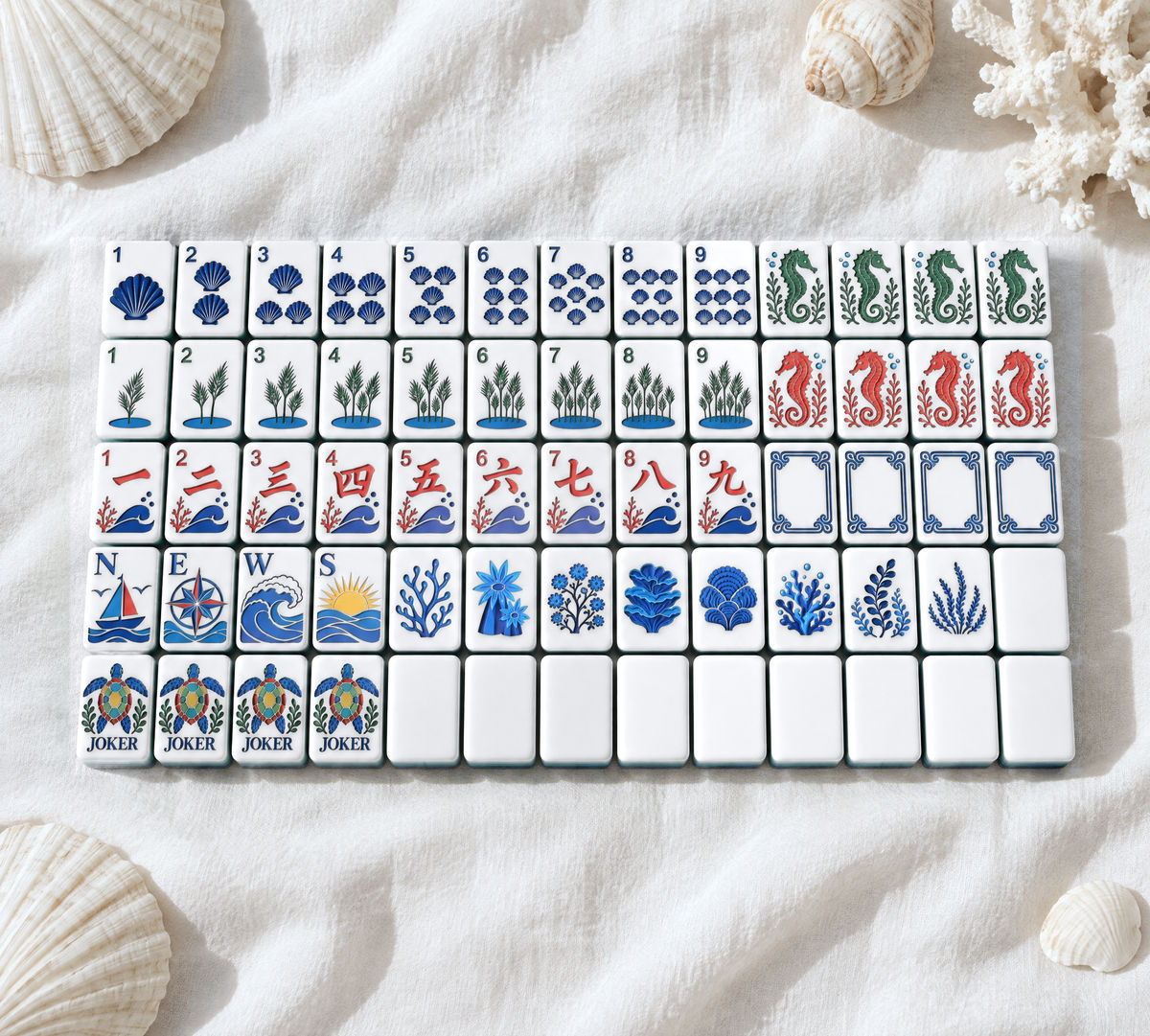
An Earthly hand is a winning hand in American mahjong defined by a specific combination of tile groups listed on the current year's National Mah Jongg League card. It typically requires four melds (pungs, kongs, or other valid groups) plus a pair, drawn from the standard 152-tile set. The exact tiles and point value vary year to year based on the official card issued each spring—which is why learning to read the mahjong card is essential. An Earthly hand is never a joker-free hand (because those carry special scoring rules); it's a regular-play combination worth checking the card to confirm your meld before you declare. We verify the hand name and point value against the current card every time we play—never from memory.
An Earthly hand belongs to the category of hands that reward specific tile arrangements on the American mahjong card. The card itself—a laminated sheet issued by the National Mah Jongg League each spring—lists roughly 8,000 winning combinations, organized by hand name, tile pattern, and point value. To find and recognize an Earthly hand, you must first understand how the card is laid out and what the notation means. This guide walks you through the meaning of an Earthly hand, how to spot it during play, how to score it, and what equipment and practice help you master it faster.
What exactly is an Earthly hand in American mahjong?
An Earthly hand is a named winning combination on the National Mah Jongg League card that follows American mahjong rules: four melds plus a pair. The card assigns it a specific name (Earthly), organizes it by suit and number pattern, and lists its point value. The exact tiles required change each year. In American mahjong, hands are never built from memory—they must match the current year's card exactly. If your tiles match a listed hand, you've won; if not, you continue drawing. An Earthly hand is not a universal rule across all mahjong variants—Chinese, Hong Kong, and Riichi mahjong use completely different hand definitions and scoring systems—so always confirm you're playing American rules and using the current card.

Where do you find the Earthly hand on the card?
The National Mah Jongg League card is printed in sections, organized first by suit combination (like "All Bams," "All Craks," "Mixed"), then by hand pattern and point value. Hands are listed by name—including Earthly, Heavenly, Heavenly 1, 2, 3, and many others—and a single hand name may appear multiple times if it can be formed in different tile sequences. To locate an Earthly hand, scan the card for the Earthly section; the card usually groups similar-ranked hands together. Each line shows the exact tile pattern (using numbers and suit symbols), the melds required, the pair, and the point value in a row. The card is dense and requires practice to read quickly. We recommend keeping a printed card at the table and using a highlighter to mark hands you've recently completed—this trains your eye to spot patterns faster during play. Many players also carry a mahjong mat with the card printed or laminated directly into the mat itself, which keeps it visible and protected.
🀄 Shop best-selling mahjong sets →
How many points is an Earthly hand worth?
Point value for an Earthly hand depends on the specific year's card and which variation of the hand you complete (many hands appear multiple times with different melds and points). Typically, named hands like Earthly fall into mid-to-high scoring ranges—often 40, 50, 60, 70 points or higher—but we never assume the value; we check the card first. American mahjong scoring rewards:
Hands with jokers (all four jokers, or specific joker counts)
Hands with pairs of consecutive or matching tiles
All-kong or mostly-kong melds (rarer, harder to form, higher points)
Closed hands (no exposed melds except the winning hand)
An Earthly hand is neither a "joker-free" hand (which carries a point bonus for using zero jokers) nor designed to be high-scoring; its value is printed on the card for the current year. If you're comparing hands during play to decide whether to discard toward one combination or another, consult the card or a scoring table. We keep a quick reference list of all points by hand name at the table, sorted from highest to lowest, so we can chase the highest-value plays.
How does an Earthly hand differ from Heavenly, Chows, and other named hands?
The card organizes hands into families based on pattern and historical naming convention. Heavenly hands (usually no jokers, all-one-suit, and very high-scoring) rank differently from Earthly hands. Earthly hands sit in a middle tier—more common than Heavenly, but not as frequent as standard mixed-suit combinations. Other named hands include Chows, Quints, Hongs, Dragons, and Winds, each with its own tile requirements and point value. The name itself hints at the hand's rarity: Heavenly and Earthly evoke that hierarchy, though Earthly is more achievable during a typical game night.
Chinese, Hong Kong, and Riichi mahjong use completely different hand names and scoring systems—they have no Earthly hand equivalent. Earthly is purely an American mahjong creation. In Chinese mahjong, hands are often called by meld type (like Pung, Kong, Chow) or by unique patterns (Dragon Pung, Concealed Kongs). If you play multiple variants, always keep the rule book or card for each variant at the table.
How do jokers affect an Earthly hand?
In American mahjong, jokers can substitute for any tile in an exposed meld (a pung, kong, quint, or sextet), but never in a pair or a single tile. An Earthly hand may or may not allow jokers, depending on what the card shows for that specific hand. Some Earthly variations on the card include jokers (meaning you form the meld by substituting a joker for one of the required tiles); others do not. The point value often reflects the joker count: hands with fewer jokers typically score higher. Joker-free hands—those completed without any jokers—earn a bonus and are marked on the card with a special symbol.
When you're building toward an Earthly hand, count how many jokers you have in your hand, how many you've seen discarded, and how many remain in the wall. This calculation helps you decide whether you can realistically complete the hand or should pivot to a different combination. Understanding how jokers work is one of the fastest ways to improve your decision-making and win rate.
🎁 See our most-loved mahjong sets & accessories →

What's the practical step-by-step to recognize and claim an Earthly hand?
1. Sort your tiles: Arrange your 13 tiles (plus the draw tile) into suits and numbers, grouping similar tiles together.
2. Check the card: Flip to the Earthly hand section on the current year's card and scan every Earthly variation listed.
3. Match your melds: For each Earthly line on the card, check whether your tiles include the exact melds and pair shown.
4. Verify joker count: If the hand shows jokers, confirm you have the right number and that they substitute correctly (never in a pair).
5. Confirm the pair: Make sure you have exactly one matching pair left after forming the four melds.
6. Call "Mahjong": Once you've matched an Earthly hand (or any winning hand) exactly, call "Mahjong," expose your tiles, and the hand ends.
Common mistake: Assuming a hand name without checking the card. Two players might each think they have "Earthly" but with different tile arrangements—only the card decides.
Scenario | What to do | Why it matters |
You have 4 Craks, 4 Craks, 4 Craks + 2 Dragons + 3 Dragons, 3 Dragons, 3 Dragons | Check the card for Earthly; if it matches exactly, call Mahjong. | Only exact matches count; one wrong tile = no win. |
You have the tiles for Earthly but used 2 jokers; the card shows Earthly with 0 jokers only | You don't have this hand; look for a different Earthly variation with jokers allowed. | Different joker counts = different hands and point values. |
You're unsure if you've read the card correctly | Ask another player to verify before you call Mahjong. | Calling a non-hand forfeits your turn and loses the round. |
What to check before you play toward an Earthly hand
Is the card for the current year? Hands change every spring. An old card teaches patterns but won't help you win.
Have you learned to read the card? If you're new to mahjong, spend 20 minutes drilling card-reading drills before game night.
Do you have a readable, printed card at the table? A worn or blurry card wastes time and invites errors. Many players invest in a mahjong mat with the card printed so it's always clear and accessible.
Are you tracking which tiles have been discarded? If three Dragons are already gone, you can't form a Dragon pair; shift your target hand.
Do you play with racks and pushers? Racks keep tiles sorted and visible, reducing read errors and speeding up hand verification.
Comparing high-scoring named hands: a quick reference
Hand name | Typical suit mix | Typical joker count | Typical point range | Difficulty level |
Heavenly | Single suit or specific pattern | Often 0 | 60–80+ | Very hard |
Earthly | Mixed or single suit (varies by year) | 0–4 | 40–60 | Medium |
Chows | Mixed suits, sequences implied | 0–3 | 30–50 | Medium |
Quints | Mostly 5-tile melds | 0–2 | 50–70 | Hard |
Hongs | Often Dragons and Winds | 1–3 | 40–60 | Medium |
(Point values are for illustration; always check the current card.)
Why learning named hands like Earthly accelerates your game
New American mahjong players often focus on learning the easy hands first—those with low point values, common tile combinations, and short card sections. Named hands like Earthly sit in the middle tier: they're challenging enough to feel rewarding but achievable within a normal game. Learning to recognize Earthly and similar mid-tier hands trains your eye to spot patterns, teaches you how the card is organized, and gives you reliable hands to chase when you're stuck. Players who know 10–15 named hands well almost always beat players who only know generic patterns.
✨ Find your Mahstead set — free US shipping →

FAQ
Is an Earthly hand the same in Chinese mahjong as in American mahjong?
No. Earthly is an American mahjong hand name only. Chinese mahjong uses entirely different hand types and scoring rules. Always confirm which variant you're playing and use the correct reference card.
Can I use a joker in the pair of an Earthly hand?
No. In American mahjong, jokers can never be used in a pair or a single tile—only in exposed melds (pungs, kongs, quints, sextets). If the Earthly hand on the card shows a pair, both tiles must be real tiles, not jokers.
What if I have an Earthly hand but I'm not sure if it matches the card?
Ask another player at the table to verify before you call "Mahjong." If you call a non-hand, you forfeit your turn and the round ends. Verification takes 10 seconds and prevents mistakes.
Does the point value of an Earthly hand change from year to year?
Yes. The National Mah Jongg League issues a new card each spring, and hand definitions and point values can shift. Always use the current year's card and never rely on last year's memory.
How many Earthly hand variations are usually on the card?
The number varies by year, but typically a single named hand (like Earthly) appears 3–8 times on the card, each with different tile combinations, meld patterns, and sometimes different point values. Scan every Earthly line before assuming you don't have the hand.
If I play with a mat that has the card printed on it, is it as readable as a separate laminated card?
Printed mats are very readable and keep the card visible during play. Separate laminated cards are portable and durable. Many serious players use both: a mat for the home table and a card in a travel bag for games at other venues.


View More
View More
View More
