
Taiwanese Mahjong Special Hands: Winning Patterns Explained
Last updated: Nov 23, 2026
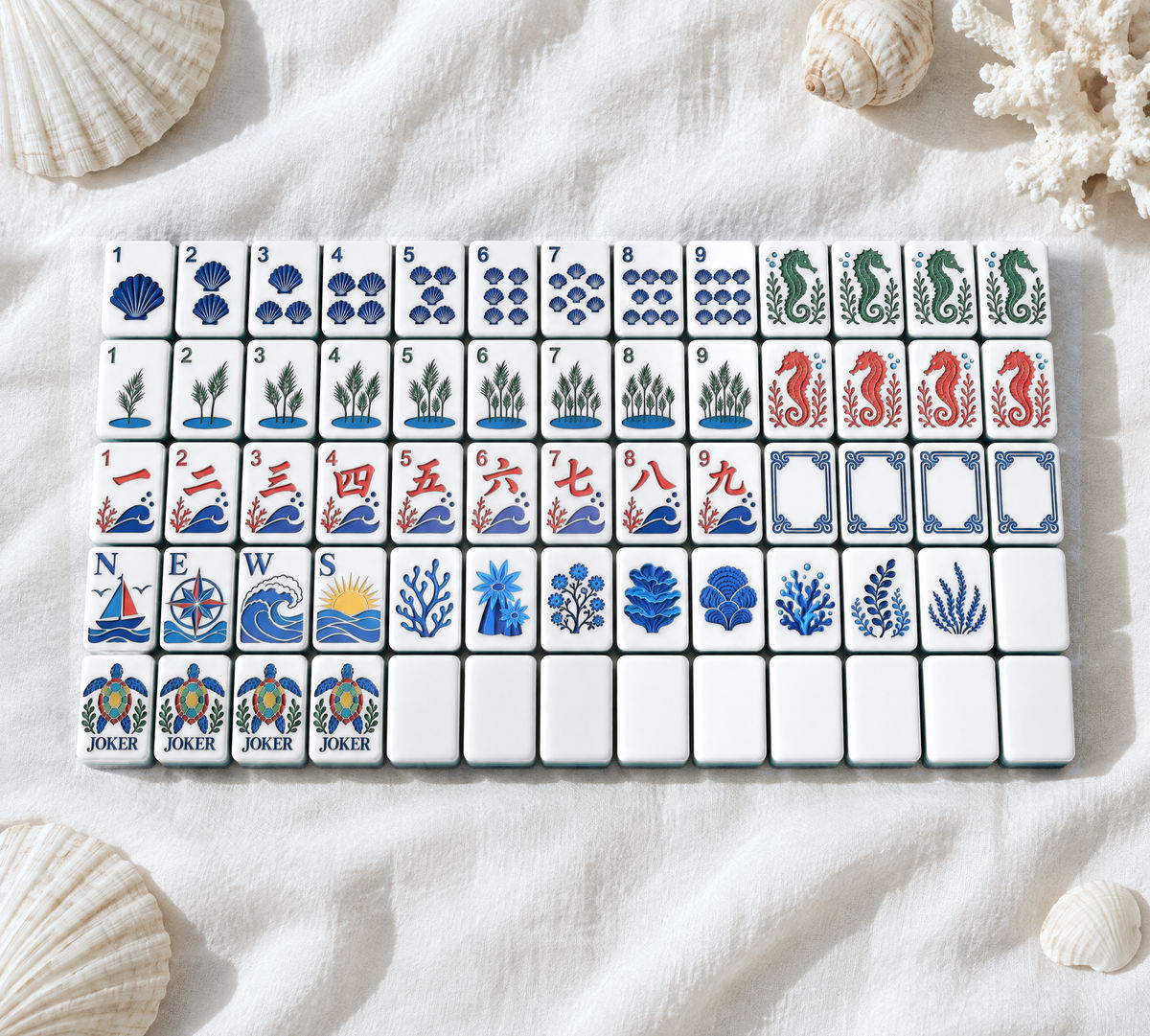
Taiwanese mahjong uses 144 tiles (not 152) and relies on concealed play and complex scoring multipliers rather than a printed card. Special hands include "all pung" (no sequences), "all terminal and honor" (limit hand), "all simples" (no terminals), "mixed one suit," and seven-pair variations. Each hand carries a point value multiplied by the prevalence of honor tiles or bonus conditions; a winning hand scores at minimum 8 points, and limit hands (ceiling hands) award maximum payment. Unlike American mahjong's drawn card reference, Taiwanese players must memorize hand patterns, and jokers don't exist—every tile is fixed. Winning requires recognizing not just valid combinations but their scoring tier before declaring.
Taiwanese mahjong—played across Taiwan, Singapore, and parts of mainland China—attracts players who prize speed, memory, and mental calculation. If you've played American mahjong, switching to Taiwanese feels like learning a new language: no jokers, no printed card, no exposed melds until someone wins. The payoff is a deeper, faster game where pattern recognition and scoring precision matter as much as luck. Let's decode Taiwanese mahjong's special hands so you can recognize them, understand their value, and hold your own at any table.
What makes Taiwanese hands "special" versus regular winning hands?
In Taiwanese mahjong, every winning hand has a point value. A "regular" hand (also called a "basic" hand) scores 8 points or higher based on honor tiles, sequences, or concealment bonuses. A "special" or "limit" hand is one that scores at the ceiling—usually 16, 32, or 64 points—because it follows an exceptionally rare or complex pattern. Special hands are patterns so specific they're worth an automatic maximum payout, much like a royal flush in poker. Recognizing the difference between a 10-point hand and a 32-point special hand changes everything about your strategy and risk tolerance during play.
🀄 Shop best-selling mahjong sets →

Which Taiwanese special hands appear most often in competition?
The most common special hands are all pung (no sequences—only melds of three or four identical tiles), all terminals and honors (composed entirely of 1s, 9s, and winds/dragons), mixed one suit (one suit plus terminals and honors), all simples (2–8 in one suit only), and seven pairs (seven distinct pairs instead of the standard four melds plus one pair). In tournament play, "all pung" appears regularly because players can prepare for it across multiple rounds; "all terminals and honors" is rarer but still achievable; seven pairs often wins by luck on the final tile draw. Each comes with specific point multipliers and must be declared immediately upon winning—no partial credit if you draw a hand worth two special patterns.
How does Taiwanese scoring multiply for special hands versus American rules?
Taiwanese mahjong scoring is fundamentally different from American mahjong's flat payout. In American mahjong, a hand is either valid (and pays out at that year's rate) or invalid. In Taiwanese mahjong, every hand starts with a base score (usually 8 points for a basic winning combination). Points then multiply based on:
Honor tile count: Each dragon or wind adds a multiplier; three or more honor tiles can double or triple the base score.
Concealment: If all four melds are concealed (drawn, not exposed) the score jumps significantly.
Hand pattern: Certain patterns (all pung, all simples) carry fixed multipliers regardless of tile mix.
Draw type: Drawing from the wall scores higher than robbing the kong or drawing the last tile.
A basic "all pung" hand with two dragons might score 16 points; the same hand with four honor tiles scores 32. American mahjong has no concept of multipliers—a hand either matches the card or doesn't. Taiwanese play rewards tight, disciplined tile management over raw luck.
What's the difference between Taiwanese and Hong Kong mahjong special hands?
Hong Kong mahjong shares Taiwanese mahjong's tile count (144), concealment rules, and jokerless structure—but hand values and special patterns diverge sharply. Taiwanese mahjong emphasizes balanced tile distribution and honors as multipliers; Hong Kong mahjong prioritizes "winning patterns" (鬼牌 patterns) and includes a much larger library of named hands (sometimes 80+ recognized patterns). Hong Kong's "13 unique terminals and honors" is a limit hand; Taiwanese mahjong calls the equivalent "all terminals and honors" but scores it differently. A hand that's a 16-point special in Taiwan might be worth 32 points in Hong Kong. Additionally, Hong Kong play includes "ready hand" rules and "dead tile" tracking that don't exist in Taiwanese play. If you're traveling between regions, always confirm house rules on pattern values and draw penalties before sitting down.
Aspect | Taiwanese | Hong Kong |
Tile count | 144 | 144 |
Jokers | None | None |
Base hand value | 8+ points | Varies by pattern (2–limit) |
All-pung hand | ~16–32 points | ~2–8 points |
Limit hand ceiling | 64 points | 32 points (often) |
Pattern library | ~40–50 standard | 80+ recognized |
Ready hand rule | Less strict | Very strict—limits play |
Table talk | Minimal | Minimal |
The key takeaway: if you're playing Taiwanese mahjong with international players, ask if anyone learned in Hong Kong—scoring collisions are common and cause table disputes.
🎁 See our most-loved mahjong sets & accessories →

Can you win with a special hand on the final draw, or are there dead-tile rules?
Yes, you can win on the final tile in Taiwanese mahjong. However, the draw method affects your score. Self-draw (drawing from the wall yourself) scores highest; discard win (winning off another player's discard) scores slightly lower; robbing the kong (winning the tile a player just added to their kong) has specific point adjustments; winning the last tile from the wall carries a bonus multiplier in some house rules. There's no universal "dead tile" rule like in some Hong Kong variants—once a tile is discarded, it's in play. However, many Taiwanese tables enforce strict "ready hand" discipline: once you declare ready (ting), you cannot change your hand, and you must win on your next draw or discard opportunity. Breaking this rule results in penalties or an automatic loss. Always clarify house rules on ready-hand penalties and final-draw scoring before buying into a game.
How do you memorize Taiwanese special hands if there's no card to reference?
Most Taiwanese mahjong players learn special hands through repeated play and flashcard drills. Unlike American mahjong—where the National Mah Jongg League card is your legal reference—Taiwanese players must internalize patterns through memory. Competitive players often:
Study hand lists (widely available online; regional variations exist).
Play practice rounds focused on one pattern family (e.g., "all pung" week).
Use hand-counting apps or study groups before tournament season.
Memorize the highest-scoring patterns first, then work backward to basic hands.
New players typically start with the ten most common patterns and add five new ones every two weeks. After three to six months of weekly play, most casual players can recognize and declare 30+ patterns without hesitation. There's no shortcut—the memory demand is why Taiwanese mahjong attracts players who enjoy the mental challenge. Many study groups meet online specifically to drill pattern recognition before tournaments.
What to check before you buy a Taiwanese mahjong set
If you're stepping into Taiwanese mahjong—whether you're switching from American or starting fresh—you'll need a 144-tile set with durable numeric tiles and clear suit markings. Look for:
Tile quality: Resin or bone tiles that survive years of shuffling.
Font clarity: Numerals and suit symbols readable under table lighting.
Weight: Heavy tiles reduce accidental scatters during tile draws.
Tile size: Standard 30mm tiles fit most hands; verify before buying if you have small hands.
Carrying case: Taiwanese sets are often played in tournaments and meetups—a sturdy bag saves tile breakage.
Set completeness: Confirm you have exactly 144 tiles (36 per suit × 4 suits, plus 16 winds, 12 dragons, 8 flowers, 8 blanks). Don't buy a set marketed as "160 tiles"—those are American mahjong sets and won't suit Taiwanese play.
Our best-selling acrylic mahjong sets include American 152-tile configurations; if you're committed to Taiwanese mahjong, seek a specialist retailer that stocks 144-tile sets. For travel and tournaments, pair your set with a mahjong bag or case to protect tiles during transit.
✨ Find your Mahstead set — free US shipping →

FAQ
Can I use an American mahjong set to play Taiwanese mahjong?
No. American sets contain 152 tiles (extra jokers and blanks); Taiwanese mahjong requires exactly 144 tiles. The tile composition differs too—American sets have jokers, which Taiwanese play forbids. You'll need a purpose-built 144-tile set.
Do Taiwanese special hands require all four melds to be concealed, or can one be exposed?
Most special hands award maximum points only when all four melds are concealed (drawn from the wall, not exposed through calls). If you expose a meld—pung or kong—your hand no longer qualifies for the special hand bonus and drops to a basic-hand score. Always assume concealment is required unless your local table explicitly allows exceptions.
How often do special hands win at a Taiwanese mahjong table?
In casual play, roughly 20–30% of winning hands are special hands; in competitive or experienced tables, that rate rises to 40–50% because players chase patterns strategically. Beginners see special hands less often because they haven't yet learned to recognize or prioritize them mid-game.
If I'm tied between two special hand patterns, which one wins?
In Taiwanese mahjong, you declare the hand you achieved at the moment you win—you cannot retroactively choose a different pattern to score higher. If your hand qualifies for two patterns simultaneously (rare), most house rules award the higher-scoring pattern automatically. Always clarify this before play starts.
What's the penalty for declaring a false special hand in Taiwanese mahjong?
Penalties vary by house rules and region, but common ones include: immediate disqualification from that round, paying double the hand's claimed value to all players, or sitting out the next round. In tournaments, false declarations may result in ejection. Never guess—if you're unsure the hand qualifies, declare it as a basic hand instead.


View More
View More
View More
