
Do You Need an American Mahjong Set? A Honest Player's Guide
Last updated: Nov 23, 2026
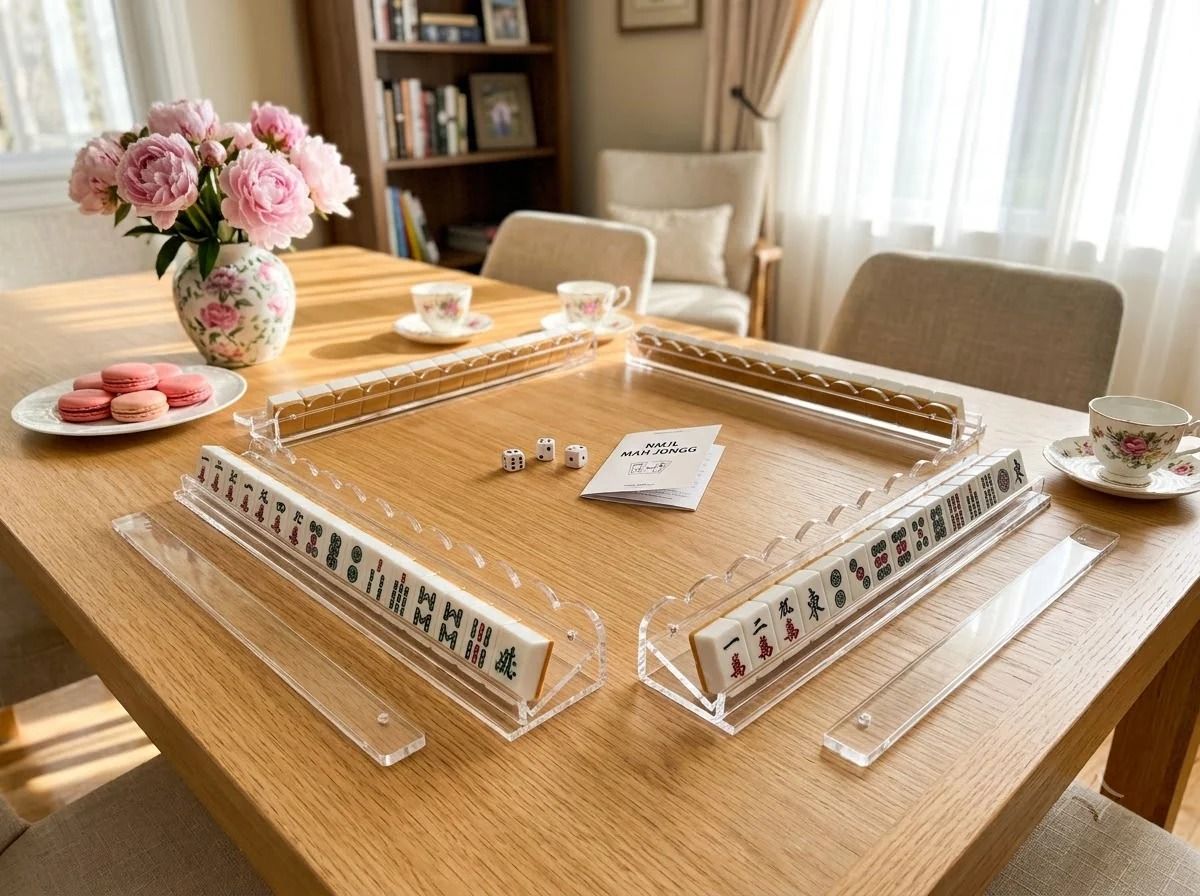
Yes, you need a dedicated American mahjong set if you play regularly—even twice monthly—because borrowed sets wear out, lose tiles, and lack consistency. A standard American set contains 152 playing tiles plus 8 jokers (160 total in most retail sets), organized into three numbered suits, winds, dragons, flowers, and blanks. You'll also typically want a mat, racks with pushers, and a bag for travel. Sets range from simple to engraved designs; many players find acrylic sets durable enough for weekly games over years. The key question isn't whether you need one—it's whether your game frequency and budget align. If you host regularly or play in a league, owning your own set eliminates logistics headaches and ensures you always have correct tiles.
What's inside an American mahjong set, and will I have enough tiles?
An American mahjong set has exactly 152 playing tiles: 108 numbered tiles (three suits of Bam, Crak, and Dot, numbered 1–9, four copies each), 16 winds (four each of North, East, West, South), 12 dragons (four Red, four Green, four White), 8 flowers, and 8 jokers. Retail sets typically come as 160-tile kits with spare tiles for replacements. You use all 152 tiles in every game with four players. The jokers are critical—they act as wild tiles and often determine whether you can complete a hand on the current year's National Mah Jongg League card. If tiles go missing or crack over time, spares prevent your set from becoming unplayable mid-season. What's in an American mahjong set covers each tile type in detail.
🀄 Shop best-selling mahjong sets →
When do casual players actually need their own set?
You're a good candidate if you play twice a month or more, host games at your home, or travel to tournaments. Borrowing works fine for occasional play—maybe once every few months with friends. But frequent players waste time waiting for games to start while someone hunts down a missing tile, or learn a hand wrong because a borrowed set has mismatched or damaged pieces. Hosting regularly? Your own set prevents the awkward shuffle of "let me call around for a set" and signals to players you're serious about consistent weekly or twice-weekly play. League players always own their own set; it's assumed. Casual once-a-year players can skip it. Most of us fall between: we play monthly-plus and benefit hugely from ownership. Check best-selling mahjong sets to see what active players in your area are using.
How much do you actually spend once you own a set?
A complete setup includes four pieces: the set itself, a mat, racks with pushers, and a travel bag. The set is the main investment. A mat protects tiles and speeds sorting. Racks and pushers save your wrists during long games. A bag lets you carry everything between homes or to tournaments. Many players start with just the set and a mat, then add racks and a bag as they play more. Others grab a bundled collection at the start to avoid repeat purchases. Budget grows with your commitment: a once-a-month player might spend less than a weekly-game host. Our weekly-game crew always keeps extra jokers and blanks on hand (every 160-tile set includes spares), so we've never had to buy replacement tiles mid-season after five years of heavy play.
Scenario | Typical Setup | Why | What you'll likely buy | Duration |
Casual, once monthly | Set only | Minimal investment; set sits between plays | Set, optional mat | 3–5 years |
Regular, 2–3x monthly | Set + mat | Mat protects tiles; mat makes play faster | Set, mat | 5+ years |
Weekly host | Set + mat + racks + bag | Durability, fast games, portability matter | All four | 5+ years |
Tournament player | Set + dedicated mat + racks + case | Travel, tile security, wrist support | All four plus case | 5+ years |
What's the difference between a basic set and an engraved set?
Both contain the same 160 tiles and work identically in play. The difference is customization and durability. A basic set uses standard tile designs and layouts. An engraved set adds personalized text, names, or custom artwork on tiles or racks—useful if you're gifting to a specific player, marking a set for a couple or family group, or creating a signature set your game group recognizes. Engraved sets take longer to order but arrive ready to use. Both acrylic and engraved options last through years of weekly play in our experience. Choose engraving if you want a keepsake or need to distinguish your set from others at a tournament. Choose basic if you prioritize speed of delivery and simplicity. Either way, pair it with a mat, racks, and a travel bag once you settle into regular play.
Should you buy a set if you only play remotely or with apps?
No. If all your play happens on Zoom, Discord, or a mahjong app, you don't need physical tiles. A set is purely for in-person play. However, if you anticipate returning to in-person games—even occasionally—it's worth buying early rather than scrambling later. The upfront cost is lower than you might think, and sets don't expire. Store a set in a cool, dry place and it stays playable for a decade. Many of us kept sets untouched during the pandemic, then resumed weekly games as soon as we could. If you're uncertain, start by learning the rules and hand patterns with an app or group, then buy when you know your play will be consistent in person.
🎁 See our most-loved mahjong sets & accessories →
What to check before you buy
Verify the tile count. A complete American game uses 152 tiles. Retail sets are usually 160 tiles (152 + spares). Never buy a set claiming fewer than 152 tiles.
Check the tile material. Acrylic is durable, quiet, and resistant to cracking. It's the standard for weekly home games and tournaments.
Confirm the suit symbols and dragon colors. Red dragons go with Craks, Green with Bams, White with Dots. Mismatched dragons slow learning.
Read the hand card compatibility. Your set must work with the current year's National Mah Jongg League card (issued each spring). All 160-tile American sets do.
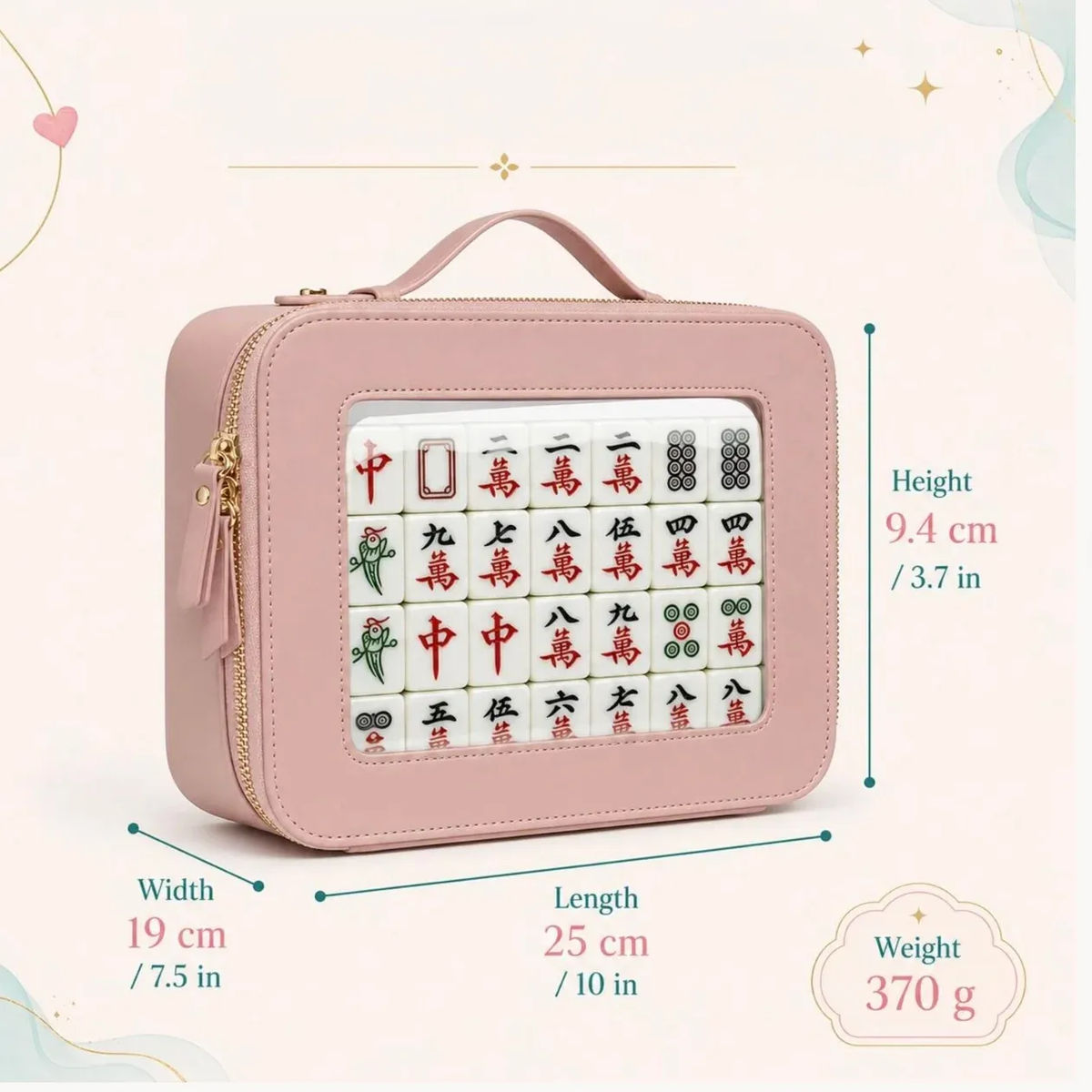
Plan for storage and transport. If you host, budget for a mat. If you travel, add a bag and racks. These cost less than a second set and extend your current set's lifespan.
Buy from a dedicated mahjong supplier. They know American tile counts and rules. Avoid generic game retailers that may sell 144-tile or 152-tile Chinese sets by mistake.
✨ Find your Mahstead set — free US shipping →
Quick decision framework: Is now the right time?
Ask yourself:
Am I playing in person more than once a month? If yes, owning a set saves time and eliminates borrowing hassles.
Do I host games at my home? If yes, your own set is essential for credibility and convenience.
Will I play for at least two years? If yes, amortized cost is low; sets last decades.
Do I have space to store it? If yes, buy. If no, a travel bag makes storage and transport seamless.
Can I afford the set plus a mat and racks? If yes, buy the full setup once rather than piecemeal. If only a set, start there and add pieces monthly.
If you answer "yes" to three or more, buy now. If you're unsure, revisit in a month; your play pattern will clarify whether ownership makes sense.
FAQ
What happens if I lose or break a tile after I buy the set?
Every 160-tile set includes spare tiles. If a tile cracks or is lost, swap in a spare—the spares are identical to the playing tiles. If you lose all spares after years of heavy play, you can source individual replacement tiles from dedicated mahjong suppliers, but this is rare in our experience.
Can I use a Chinese or Hong Kong mahjong set to play American mahjong?
No. Chinese sets have 144 tiles and different suit symbols (no "Bam" as written text, different dragon colors). American play requires a 160-tile American set with the correct tile layout and symbols to match the National Mah Jongg League card.
Do I need to buy a new set every year?
No. A single set lasts five or more years with normal home play. The hand card changes annually (issued each spring), but your tiles work with every year's card. Buy a new set only if your current one is heavily damaged or you're expanding to a second game table.
Is an acrylic set better than a bamboo or bone set for American mahjong?
For American play, acrylic is the practical choice: it's durable, affordable, quiet, and doesn't require oiling or climate control. Bamboo and bone sets are gorgeous collectibles but demand more care and cost significantly more. Most weekly-game players use acrylic.
Can I play American mahjong with two or three players instead of four?
Yes, special 2- and 3-player rules exist, and your standard 160-tile set works for those games. Rules differ from four-player; hand patterns remain tied to the current year's card. See 2 and 3 player mahjong rules for details.
Do I need a mat if I have a dining table?
Not strictly, but a mat speeds tile sorting and protects both tiles and your table. Many players skip it early, then buy one after realizing how much faster and quieter play becomes with a mat underneath.


View More
View More
View More
