
Filipino Mahjong Strategy: Tile Reading & Hand Building
Last updated: Nov 23, 2026
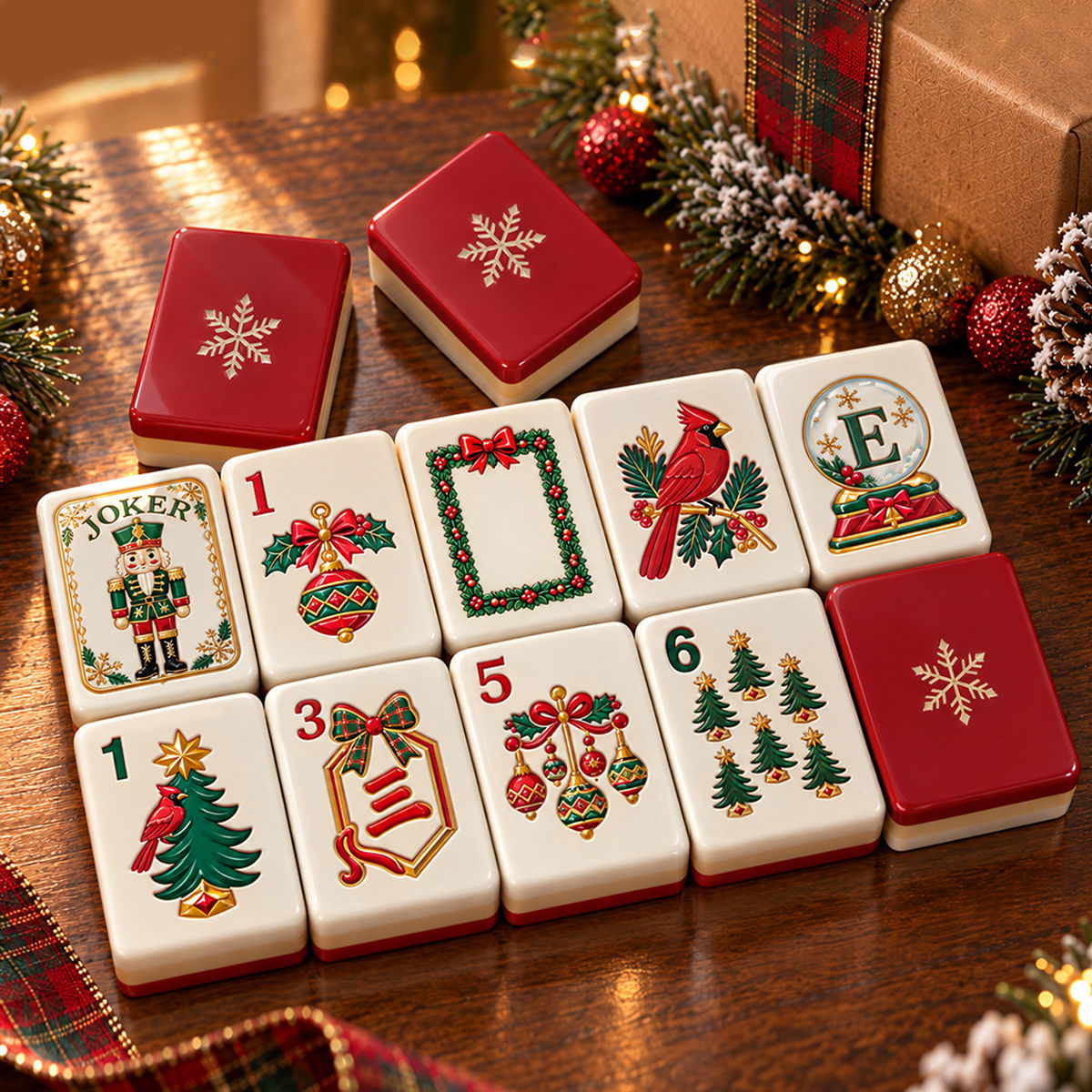
Filipino mahjong (also called Filipino-American mahjong) uses the same 152-tile set and National Mah Jongg League card as American mahjong, but strategy diverges in three ways: first, the discard pile matters more—Filipino players track what's been thrown to predict remaining tiles and block opponents' melds faster; second, pair-hunting happens earlier and more aggressively, since hands often demand specific pairs that narrow quickly; third, tempo matters—you must decide whether to commit to a hand or pivot within three or four turns, whereas American players sometimes play looser. The game still lasts 15–20 minutes per round in a four-player format. Success hinges on reading your neighbors' discard patterns, memorizing which tiles are gone, and knowing when to break a half-formed hand to avoid being locked into a dead path. Unlike American mahjong's standard slow-and-steady approach, Filipino strategy rewards decisiveness and table awareness.
Filipino mahjong shares American mahjong's structural foundation but demands sharper observation of discards and faster pattern recognition. We'll walk through the core strategic differences and show you how to read the table like a pro.
What makes Filipino mahjong strategy different from American?
Filipino mahjong plays faster and tighter than American mahjong, even though both use the same tiles and hands from the League card. The key difference: Filipino players make early bids based on incomplete information and adapt ruthlessly. In American mahjong, players often hold seven or eight tiles loosely until turn four or five; in Filipino play, you announce your hand direction by turn two or three. This forces you to read the discard pile immediately and decide: am I building this hand or pivoting? The pace rewards decisiveness over caution—hesitation costs you tempo and visibility.

How do you track discards effectively?
In Filipino mahjong, the discard pile is your primary information source. Remember what each player threw and in what order, because tiles are finite. If East discarded three Dots early and West never threw a 5 Dot, that 5 Dot is likely in West's hand or in the wall. Build a mental model: which tiles have appeared twice? Which haven't surfaced? If you need a 7 Crak for a pung and you've seen three already, one remains—is it safe to call or will it get buried? Most wins come from players who remember the first 12 discards perfectly. Write nothing down; rely on pattern memory, the same skill you use to remember a phone number. Beginners often lose because they miss that North threw only high Bams while South threw only low Dots—that asymmetry tells you something about their hand shape.
When should you abandon a half-built hand?
Filipino players pivot faster than American players because the cost of holding a dead hand is steep. By turn three, if you have only two tiles of your intended pair and haven't seen the third, and the other suit you're building is now two-thirds claimed by discards, walk away. A hand is "dead" when the math no longer works: if you need 7 Bams, 8 Bams, and 9 Bams as a chow-substitute, and you've already seen four 7s and three 8s, the missing 9s can't support a complete pattern. Pivot by picking up a discard from a player who just threw a tile you need—signal the table that you're switching directions. This sounds chaotic, but it's actually economical; you save three or four dead turns. Compare this to American play, where sitting tight for six turns waiting for one tile is considered patience. Filipino strategy treats early pivots as smart, not reckless. The penalty for stubbornness is higher than the cost of changing course.
How do you identify which hand pattern is safest to chase?
When you see your first few tiles, scan the current League card section for hands that need your tiles but depend on as few specific tiles as possible. A hand requiring four Dots, four Winds, and one Red Dragon is safer than a hand requiring four Dots, three specific honors, and two specific numbers—because winds and dragons appear in every discard pile early. Look for hands that accept multiple paths: maybe you can make a 5-8-9 or a 6-7-8 in the same suit, so if 5-8 appear you can pivot to 6-7 without abandoning your pair. Avoid hands that demand one exact pung (like three White Dragons) plus one exact set (like five Bams in sequence). The math gets brutal fast: if the White Dragon pung is called by two opponents in the first six turns, you're locked out. Winning Filipino players read the card like a tree of escape routes, not a single path. They start flexible and narrow as discards reveal what's safe.
What's the difference between early and late-game positioning?
Early game (turns 1–4): claim visibility. Call tiles aggressively if they fit your pair or first meld—show the table you're building something. This forces opponents to honor your line and discard away from your suit. By revealing early, you make the discard pile predictable. Late game (turns 5–10): tighten your position. If you haven't won by turn six, switch to a defensive posture. Stop calling and start tracking. Let other players commit; when they call a tile to build a meld, you learn exactly what they're chasing. Use this intel to throw tiles that box them out. Many Filipino players win in the late game by playing turtle—calling almost nothing, then striking hard on one call when they finally see a tile that completes their hand. American players often lose the late game because they stay loose and vocal; Filipino strategy rewards silence and precision.
Strategic Decision Matrix: Hand Viability by Turn
Turn | Tiles in Hand | Pair Found? | First Meld? | Action |
1–2 | 6–8 | No | No | Scout; call one tile if it's a natural fit |
3–4 | 8–10 | Yes or close | Partial | Commit or pivot; read discards to decide |
5–6 | 10–12 | Yes | 1–2 complete | Lock in your path or fold into defensive play |
7+ | 12–14 | Yes | 2+ complete | Win or wait; call only if you're one tile from winning |
This table assumes you're playing a full four-player game with standard turn flow. Each decision point is a checkpoint: if you hit turn 4 without a pair, you're behind Filipino pacing and should pivot or reset.
🀄 Shop best-selling mahjong sets →

What role do jokers play in Filipino strategy?
Jokers are wildcards but not silver bullets. In Filipino mahjong, jokers are used the same way as American: in exposed melds (pungs, kongs, quints, sextets), never as singles or pairs. But strategically, Filipino players treat joker possession as a defensive asset, not just an offensive one. If you hold a joker late in the hand and you're not winning soon, don't use it—keep it visible so opponents know you're still building. A joker in your rack signals that your hand isn't dead, which can shift discard behavior. Conversely, if you call a tile and immediately use a joker to complete a meld, you've burned a wild and reduced your flexibility. Experienced Filipino players save jokers for the final meld when possible, turning a joker into a tempo tool: play it late, create urgency, and force the table to react. This differs from American play, where jokers are spent freely throughout the hand.
How do passing, declaring, and mahjong call timing work?
In Filipino mahjong, "declaring" your hand direction happens aloud, usually by turn two. You might say "Bam" or "Dragon" or "Mixed" to signal which suit or honor family you're chasing. This is not binding—you can shift—but it establishes your table presence. When you call a tile (by saying "call" or "taking" it), you expose the meld, and play rotates to the next player. Unlike American mahjong, where you might lay down a pung and keep drawing from the wall, Filipino play often stalls at the call: the drawn tile is exposed, the meld is shown, and responsibility passes. Mahjong is called when you draw your winning tile directly from the wall (the hand is complete with pair + melds). You cannot win on a discard in standard Filipino play—you must draw from the wall. This rule alone changes strategy: you're not racing to get a tile out there; you're racing to make sure a tile remains in the wall for you. Opponents often try to deplete the wall or manipulate the draw order to block your win.
Why does table position matter in Filipino mahjong?
Your seat—East, South, West, or North—affects how many turns you have before the hand cycles back to you. East always goes first and has a slight tempo advantage. More importantly, your discard neighbors are fixed. West sits to your left (you see their discards first) and North sits to your right (you throw to North). In Filipino play, you must read these two players obsessively: West shows you what's being rejected, and North tells you what's safe to throw. Skilled players throw tiles that North cannot use—if North needs Bams and you just threw a White Dragon, North will struggle to call that and break their other patterns. Your position also determines how much information the wall holds when it reaches you. If you're South or West, you draw later in the wall's sequence, meaning fewer fresh tiles remain. Adapt by being more aggressive early (before wall tiles run out) and more conservative late. East and North often play tighter simply because they have less drawing time once the wall depletes.
🎁 See our most-loved mahjong sets & accessories →
What's the biggest mistake Filipino players make?
Holding patterns for too long. A hand that "could" work often doesn't—and by the time you realize it's dead, you've wasted five turns and the wall is almost gone. Filipino mahjong punishes patience more than American mahjong because the pace is faster and the tile economy tighter. The second mistake: not tracking melds called. When a player exposes a pung or kong, those three or four tiles are gone from your possible wins. If you need a 5 Crak and someone already exposed a kong of 5 Craks (using all four), walk away—there's no fifth. Many beginners panic and assume the player made a mistake. They didn't. The third mistake: announcing your hand direction too loudly. If you declare "Bams" on turn two and then shift to "Winds" on turn five, opponents learn you're desperate and adaptable—they'll start throwing tiles that wreck both paths. Smart Filipino players stay cryptic, call minimally, and let their discard choices hint at direction without confirming.
What to Check Before You Buy a Set for Filipino Mahjong
Tile clarity: Choose a set with large, readable characters so you can identify tiles at a glance during fast play. Acrylic sets with crisp engravings beat bamboo sets with wear because Filipino play often runs weekly for months.
Joker count: Verify the set includes at least 8 jokers (standard for American and Filipino play). Never buy a set with fewer.
Rack compatibility: If you're playing on a mat, make sure your racks with pushers fit the mat's lip—a half-inch misalignment will slow your calls.
Case durability: Filipino players often transport sets between homes. A reinforced bag or case that protects tiles from humidity and chips is not optional in tropical climates.
Hand-feel: Hold tiles for 30 seconds—do they feel heavy and stable, or light and slippery? Filipino play demands confidence in your tile handling.
Our best-selling acrylic sets are built for weekly play and come with racks that fit standard mats. Free US shipping makes replacing worn tiles affordable if you play year-round.
Is Filipino mahjong the same as American mahjong?
No. They use the same tiles and hands from the National Mah Jongg League card, but Filipino mahjong is played faster, with more aggressive early pivoting and tighter discard tracking. American players often take six to eight turns to commit; Filipino players commit by turn three. The call mechanic is similar, but tempo and table psychology are entirely different. If you learn one, you can pick up the other quickly, but strategy doesn't transfer directly.
✨ Find your Mahstead set — free US shipping →

FAQ
What's the most important skill for Filipino mahjong strategy?
Discard tracking. Memorize which tiles have been thrown and in what order. This tells you which tiles remain in the wall and which opponents are chasing. Memory trumps luck in Filipino play.
Can you play Filipino mahjong with a standard American mahjong set?
Yes. Both use 152 tiles plus jokers from the National Mah Jongg League card. The set is identical; only strategy differs. Any set works fine.
How do you know when to declare your hand early in Filipino mahjong?
By turn two, if your first five to six tiles show a clear direction (mostly Bams, mostly Winds, a pair plus one suit), declare it. Silence after turn three signals weakness.
What happens if you call a tile but can't complete your meld?
You're stuck. Your hand is now exposed, and opponents block that suit and any overlapping patterns. You cannot "uncall" a tile. This is why Filipino players pivot early—to avoid calling into a dead end.
Is there a strategic advantage to sitting in the East seat?
Slight. East draws first and can set tempo. But West (your left neighbor) has the most information early because they see your discard first. Skilled players adapt to any seat within one turn.


View More
View More
View More
