
Designer Mahjong Wind Indicator: Choose the Right Style for Your Game
Last updated: Nov 23, 2026
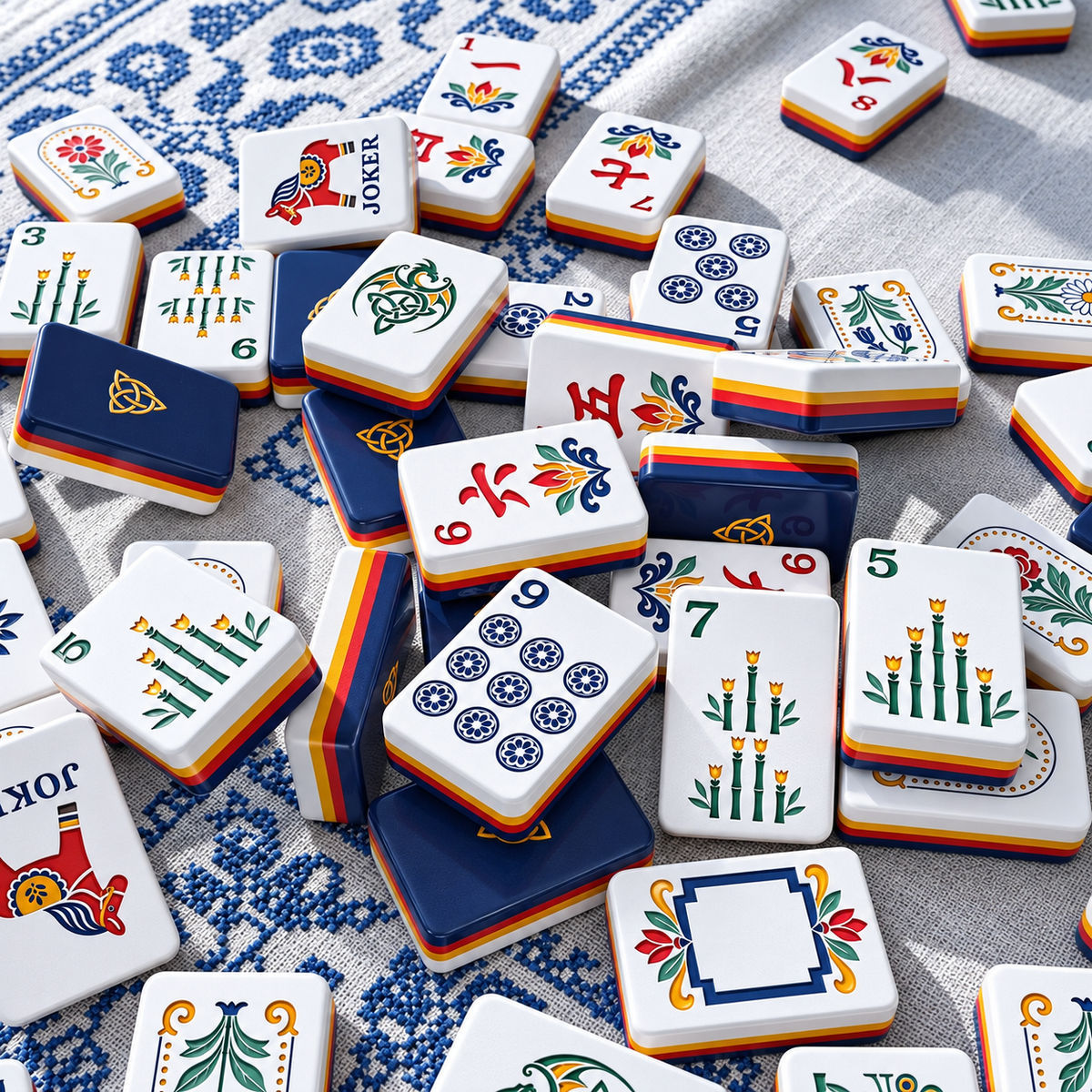
A designer mahjong wind indicator is a decorative marker that rotates to show the current dealer position—East, South, West, or North—and typically includes the round number. Unlike generic plastic tokens, designer versions use acrylic, wood, or engraved materials that match a full best-selling mahjong set. Most rotate on a stand or sit flat; some are double-sided with round numbers on the reverse. You'll place it in the center of the table before each hand begins. Cost varies by material and customization—engraved acrylic indicators cost more than plain resin ones. Buy one only if your table rotates dealer regularly; casual players often skip it. Mahstead offers engraved and novelty styles that coordinate with our acrylic sets and pair visibly with mats and racks.
What exactly does a wind indicator do?
The wind indicator tells all four players who is East (dealer) for that round, which determines turn order, who pays whom, and hand value. In American mahjong, East always goes first; after East completes a hand, South becomes East, then West, then North. Without a visual marker, mistakes happen—someone forgets whose turn it is, or two players disagree on position. A designer wind indicator sits in the table center, rotates between rounds, and often includes the round number (1–16) on a second side. It serves no mechanical purpose but prevents confusion and looks intentional at the table.

Which wind indicator style works best for your table?
Engraved acrylic wind indicators match engraved American mahjong sets and sit on a rotating base; they read clearly from any seat and coordinate with acrylic tiles. Best for tables that invest in a matching set and mat. Novelty or themed wind indicators feature mahjong symbols, flowers, or jokes; they appeal to players who want personality and humor. Double-sided rotating markers show the wind on one face and the round number (1–16) on the reverse, saving table space. Flat acrylic tiles with wind symbols are the most compact; they don't rotate but can be repositioned manually. Wood or tile-finish markers suit tables with traditional or rustic aesthetics. Your choice depends on whether your table values matching aesthetics, portability, or humor. Casual tables often skip a dedicated marker and rotate a joker or spare tile instead; serious weekly games almost always use one.
🀄 Shop best-selling mahjong sets →
How do you actually use a wind indicator during play?
Before each hand, the current East player places the wind indicator in the center of the table showing their position. After East's hand ends (whether someone wins or the hand is a draw), the indicator rotates: East becomes South, South becomes West, West becomes North, North becomes East. If using a double-sided marker, after four complete hands (North returns to East), flip it to show the next round number. Position the indicator so all four players see it clearly without leaning. Never move it mid-hand, even if someone claims confusion—this prevents disputes and keeps the game moving. At the end of a 16-round session (four full rotations through all winds), the game is complete. Most groups leave the indicator visible between rounds so newcomers instantly know who deals next.

Designer wind indicators vs. improvised markers—what's the real difference?
Marker Type | Best For | Visibility | Cost Basis | Durability |
Engraved acrylic (rotating) | Matched sets, weekly tables | Excellent—reads from all angles | Higher | 10+ years, acrylic lasting |
Novelty acrylic (fixed or rotating) | Themed tables, humor-focused groups | Good—if large enough | Mid-range | 5–10 years, depending on paint |
Flat tile-style markers | Compact travel setups, minimal tables | Adequate—must be centered | Lower | Varies; acrylic very durable |
Improvised (spare joker, blank tile) | Casual play, budget-conscious groups | Poor—easy to confuse with deck | None | Low—easily lost or damaged |
Engraved wind indicators cost more upfront but last longer, look intentional, and coordinate with mahjong mats and racks. Novelty markers add personality but may fade or chip with heavy use. Improvised markers work but create micro-conflicts (someone grabs your joker by accident, or a blank tile gets mixed back into the deck). If your group plays weekly, a designer indicator saves time and eliminates disputes. If you play once a month casually, an improvised marker is fine.
🎁 See our most-loved mahjong sets & accessories →
What to check before you buy a wind indicator
Material: Acrylic is durable, easy to clean, and reads clearly under lamp light; resin or plastic may yellow or cloud over time. Check the product photos for clarity and ask if the color is dyed or painted (dyed lasts longer). Size: The marker must be large enough to see from all four seats without strain; anything under 2 inches square risks being overlooked. Rotation mechanism: If it rotates, test that it spins freely without sticking; some bases are loose and may shift during play. Matching: If you own a mahjong set from Mahstead, verify the wind indicator's acrylic color and weight match—mismatched acrylic can look jarring. Round numbers: If it includes a round counter, confirm all 16 numbers are legible and aligned properly; poor printing creates confusion mid-game. Shipping: Wind indicators are small and lightweight; confirm free US shipping is included. Order it at the same time as your set so they arrive together and you can verify the match.
✨ Find your Mahstead set — free US shipping →
Why a engraved wind indicator beats a generic plastic token
An engraved marker sets the tone: it signals that your table values ritual, clarity, and craft. Players see it before they sit down and immediately sense the game is organized and intentional. A generic plastic token looks like an afterthought and may warp or become sticky with spilled drinks. Engraved acrylic tolerates moisture, stays clear under varying light, and feels substantial in your hand. If you're investing in engraved American mahjong sets, a matching wind indicator costs little more but makes the entire setup feel cohesive. It's not a must-have—but once you use one, going back to a joker feels incomplete. Many serious players keep a wind indicator in their mahjong bag because it's compact and instantly professionalizes any table, even when traveling.
FAQ
Can I use the same wind indicator for different mahjong variants (American, Chinese, Hong Kong)?
Yes, if it shows only the four winds (East, South, West, North). However, some variants rotate winds differently or include bonus rounds. Check your ruleset first. American mahjong always rotates East → South → West → North → East over exactly 16 hands, so any four-wind marker works.
What happens if I forget to rotate the wind indicator mid-game?
Stop immediately and rotate it before the next hand begins. The current round must show the correct wind, or scoring disputes will follow. If you've already started, complete the current hand and rotate before the next one starts. Do not rotate mid-hand; it invalidates the hand.
Do I need a wind indicator if I play mahjong online or with only three players?
No. Online platforms handle wind rotation automatically. In 3-player American mahjong, the wind indicator is optional because the rules already specify dealer rotation per the 2 and 3 player format. Many casual 3-player tables skip it.
How do I choose between a rotating marker and a flat acrylic tile marker?
Rotating markers are easier to read from any angle and look more polished; they take up a small footprint in the center of the table. Flat markers are more portable and compact but require manual repositioning each round. If your table is permanent or semi-permanent, a rotating marker is worth it. If you travel with your set, a flat tile marker is faster to pack.
Can I engrave a custom name or group logo on a wind indicator?
Yes—ask Mahstead about customization options for engraved sets and accessories. Lead time for custom engraving varies. Standard designs with winds and round numbers are faster to order and ship.
What's the difference between a wind indicator and a round marker?
A wind indicator shows only the four winds (dealer position); a round marker shows which of the 16 rounds you're playing. Many designer indicators do both—one face shows the wind, the other the round number. Some sets include both as separate tokens. Check the product description to confirm what you're buying.


View More
View More
View More
