
Common Mistakes in Korean Mahjong: What Players Get Wrong
Last updated: Nov 23, 2026
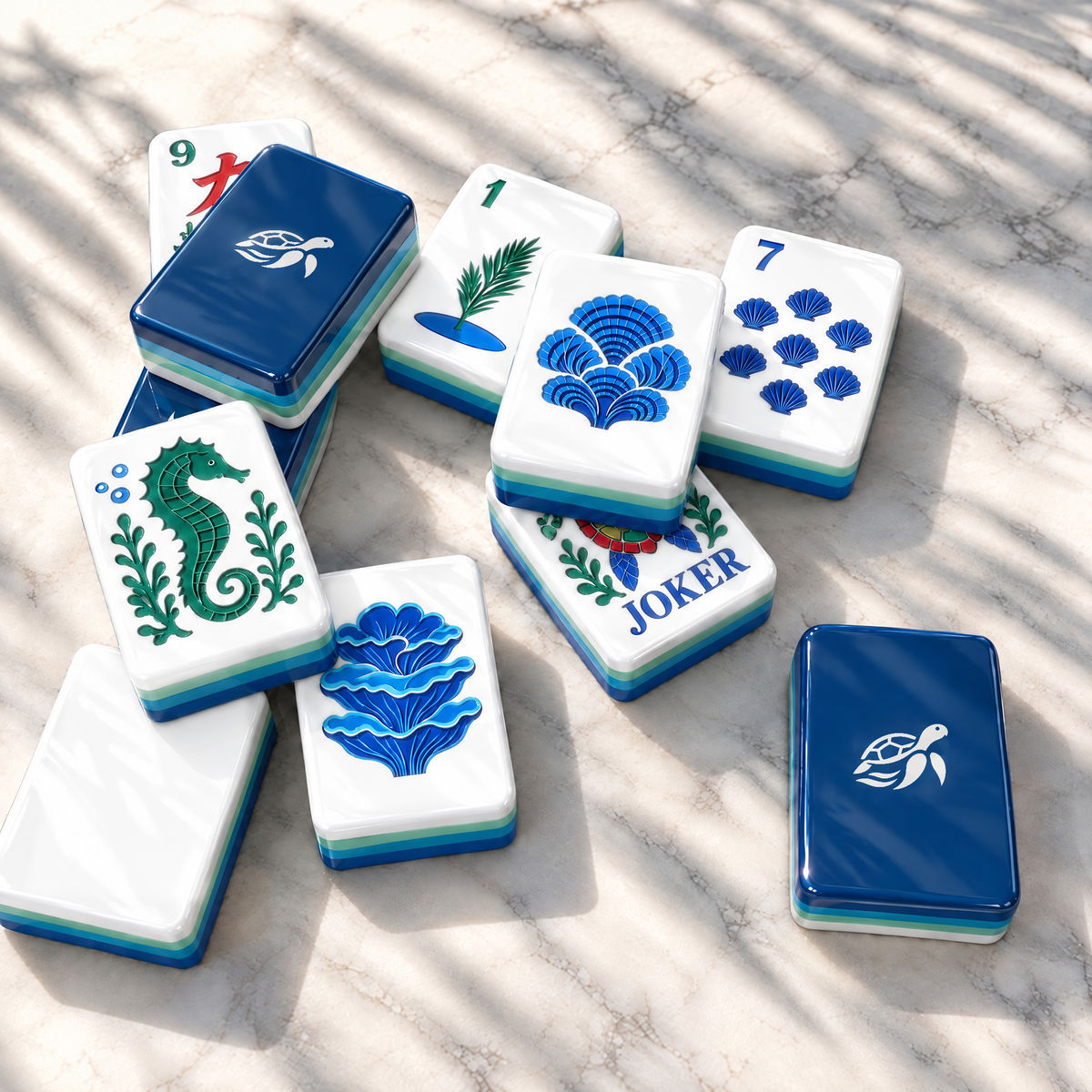
Korean mahjong differs fundamentally from American play: it uses a 144-tile set (not 152), no fixed hand card, and allows chows (sequences like 1-2-3) alongside pungs—something American mahjong forbids. The most common mistake is treating Korean rules like American ones: assuming no sequences exist, trying to use the NMJL card, or misunderstanding the winning mechanic (Kong in Korean play opens the deck and triggers a live discard, unlike American melded sets). New players also confuse tile counts, forget that all suits rank equally (no dragons anchor patterns), and call melds when the rules don't allow it. We see this weekly in mixed games—one player assumes American-style exposure, another expects Hong Kong speed play. The fix: learn your variant's winning condition before sitting down. Mahstead's best-selling collections stock American sets with precision—but if you're serious about Korean play, study the three major variants' rule cards side by side first.
What is Korean mahjong and how does it differ from American play?
Korean mahjong (Gungsaeng) uses 144 tiles, a shuffled draw system (no shuffling ritual), and allows both melds and hidden hands. Unlike American mahjong, which requires hands only from an annual card with fixed exposures, Korean play lets you win with any combination of pungs, chows, and pairs—even all concealed. The deck reshuffles after each hand; there's no Charleston. Winning happens when you draw or claim a live discard; no "mahjong hand" lookup card exists. This makes Korean play faster and more improvisational than the rule-heavy American variant.

Do sequences (chows) really work in Korean mahjong?
Yes—and this trips up almost every American player crossing over. In American mahjong, you can only expose pungs (three of a kind), kongs (four), quints, and sextets. Sequences are completely forbidden. Korean mahjong allows chows (1-2-3, 5-6-7, etc.) in any suit, exposed or concealed. You can claim a discard to complete a chow just as you would for a pung. Many new Korean players from Western backgrounds try to claim sequences but then hesitate, unsure whether they're allowed—they are. The rule: any consecutive run of three or more in the same suit counts as a legal meld.
How does winning work differently in Korean mahjong?
Korean mahjong awards a win when you have four melds (pung, kong, chow, or mix) plus a pair—exactly 14 tiles. You win by drawing the winning tile yourself (zimo) or claiming a discarded tile (hu). American mahjong requires you to draw from a specific hand pattern on the League card; Korean play has no such restriction. You can also win with a completely concealed hand (no melds shown) if you draw your winning tile. American players mistake this for "going out immediately," but it's standard Korean logic: if your hand is complete and legal, you win. The speed and flexibility confuse players used to NMJL's rigid structure.
What scoring errors do Korean players make?
Korean mahjong scoring depends on your hand's complexity—not position or year-card alignment like American play. Hands with more concealed melds (zimo) score higher than those with exposed melds. Hands using terminals and honors (1s, 9s, winds, dragons) score more than simple numbered melds. Many players forget to count the pair as a scoring element; some deduct points for "breaker" tiles when the table rules don't require it. Regional variations complicate this: Seoul-style play, Busan-style, and modern online variants each use slightly different point multipliers. The mistake: assuming one scoring system applies everywhere. Ask the table before play begins which ruleset (Seoul Classic, Online Speed, or House Rules) governs that session.
Why do new players confuse tile counts and joker rules?
American mahjong sets contain 152 playing tiles plus 8 jokers (160 total). Korean mahjong uses 144 tiles—no jokers at all. A player new to Korean play who brings an American set will have four extra Bams, Craks, and Dots sitting unused, and eight jokers that have no function. Even worse, some think jokers can substitute for missing tiles in Korean play (they can't). The tile surplus creates confusion: "Are we using these or not?" Clarify your set's origin and locale before shuffling. If playing Korean rules, ensure all 144 tiles (not 152) are in the pool and jokers are set aside. American sets work fine if you simply ignore the extras—but the mental friction slows the game.

Comparison Table: American vs. Korean Mahjong Basics
Feature | American | Korean |
Tile Count | 152 playing tiles + 8 jokers | 144 tiles (no jokers) |
Hand Source | Fixed NMJL card (issued yearly) | Any legal combination of melds + pair |
Sequences (Chows) | Forbidden—no exposures allowed | Allowed in any suit, exposed or hidden |
Winning Condition | Match specific hand pattern on card | 4 melds + 1 pair (14 tiles) |
Exposed Melds | Pung, Kong, Quint, Sextet only | Pung, Kong, Chow (any mix) |
Joker Usage | Substitutes in melds; never in pairs | None—no jokers in the game |
Scoring System | Points by hand rarity & position | Points by complexity & concealment |
Charleston | Mandatory tile-pass before play | None—deck reshuffles each hand |
Game Pace | Moderate (fixed hands slow discovery) | Faster (any combo possible) |
Common Rule Mistakes and How to Avoid Them
Mistake top: Assuming jokers work in Korean play. Fix: Before the game starts, confirm which tile set you're using and remove jokers if playing true Korean mahjong. Don't leave them in the rack—they're distracting and create legal ambiguity.
Mistake #2: Refusing to call a discard for a chow. Fix: Familiarize yourself with the chow rule before sitting. If someone discards a 5 Bam and you hold 3-4 Bams, you can claim that discard. This is not optional; it's a legal call.
Mistake #3: Mixing American NMJL card lookups with Korean play. Fix: Korean mahjong has no "card." Don't ask "Is this hand on the card?" It doesn't matter. If it's four melds plus a pair, it wins.
Mistake #4: Forgetting the pair counts toward your 14-tile winning hand. Fix: Count: 4 melds × 3 tiles = 12, plus 1 pair = 14. If you have only 13 unique tiles, you're not done.
Mistake #5: Using American-style pung/kong exposure rules in a Korean game. Fix: In Korean play, you can expose chows just as you expose pungs. There's no restriction on sequence displays. Call them naturally when you claim a discard.
Mistake #6: Not clarifying regional scoring before the first hand. Fix: Ask the table: "Are we playing Seoul Classic, modern online rules, or house rules?" Scoring varies significantly by region. Agree now or reset after the first hand.
🀄 Shop best-selling mahjong sets →
What to Check Before You Buy or Sit Down
Confirm the variant. Is this an American, Korean, Hong Kong, or Riichi game? Don't assume.
Verify tile count. Count the set in the box: American sets have 152 playing tiles (plus spares). Korean games use exactly 144.
Ask about jokers. If you're playing Korean mahjong, jokers don't exist in the game—ask the host whether they've already been removed.
Clarify the scoring system before the first hand. Regional rules shift dramatically.
Request a quick rules summary if you've never played this variant. Five minutes upfront prevents ten hands of confusion.
If you're hosting mixed-skill games and regularly switch between American and Korean play, the cleanest move is to own engraved mahjong sets and custom racks with pushers labeled by variant—so everyone grabs the right set without debate. A clear mat with rule zones also helps new players orient themselves to the exposure rules for that session.
🎁 See our most-loved mahjong sets & accessories →
Why Korean Players Keep Switching Back and Forth
Once you've played both, the appeal becomes clear. American mahjong rewards memory and card study; Korean mahjong rewards speed and adaptability. Many players love the mathematical rigor of NMJL play but crave the fluidity of Korean nights. The mistake most make is treating them as the same game—they're not. Each has its own logic, pacing, and joy. The real skill is switching your mind cleanly: set aside the NMJL card, embrace the chow, accept that winning is simpler but reading the table is faster.
Play several games of each variant before mixing them in a single session. Your hands will thank you, and your table won't need a five-minute rules reset every round.
✨ Find your Mahstead set — free US shipping →

FAQ
Can I play Korean mahjong with an American mahjong set?
Yes. Ignore the jokers and extra tiles (set them aside). Use exactly 144 tiles from the American set. The only issue is psychological—you'll see unused pieces and second-guess yourself. Cleaner to own a dedicated 144-tile set if you play Korean regularly.
Is there a "mahjong card" for Korean play like the NMJL card for American?
No. Korean mahjong has no fixed hand list. Any combination of four melds plus one pair (14 tiles total) wins. The card is your knowledge of what constitutes a legal meld and your speed at spotting combinations.
Why do some Korean games use jokers and some don't?
Regional and house-rule variation. Modern online Korean mahjong sometimes adds jokers for faster play; traditional Korean mahjong (Gungsaeng) uses none. Always ask the host before the first hand.
What's the biggest mistake American players make in Korean mahjong?
Refusing to claim discards for chows because "sequences aren't allowed." American rule internalization runs deep. Unlearn it: chows are not only allowed in Korean play—they're normal and expected.
How do I know if I'm playing the right variant?
Ask before sitting: "Is this American NMJL, Korean, Hong Kong, or another variant?" Listen for keywords: "card" = American; "144 tiles" = likely Korean; "speed play" = possibly Hong Kong; no mention of sequences = American. When in doubt, request a one-minute rules summary.


View More
View More
View More
