
Cocktail Mahjong Tournament Format: Rules, Setup & Scoring
Last updated: Nov 23, 2026
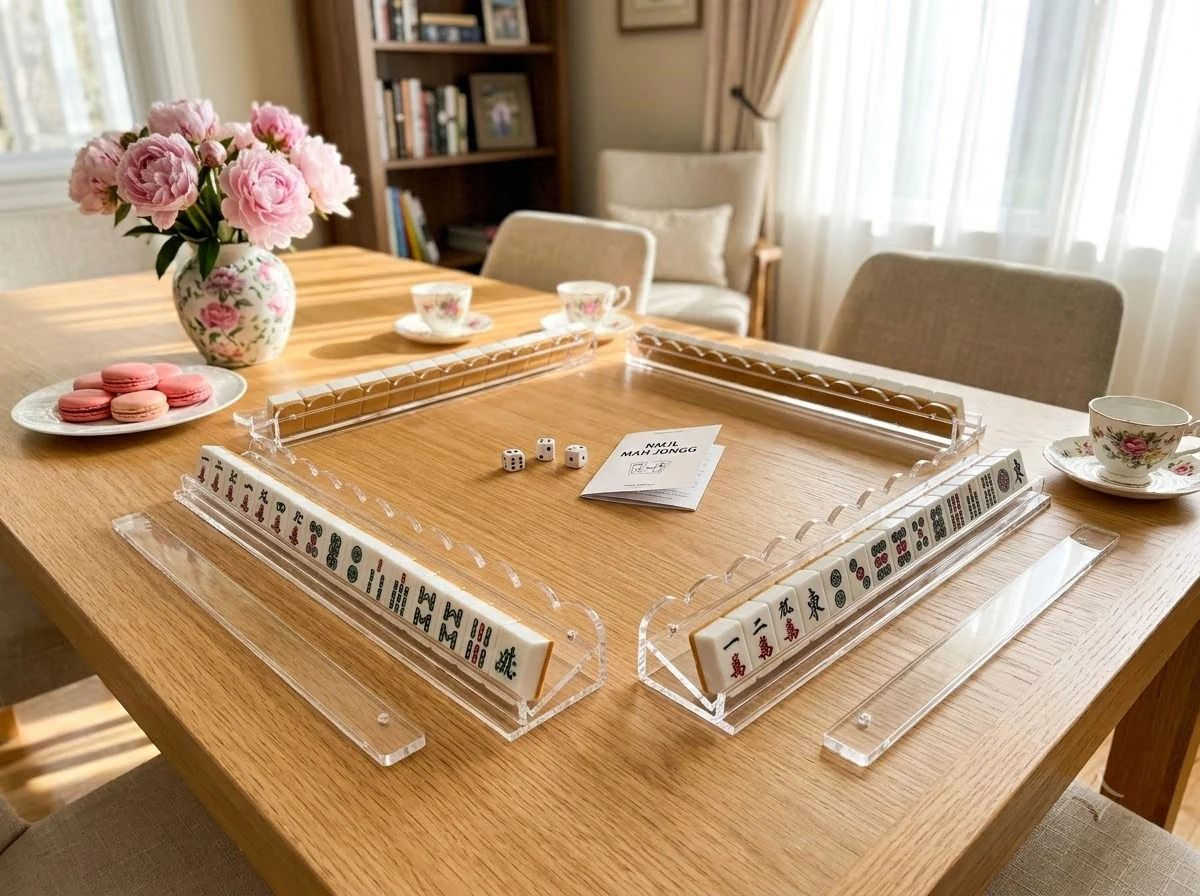
Cocktail mahjong is a tournament format where four or more players rotate through tables over several rounds, playing standard American mahjong with the current year's National Mah Jongg League card. Each game runs until one player wins, points are recorded on a scoresheet, and players typically move to different tables after each round so everyone plays with different opponents. A typical cocktail tournament lasts 3–5 hours depending on round count and hand speed; most players aim for 4–8 rounds so the winner is determined by cumulative score, not luck at one table. Scoring follows American mahjong rules: winners earn points from losers based on the winning hand, and you track individual player totals throughout the tournament. The format works especially well for clubs, fundraisers, or large game nights where you want everyone involved and a clear champion at the end, and hosting one requires clear scoresheet templates and equipment that scales to your table count—Mahstead sets come ready for tournament play.
Cocktail mahjong tournaments are the friendliest way to run a competitive game night with six, eight, or even twelve players. Unlike a single table game, a cocktail format rotates players between tables after each round, so nobody sits out, and the final score reflects skill across multiple opponents rather than one lucky hand. We host them regularly and have learned what works and what falls apart fast.
🀄 Shop best-selling mahjong sets →
What makes a cocktail format different from a regular mahjong game?
A regular game sits four people at one table until someone wins; you play one hand and the game ends or you rinse and repeat. A cocktail tournament instead runs multiple rounds with players rotating seats and opponents each time. Everyone stays engaged the whole night because no one is waiting for the "real" game to start. The key difference: you're tracking cumulative points across rounds, not just who won the last hand. This rewards consistency and skill across the evening rather than a single lucky draw.
How do you set up player rotation and tables?
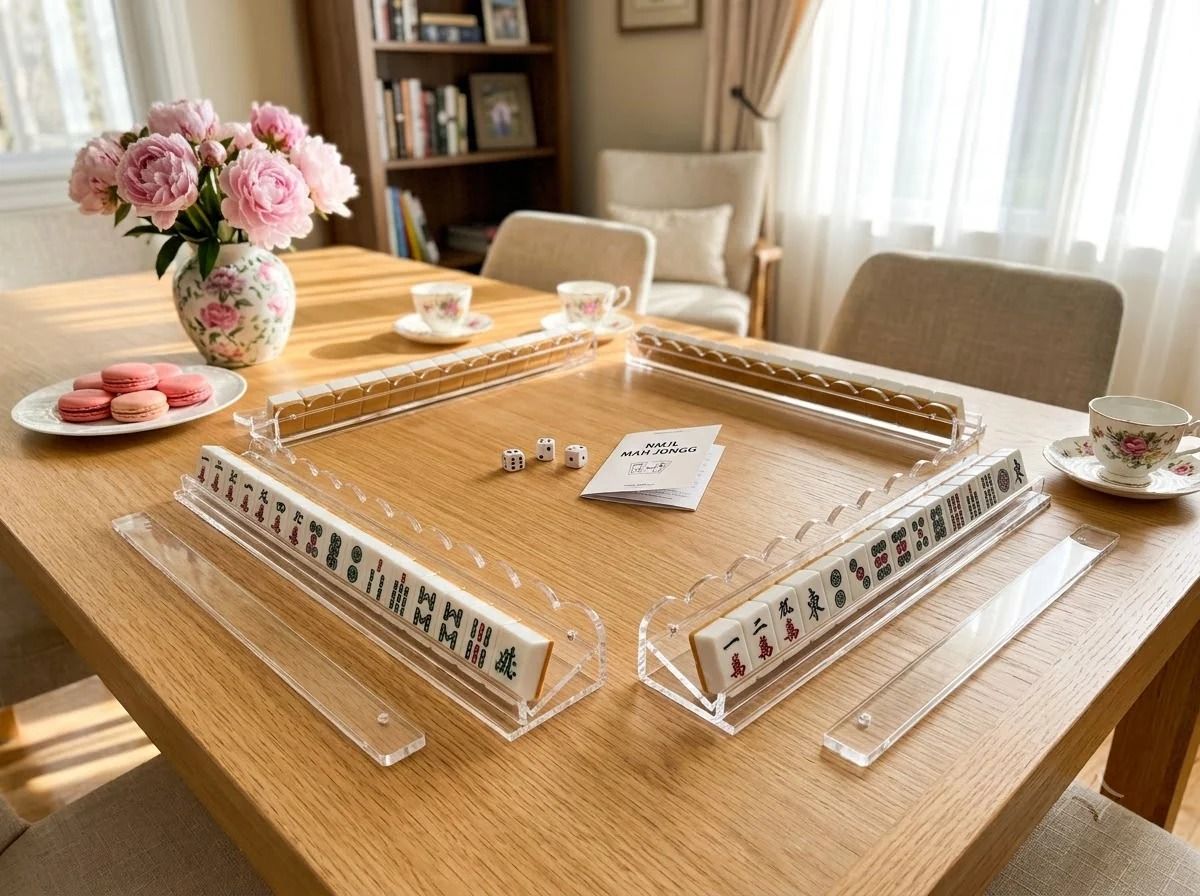
Start by deciding your total number of players and rounds. If you have eight players and want four rounds, you'll run two tables of four simultaneously (Round 1: Table A and Table B), then break and reassign players so no one plays the same opponent twice. The standard rotation uses a "master bracket" sheet that lists who sits at each table in each round. For six players across four rounds, run one table of four and one table of two (or use simplified three-player rules for the second table if you prefer). Write the bracket on a visible poster before the tournament starts so players know exactly where to sit. A hand list with player names and seat assignments at each table eliminates confusion and keeps energy high. Use a simple scoresheet with player names down the left and one column per round; fill in scores as games finish, so the running total is always visible.
What scoring system do you use in cocktail mahjong?
American mahjong scoring depends on the winning hand and the losers' tiles. The National Mah Jongg League card lists point values—typically 30, 40, 50, 60, or 70 points for a hand, doubled or tripled based on whether you went out on a drawn tile or took a discarded one, and whether all your pairs are the same suit. In a four-player game, one loser pays the winner and the other two pay half. Record the winner's score in the round column, then subtract that amount from each loser. At the end of all rounds, the player with the highest cumulative total wins the tournament. Some groups prefer a "plus/minus" sheet where winners get positive points and losers go negative; either method works as long as you're consistent. A common mistake: forgetting to record losers' scores—always write down all four players' scores, not just the winner.
How many rounds should a tournament have?
Four to eight rounds is the sweet spot for a 3–5 hour event. Each hand typically takes 20–40 minutes depending on how fast your group plays and how often someone goes out (more winners = faster rounds). With four players and four rounds, you'll finish in about 2–2.5 hours; with six players rotating and five rounds, plan 3–4 hours. Fewer than four rounds means luck plays too big a role; more than eight rounds and energy dips and people get tired. If your group plays slowly, reduce to four rounds and pick your best hands to hurry things along. If players are new to the game, expect each hand to take longer, so budget an extra 15 minutes per round. Test your round count in a practice tournament first—stopping at the right moment keeps everyone happy.

What equipment do you need to run a tournament smoothly?
For each table, you need a complete American mahjong set (152 tiles plus jokers), a mahjong mat to protect the tile surface and organize play, and racks with pushers so players can hold and display their tiles neatly. A scoresheet printed or written on paper, pencils, the current year's National Mah Jongg League card, and dice for determining the dealer round out the essentials. If you're hosting at a club or large venue, one master bracket poster visible to all players saves repeated questions. Some hosts add a small bell or timer to signal the end of registration and round start times. Acrylic tiles are easier to read and more durable than bone tiles for tournaments where there's high turnover and tables can get messy. Our best-selling mahjong sets arrive with clearly marked tiles and are designed to handle the wear of multiple rounds.
Equipment | Purpose | Notes |
Mahjong set (per table) | Core game tiles | Acrylic lasts longer under tournament use |
Mahjong mat (per table) | Tile display, organization | Helps separate discards and hand zones |
Racks with pushers (per table) | Player tile holders | Speeds up play and reduces table mess |
Scoresheet & pencil | Track points | Print multiple copies; one breaks or gets wet |
NMJL card | Hand reference | Current year only; confirm before tournament |
Dice (per table) | Dealer selection | Included in most sets |
Master bracket poster | Player rotation guide | Prevents confusion and seat disputes |
🎁 See our most-loved mahjong sets & accessories →
How do you avoid common mistakes that derail a tournament?
Not printing the bracket ahead of time: Players ask where they sit after every round. Print and post it visually before Round 1.
Forgetting to record all four players' scores each round: Write down winners and losers so the cumulative total is accurate. A lost score means replay or dispute.
Mixing up the current year's card: Always verify the National Mah Jongg League card is the current year's. An old card allows hands that no longer exist and invalidates results.
Running out of scoresheets or pencils: Print extras. Wet tiles, spilled drinks, and worn-out erasers are real. Have three times what you think you'll need.
Letting players choose their own seats: Randomize or use your bracket. Letting friends always sit together defeats the rotation purpose and leads to accusations of unfairness.
Playing without a visible running total: Update the master scoresheet after every round and post it so players see their place. Suspense and fairness build confidence in the winner.
Not clarifying house rules before Round 1: If you allow remakes on misdeals or penalty plays on rule violations, explain and agree before the tournament starts. Stopping mid-tournament to argue rules kills momentum.
What to check before you buy equipment for your tournament
Tile clarity: Can all players read numbers and suit symbols from across the table? Acrylic tiles with printed suits are easiest for multiple rounds without eye strain.
Mat size: Does it fit your table and give enough space for four hands, discards, and a dead wall? A mat that's too small forces crowding and tiles slide off.
Rack stability: Do pushers keep tiles upright and easy to manipulate? Flimsy racks cause players to fumble, which slows rounds and frustrates competitors.
Set completeness: Verify you have exactly 152 playing tiles plus jokers. Count before the tournament, not during Round 1.
Scoresheet legibility: Use large print, clear columns, and space to write. Tiny scoresheets lead to math errors and disputes.
Card accessibility: Print or display the National Mah Jongg League card at each table, not just hold one copy. Players look up hands constantly, and a single card becomes a bottleneck.
✨ Find your Mahstead set — free US shipping →
FAQ
Can you run a cocktail tournament with fewer than four players per table?
Yes. Use 2 and 3-player rules for tables with two or three players, though rotation and scoring get more complex. Most groups stick to four per table because the rules and flow are standard. If you have an odd number of total players, one table of three works fine for a few rounds.
How do you decide who wins the overall tournament?
The player with the highest cumulative score across all rounds wins. Some tournaments use a tiebreaker (head-to-head score from the final round, or total wins), but highest cumulative total is the clearest method. Announce the tiebreaker rule before Round 1.
Do you have to use an acrylic set, or can you use bone tiles?
Bone tiles work fine, but acrylic is more durable for repeated rounds and easier to read under variable lighting. If you're hosting a one-time tournament, bone is perfectly acceptable. Acrylic shines in clubs or frequent events where sets get heavy use.
Can you run a cocktail tournament with eight or more players?
Yes, but you'll need multiple tables. Eight players = two tables of four rotating. Twelve players = three tables of four. Stick to four per table and rotate the entire group between rounds using your master bracket. More than four per table slows play and raises disputes.
What if someone has to leave mid-tournament?
Use a substitute player for that seat in remaining rounds, or allow the player's scores to stand and note they withdrew. Don't remove their previous scores or the other players' results become unfair. Clarify your absentee policy before the tournament starts.
How long does a typical cocktail tournament actually take?
Four rounds with four players per table, 20–30 minutes per hand, runs 2–2.5 hours plus setup and breaks. Six players and five rounds takes 3–4 hours. Always budget an extra 30 minutes for late arrivals, rules clarification, and downtime between rounds.


View More
View More
View More
