
Filipino Mahjong with 2 Players: Rules, Setup & Strategy
Last updated: Nov 23, 2026
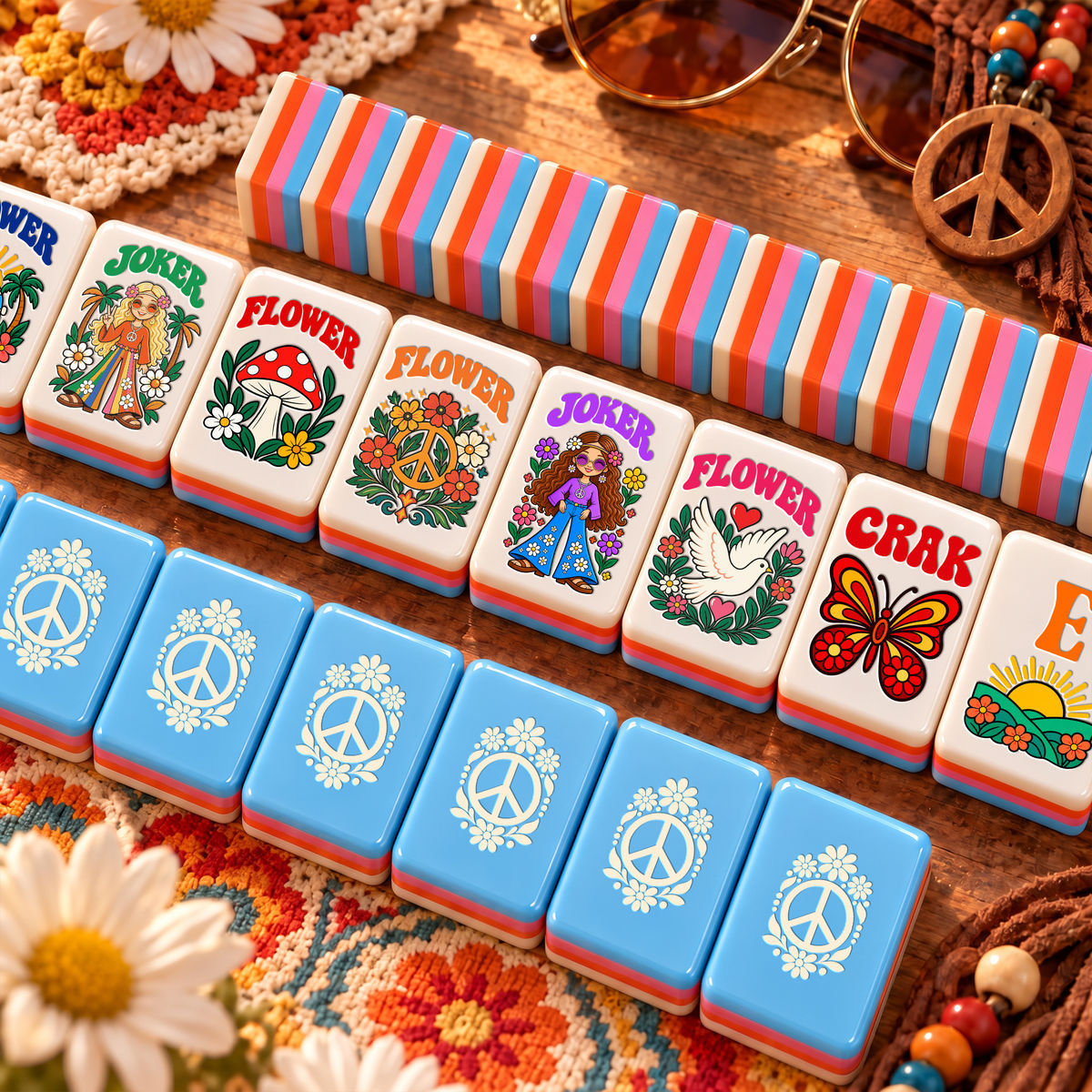
Filipino mahjong with two players is a simplified, fast-paced variant using a reduced tile set (often around 108–120 tiles instead of the full 152). Players draw and discard in turn, aiming to form a complete hand of sequences and groups before their opponent. Draw order alternates; the game ends when one player declares a winning hand or all tiles are exhausted. Unlike American mahjong, which requires the current year's League card and complex hand patterns, Filipino mahjong uses traditional Chinese-style sequences (chows) and allows open play. A two-player round takes 15–30 minutes. The winning hand typically consists of melds plus a pair, though house rules vary widely. Scoring is simpler than four-player American mahjong and often point-based rather than split-payment. Quality tiles—acrylic or bamboo, clearly marked—reduce disputes and keep the game moving; we recommend starting with a best-selling standard acrylic set you can modify for two-player play.
How does two-player Filipino mahjong differ from four-player American mahjong?
Filipino mahjong evolved from Chinese regional play and is played socially across the Philippines, often without a strict annual card. American mahjong uses 152 tiles, requires the National Mah Jongg League card (reissued each spring), forbids sequences, and is designed for exactly four players. Two-player Filipino mahjong reduces the tile count, allows chows (1-2-3 sequences), and plays faster. You won't need jokers or the League card; instead, you'll focus on traditional melds: pung (three identical), kong (four identical), and chow (three consecutive, same suit). The draw speed is also quicker—each player gets fewer tiles per turn because there are only two hands in play.
🀄 Shop best-selling mahjong sets →

What tiles and setup do you need for two-player Filipino mahjong?
Most two-player Filipino mahjong games start with 108 tiles—removing the wind tiles and flowers entirely, or removing one copy of each number in each suit. A standard full American set (160-tile acrylic) contains extra jokers and spares, so you can separate out a 108-tile core and set aside the rest. Begin by removing the wall: each player takes 13 or 14 tiles (draw rules vary by house—some deal 13 + 1 draw, others 14). The remaining tiles form the draw pile in the center. No Charleston (the pre-game tile pass used in American mahjong) is needed; you go straight to play. Players alternate: draw one tile, discard one tile, announce melds, and try to declare mahjong first. If you're using standard American acrylic tiles, make sure they're clearly marked with big suit symbols and numbers so you can tell Bams, Craks, and Dots apart at a glance—especially important when playing fast on a mat.
What are the winning hand patterns in two-player Filipino mahjong?
A winning hand in Filipino mahjong typically has 14 tiles: four melds (pung, kong, or chow) plus one pair. Unlike American mahjong, which restricts hands to patterns on the League card, Filipino mahjong allows any valid combination of sequences and groups. A valid meld is three tiles in a row (1-2-3, 5-6-7, etc.) or three or four identical tiles. The pair must be two identical tiles. For example: Bam 1-2-3 (chow), Bam 5-5-5 (pung), Dot 7-8-9 (chow), Crak 2-2-2-2 (kong), plus Dot 3-3 (pair) = mahjong. Some house rules allow "eyes" (one unpaired tile that matches a tile in your hand), but standard Filipino play requires a clean pair. A few variants let you win with 13 tiles if they form a special pattern (all ones, all honors, etc.), but confirm house rules before starting. Speed and clarity matter here—a durable acrylic set with engraved symbols eliminates confusion mid-game.
Element | Two-Player Filipino | American Four-Player | Why It Matters |
Tile count | ~108 (reduced) | 152 (full) | Fewer tiles = faster rounds |
Sequences allowed | Yes (chows) | No (forbidden) | More hand combinations possible |
Hand source | Any valid meld set | Current year League card only | More flexible, casual play |
Players | Exactly 2 | Exactly 4 | Different draw/speed rhythm |
Pair requirement | One pair required | Varies by pattern | Simpler winning condition |
Setup time | ~2 minutes | ~5 minutes (includes Charleston) | Filipino play is quicker to launch |
Typical round | 15–30 minutes | 30–45 minutes | Two-player is snappier |

How do you score and keep track of wins in two-player Filipino mahjong?
Scoring in two-player Filipino mahjong is simpler than American mahjong's complex split-payment system. Most commonly, the winner collects a fixed point value from the loser—often 1 point per round, or a tiered system based on hand difficulty (e.g., a hand with all pongs scores more than a hand with all chows). Some players use a doubling system: a hand with a kong is worth double, a hand with all terminals (1s and 9s) is worth triple, and so on. Keep a running score on paper or tally it mentally across multiple rounds. At the end of a session (usually 10–20 rounds), the player with the highest total wins the pot (if money is involved) or simply earns bragging rights. House rules vary widely—agree on scoring before you start. A mahjong mat with a built-in scoring area or simple notepad keeps things transparent and prevents disputes, especially when playing multiple rounds in sequence.
🎁 See our most-loved mahjong sets & accessories →
What are common mistakes and house-rule variations in two-player Filipino mahjong?
The biggest mistake is mixing up hand patterns. Because Filipino mahjong allows chows and any meld combination (unlike the League-card-only patterns in American mahjong), new players often accidentally declare a mahjong with an invalid pair or a mismatched meld. Before each round, confirm: Does the winning hand require a true pair (two identical tiles), or can one tile be a "wild" or joker? Are kongs (four identical) and quints allowed? Can a player win by drawing a tile, or only by another player's discard? House rules also differ on dead-hand penalties: if you miscount your tiles or declare falsely, do you sit out a round or pay a penalty? Some two-player variants use "open hand" rules where all melds are visible on the mat (similar to American mahjong exposed play), while others keep hands hidden until mahjong is declared. Clarify these rules in writing or verbally before starting, especially if you're playing with new opponents. Quality tiles on a dedicated mahjong mat with clear boundaries reduce misreads and keep the hand layout organized so no one accidentally plays out of turn.
✨ Find your Mahstead set — free US shipping →
What to check before you buy a set for two-player Filipino mahjong:
Tile clarity: Ensure suit symbols (Bam, Crak, Dot) and numbers are large, engraved, or printed boldly—not faint. You're playing with fewer tiles, so confusion travels fast.
Tile weight & feel: Acrylic tiles glide smoothly on a mat; bamboo is traditional but heavier. Choose based on your table space and comfort (we recommend testing a best-selling set if possible before a full purchase).
Complete tile count: Make sure you have at least 108 usable tiles (enough for a reduced Filipino game). A 160-tile set includes spares, so you'll have more than enough.
Mat: A dedicated mahjong mat with quadrants keeps the draw pile, discard pile, and player racks organized in a two-player game—especially helpful on small tables.
Storage: Two-player sets don't need the full four-rack setup, but a compact bag or case protects tiles and mats if you play across multiple homes or venues.

FAQ
Can you play American mahjong with two players?
Not easily. American mahjong requires exactly four players, a full 152-tile set, and the League card to determine valid hands. The draws and discard rhythm break down with two. If you want two-player tile games, Filipino mahjong or Chinese variants are better fits.
Do you need jokers for two-player Filipino mahjong?
No. Filipino mahjong uses only numbered tiles (Bam, Crak, Dot 1–9) and winds/honors (optional). Jokers are specific to American mahjong. You can play Filipino with a reduced standard set.
How long does one round of two-player Filipino mahjong take?
Typically 15–30 minutes, depending on how fast players draw and discard. Two-player rounds are much quicker than four-player American games because there are fewer hands competing for tiles.
What happens if both players run out of tiles with no winner?
Most house rules call it a draw or a "dead hand." No one scores; play resets and you deal again. Some groups award a consolation point to the player closest to mahjong.
Can you use an American mahjong set for Filipino mahjong?
Yes. A standard American 160-tile acrylic set contains all the tiles you need (Bam, Crak, Dot 1–9, winds, dragons). Remove the flowers and jokers, and you have a complete Filipino game. Just make sure the tiles are clearly marked so you can identify suits quickly.


View More
View More
View More
