
Coastal Mahjong Travel Bag: Protection for Your Set on the Go
Last updated: Nov 23, 2026
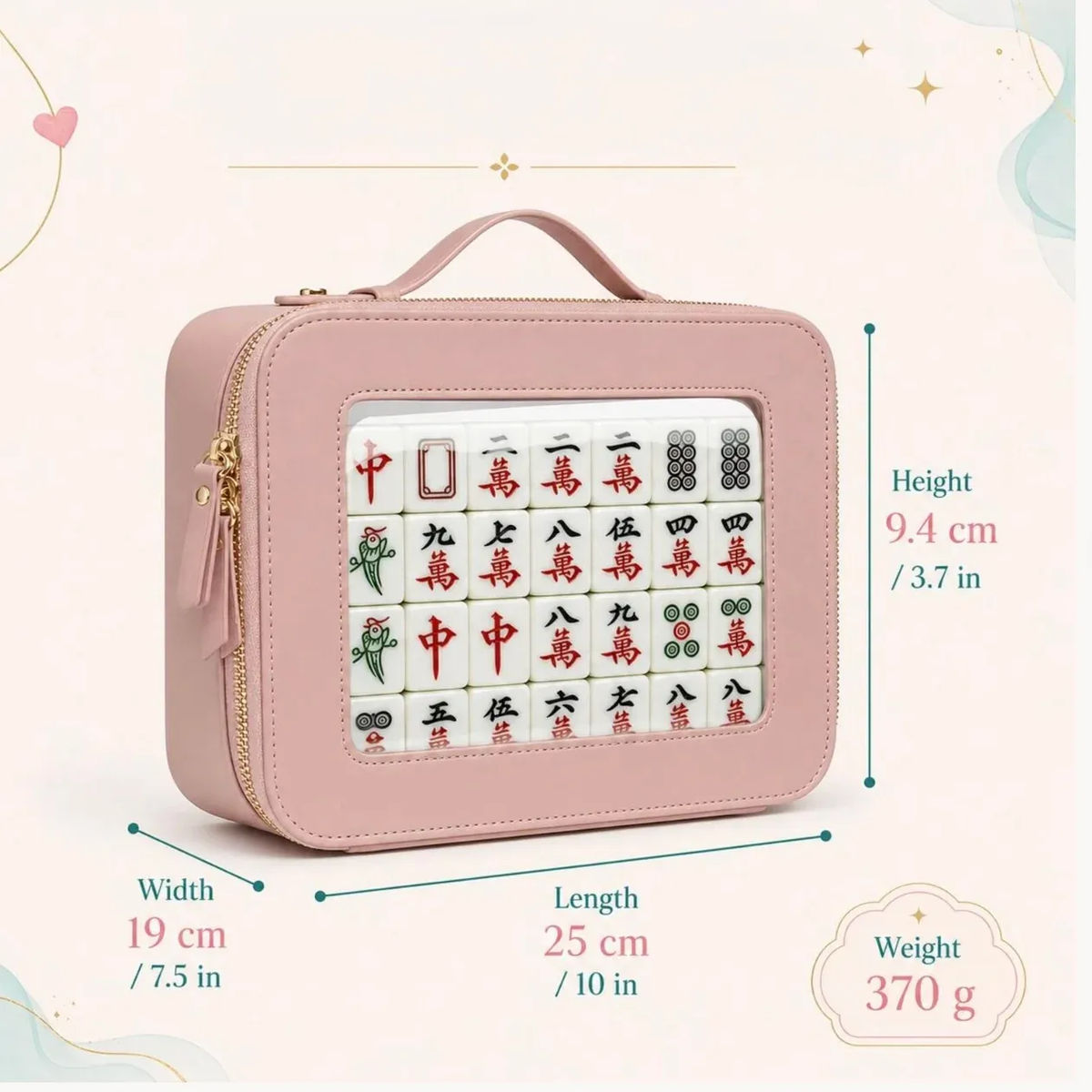
A coastal mahjong travel bag is a protective carrying case designed to hold a full 160-tile American mahjong set, mats, racks, and accessories while traveling by car, plane, or boat. Unlike a soft drawstring pouch, a structured travel bag absorbs impact, resists moisture (critical near salt water), and organizes tiles so nothing shifts in transit. Most run 18–24 inches long and weigh under 5 pounds empty. Quality bags feature reinforced zippers, cushioned compartments, and water-resistant fabric—essential if you're heading to coastal venues, vacation rentals, or multi-day tournaments. Mahstead's travel bags and cases collection includes designs with interior dividers for tiles, separate pockets for dice and racks, and exterior handles rated for frequent handling. Cost varies by material and size; check the product page for your preferred style. Avoid flimsy nylon or bags without padding—salt spray and humidity deteriorate unprotected acrylic tiles over months. --- 🀄 Shop best-selling mahjong sets →
What makes a travel bag truly coastal-ready?
Coastal air is tough on mahjong sets. Salt spray corrodes metal zippers and hardware; humidity swells cardboard tiles and warps wooden racks; sand finds every seam. A coastal travel bag needs water-resistant (not waterproof) fabric on the exterior, sealed seams, stainless-steel or powder-coated zippers, and interior padding that stays dry even when damp. Most importantly, the bag must keep tiles separated so they don't chip or crack when the car hits a pothole. Look for compartments with fabric dividers or padded walls between the tile trays. Mahstead bags are designed with these conditions in mind—they're built for players who travel frequently, not just store their set at home.
Should you buy a dedicated mahjong bag or use luggage?
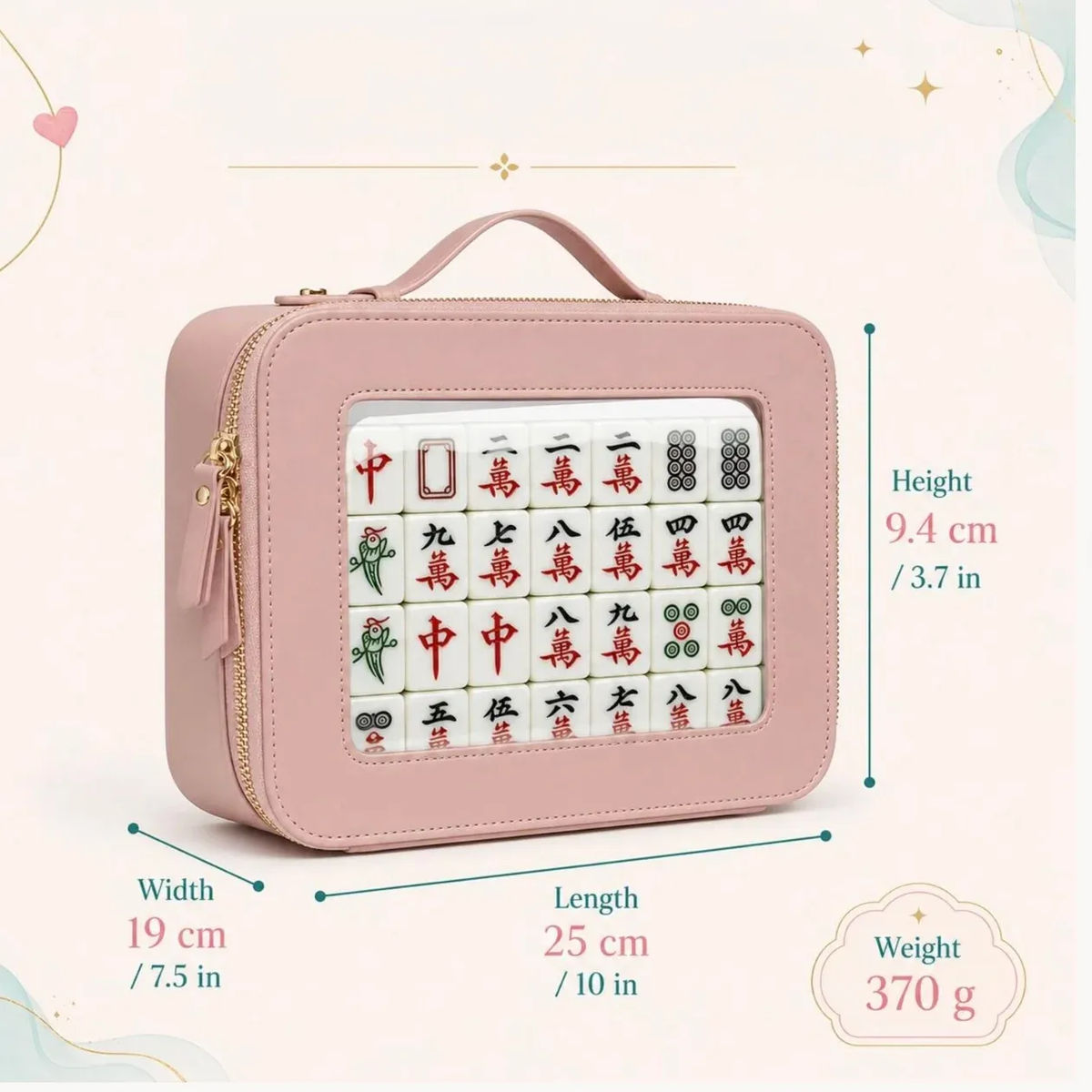
A standard suitcase or duffel won't protect your acrylic tiles the way a mahjong bag does. Here's why: a 160-tile set in a hard suitcase will shift during travel, and tiles pressed against each other or luggage edges can crack; the humid interior of luggage trapped with acrylic and wood accelerates mold and tarnishing; a standard luggage compartment has no dividers, so tiles, racks, dice, and your mahjong mat get tangled. A dedicated mahjong travel bag includes reinforced interior layout designed specifically for tile dimensions, keeps your mat flat or rolled separately, and protects your racks and pushers from being crushed. For players who travel to the coast even once or twice a year, a proper travel bag pays for itself in tile longevity.
What size bag do you actually need?
A full 160-tile American mahjong set occupies roughly 24 × 12 × 4 inches when stacked in tile trays. If you're carrying only the tiles and dice, a compact 18-inch bag works. But most of us also travel with racks with pushers, a mat, and the card. That requires a medium bag (20–24 inches) with multiple compartments. If you're flying and checking luggage, or if you host games at vacation rentals and need backup accessories, consider a larger bag (26+ inches) that holds two sets or one set plus a folded mat. Measure your tile trays before ordering—Mahstead bags list interior dimensions on the product page so you can verify your set fits. Don't guess; a bag that's too small will force you to compress your tiles, risking damage.
How do you pack a mahjong set for coastal travel?
Step 1: Empty and organize. Before packing, count your tiles and remove any loose jokers or blanks. Wipe your tiles lightly with a microfiber cloth to remove dust; don't use water.
Step 2: Tile trays first. Place your tile racks (if you have them) flat on the bottom of the bag, or stack tile trays in the order you'll use them. Never lay trays on their sides—tiles will tumble.
Step 3: Racks and pushers. Wrap mahjong racks with pushers in a thin towel and nestle them in a side pocket or on top of tiles, never loose in the main compartment.
Step 4: Mat and card. Roll your mahjong mat tightly and secure with a velcro strap (many Mahstead bags include one). Slip your NMJL card into a plastic sleeve and clip it to a front pocket so you can reference it without opening the bag.
Step 5: Dice and small items. Dice and joker/blank spares go in a small mesh or zippered pouch—many Mahstead bags have a designated accessories pocket.
Step 6: Seal and check. Zip the bag fully, then gently shake it. You should hear nothing sliding. If you do, re-pack; movement in transit means impact damage.
For coastal trips, pack a small silica gel packet in the bag to absorb excess moisture during humid days or if the bag gets rained on. Replace it every 2–3 days if you're in high humidity.
Comparison: Travel bag types for different coastal scenarios
Scenario | Bag Type | Who It's For | Key Features |
Day trips to a beach house | Soft-sided compact (18–20 in) | Local players, short drives | Lightweight, fits in car cup holder, simple zippers |
Week-long vacation rental | Medium structured (22–26 in) | Groups or frequent travelers | Padded compartments, waterproof fabric, mat pocket |
Multi-stop tournament or cruise | Large with wheels (26–30 in) | Serious travelers, airline-bound players | TSA-compliant lock, reinforced handle, separate shoe pocket |
Two sets or backup inventory | Extra-large (28+ in) | Hosts, tournament organizers | Multiple tile trays, expandable sections, carry and roll options |
All Mahstead bags are designed for players who want their tiles to arrive safely. The material and size you choose depends on how often you travel and whether you're flying or driving. A bag that works for monthly car trips to a coastal venue may not suit someone flying internationally; conversely, an oversized bag wastes space and weight for a player who travels once a year.
🎁 See our most-loved mahjong sets & accessories →
What to check before you buy a coastal travel bag
Before you order, verify these details:
Interior dimensions match your tile trays. Measure the length, width, and height of your tile trays (or your set's box dimensions) and compare to the bag's listed interior space. A quarter-inch too snug and you'll force tiles in.
Zippers are stainless steel or powder-coated. Regular metal zippers rust near salt water. Check product photos or description.
Seams are sealed or reinforced. Water-resistant fabric alone isn't enough if seams let moisture in. Ask in the product description or Q&A if seams are sealed.
Weight and carry handles. Will you hand-carry it off an airplane or hoist it onto a vacation rental shelf? Bags under 3 pounds empty are easier to manage.
Warranty or return policy. Mahstead offers a straightforward return process (check the site for details), so you can order and test-fit your set risk-free.
Spare compartments for future gear. As you accumulate engraved mahjong sets or backup accessories, will your bag grow with you? Expandable sections or large side pockets help.
A few minutes of research before checkout saves you from ordering a bag that doesn't fit, leaks, or breaks mid-trip.

FAQ
Can I use a mahjong travel bag to store my set long-term?
Yes, but not in a damp garage. Mahjong travel bags protect tiles from dust and UV light, making them ideal for closet or cabinet storage. For coastal homes with high humidity, ensure the bag is in a climate-controlled room; exterior patios or uninsulated sheds will allow moisture to seep in despite the bag's water resistance. Air out your bag quarterly.
Will a travel bag fit inside airline carry-on luggage?
Most Mahstead compact and medium bags (18–22 inches) meet standard carry-on dimensions. Check your airline's specific carry-on limits before you book; budget airlines are stricter. A large travel bag (26+ inches) will require checked luggage. Call your airline or visit their website to confirm your bag's dimensions against their overhead bin and luggage width rules.
What's the difference between water-resistant and waterproof for a coastal bag?
Water-resistant fabric sheds light rain and salt spray and dries quickly; waterproof fabric blocks all water, trapping humidity inside. For mahjong tiles, water-resistant is better—it prevents salt deposits from building up while allowing the bag to breathe so trapped moisture doesn't rot the interior. Fully waterproof bags can create a humidity pocket that damages acrylic over weeks.
Can I throw a damp mat into my travel bag after a beach game?
No. Roll your mat in a dry towel first, and let it air in a sunny spot for at least 30 minutes before packing. A damp mat in a sealed bag will encourage mold and mildew on the tiles inside. If your mat gets soaked, unroll it at home and let it dry completely (4–8 hours) before storing. Mahstead mats are durable, but moisture trapped in folds causes problems.
How often should I replace my coastal travel bag?
Mahstead bags are built to last 5–10 years of regular travel if cared for properly. Check zippers and seams annually; if zippers jam or fabric develops small tears, they're repairable. Replace the bag if seams fail (waterproofing compromised), zippers can't be fixed, or fabric peels. For players who travel to coastal games weekly, expect 7–8 years; occasional travelers may keep a bag for 10+. --- ✨ Find your Mahstead set — free US shipping →


View More
View More
View More
