
Changsha Mahjong How to Count Points: Scoring Rules Explained
Last updated: Nov 23, 2026
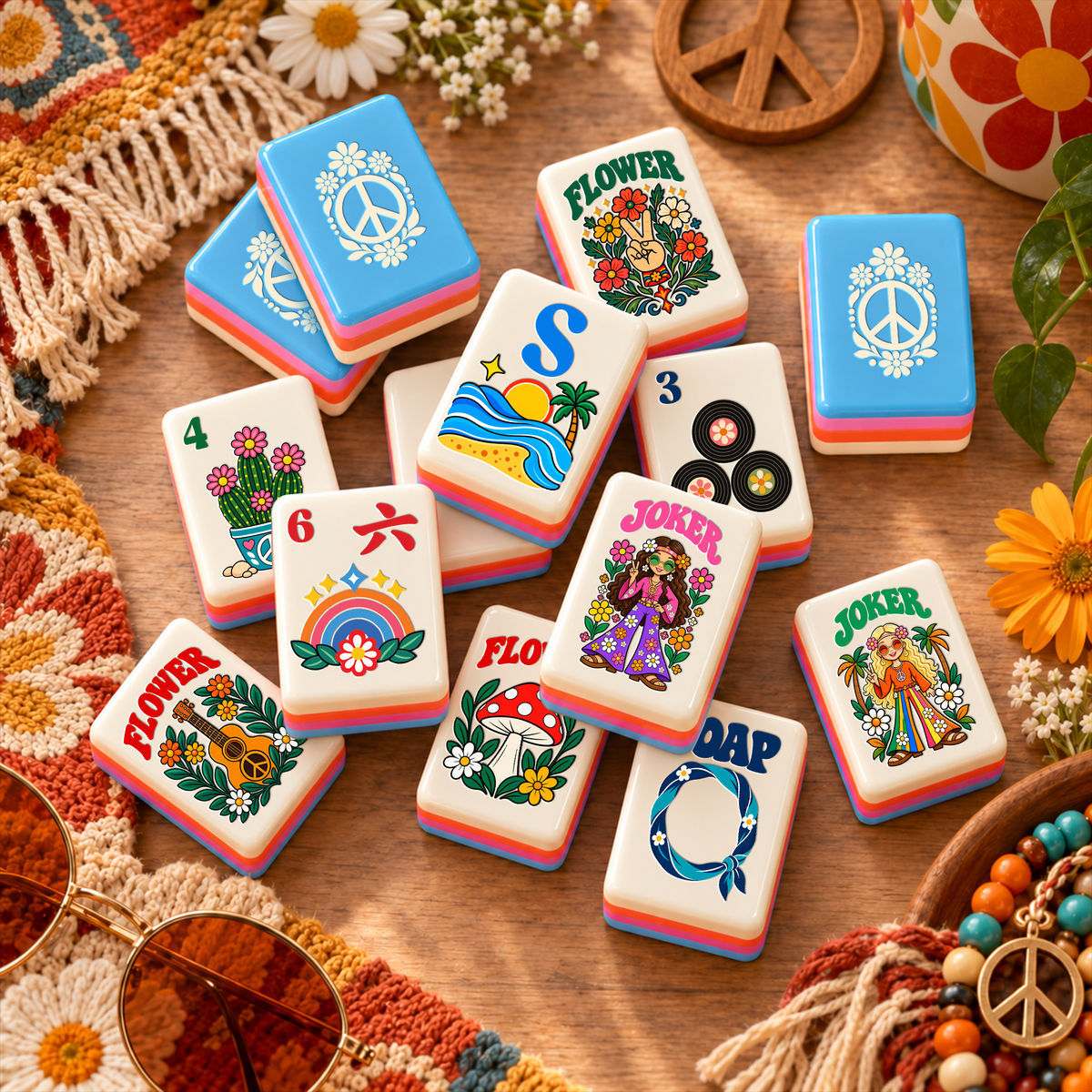
Changsha mahjong scoring counts "fans"—completed patterns worth specific point values—rather than matching hands to an annual card. A player draws a tile, completes a winning hand (melds and a pair), and declares their fan count (typically 1–8 fans per hand). Base points depend on the fan level and the number of losing players; those points are then multiplied by the fan number to arrive at the final payout. Unlike American mahjong (which follows the National Mah Jongg League card and requires exact hand matches), Changsha allows flexible melds and values hands purely by pattern complexity and honor or terminal tile presence. Scoring happens immediately after someone goes out; payouts are tracked manually or with a scoring app. The variant is popular in Hunan Province and among players who prefer rule flexibility over strict card-based play. Mahstead's best-selling mahjong sets work equally well for Changsha play—you need the same 152 standard tiles—though you'll track scores on paper rather than rely on a rules card. #
What Are Fans in Changsha Mahjong?
Fans are point categories earned by completing specific tile patterns in your winning hand. Each fan type represents a different level of difficulty or rarity. The higher your fan count, the more you win from each losing player. Common fan categories include Pure Melds (no honor tiles), All Terminals (only 1 and 9 tiles), All Honors (only winds and dragons), and Quint patterns (five-of-a-kind). Unlike American mahjong, which locks you into the year's official card, Changsha lets your group define which patterns count as which fan level—making house rules essential before play begins.

How Do You Calculate Base Points Before Multiplying?
Base points start from a flat amount (often 8 or 20 points, depending on your group's rules) and are multiplied by the fan number to reach the final payout per loser. For example: if base points are 8 and you win with 2 fans, you earn 8 × 2 = 16 points from each player who did not win. Some groups use a sliding scale where higher fan hands earn exponentially higher base points—so 5 fans might multiply by a larger base than 1 fan—to reward difficult melds. The key rule: establish your group's base-point structure and fan definitions before the Charleston. Writing these rules on a scoresheet prevents disputes and ensures everyone's playing the same game.
What Tiles Create the Most Common Winning Patterns?
High-value fans usually involve terminal tiles (1 and 9 in all suits), honor tiles (winds and dragons), or all melded tiles with no single-tile or pair weakness. A hand of four pungs plus one pair of honors (all melds, no sequences) is a classic multi-fan winner. Conversely, a hand with mixed suits, only mid-range number tiles, and a simple pair might score just 1 or 2 fans. The winning tile—whether drawn from the wall or claimed from another player's discard—must complete a legal meld or the pair. Because Changsha allows flexible meld types and often permits both pungs and chows (sequences), more combinations exist than in American mahjong, making fan counting feel more intuitive to players used to Chinese regional rules.
How Do Payouts Split Among Three or Four Players?
In a four-player game, the winner collects points from all three losers. In three-player Changsha, the winner takes from the two losers (rules vary—some groups only collect from the player who "fed" the winning tile). A player who discards the tile that wins for another player sometimes pays double or triple points. Keeping a running score prevents confusion: track each player's cumulative earnings or losses on a pad, and at game's end, settle in cash or points as your group prefers. The multiplier effect means higher-fan hands create larger payouts, so an 8-fan win can shift the entire game's balance in one turn.
How Does Changsha Differ from American Mahjong Scoring?
Feature | Changsha Mahjong | American Mahjong |
Scoring basis | Fan count (pattern complexity) | Exact hand match to annual card |
Rule flexibility | Defined by group; house rules vary widely | Standardized by NMJL card each year |
Meld types allowed | Pungs, chows, kongs, quints—flexible | Pungs, kongs, quints, sextets only; no chows |
Winning tile source | Draw or claim discard; both count | Draw or claim discard; both count |
Scoring calculation | Base points × fan count × losers | Points per hand type on the card |
Pair restriction | Any tile can pair | Jokers cannot pair; honor/terminal pairs only in some hands |
Joker use | Limited or absent in traditional play | 8 jokers integral to most hands |
The biggest difference: Changsha scoring rewards hand complexity and tile type, while American mahjong rewards exact pattern recognition and the ability to read the current card. Neither is easier—they're just different skill sets.

What's the Most Common Beginner Mistake When Counting Fans?
New players often fail to pre-agree on which patterns earn which fan count, leading to disputes when someone declares a win. Another common error: miscounting the number of melds or misidentifying terminal and honor tiles. Always verify the winning hand before anyone discards and moves on. If a player declares 3 fans but the hand holds only 2 legitimate fan patterns, the table should catch it immediately. Some groups use a "challenge rule"—if someone questions the fan count, the other players validate it together before payment happens. Writing down each player's fan-level definitions on a scorecard (e.g., "All terminals = 3 fans, All honors = 3 fans, Mixed = 1 fan") prevents arguments and keeps the game moving.
🀄 Shop best-selling mahjong sets →
Step-by-Step Checklist: Running a Changsha Game
Gather players and agree on rules. Decide base points, fan definitions, payout rules for the "feeder" (who discards the winning tile), and whether three or four players will participate.
Set up the tiles. Use a standard best-selling mahjong set with 152 tiles. A mahjong mat keeps tiles organized and protected during play.
Perform the Charleston. Mix and pass tiles in the traditional three-way exchange (or two-way, depending on group rules).
Deal and draw. One player (dealer, chosen by dice roll) draws first; play proceeds in turn order (East, South, West, North).
Declare melds openly. Expose pungs, kongs, and other melds to the table as you form them, so other players can track your progress.
Call a win immediately. The instant your hand is complete (melds plus pair, or all melds if your group allows), declare and show your tiles.
Count fans together. Have at least one other player verify your fan count before accepting payment.
Record scores. Write down each winner's fan count and the payout amount in a scoresheet.
Play the next round. The winner often becomes the new dealer, or your group may rotate.
Settle at the end. Total each player's earnings or losses and pay out in cash or points.
What to Check Before You Buy
Set size and tile quality: Ensure your set has all 152 playing tiles (acrylic sets from Mahstead are durable and easy to read). Check that tiles are clearly marked with Bams, Craks, and Dots—critical for fast fan recognition.
Storage and travel: If you host weekly, invest in a mahjong bag or case to keep tiles safe and organized between games.
Scoresheet or app: Print a simple scoresheet or download a Changsha scoring app to track points accurately. Avoid mental math mid-game—errors cascade.
House rules document: Write your group's fan definitions, base points, and payout rules on a card and keep it with the set. New players should read it before sitting down.
Rack familiarity: If your group uses racks with pushers, make sure everyone knows how they work—pushing tiles forward signals readiness, and it speeds up play considerably.
🎁 See our most-loved mahjong sets & accessories →
Why House Rules Matter in Changsha
Because Changsha is regional and flexible, every group plays slightly differently. Some define "All Terminals" as 3 fans; others call it 2 or 4. Some allow sequences (chows); others forbid them. Some groups score bonus fans for patterns like "All Greens" (only green dragons and green-marked Bams). Without written rules, a new player's win claim becomes a negotiation rather than a celebration. The best groups document their rules, teach them to newcomers, and update them only by consensus. This is why Changsha play among friends stays friendly—the rules belong to the table, not an external authority, so disputes feel resolvable.
✨ Find your Mahstead set — free US shipping →
#

FAQ
Can I play Changsha mahjong on an American mahjong set?
Yes. Changsha uses the same 152 standard tiles (Bams, Craks, Dots, winds, dragons, flowers, and jokers). The only difference is how you count and score—you ignore the annual card and use fan-based point values instead.
What's the minimum and maximum fan count in Changsha?
Most groups allow 1 to 8 fans per hand. A 1-fan hand might be a simple win (melds plus a pair); an 8-fan hand is typically all honors, all terminals, or a rare all-quint pattern. Your group defines the ceiling—some play to 10 fans or higher.
Do I need a scorekeeper for Changsha?
Not required, but it's wise. A designated scorekeeper or a shared app prevents disputes and lets players focus on strategy. At minimum, use a pen and paper to note each winner's fan count and total payout.
What happens if two players win in the same round?
Most groups declare the first player to announce their win as the winner for that round. Some allow "draw" rounds where no one scores. Decide this rule before play starts.
How is Changsha mahjong different from Sichuan or Taiwanese mahjong?
All three are regional Chinese variants with flexible melds and fan-based scoring, but each region defines its own fan categories, payout structures, and allowed tile combinations. Changsha (Hunan Province) typically values terminal and honor tiles heavily. If you're switching variants, learn that region's fan chart before sitting down.
Can I use jokers in a Changsha winning hand?
It depends on your group's rules. Traditional Changsha play often minimizes or forbids jokers to encourage natural melds. Modern casual play sometimes allows them as wild tiles. Agree before the Charleston.


View More
View More
View More
