
Coastal Mahjong Racks: Types, Sizes & How to Choose
Last updated: Nov 23, 2026
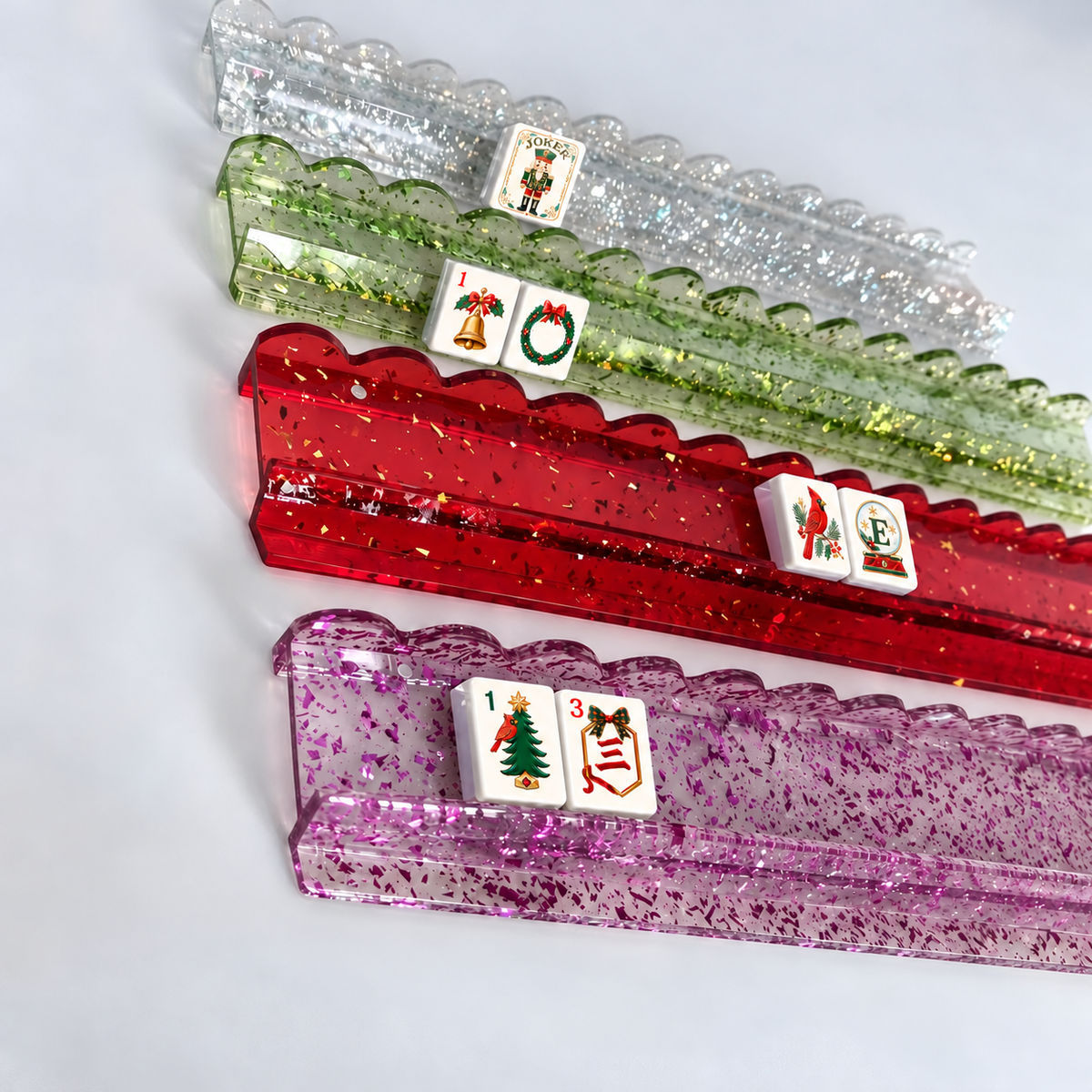
A coastal mahjong rack is a grooved wooden, acrylic or bamboo holder that stands 4–8 inches tall and holds 13–14 tiles per player in an upright row, angled toward you so you can see all your tiles without exposing them to opponents. Racks usually come with matching pushers (small sticks that slide tiles forward to draw new ones). American mahjong racks fit all standard 160-tile sets sold by Mahstead and similar retailers. Most coastal designs feature light finishes, natural materials or ocean-inspired colors that complement beach-house décor. Racks aren't required to play, but serious players choose them to speed up tile management, reduce table clutter and prevent accidental knocks that scatter tiles—especially important when hosting weekly games. Cost ranges widely based on material and finish; see current pricing on the product page. Choose based on your table size, player count, storage space and whether you want pushers included.
🀄 Shop best-selling mahjong sets →
What size rack do you need for your player count?
American mahjong seats four players, each needing a dedicated rack tall enough to hold 13–14 tiles comfortably and narrow enough to fit four racks around a standard card table (36–48 inches) without crowding. Individual racks typically measure 2.5–3.5 inches wide and 4–7 inches tall; four seated players need roughly 10–14 inches of horizontal rack space total, leaving room for the mat (usually 27 × 27 inches) and a dealer's wall in the center. If your coastal dining table is smaller or you prefer a spacious setup, measure your table and subtract space for the mat before ordering; a 48-inch round table works tight, while 54–60 inches feels relaxed. Beginners often buy a single rack to test; check the mahjong racks collection for sets of four or buy individually if your friends bring their own.
Do coastal racks include pushers, and do you need them?
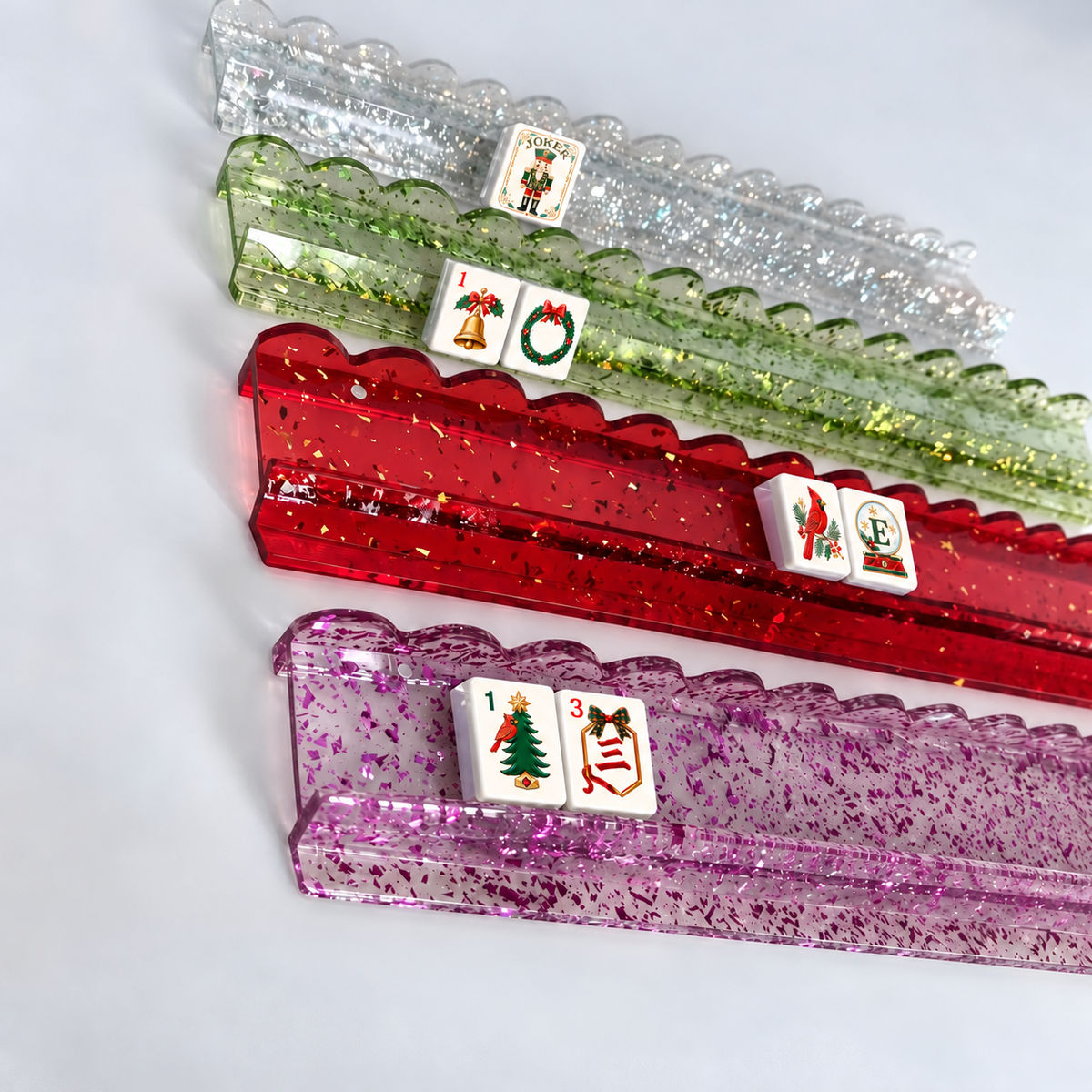
Most racks with pushers bundle a matching stick (usually bamboo or wood) for each player. Pushers slide tiles forward smoothly as you draw, reducing hand stress and keeping your tile row neat—especially helpful for players with arthritis or during long games. Pushers are optional: you can draw tiles by hand, but they slow play slightly and risk bumping tiles accidentally. Coastal designs often feature natural wood pushers that match the rack color (light oak, bamboo, whitewash). If you buy a rack without pushers included, pushers are sold separately and cost little; always check the product page to confirm what comes in your purchase.
Wooden vs. acrylic: which coastal style suits your home?
Material | Best for | Durability | Coastal look | Care |
Light wood (oak, ash, pine) | Traditional, warm aesthetic | 5–10 years with care | Warm, natural | Wipe dry, avoid prolonged moisture |
Bamboo | Eco-conscious players, light weight | 5–8 years | Organic, relaxed | Wipe after play; do not soak |
Whitewash/bleached wood | Modern coastal, farmhouse | 7–10 years | Bright, airy | Dust regularly, wipe spills quickly |
Clear/frosted acrylic | Contemporary, easy cleaning | 10+ years | Sleek, minimal | Dishwasher safe; scratch-resistant |
Wooden coastal racks absorb the salt-air aesthetic and feel warm to the touch; acrylic racks resist humidity better and are easier to sanitize between games. If your beach home sits near salt spray, acrylic or sealed wood is wise. Wood can warp if left damp; always store racks upright in a dry closet after play. Our best-selling collection includes both finishes so you can order a test set before committing to four matching racks for your weekly group.

Should you buy individual racks or a matched set of four?
Buying four matched racks ensures consistency at your table and simplifies setup: everyone plays with identical gear, no one argues over which rack is "better," and your coastal table looks intentional. Matched sets usually cost less per rack than buying individually and often arrive together for coordinated play. However, if your players travel or bring personal racks, or if you're just starting, buying one or two racks first lets you test comfort and style before investing in a full set of four. Many of us rotate between hosting at home and playing at friends' houses; having your own reliable rack (especially with your name engraved, if you choose a custom set from our engraved American mahjong sets) prevents mix-ups and adds a personal touch to shared games.
✨ Find your Mahstead set — free US shipping →
What to check before you order coastal racks online
Rack dimensions & table fit. Measure your actual play table width. Confirm the rack footprint (width × depth) in inches on the product page; four racks plus a mat must fit comfortably. If the listing doesn't specify, email to ask before ordering—coastal homes vary widely.
Material & finish durability in humid air. Wooden racks can swell or warp in salty, humid coastal environments; sealed finishes resist moisture better than raw wood. If you live near the ocean, acrylic or high-gloss sealed wood is safer than unfinished bamboo.
Pusher inclusion & compatibility. Confirm pushers come with your racks; if not, buy them separately. Pushers must fit your tile thickness (standard American tiles are about ½ inch tall). Mismatched pushers feel awkward in play.
Quantity—individual vs. set. Count how many racks you actually need. If three of your four players bring their own racks, buy just one. If you're hosting and providing all equipment, buy four (or a full set if your store offers bundled pricing).
Shipping & packaging. Coastal shipping over 2,000 miles sometimes arrives with minor cosmetic damage in humid climates. Check the return policy before ordering; Mahstead ships free across the US, so factor in turnaround time if you need racks for a specific game date.
Engraving or personalization. If you want your name, initials or a coastal theme carved into your rack, order custom options well in advance—turnaround can be 2–3 weeks during peak season.
🎁 See our most-loved mahjong sets & accessories →
Coastal mahjong racks transform a casual game into a polished, organized ritual. Whether you choose natural wood that echoes your beach-house décor or clean acrylic that resists ocean humidity, the right rack speeds play, protects tiles and makes hosting weekly games a pleasure. Measure your table, confirm material durability in your climate, and buy matched sets of four if you're the primary host—your players will appreciate the consistency and care you put into setup.

FAQ
Can I use mahjong racks on a regular dining table, or do I need a mahjong mat?
You can use racks alone on any flat table; the mat is optional. A mat protects your table, provides a non-slip surface and marks the playing area, but racks work fine without one. Many coastal players use racks on a bare table and roll up a mat only for formal games or when protecting furniture.
Do wooden coastal racks need special care if I live right by the ocean?
Yes. Salt air accelerates wood aging and can cause swelling or finish damage. Wipe racks dry after each game, store them in a climate-controlled closet, and consider acrylic or heavily sealed finishes if you play near salt water. Unfinished bamboo is risky in humid coastal climates.
What's the difference between a mahjong rack and a tile holder?
A mahjong rack is a grooved wooden or acrylic stand that holds 13–14 tiles upright and angled; a tile holder is any container (bag, box, cup) that stores tiles between games. Racks are for active play; holders are for storage and travel.
Can I mix and match racks from different sets, or do they have to match?
They don't have to match functionally, but mixing looks sloppy and can confuse tile counts during play. Most serious players prefer four identical racks. If you're just learning, mismatched racks are fine—just pick one height and stick with it so all players see tiles at the same level.
Do pushers come with every rack, or are they sold separately?
Some racks include pushers; others don't. Always check the product page before ordering. If pushers aren't included and you want them, they're sold separately and usually cost little. Confirm your pusher length and thickness match your tile size before play.
How do I store racks and pushers between games so they don't get damaged?
Stand racks upright in a dry closet or shelf, away from direct sunlight (which can fade wood or acrylic). Store pushers in a separate box or bag so they don't bend or crack. Keep everything in a climate-controlled space; humidity and temperature swings damage wood finishes.
Are coastal-themed racks (with ocean colors or designs) more expensive than plain ones?
Not always. Cost depends on material, craftsmanship and finish, not theme. A whitewashed wood coastal rack and a natural oak one can cost the same; it's the style you choose. See current pricing on the product page to compare.


View More
View More
View More
