
Closed Hand in Mahjong: Examples and When It Wins
Last updated: Nov 23, 2026
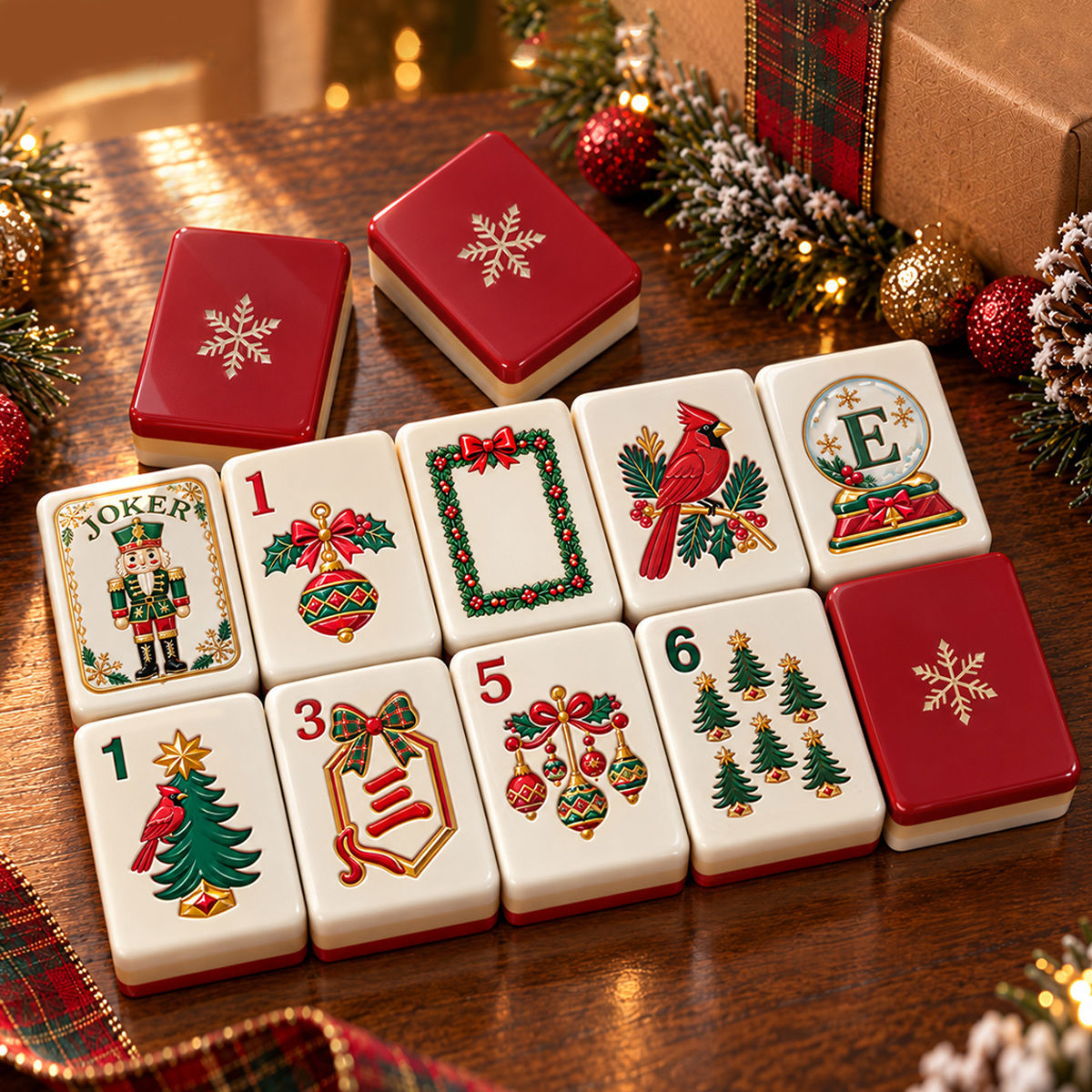
In American mahjong, a closed hand is one you complete without ever exposing a pung, kong, quint, or sextet to the table. You keep all fourteen tiles hidden until you go mah jongg and reveal your entire winning hand at once. Closed hands appear on the current year's National Mah Jongg League card; the card divides hands into sections, and closed-hand entries are clearly marked. Because you've revealed nothing during play, other players have no clue what you're holding—a stealth advantage. A closed hand typically scores 30–50 points or higher, depending on the card's listed value, making it worth the risk of holding nothing exposable if your draw doesn't land. You'll need a clear best-selling American mahjong set to practice spotting closed hands quickly during the discard phase.
A closed hand in American mahjong is one you complete without ever exposing a pung, kong, quint, or sextet to the table. You keep all fourteen tiles hidden until you go mah jongg and reveal your entire winning hand at once. Closed hands appear on the current year's National Mah Jongg League card; the card divides hands into sections, and closed-hand entries are clearly marked. Because you've revealed nothing during play, other players have no clue what you're holding—a stealth advantage. A closed hand typically scores 30–50 points or higher, depending on the card's listed value, making it worth the risk of holding nothing exposable if your draw doesn't land. You'll need a clear best-selling American mahjong set to practice spotting closed hands quickly during the discard phase.
What is a closed hand exactly?
A closed hand is fourteen tiles arranged and concealed in your rack until you call mah jongg. Unlike an open hand—where you've exposed one or more pungs, kongs, quints, or sextets during play—a closed hand reveals nothing. The moment you draw your winning tile, you announce your hand and display all tiles at once. From the start, other players see only your tile count rising. They cannot deduce your strategy, guess your melds, or block your winning tile before you grab it. This opacity is the closed hand's core strength and why it commands a point premium on the card.

How do you read closed hands on the card?
The National Mah Jongg League card lists hands in sections organized by tile type, suit combination, and hand category. Closed hands are grouped separately and labeled clearly to distinguish them from open hands. To spot a closed hand entry, look for the notation that indicates no exposures are allowed—typically shown as a solid block or distinct symbol. Each line on the card shows one hand pattern: the tile composition (suit, number, wind, dragon, or flower), multiplier if any, and point value. When you scan for a closed hand match, you're looking for a line where your fourteen tiles—without any jokers in a single tile or pair—align exactly with the pattern and point multiplier listed. Many players miss closed-hand entries during the game because they're hunting open-hand patterns first; slowing down and checking the closed section first saves time if you've drawn no exposable melds.
Why does a closed hand score more?
Because you reveal nothing, other players cannot block your winning tile or adjust their discard strategy in response to your exposure. If you've exposed a pung of 3 Dots, everyone knows you're holding related tiles and will guard their 2s, 4s, and Dragons. A closed hand forces opponents to play blind. The card reflects this advantage by awarding closed hands a higher base point value—often 30, 40, 50, or more points compared to a similar open hand. A hand worth 30 points as an open hand may be listed again as 40 points if played closed. This gap rewards the risk: you build a closed hand knowing that if the draw stalls, you're left with no meld safety net. You cannot pivot to an open hand mid-game if your closed hand tiles don't arrive. The higher score compensates for that all-or-nothing bet.
What mistakes do players make with closed hands?
Holding closed too long without a backup plan. Many players commit to a closed-hand pattern early and refuse to expose a pung or kong even when a tile they need stops appearing. By turn seven or eight, they're stuck with a dead hand and no open alternative. The better move: hold a closed hand loosely, and the moment a backup open-hand pattern becomes clear (say, a different Dragon combination), expose a meld and pivot. Confusing joker placement rules. American mahjong jokers can never occupy a single tile position or form a pair—not even in a closed hand. A closed hand listing "3 3 3 Dragons" and "1 1 Flowers" cannot use jokers for the pair; jokers only substitute inside pungs, kongs, quints, or sextets you've already exposed. If your closed hand requires a joker pair or single, it's impossible—cross it off. Miscounting tile rarity. Closed hands often call for unusual combinations (say, two different Winds and three Dragons). Count how many of that tile remain unplayed before committing to the hand; if four 1 Dots have been discarded and you need three more plus a joker, the math doesn't work. Not scanning the card fast enough during play. When you're ten tiles in and the draw has gone six rounds, glancing at the closed-hand section takes discipline; many players freeze and expose a pung instead, switching to autopilot. Bring a highlighter to the card during home games and mark your closed-hand candidates before play starts.
Closed hand vs. open hand: a scoring comparison
Hand Type | Tiles Exposed | Example Pattern | Typical Points | Risk Level | When to Choose It |
Closed | None | 3 Bams, 3 Craks, 3 Dots, 2 Dragons (pair) | 30–50 | High | You drew cleanly and backup is weak |
Open (early) | 1 pung | 3 Bams exposed, 3 Craks, 3 Dots, 2 Dragons | 20–30 | Low | You need the table to see you're safe |
Open (late) | 2+ melds | Two pungs exposed, 3 Craks, 2 Dragons | 15–25 | Very low | You're desperate to find a discard |
Closed hands start at roughly +30% over the open equivalent and grow if additional pungs or kongs are exposed during play. An open hand with three exposures may score half what the closed version does. The trade-off: a closed hand locks you in. An open hand lets you adapt. Choose closed only when your closed-hand pattern is solid and your alternative open paths are poor.
🀄 Shop best-selling mahjong sets →

Step-by-step: How to play a closed hand
Before play starts, study the card and highlight your closed-hand targets. Mark two or three closed-hand patterns you might hit. This reduces decision time mid-game.
During the Charleston, note which tiles flow out of the hand. If a key tile for your closed pattern is given away, mentally cross that hand off.
In the opening rounds (turns 1–4), build your closed hand loosely. Hold the tiles but stay alert for an open backup. If by turn five your closed pattern is still intact and you've drawn two-thirds of the tiles you need, commit.
Watch for dead tiles. If a Dragon you need has been discarded twice, that closed hand is finished. Expose a pung and pivot immediately.
Count rounds and remaining players' discards. By turn eight, if you're still one or two tiles away, gauge whether waiting one more round is safer than exposing now.
Call mah jongg only when you hold all fourteen tiles. Display them all at once. The dealer counts them, verifies the pattern on the card, and announces the point value.
Real example: A closed hand in play
Your hand: Four 1 Bams (bird), four 2 Bams, four 3 Bams, four East Winds, two Red Dragons (pair). That's fourteen tiles—a closed hand listing on the card worth 40 points.
Round 1–3: You draw; two 4 Bams have been discarded by opponents. You keep your hand closed.
Round 4: A player discards the last 1 Bam. Your closed hand is now impossible (you'd need four 1 Bams; one is gone forever). Pivot now. Expose your four East Winds as a kong and look for a new closed or open hand.
Why it matters: In that same game, had you waited until round six to pivot, you'd have been down to two viable hands and the East Winds might have been claimed by another player in the discard pile. Early detection of a dead closed hand—within two to three rounds—is the difference between a pivot win and a loss.
What to check before you buy a set for closed-hand practice
Tile clarity: Can you read each Bam, Crak, Dot, Wind, and Dragon quickly? Acrylic sets with clear engravings let you spot patterns fast. Closed-hand play happens in real time; fuzzy tile faces slow you down.
Rack depth: A rack with pushers keeps tiles upright and ordered. When fourteen tiles are hidden, good pushers let you shuffle them without exposing them to the table, a critical habit for closed-hand play.
Tile count and condition: Verify your set has all 152 playing tiles plus spares. Missing or bent tiles corrupt your closed-hand patterns mid-game.
Card access: Ensure you have the current year's National Mah Jongg League card. Closed hands change yearly. Last year's card won't match this year's plays.
🎁 See our most-loved mahjong sets & accessories →
Why American mahjong closed hands differ from other variants
Chinese, Hong Kong, and Riichi mahjong do not use a fixed card and do not define "closed hand" in the American sense. In Chinese and Hong Kong mahjong, you can call and expose chows (sequences like 1-2-3), which American mahjong forbids. A "closed hand" in those games means you've drawn all tiles yourself and win without any calls—a rare, high-scoring event. Riichi mahjong has a similar concept called tsumo (self-draw). American mahjong's closed hand is different: it's a named pattern on the card that you must match exactly, without any exposure, using only pungs, kongs, quints, and sextets (no sequences). This makes American closed hands a strategic choice tied to card study and risk assessment, not just luck. Beginners often ask whether they can play a closed hand "their own way"; the answer is no. American rules are strict: the hand must match the card, and the card is reissued every spring.

FAQ
Can I use a joker as a pair in a closed hand?
No. In American mahjong, jokers can never form a pair or occupy a single tile—closed or open. Jokers substitute only inside exposed pungs, kongs, quints, or sextets. If a closed-hand pattern requires a joker pair, that hand is impossible.
What happens if I expose one tile by accident during a closed hand?
The hand is no longer closed. If you've accidentally revealed a meld to the table, you must treat it as exposed. Other players may call it on their turns if it matches their discard. Your hand loses its closed-hand point value; if you go mah jongg, you score the open-hand version instead (lower points).
How many closed hands are on the annual card?
The National Mah Jongg League card includes dozens of closed-hand patterns across all sections. The exact count varies yearly, but closed hands typically represent 15–25% of all listed hands. Study the card before your first game to familiarize yourself with how many options exist.
Is it ever wrong to pursue a closed hand?
Yes. If by turn five you've only drawn three tiles of a seven-tile requirement, abandon it. Dead closed hands waste turns. Pivot to an open hand early so you have time to build an alternative. Closed hands only score if you complete them.
Can a beginner play closed hands effectively?
Beginners can try, but closed-hand play demands card fluency and pattern recognition under pressure. A beginner's guide is a better starting point. Once you've played open hands for 10–15 games, you'll have the tile knowledge and confidence to spot and commit to closed-hand patterns without panic. ✨ Find your Mahstead set — free US shipping →


View More
View More
View More
