
Clear Mahjong Case: Choosing Storage That Protects Your Set
Last updated: Nov 23, 2026
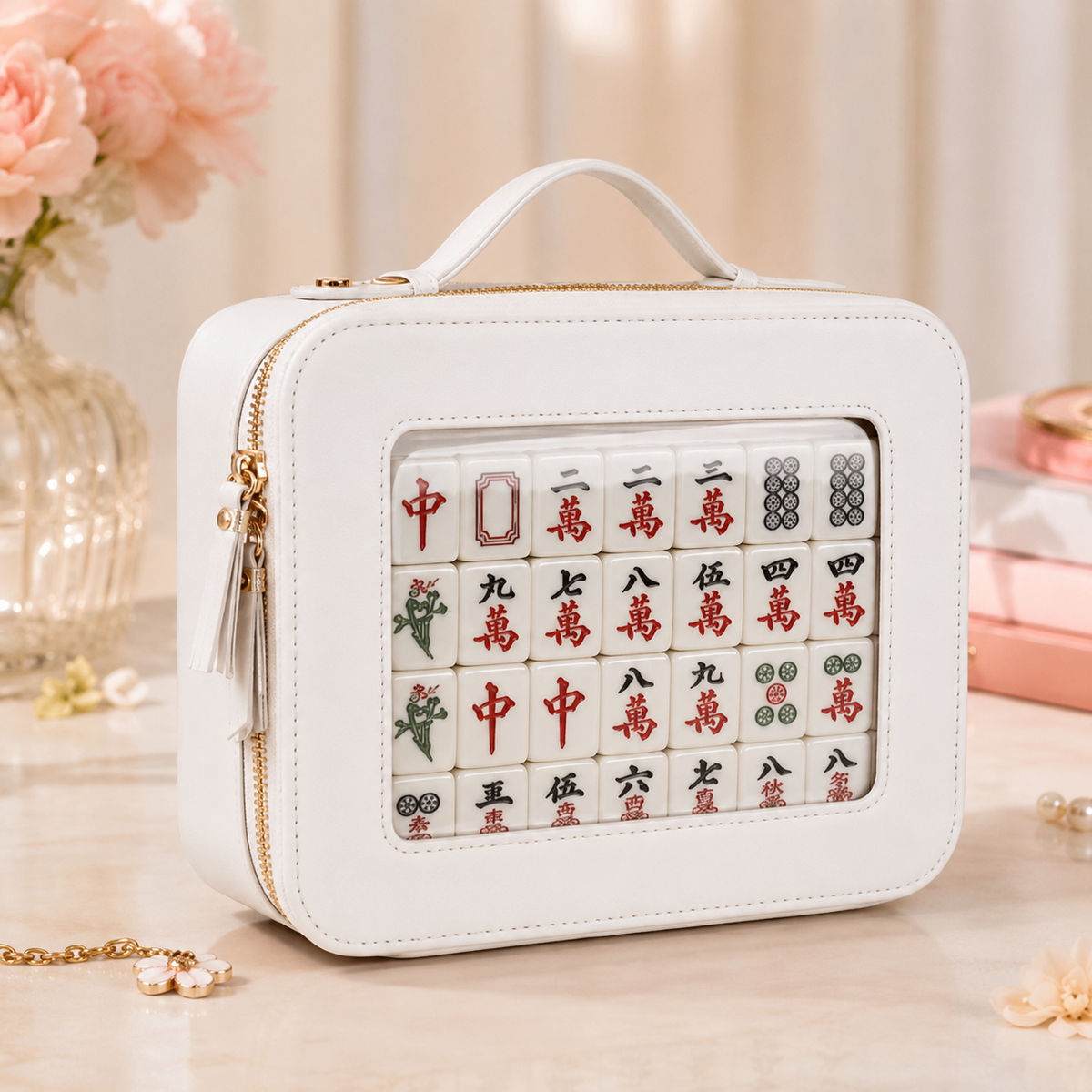
A clear mahjong case is a protective container—usually acrylic, vinyl or hard plastic—designed to hold a full 160-tile American mahjong set, racks with pushers, mat and dice. Cases from Mahstead's travel bag and case collection range from soft-sided zippered vinyl bags with clear panels to rigid acrylic or hard-shell designs. Most hold one standard set plus accessories; some nest two sets. Clarity lets you see tiles without opening, reducing fumbling at the table. A good case costs less than replacing damaged tiles and fits in a car trunk or closet. Avoid flimsy zippers, thin walls that crack under pressure, and cases sized for 144-tile sets if you own a full 160-tile set—you'll jam tiles or leave gear behind. Mahstead's cases ship free across the US and are sized specifically for American sets with full accessories.
Why do serious players use clear cases instead of cloth bags?
Cloth bags hide your tiles and force you to dump them on the table to count or sort—slow, messy, and risky on someone's living-room rug. A clear case lets you verify your set is complete before you arrive at game night, keeps tiles organized in compartments, and protects against dust, spills and pets. Clarity also speeds setup: you can spot a broken or missing tile before the shuffle begins. Hard cases survive car trunks and stacked closet shelves; vinyl cases take less space but offer less impact protection. Most of us who host weekly games keep a case on hand—not optional gear.
🎁 See our most-loved mahjong sets & accessories →

What's the difference between acrylic, vinyl and hard-shell clear cases?
Acrylic cases are rigid, scratch-resistant, and show tiles in perfect focus—ideal for display or frequent short trips. They don't flex, so tiles don't shift inside. Vinyl cases are soft-sided with a clear window or panels, lightweight, and pack flat; they're best for weekly players who toss gear in a car. Zippers can fail if overstuffed. Hard-shell cases (molded plastic or composite) offer maximum durability for serious travelers—they stack, lock, and survive airport baggage. Hard cases cost more and take up permanent closet space. Most American mahjong players choose vinyl or acrylic depending on storage space and travel frequency. Choose acrylic if you display your set at home or play monthly at tournaments; vinyl if you host weekly games in a car pool; hard-shell if you travel interstate or fly with your gear.
How much storage space does a clear case actually need?
A standard clear case for one full 160-tile set with racks, mat and dice measures roughly 18–24 inches long, 12–15 inches wide and 4–6 inches deep, depending on design. It fits easily on a shelf, under a bed, or in a car trunk. Nesting cases for two sets take up less combined space than two separate bags but are heavier and more expensive. If you host in a small apartment, measure your closet or car trunk before ordering—nothing worse than buying a case that doesn't fit your storage. Mahstead's product pages include dimensions; cross-check them against your space before checkout.
What should you check before buying a clear case?
Here's a pre-purchase checklist:
Set size: Confirm you own a 160-tile American mahjong set, not a 144-tile or Chinese set. Cases sized for 144 tiles won't fit a full American set with accessories.
Compartments: Does the case separate tiles, racks, mat and dice? Mixed storage creates noise and tile damage in transit.
Zipper quality: Pull a sample zipper (if possible in-store) five times. Cheap zippers jam after weeks of use. Mahstead cases use commercial-grade hardware.
Seal and scratch resistance: Look for a case with a gasket or tight-fitting lid, not a loose snap-on top. Acrylic cases should have a matte or micro-etched interior to prevent tiles from sliding.
Weight when full: Lift a display model loaded with tiles if available. You'll carry it weekly. Anything over 8 pounds gets old fast.
Return policy: Always confirm you can exchange or return if the case doesn't fit your set or accessories.
Case Type | Best For | Durability | Setup Time | Stackable |
Vinyl | Weekly home games, car pool | 2–3 years, zippers wear | <1 minute | Somewhat |
Acrylic | Monthly tournaments, display | 4+ years, scratch-prone | 2 minutes | No |
Hard-shell | Interstate travel, frequent moves | 5+ years | 3 minutes | Yes |
✨ Find your Mahstead set — free US shipping →

How do you pack a case to avoid tile damage?
Sort tiles into the compartments provided: Bams, Craks, Dots, winds, dragons, flowers and jokers separate. Racks with pushers should slot into a dedicated rack holder or lie flat in a padded section—never stack loose tiles on top of racks. The mat can roll and tie or fold flat. Dice go in a small pouch inside a case pocket. Fill empty space with bubble wrap or soft packing material—don't cram tiles to capacity or you'll crack them when closing the lid. When transporting, place the case flat on a car seat or floor, not standing upright or in a back seat where it shifts. If your case gets wet, leave it open to air-dry completely before storage. Most tile damage happens during packing, not play.
Should you buy a case with your set or separately?
If you're buying your first set, bundle a case together—they're often offered as a package and ship at one time. If you already own one of our best-selling mahjong sets and need a case, measure your set dimensions and accessories first, then order a case to match. Don't guess; a mismatch is frustrating. Mahstead's collection of travel bags and cases includes options to pair with any 160-tile set. If you host multiple games weekly, consider two cases—one for home storage, one for travel.
🀄 Shop best-selling mahjong sets →
What about engraved or custom sets—do they need special cases?
Engraved American mahjong sets are the same size and weight as standard sets, so they fit standard clear cases without modification. Engraving adds personality but no bulk. Custom sets (personalized with your name, a date, or a joke) remain 160 tiles and pair with the same travel bags and cases as any other set. The only exception: if you order a set with oversized tiles or a non-standard design, confirm dimensions with Mahstead before buying a case. For most players, one case works for all your sets.

FAQ
Can I store a clear case with my mahjong mat inside it long-term?
Yes. Mats don't degrade in cases if stored in a cool, dry place away from direct sunlight. Never store a wet mat—let it air-dry fully first. Check the case annually for dust, mold or odor, especially in humid climates.
What's the best way to clean the inside of an acrylic case?
Use a soft, dry microfiber cloth monthly to wipe the interior. For stubborn dust, vacuum gently with a brush attachment—never use water on acrylic tiles inside a closed case. Wipe the outside with a damp cloth and dry immediately to avoid streaks.
Do clear cases work for travel by airplane?
Yes, if the case fits carry-on dimensions (typically 22×14×9 inches). Check your airline's policy before packing. Hard-shell cases are more likely to survive baggage handling; vinyl cases may compress. Keep your case in a larger duffel bag for extra protection in overhead bins.
Can two American mahjong sets fit in one nesting case?
Some Mahstead cases are designed to hold two sets, but this depends on the specific case design. Check the product description for capacity. A single case holding one full 160-tile set plus accessories is more common and safer for tile protection.
What should I do if my case zipper breaks during a game?
If a zipper jams, try backing it off slowly rather than forcing it forward. If it won't budge, leave it and transport the case carefully with the lid held closed by hand. Most modern replacement zippers can be swapped by a luggage repair shop cheaply. For future purchases, test zippers on display models or read reviews for durability feedback.


View More
View More
View More
