
Classical Chinese Mahjong with 3 Players: Rules & Setup
Last updated: Nov 23, 2026
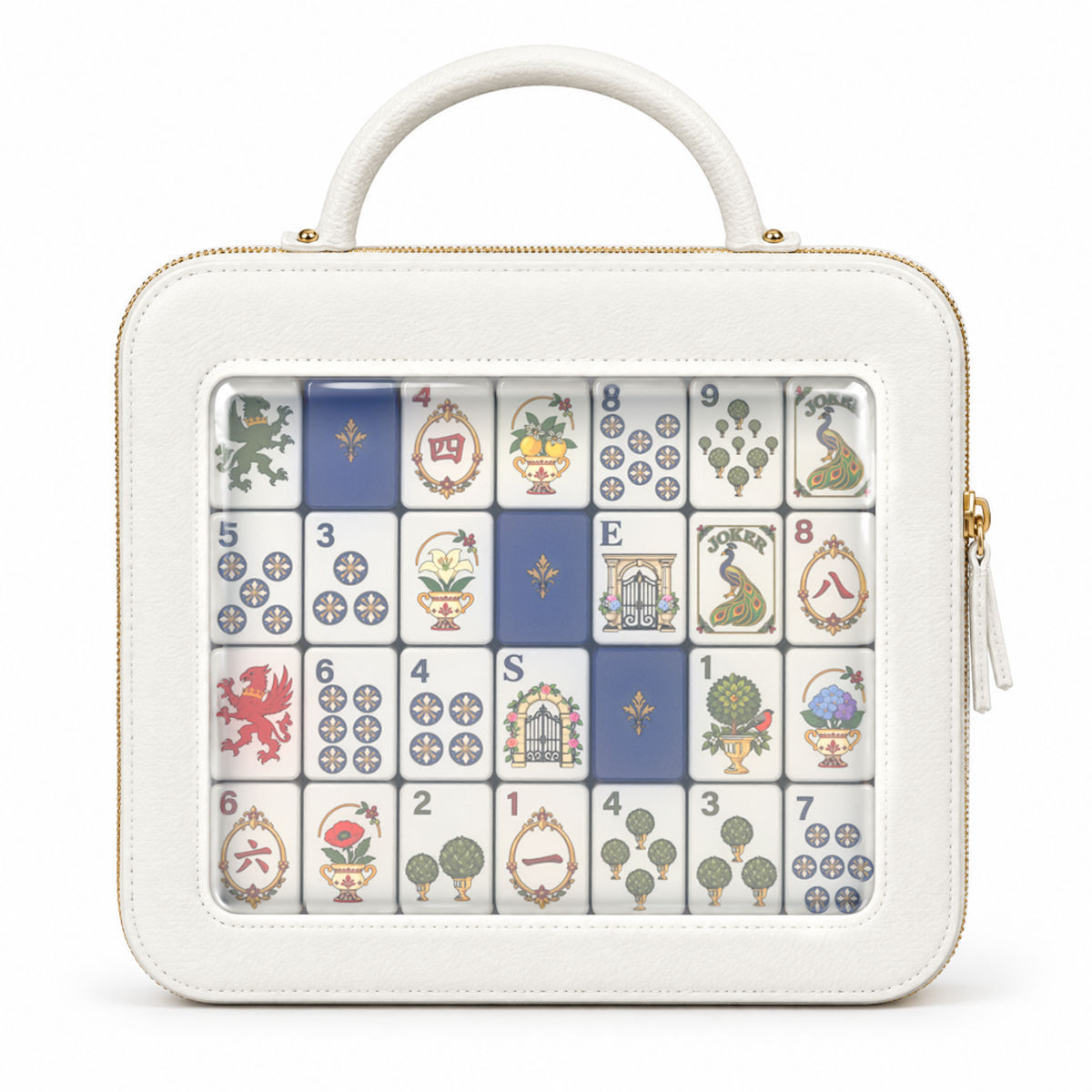
Classical Chinese mahjong adapts to three players by removing all 2 Bams, 2 Craks, 2 Dots, 8 Bams, 8 Craks, and 8 Dots—leaving 108 tiles total. One player sits out each hand (often the non-dealer), and wall-building, discard sequences, and scoring adjust accordingly. The game remains turn-based: draw, discard, declare exposure (pung, kong, quint), and build toward winning combinations (melded sets plus a pair, or all-concealed hands). Winning patterns vary by region; some allow sequences (chows), others only identical pungs and honors. Play lasts roughly 15–30 minutes per hand depending on skill and house rules. You'll need classical Chinese tiles (heavier, hand-painted or printed symbols), a mat for discards, and agreement on your rule set before the first deal.
Classical Chinese mahjong has thrived for centuries in family games and temple rooms across East Asia. When only three players can sit down, the game doesn't disappear—it transforms. The tile count shrinks, positions rotate differently, and timing becomes tighter. We've hosted many three-player sessions on rainy afternoons, and the rhythm is genuinely different: faster decisions, sharper reading of your opponents' needs, and a deeper focus because fewer safe tiles exist in the discard pile.
The foundation is simple: remove the 2s and 8s from all three number suits. That halves the copies of each number in Bams, Craks, and Dots from four to two, landing you at 108 playable tiles. Winds, Dragons, and Flowers stay intact. From there, seating and the wall build depend on your house rules—and that's where three-player variants splinter.
How many tiles are actually in play?
The standard classical Chinese set holds 144 tiles (108 number tiles plus 16 winds, 12 dragons, and 8 flowers). For three-player, you remove the 2s and 8s from the number suits—36 tiles gone—leaving 108 tiles to shuffle. The wall forms 27 stacks of 4 tiles (since 108 ÷ 4 = 27 stacks per player). One player is typically the dealer; the second player sits opposite or to the left; the third sits where the fourth would normally be. The rotation rule for who sits out each hand varies: some groups rotate every hand; others fix the sitting-out player to reduce confusion. No official "best" method exists across regions—you'll agree with your group before dealing.

Which scoring system applies to three players?
Classical Chinese mahjong scoring varies wildly by region: Hong Kong style counts self-drawn hands differently than Taiwanese or Riichi (Japanese). In Hong Kong three-player, winning by discard ("on someone else's tile") typically pays from one opponent only, while self-drawn wins pay from all two opponents at a higher rate. Riichi three-player uses a point pool and often includes "dealer bonus" increments. Taiwanese three-player may not exist as a formal variant—most Taiwanese games require four players. The lesson: before your first hand, write down or photograph your scoring rules so disputes don't erupt. Many groups improvise, which is fine, but changing mid-session ruins trust. A simple house rule: discard win = 1 point per base unit from the discarder; self-drawn = 1 point from each opponent. Then multiply by hand complexity. This keeps math quick and games flowing.
Can you use sequences (chows) in classical three-player?
Yes, if your chosen rule set allows them. Classical Chinese mahjong in most regions permits chows (e.g., 3–4–5 Bams) and you can "call" an exposed chow from a discard if the tile completes your hand or forms part of a meld you plan to show. Three-player doesn't remove this rule; it just shrinks the tile pool, making chows rarer and more valuable. However, some three-player house rules ban chows entirely to speed play or match local custom. The critical point: check before the deal. If chows are legal, remember that calling a chow tile from a discard ends the turn of the player who discarded it and passes the turn to you—then to the next player. This differs from pungs and kongs, which also end the prior discarder's turn but can be "stolen" (called) by any player, not just the one whose turn is next.
What happens to the seat wind in three-player rotation?
The dealer seat (often "East") usually stays fixed to one player for a full rotation of hands, or rotates after each hand depending on your ruleset. Some groups assign East to the strongest player as honor; others rotate clockwise. If three players are seated, the "North" and "West" and "South" seats remain—you're just missing one compass point. One approach: seat players at 12 o'clock (East, dealer), 5 o'clock (South), and 9 o'clock (West); the unused seat is at 3 o'clock (North). Winds are still drawn and kept—they function the same as in four-player: a player with the East wind as a tile in their hand can use it in melds and gains scoring bonuses if East is both their seat wind and their drawn wind (double wind). This rule persists in three-player, so tiles stay valuable and strategy stays layered.
How does the three-player wall build and draw work?
In four-player classical Chinese, each player receives 13 tiles from the wall and the dealer draws 14. The wall is divided into four quadrants. In three-player, the typical build is: the wall has 27 stacks (108 tiles ÷ 4 per stack). Each player draws 9 stacks (36 tiles ÷ 4 per stack) to form their starting hand of 13 tiles, with the dealer drawing 14. The wall is often divided into three quadrants, not four, and the dealer draws from the "live end" after one discard round. Some groups use a smaller, rotating wall to save table space. The mechanical detail matters because an incorrectly built wall can seed the game unfairly—shuffle thoroughly, divide clearly, and let players verify stack counts before the deal.
Aspect | Classical Chinese 3-Player | Classical Chinese 4-Player | Why It Matters |
Tile count | 108 (remove 2s, 8s) | 144 | Fewer safe discards; faster game |
Starting hand | 13 tiles | 13 tiles | Dealer draws 14th in both |
Wall stacks | 27 (÷3 seats) | 36 (÷4 seats) | Affects reserve tile availability |
Sitting out | 1 player per hand | None | Rotation rule essential to agree upfront |
Chows allowed | Depends on ruleset | Depends on ruleset | Must confirm before dealing |
Scoring source | Discarder (one) or all (self-drawn) | Discarder (one) or all (self-drawn) | Write it down to avoid disputes |
🀄 Shop best-selling mahjong sets →

What's the biggest mistake three-player groups make?
The most common failure is not agreeing on the sitting-out rule before play begins. Three players mean one chair is empty each hand. Does that player sit out the entire session? Or do you rotate every hand so each person plays three consecutive hands, then sits? Do they stay at the table and watch, or leave? If they leave, do they shuffle the next deal? Ambiguity here breeds resentment fast. Second mistake: rushing the tile removals. Forgetting to pull the 2s or 8s from even one suit creates a 140-tile game instead of 108, skewing hand frequencies and scoring. Check removal together. Third: no agreed scoring sheet. Classical Chinese scoring is regional; three-player variants are regional inside that. If you're using a hybrid rule (like "Hong Kong discard payout, but Riichi bonus for dealer"), write it on paper so no one rewrites the rules mid-hand.
We've found that two and three player mahjong rules often get confused with American mahjong, which is always four-player. Classical Chinese tiles and American tiles are entirely different—American sets include Flowers and all number combinations; classical Chinese sets exclude certain numbers for three-player. If you're buying tiles for three-player classical, hunt for a traditional Chinese set (hand-painted bamboo, bone and wood, or modern acrylic reprints of classical symbols), not an American set.
🎁 See our most-loved mahjong sets & accessories →
How to choose tiles and equipment for three-player sessions
If you're hosting regular three-player games, invest in a best-selling mahjong set that's durable and easy to shuffle. Acrylic or resin tiles are lighter and quieter than traditional bone; they don't require removal to adjust (you remove tiles from play by setting them aside, not by taking them off a tile rack). A simple mat or table cover keeps discards visible and organized—critical in three-player where fewer open tiles exist. You'll also want a mahjong mat large enough for three stacks of discards and a central wall zone. Since no four-player rack is needed, a portable travel bag works well if you rotate hosting duties.
For the sitting-out player, a notebook or scoresheet is essential. They track points, remind players of the current rule set, and note any disputes for the next hand. This keeps the game honest and social—the sitting-out player is still engaged, not forgotten.
Regional variation: Can you play this way everywhere?
Three-player classical mahjong is not a universally standardized variant like four-player. Hong Kong, Taiwan, Shanghai, and Japan all have slight differences, and family house rules add more layers. If you're learning from a video or book, check its regional origin. Japanese Riichi has a distinct three-player mode with specific hand rankings. Hong Kong classical three-player is subtly different in payout rules. Taiwanese groups often simply don't play three-player—four or two is standard there. If you're joining an existing three-player group, ask for their rulebook (written or oral) and trust their system; jumping in with a book from a different region can cause friction. Common ground: always confirm sitting-out rotation, scoring sources, chow legality, and any special bonuses (flower points, dragon bonuses, etc.) before shuffling.
✨ Find your Mahstead set — free US shipping →
What to check before you buy
Tile count: Confirm the set includes at least 144 tiles (108 playable + spares) so you can remove 2s and 8s and still have full sets.
Tile symbols: If you're new to classical Chinese tiles, verify the symbols match your learning resource (Hong Kong style looks subtly different from Taiwanese).
Weight and noise: Lighter tiles shuffle faster; heavier tiles feel more traditional but tire hands after long sessions. Test if possible.
Mat size: A three-player mat only needs three discard zones (not four), so a smaller mat saves space. Measure your table before ordering.
Bag durability: If you're traveling between homes, a reinforced travel bag keeps tiles safe and the set organized.

FAQ
Is three-player classical mahjong an "official" variant?
Not globally standardized. Hong Kong, Japan (Riichi), and regional Chinese communities have three-player rules, but they differ. Check the source of your rulebook and align with your play group—no governing body unifies three-player classical worldwide.
Can I use an American mahjong set to play three-player classical?
No. American sets (152 tiles, Flowers, Jokers, all number suits 1–9) are designed for a different game entirely. You need a classical Chinese set with the tile layout and symbols your region uses.
What if one player leaves mid-game—do I continue as two-player?
That's a house rule decision. Some groups finish the hand with two players and redistribute points. Others pause and restart with three when the player returns. Agree on this before the first hand starts.
How long does a three-player hand take?
Typically 15–30 minutes depending on player skill, discussion, and your scoring complexity. Three-player games are faster than four-player because fewer safe tiles exist and decisions come quicker.
Do I need special racks or holders for three-player?
No. Racks are personal preference and work the same in three-player as four-player. Many players prefer to hold tiles in hand or rest them on a simple mahjong mat to keep the table open and organized.
How do I know which regional rules my group should use?
Ask the most experienced player in your group or the person who taught you. If no one has a source, find a rulebook from the region you're interested in (Hong Kong Classical, Riichi, etc.) and vote as a group to adopt it. Written rules prevent disputes.


View More
View More
View More
