
Classical Chinese Mahjong Etiquette: Rules & Table Respect
Last updated: Nov 23, 2026
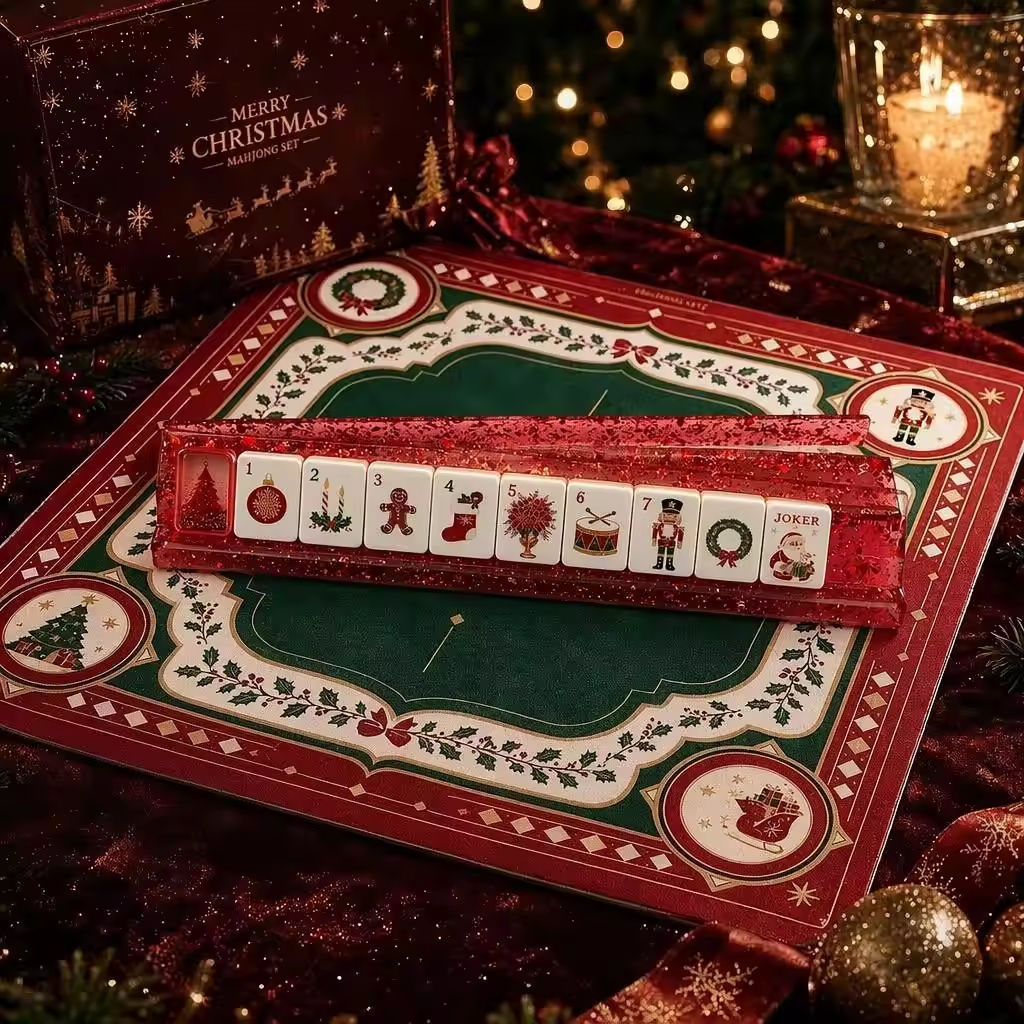
Classical Chinese mahjong etiquette is a set of unwritten behavioral and procedural standards that govern how tiles are touched, declared, discarded, and how players interact during play. Unlike American mahjong, which follows the National Mah Jongg League card and formal rule books, classical Chinese etiquette emerges from centuries of play and varies by region—Cantonese, Shanghai, and Sichuan styles each have distinct norms. Core principles include never rushing discards, maintaining tile integrity (no bent or marked tiles), respecting the wall and other players' racks, and communicating clearly through tile placement and sound. A typical game lasts 1–2 hours for casual play and can extend longer in formal settings. Most players learn etiquette through observation and gentle correction at the table rather than from written rulebooks. Serious players often invest in quality sets and protective mats to signal respect for the game; neglecting etiquette—rushing, handling tiles carelessly, or distracting opponents—erodes trust and may end your invitation to play.
How do you handle tiles respectfully?
Tile handling is the foundation of classical Chinese mahjong etiquette. Never bend, crease, or flip tiles with force; hold them by the edges, spine upright, and set them gently into your rack or the table. Keep your hand relaxed and deliberate—rushing your reach signals impatience or carelessness. Always examine discarded tiles before they enter the discard pile; once a tile is fully released into the middle of the table, it cannot be reclaimed. Never touch tiles that don't belong to you, including those in the wall, other players' racks, or the discard zone. If you must adjust your rack, do so quietly and at the start of your turn, not mid-round or while another player is drawing or discarding. Players who handle tiles with reverence—smooth movements, quiet arrangement—earn a reputation for discipline and are welcomed back to the table.

What does it mean to discard clearly and on time?
In classical Chinese mahjong, your discard must be definitive and accompanied by an audible sound—the soft click or snap of tile on table signals intent and respect for the pace of play. Place your discard in the center of the table in front of you, aligned with the others so the sequence is clear; never throw it carelessly or place it ambiguously near your rack. Discard promptly—three to five seconds of deliberation is normal; longer delays frustrate opponents and may be seen as stalling or soft play. Once you release the tile, it belongs to the pool and you may not take it back. If you hesitate, hold the tile between your fingers until you commit; do not hover over multiple discards and then change your mind. In formal play, an indecisive discard—one you pause over or readjust after placing—may prompt the player to your left to claim it immediately for a win or kong. The rhythm and clarity of your discard set the tone for the entire table.
Why is wall integrity sacred in classical play?
The wall—the undrawn tiles arranged in stacks before the game starts—represents the luck and randomness that no player should control. Never touch the wall except during your designated draw, and then only with the same gentle grip you use for other tiles. Never peek at wall tiles, count the remaining draws theatrically, or rearrange the wall structure; these actions are seen as disrespectful to fate and other players' concentration. If a tile in the wall falls or is accidentally exposed, stop play immediately and replace it face-down or call for a fresh wall—do not proceed until integrity is restored. Some players rotate the wall slightly before each hand to ensure shuffling; others prefer a steady wall. Respect the established protocol at your table. Violation of wall integrity—whether from curiosity, superstition, or carelessness—can end a game or permanently damage your standing as a trustworthy player.
What should you never do at a classical mahjong table?
Classical Chinese mahjong etiquette defines a long list of taboo behaviors. Never speak during another player's turn unless responding to a direct question about the rules or a claim of win. Never comment on tiles in the wall, discard pile, or other racks—this distracts and influences decision-making. Never eat or drink over the tiles; use coasters and keep food away from play. Never use your phone, take photos, or record games without explicit permission. Never accuse a player of cheating without calm, private discussion; disputes aired loudly damage the game for everyone. Never brag about your hand or mock losing players. Never leave the table mid-game unless there is a genuine emergency; abrupt departures are seen as disrespect. Never reset tiles or reorganize the wall without group agreement. Never play with damaged, bent, or marked tiles—if a tile is compromised, notify the table immediately. These rules exist to preserve focus, fairness, and the dignity of all players.

How do regional styles differ in their etiquette norms?
Classical Chinese mahjong varies by region, and etiquette shifts accordingly. Cantonese mahjong (the most common form in North America and Hong Kong) emphasizes rapid play, loud declaration of wins or kong, and a deliberate discard ritual that announces your move to the entire table. Shanghai mahjong and its variants tend toward quieter, more meditative play with emphasis on tile secrecy and subtle signals; rushing or speaking loudly is considered rude. Sichuan mahjong introduces more complex hand patterns and often allows players to claim tiles from further back in the discard pile, requiring extra care in placement and clarity. Some regions favor strong, audible tile placement; others prefer near-silent play. The unspoken rule across all regions is this: watch how your table plays and adapt. If three players favor quiet concentration, do not be the fourth speaking throughout. If the group embraces loud, celebratory wins, match that energy. Respecting the table's established rhythm is more important than enforcing your preferred style.
Comparison: Etiquette in Classical vs. American Mahjong
Element | Classical Chinese | American |
Discard ritual | Loud click, deliberate placement, regional variation | Silent, tile placed faceup in rack or table per rules |
Tile handling speed | Deliberate, no rushing; pauses are normal | Brisk, organized; Charleston adds structured passing |
Wall contact | Sacred; minimal touching; peeking is taboo | Wall irrelevant; hand drawn from deck or pass |
Winning announcement | Vocal, celebratory; varies by region | Formal: "Mahjong"; joker placement confirms |
Conversation at table | Regional: Cantonese loud, Shanghai quiet | Minimal during active play; discuss hand after win |
Hand secrecy | Very high; never expose your rack | Moderate; jokers and melds are visible |
Pace expectation | Flexible, can be meditative or rapid | Fixed; players move in turn order, no long pauses |
This table reflects broad tendencies; always observe your actual table and ask polite questions if unsure.
🀄 Shop best-selling mahjong sets →
What to check before you buy tiles for classical Chinese play
If you are investing in a set for classical Chinese mahjong, quality signals respect for the game and for your opponents. Look for tiles that are thick, smooth, and uniform in size—tiles that feel premium to the touch send a message that you take the game seriously. Verify that all 144 tiles (or spares in a larger set) are present and undamaged; a single bent or marked tile compromises the integrity of your game. If you play regularly, a protective mahjong mat keeps tiles and table surfaces safe and signals that you care for the equipment. Engraved or personalized sets are excellent if they remain legible and don't interfere with tile recognition. Store tiles in a sturdy case or bag; loose tiles tossed into a box suggest casual play and may chip or warp over time. Check the discard pile—some sets include a separate tray; others rely on tabletop space. In classical play, a dedicated discard tray or clear table boundary helps maintain focus and prevents accidents. Serious players also appreciate racks with pushers that hold tiles neatly and keep hands organized, reinforcing the discipline etiquette demands.
✨ Find your Mahstead set — free US shipping →
Why etiquette matters more than rules
In classical Chinese mahjong, etiquette often supersedes written rules because it preserves the spirit of the game—fairness, concentration, and mutual respect. A player who technically follows rules but dismisses etiquette (handling tiles carelessly, rushing discards, dominating conversation, or distracting others) will not be invited back, regardless of skill. Conversely, a newer player who is gracious, attentive, and respectful earns forgiveness for rule mistakes. Etiquette is how you earn a seat at future games. It is also how you teach younger players what mahjong truly is: not just a game of winning hands, but a practice in patience, presence, and honor. When you sit at a classical mahjong table with quality tiles and a clean mat, and you move deliberately and speak thoughtfully, you participate in a tradition stretching back centuries. Your opponents feel that respect and return it.
🎁 See our most-loved mahjong sets & accessories →

FAQ
Is classical Chinese mahjong etiquette written down anywhere?
Not in one definitive rulebook. Etiquette is passed through practice and observation. Regional associations publish guidelines (especially in Hong Kong and Taiwan), but most learning happens at the table from patient seniors who correct you gently and model respectful play.
Can I play classical Chinese mahjong with an American mahjong set?
No. American mahjong uses 152 tiles with the National Mah Jongg League card and jokers; classical Chinese uses 144 tiles with regional hand patterns (no jokers). The tile compositions, hand scoring, and mechanics are fundamentally different. You need a proper classical Chinese set.
What happens if I break an etiquette rule at a casual table?
At a casual table with friends, a gentle reminder ("We usually place discards in the center") is typical. Repeat violations or deliberate disrespect may result in being asked to sit out a hand. At a formal club or tournament, rule violations can forfeit your seat or ban you; etiquette breaches damage your reputation but are handled by social consequence rather than formal penalty.
Does every region of China play by the same etiquette rules?
No. Cantonese, Shanghai, and Sichuan styles have distinct etiquette norms around pace, volume, hand secrecy, and discard ritual. The core principle—respect for tiles, players, and the game—is universal, but how you express it depends on regional tradition. Always ask your table what their standard is.
How do I learn classical Chinese mahjong etiquette if I've only played American mahjong?
Watch experienced players for 2–3 games before joining. Ask a senior player privately about the house rules and etiquette. Move slowly, handle tiles gently, discard clearly, and listen more than you speak. Serious mistakes are often forgiven if you show humility and genuine interest in learning the tradition.
Can I take notes or a photo of the game for learning?
Always ask first. In casual family play, casual photos may be fine. In formal clubs, photography is usually forbidden—it can distract other tables and raise concerns about record-keeping or cheating accusations. Respect the table's privacy and the tradition of learning through memory and live practice.


View More
View More
View More
