
Chinoiserie Mahjong Table: What to Buy & Why
Last updated: Nov 23, 2026
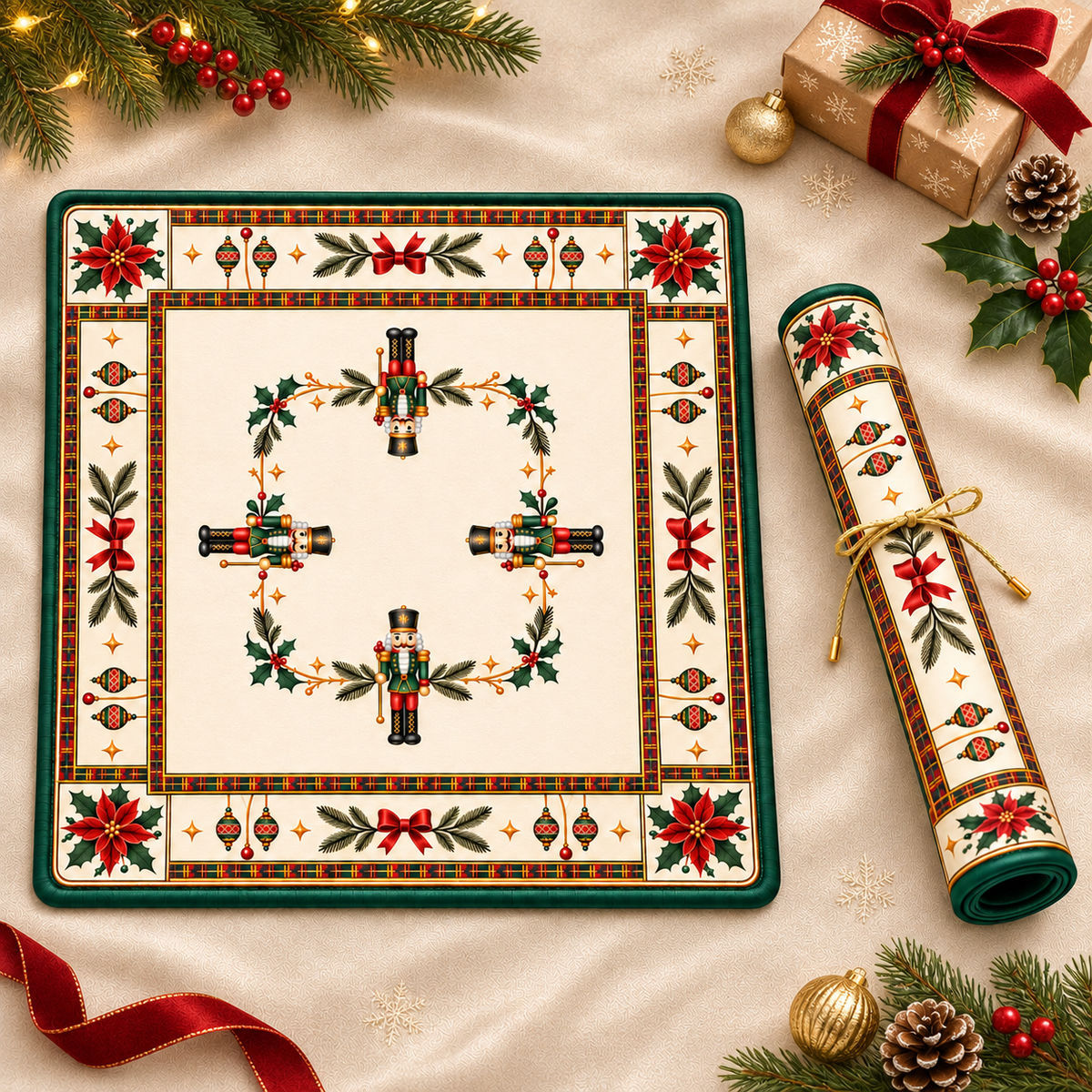
Chinoiserie mahjong tables aren't actual tables; they're protective mats or fabric covers that drape over your dining or game table and feature East Asian motifs (dragons, pagodas, flora, calligraphy). They range from 36" to 48" square, made from felt, rubber-backed nylon, or vinyl. A proper mahjong mat holds exactly 152 tiles plus 8 jokers, with raised racks on two or four sides to hold your hand and tiles steady during play. We use them in every game—they protect furniture, muffle tile clicks, and make tile-sliding smoother. Prices vary by material and customization; standard designs cost less than custom-engraved versions. Before buying, measure your table, check the mat's thickness (too thin slides; too thick won't fit under racks), and confirm it fits your tile set size. Mahstead offers mahjong mats in chinoiserie and other themes with free US shipping.
A chinoiserie mahjong table isn't a furniture piece—it's a protective mat or cover that sits atop your existing table and features East Asian artistic design (dragons, birds, garden scenes, calligraphy). We've hosted games on chinoiserie mats for years: they're beautiful, functional, and solve the biggest hosting pain point: keeping your real table unmarked while keeping tiles from sliding off during rough shuffles.
What exactly is a chinoiserie mahjong table design?
Chinoiserie draws from Chinese, Japanese, and broader East Asian visual traditions: painted dragons, nested pagodas, cherry blossoms, bamboo groves, bronze vessels, and flowing script. On a mahjong mat, these motifs frame the playing surface or appear as corner accents. Unlike generic geometric patterns, chinoiserie mats tell a story and make your game feel intentional. The style signals respect for mahjong's heritage without being historically accurate—it's inspired-by, not replica. Most players choose chinoiserie because it bridges their love of the game with home décor that doesn't scream "game room."
🀄 Shop best-selling mahjong sets →
How do mat size and table thickness affect your game?
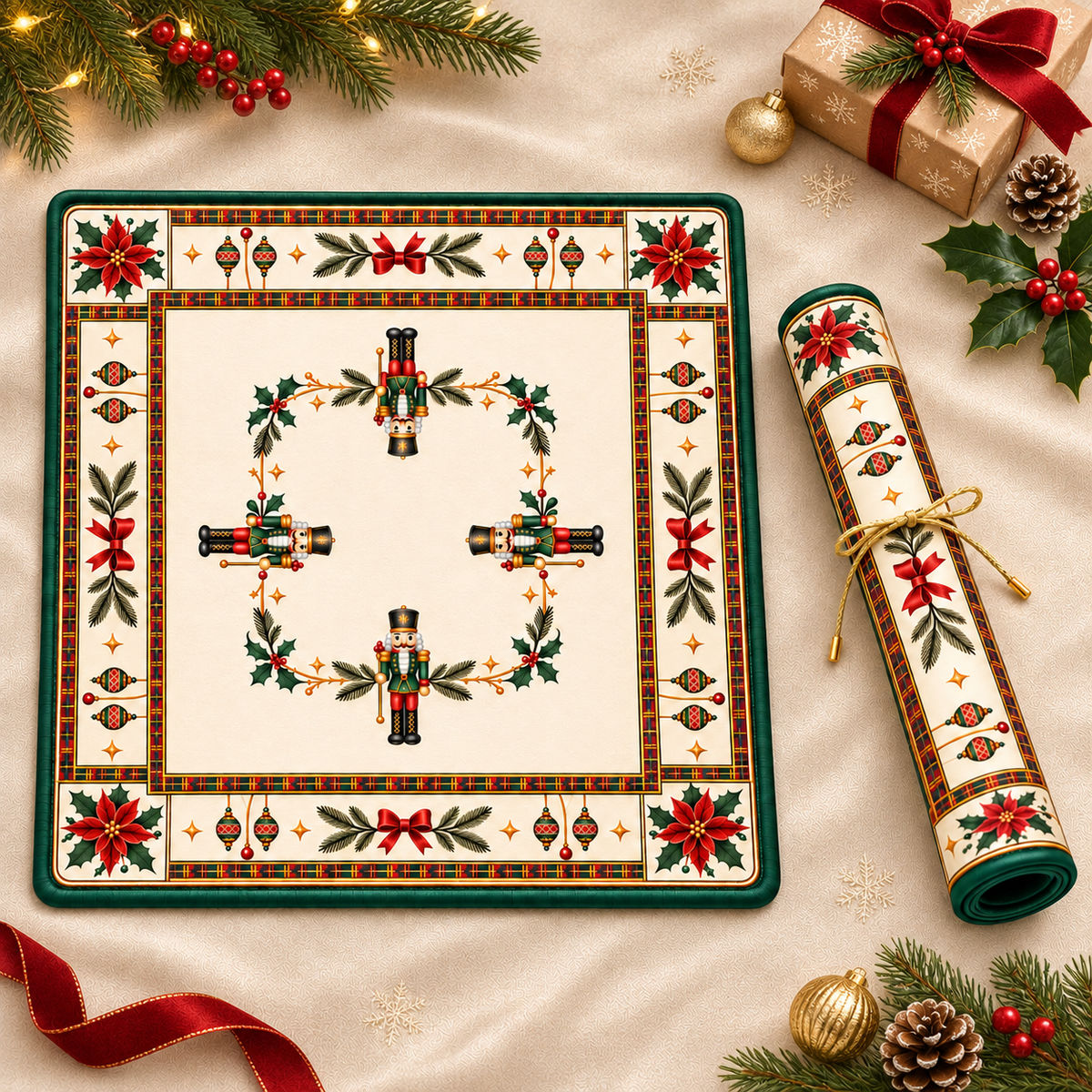
Mahjong mats come in two practical sizes: 36" square (fits 4-person standard tables) and 48" square (fits larger dining tables or extra legroom). Thickness matters: a mat under 0.125" is too thin and slides when tiles drag; over 0.25" can jam under mahjong racks with pushers and prevent smooth wall-building. Our standard is 0.1875" felt-backed nylon—thick enough to grip, thin enough to slide cleanly under a rack. Before ordering, measure your table edge-to-edge, add 2–3" on each side so the mat drapes slightly, and check your rack's undercarriage clearance. A mat that's 2 inches too large won't fit under foot racks; one that's too small leaves your table edge exposed and invites tile splinters.
Mat vs. tablecloth vs. custom cover: which should you buy?
Type | Material | Durability | Aesthetics | Cost basis | Best for |
Standard mat | Felt + rubber | 3–5 years weekly play | Printed or embroidered | Budget-friendly | Casual players, renting |
Nylon mat | Nylon + felt | 5–7 years | Wipeable, vibrant colors | Mid-range | Weekly hosts, easy cleanup |
Custom engraved | Premium felt | 7+ years | Personalized motif | Higher investment | Collectors, gifts, tournament clubs |
Fabric cover | Cotton blend | 2–3 years | Decorative only | Variable | Non-players wanting décor |
Vinyl mat | Waterproof vinyl | 4–6 years | Bright, commercial | Mid-range | High-traffic venues, bars |
Choose a standard mat if you play monthly or less. Pick a nylon mat if you host weekly and want spill-proof durability. Go custom-engraved if you're gifting to a serious player or want your group's name on it—it's the gift that stays on the table for years. A fabric cover alone is decorative: it won't protect tiles or reduce shuffling noise. Vinyl works in public spaces but feels plastic during play.
What's the right chinoiserie aesthetic for your space?
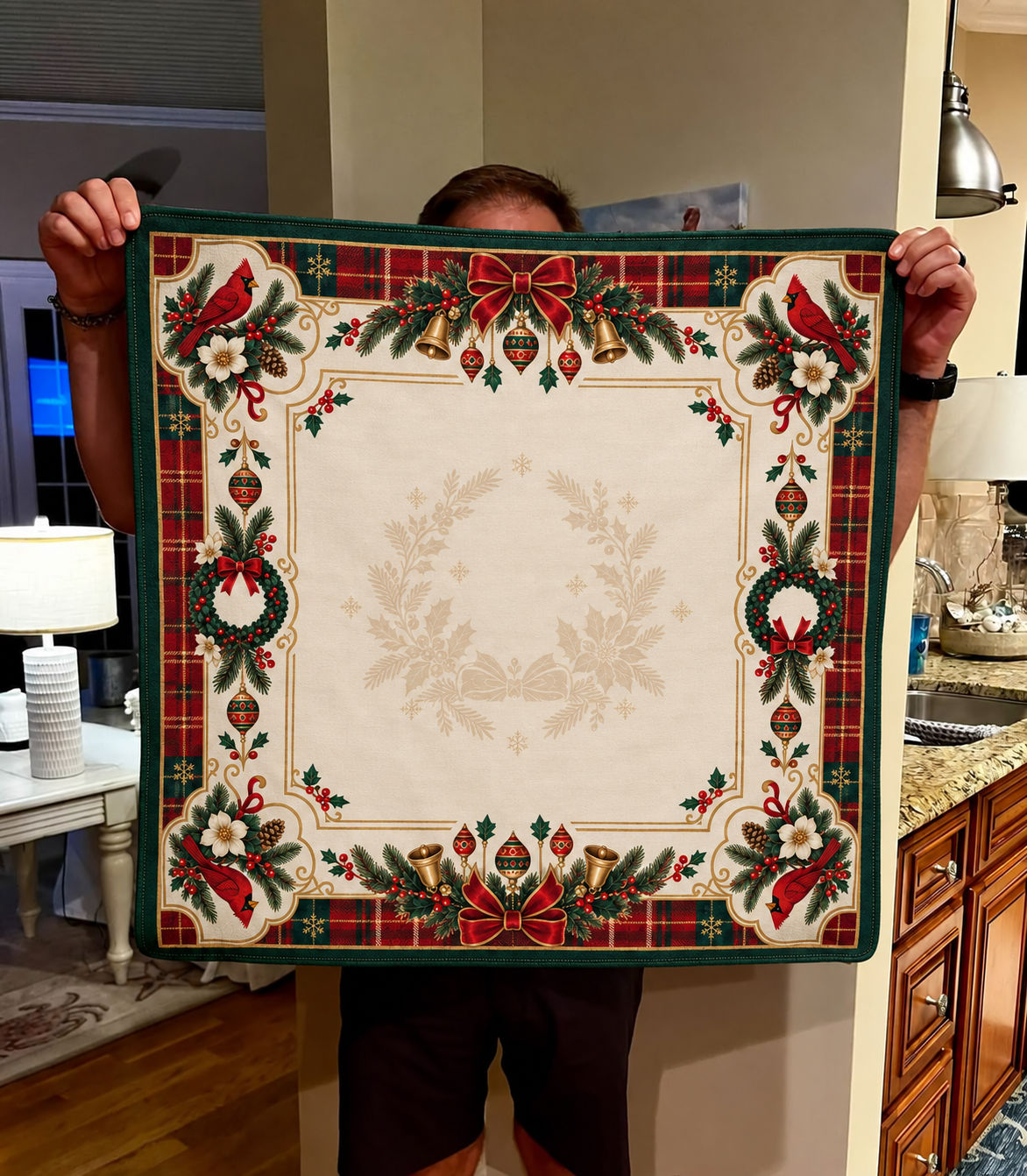
Chinoiserie comes in three visual flavors: romantic (misty mountains, herons, soft watercolor florals), bold (scarlet dragons, gold filigree, high contrast), and minimalist (single calligraphy stroke, pale silk tones). Romantic suits farmhouse or eclectic living rooms. Bold works in contemporary spaces and draws eyes—great for serious players who want the table to be a statement piece. Minimalist pairs with mid-century modern and Scandinavian décor without looking themed. The mat's border design also matters: wide embroidered borders make a 36" mat feel cozier but leave less playing space; narrow printed borders maximize surface. We recommend touring your space at the time of day you play—evening light hits reds and golds differently than morning light—before settling on a design.
✨ Find your Mahstead set — free US shipping →
Do you need a custom mat or a stock design?
Stock chinoiserie designs (dragons, garden scenes, script motifs) cost less and ship faster—usually on the best-selling collection or new arrivals. Custom mats let you add your initials, group name, year, or a specific scene; they take longer and cost more but become heirlooms. If you're hosting casually, a stock mat is smart—no regrets if someone spills. If you're gifting to a player who's been in your group for 10+ years, or if you run a tournament, custom is worth it. Ask yourself: Will I move to a new table in two years? If yes, stock. Will this mat stay with me? Custom. We've seen hosts reorder the same custom mat three times because it became part of their home identity.
What to check before you buy
Measure twice. Table width (end to end), table depth (side to side). A mat 2 inches too large bunches at corners; too small leaves gaps that trap tile dust.
Check rack compatibility. If you own racks with pushers, slide one underneath a mat sample at full thickness. Some undersides catch.
Inspect the finish. Felt absorbs spills; nylon wipes clean; vinyl is waterproof but can feel slippery during wall-building. Decide based on your crowd—if wine or coffee appears, nylon or vinyl saves headaches.
Confirm tile size. American tiles are standard 1.25" × 1" (from any brand). A mat designed for smaller Asian tiles may have cramped rack spacing.
Look at seam placement. A seam running down the center line divides your attention; corner seams are nearly invisible.
Understand customization lead time. Stock designs ship within 1–2 weeks; custom engraving adds 2–3 weeks. Plan ahead if it's a gift.
🎁 See our most-loved mahjong sets & accessories →
FAQ
What's the difference between a mahjong mat and a mahjong table?
A mahjong table is furniture with built-in racks and a playing surface. A mat is a portable cover you lay on any table. Mats are cheaper, flexible, and storable; tables are permanent and professional-looking. Most home players use mats.
Can I use a chinoiserie mat outdoors?
Not regularly. Felt absorbs moisture and fades in sunlight; nylon holds color better but can crack in freeze-thaw cycles. Vinyl is most weather-resistant but still degrades with UV. Indoor use extends any mat's life to 5+ years.
Do embroidered mats last longer than printed ones?
Embroidered designs don't peel or fade, so visually they last longer. Both felt and embroidered mats wear similarly underneath—it's the backing material (rubber vs. non-slip) that affects durability. Embroidery costs more but is worth it if you play weekly.
Can I fold a chinoiserie mat for storage?
Yes, but fold it loosely and store flat if possible. Tight creases in thick felt can cause permanent wrinkles. Roll it instead—store in a mahjong bag to keep dust off.
Should I buy a mat with raised racks already attached?
That depends. Attached racks are convenient but limit tile-stacking flexibility and are harder to clean. Separate mahjong racks with pushers let you adjust height and angle. Most serious players prefer separate racks.
How do I clean a chinoiserie mat without damaging the design?
Nylon and vinyl mats: wipe with a damp cloth and mild soap, air-dry flat. Felt mats: vacuum gently with an upholstery brush, spot-treat spills with cloth and cool water (never hot—it sets stains). Don't machine-wash any mahjong mat.


View More
View More
View More
