
Taiwanese Mahjong vs. American Competition Rules: Key Differences
Last updated: Nov 23, 2026
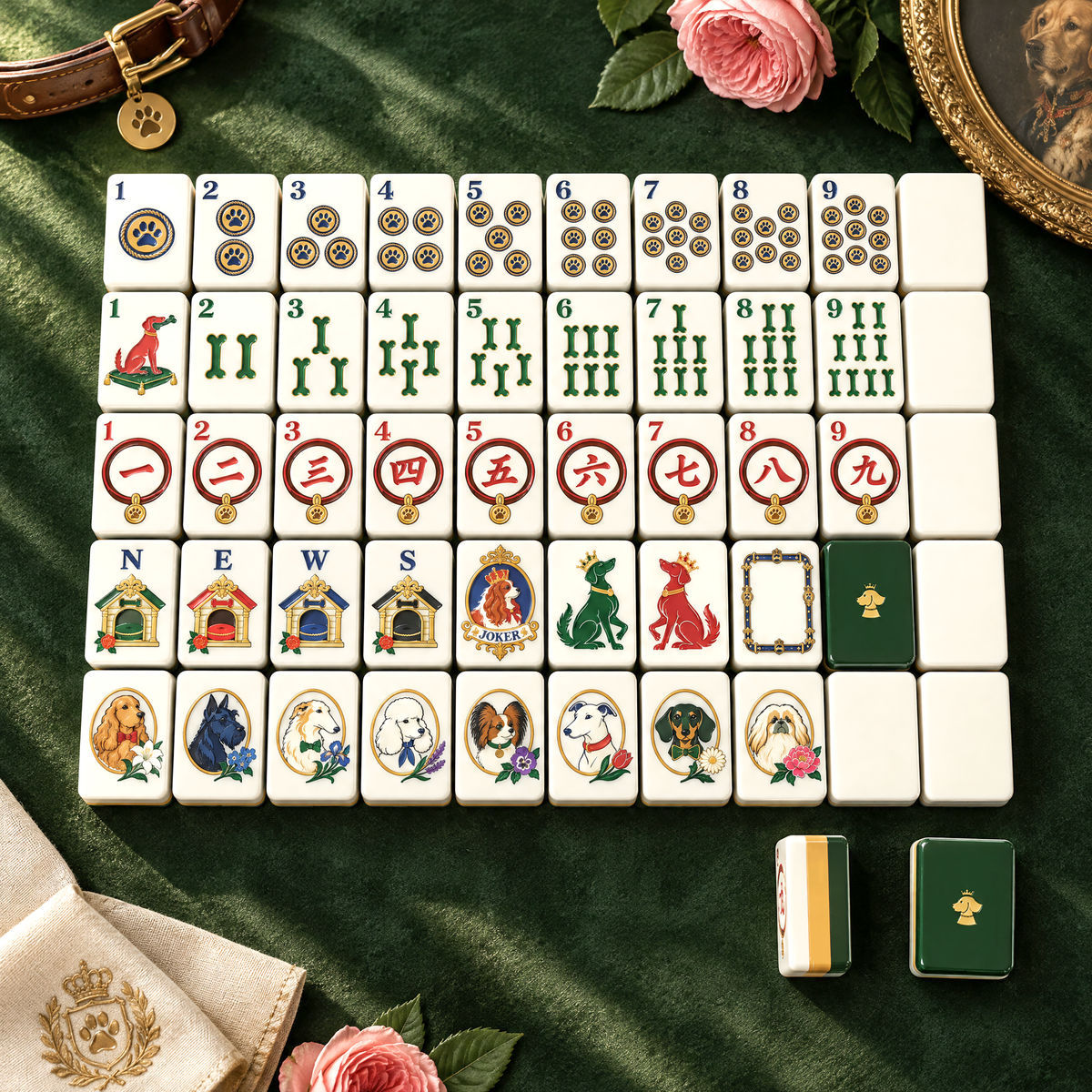
Taiwanese mahjong uses 144 tiles (108 from three suits numbered 1–9, 16 winds, 12 dragons, 8 flowers) and allows melds called chows (sequences like 1-2-3), pungs (identical triples), and kongs (identical quads)—none of which can be exposed during play. American mahjong uses 152 tiles, has no chows, and allows exposed pungs, kongs, quints, and sextets; players build only from the current-year National Mah Jongg League card. Taiwanese play is continuous and flexible; American requires exact card matches and a formal Charleston tile-passing ritual before each game. Scoring methods differ entirely: Taiwanese uses point multipliers and limit hands; American totals points from specific patterns. Both are legitimate, centuries-old games—Taiwanese closer to the Hong Kong variant, American a closed, card-based system developed for Western players. Your choice depends on whether your group values strategic hand-building (Taiwanese) or strict pattern adherence and planned exchanges (American).
Taiwanese mahjong and American mahjong share roots but diverged into distinct games decades ago. We host both variants at our table, and the differences run deep—from tile composition to how you even win. This guide cuts through the confusion so you and your group can decide which belongs on your table.
What exactly is Taiwanese mahjong and how is it played?
Taiwanese mahjong uses 144 tiles: three numbered suits (Bam, Crak, Dot) with four copies of each number 1–9; 16 winds; 12 dragons; and eight flowers. Players draw and discard continuously. You may form and claim melds—including chows (1-2-3 sequences), pungs (identical triples), and kongs (identical quads)—but you cannot expose them; all melds stay hidden until you win. The game emphasizes fast play, quick decisions, and strategic hand management. Winning requires a valid combination of melds plus a pair, similar in spirit to Hong Kong or classical Chinese mahjong. No card is required; hands are determined by tile-combination rules, not a published grid.

How does American mahjong differ in tile count and hand rules?
American mahjong uses 152 tiles: 108 from the three suits, 16 winds, 12 dragons, 8 flowers—plus 8 jokers that can substitute for any tile. Here's the crucial difference: you can expose pungs (three identical tiles), kongs (four identical), quints (five identical), and sextets (six identical). Jokers, however, cannot appear in a single tile, a pair, or in a pung—they're wildcards for melds only. Most importantly, every winning hand must match a pattern from the current year's National Mah Jongg League card. There's no freestyle hand-building. American mahjong is card-dependent, not rule-dependent; the card changes every spring, refreshing the entire game strategy.
Can you expose melds during play—and what does that mean for strategy?
In Taiwanese mahjong, you cannot expose any melds until you win. This makes the game a poker-like read: opponents can't see your strategy, and luck and tile management dominate. In American mahjong, you expose pungs, kongs, and higher melds as you build them. This transparency changes strategy entirely. Opponents see your melds and can adjust their discards to block you. Joker placement in exposed melds is strictly limited—you won't see a joker filling a pair or standing alone. This rule keeps the game fair and prevents jokers from becoming an easy out. Many American players prefer this because it balances skill and luck: you need to spot the card pattern and manage tiles tactically while others watch.
Aspect | Taiwanese | American |
Total tiles | 144 (no jokers) | 152 (includes 8 jokers) |
Chows (sequences) allowed? | Yes, but hidden | No—never used |
Can you expose melds? | No, until you win | Yes—pungs, kongs, quints, sextets |
Hand source | Tile-combination rules | National Mah Jongg League card (annual) |
Charleston (tile exchange)? | No | Yes, formal ritual before play |
Joker rules | No jokers | No single tiles, pairs, or pungs with jokers |
Scoring system | Point multipliers, limit hands | Adds points from card pattern |
Game pace | Continuous, rapid | Structured (draw, expose, discard) |
How does scoring work, and why are they so different?
Taiwanese mahjong uses a multiplier-based scoring system. Base points are calculated from your melds and win condition, then multiplied by "fan" (a unit of value—think of it as "level of difficulty"). A two-fan hand is worth 4× the base; a three-fan hand, 8×; and so on. Limit hands cap payouts. If you win with a special combination (like all one suit or all terminals), you receive a set payout regardless of multiplier. The system rewards elegant, high-value melds.
American mahjong awards fixed points based solely on the card pattern you matched. There's no multiplier—your hand is either worth 30, 40, 50, or 60 points (or more in special cases), depending on what's printed on that year's card. The advantage: every player knows exactly what each hand is worth before anyone plays. No calculation, no arguments. American scoring favors clarity and speed; Taiwanese rewards complexity and mastery.

What is the Charleston, and why does American mahjong require it?
The Charleston is a formal tile-exchange ritual that happens before American mahjong play begins. Each player passes three tiles to the right, then three to the left, then three across. Then the partner pass (if playing with a partner). This ensures each player starts with tiles roughly sorted by suit and number, creating a level playing field and a moment of collective preparation. Taiwanese mahjong has no Charleston—you simply draw tiles and begin.
The Charleston exists because American mahjong is card-dependent. Every player must have a reasonable chance to draw tiles matching the current year's card. The exchange gives you a strategic head-start: you can position tiles that fit your preferred patterns. It also builds anticipation and signals that the game is about to begin. Many Western players love this ritual; it's a social pause that feels ceremonial and fair.
Which variant should your group play?
Choose Taiwanese if your group values: continuous play, hidden strategy, classical rules that don't change, and faster decision-making. Taiwanese is ideal if you want to play intuitively without a card, or if someone at your table already knows the rules well.
Choose American if your group prefers: transparency, an annual "refresh" that keeps the game fresh, predictable scoring, and a clear card to study. American works best for casual groups, beginners, and players who want to study specific patterns ahead of time.
🀄 Shop best-selling mahjong sets →
If you're committed to American mahjong, you'll benefit from a mahjong set designed for clarity and durability—large, readable tiles make card-matching faster and reduce frustration. We offer 160-tile sets with acrylic tiles and all accessories (mat, racks with pushers, bag), which handle the rigors of a weekly game. For Taiwanese play, any standard 144-tile set works; we stock sets that bridge both communities.
What to check before you buy a set for either variant
Tile count: American requires 152 tiles + 8 jokers (our sets ship 160 tiles total). Taiwanese typically uses 144 tiles, though some sets add spare tiles.
Tile size and finish: Larger tiles (around 1.25 inches) are easier to read, especially for card-matching in American play.
Weight and feel: Acrylic tiles suit frequent play; bamboo-and-bone sets are heirloom but heavier. Consider who's hosting and how often you play.
Mat and racks: American play benefits from racks with pushers to organize exposed melds. Taiwanese often plays without racks.
Storage: A good travel bag or case protects tiles and keeps them organized if you rotate hosting duties.
Card access: If choosing American, verify your group has access to the current year's National Mah Jongg League card (available from the League or many online retailers).
🎁 See our most-loved mahjong sets & accessories →
The rule differences between Taiwanese and American mahjong are real, but both are accessible once your group commits. Many groups play both—American on Tuesdays, Taiwanese on weekends—and enjoy the variety. Start with one, master its rhythms, and expand when you're ready. The key is communicating which variant you're playing before tiles hit the table.
✨ Find your Mahstead set — free US shipping →

FAQ
Can I use an American mahjong set to play Taiwanese?
Not directly. American sets have 152 tiles plus jokers; Taiwanese uses 144 tiles without jokers. The tile composition (number of winds, dragons, flowers) differs. You'd need to remove tiles to match a Taiwanese composition—doable for casual play, but cumbersome. Better to buy the right set for the game you love.
Do I need the National Mah Jongg League card to play American mahjong?
Yes. Every winning hand must match a pattern on that year's card. The card refreshes each spring, so hands change annually. Without it, you can't verify a win or settle disputes. Most players keep a laminated copy at the table.
Is Taiwanese mahjong easier to learn than American?
Not necessarily—they're equally complex, just in different ways. Taiwanese requires understanding hand-scoring multipliers and reading opponents' hidden melds. American requires memorizing card patterns and managing joker placement strategically. Pick based on whether you prefer hidden or exposed strategy.
Can a beginner jump into either variant?
Yes, but American is often more accessible at first because the card acts as your rule book. Taiwanese demands more trial-and-error and usually requires a patient mentor. Find a local group and learn from experienced players—both games reward practice.
What if my group wants to play both variants?
You'll need two separate sets (American 152-tile with jokers, Taiwanese 144-tile without). Many players do this happily. Clarify which variant you're playing before the Charleston (American) or the first draw (Taiwanese).


View More
View More
View More
