
Chinitsu in Riichi Mahjong Explained: Rules & Strategy
Last updated: Nov 23, 2026
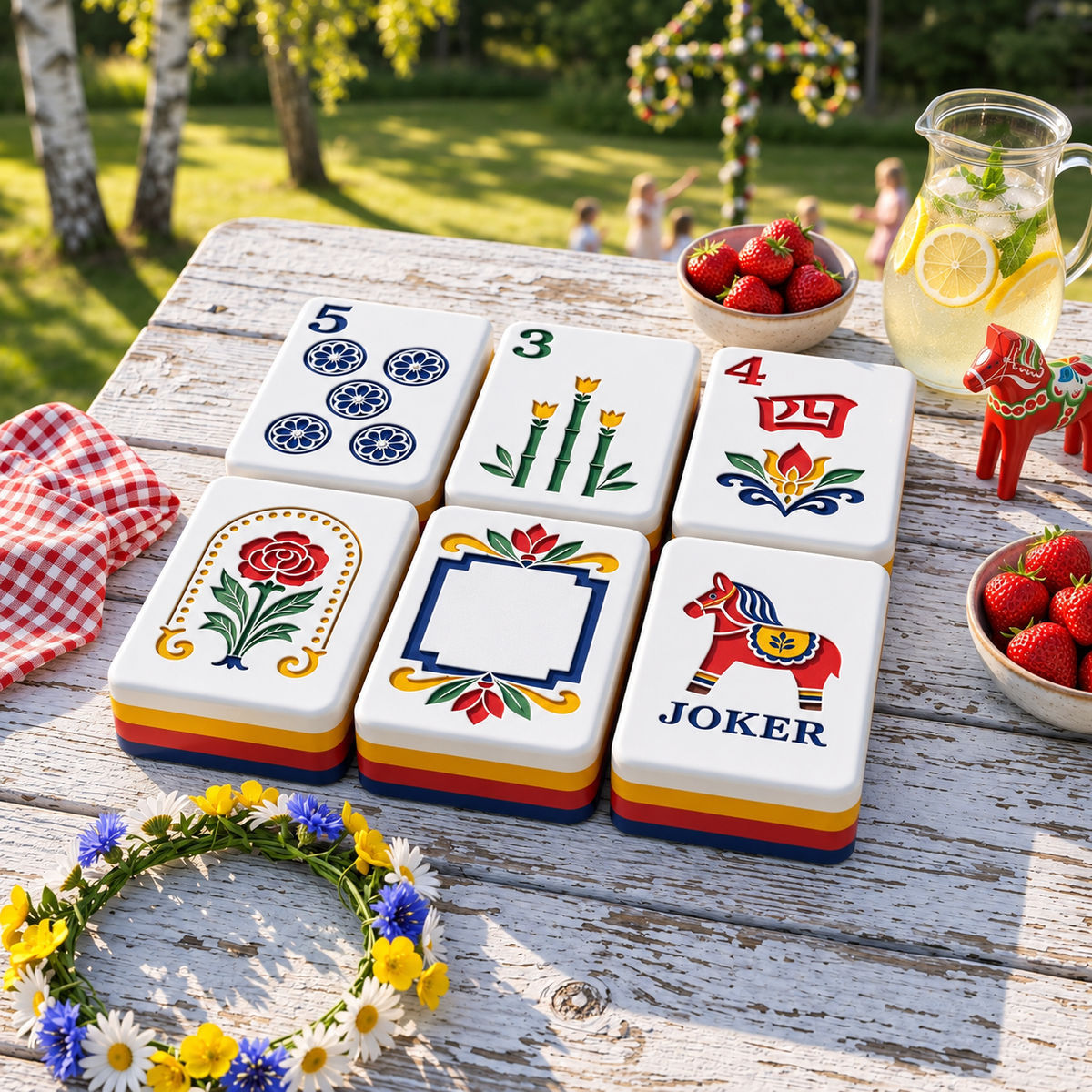
Chinitsu is a riichi mahjong hand composed entirely of tiles from one suit—Bams, Craks, or Dots—plus Honors (winds and dragons). The hand consists of 14 tiles arranged into four melds and a pair, with all non-Honor tiles from the same numeric suit. In riichi mahjong, chinitsu is worth 6 base points (before multipliers), making it valuable but not the highest-scoring hand. Unlike American mahjong, which uses a seasonal card and only plays hands listed there, riichi mahjong has fixed hand patterns like chinitsu that any player can declare. The key challenge: protecting your suit while other players discard from it. Beginners often abandon chinitsu too early; the rule is to commit fully once you have three melds, because switching suits wastes tiles.
Chinitsu (一色, "one color") is a riichi mahjong hand composed entirely of tiles from one suit—Bams, Craks, or Dots—plus Honors (winds and dragons). The hand consists of 14 tiles arranged into four melds and a pair, with all non-Honor tiles from the same numeric suit. In riichi mahjong, chinitsu is worth 6 base points (before multipliers), making it valuable but not the highest-scoring hand. Unlike American mahjong, which uses a seasonal card and only plays hands listed there, riichi mahjong has fixed hand patterns like chinitsu that any player can declare. The key challenge: protecting your suit while other players discard from it. Beginners often abandon chinitsu too early; the rule is to commit fully once you have three melds, because switching suits wastes tiles.
How does chinitsu differ from other riichi mahjong hands?
Chinitsu differs from standard hands because it requires absolute purity: every non-Honor tile must come from one suit. A mixed hand like toitoi (all pungs) can use any suit; chinitsu cannot. In terms of points, chinitsu at 6 base points ranks higher than a simple hand (1 point) but lower than sanbaiyaku (three patterns worth 6+ points combined). If your chinitsu also forms a second pattern—say, all your Bams are in sequences (chanta-like structure)—you earn both patterns' points. This "yaku stacking" is unique to riichi variants and creates a strategic tension: should you pursue chinitsu alone or risk blocking it to chase a bigger combination?

What tiles can appear in a chinitsu hand?
A chinitsu hand contains only one numeric suit (1–9 Bams, 1–9 Craks, or 1–9 Dots) plus any Honors (winds: North, East, West, South; dragons: Red, Green, White). You need 14 tiles total to form a complete hand. For example, a valid chinitsu might be: 3 Bams, 3 Bams, 3 Bams (pung), 5 Bams, 6 Bams, 7 Bams (chow), East, East, East (pung), North, North, North (pung), White, White (pair). Notice every numeric tile is a Bam; Honors fill the remaining melds. The hand does not require you to use all nine numbers—only that all numeric tiles come from one suit.
How do you build and declare chinitsu?
Building chinitsu requires discipline and tile reading. Start by picking a suit early—ideally by the second discard round. Watch which tiles the players after you discard; if they're dumping your chosen suit, commit harder. Collect sequences (chows) and sets (pungs, kongs) in your suit. Lay down melds as you draw them; exposing melds lets opponents see your suit and sometimes gives them a strategic advantage, but it also locks you into the hand, preventing mid-game panic. When you have your four melds and pair arranged in your rack, call "riichi" (ready) on your next discard that creates a waiting position. Once riichi is called, you cannot change your hand. Your opponent then discards, and if it completes your hand, you call "tsumo" (self-draw) or "ron" (from discard) and show your tiles. The key mistake: calling riichi too early with a 3-wait or exposed-meld situation; opponents will defend harder, and your odds of winning drop sharply.
When should you abandon or pivot from chinitsu?
Pivoting is the hardest judgment call. If after five draws you have only one suit represented and you're holding mainly pairs and honor tiles, stay. If by draw eight you have chunky gaps in your suit (missing 3s and 6s, for instance) and your neighbors are throwing away every 5 and 7 of that suit, consider switching. A practical rule: count your useful tiles (tiles that form or extend melds in your suit). If you have fewer than eight useful tiles and only one pung, pivot—don't chase a hand that's statistically unlikely. Experienced players read discard patterns; if your suit is "live" (opponents still holding it, discarding others), stay committed. If your suit is "dead" (opponents only discard from it, meaning they have no use for it), the suit is competitive, and you may win only if you hurry.

What scoring multipliers apply to chinitsu?
Chinitsu at 6 base points becomes more lucrative with multipliers. In most riichi rulesets, multipliers include: dora (bonus tiles that add +1 point each), winning on another's discard ("ron"; sometimes +1), calling riichi before winning (+1), winning on your own draw ("tsumo"; sometimes +1). Honoring is a second han (pattern); if your chinitsu is also a chanta or tanyao (all terminals and honors, or all 1–9 except terminals), you add another 6 or 3 base points. A chinitsu with two dora and riichi might be worth 8 base points before house mults; at a typical 2× multiplier, that's a respectable 3200 points in four-player games. The math: (base points + dora) × 2 × number of players paying you. Learning to spot dora-heavy draws early helps you decide whether chinitsu or a faster hand is the play.
🀄 Shop best-selling mahjong sets →
Scenario | Keep Chinitsu? | Why | Example |
You have 5 Bams, 7 Bams, 8 Bams; one pung; two pairs in Honors | Yes | Suit is developing; pairs become melds easily | Draw the 6 Bam next turn, complete chow |
You have 1 Crak, 1 Crak; no other Craks; neighbors discard Craks every turn | No | Suit is dead; you are fighting for leftovers | Pivot to Honors; build a winds/dragons hand |
You have 3 Dots, 4 Dots, 5 Dots; 2 Dots, 3 Dots, 4 Dots; one pung; one pair | Yes, call riichi | Two chows + pung + pair = ready; commit | Discard a Dot; wait completes hand |
Turn 10; you have 8 useful Bams, one pung; East wind is active (dora marker) | Yes | Useful tiles high; dora marker means Bams may be bonus | East is dora, so Red Dragon is dora too; Bams are safer |
Common mistakes that cost wins
Calling riichi too early. New players riichi on a 6-wait (six tiles that complete the hand). That is rational, but if opponents see your suit from exposed melds, they discard defensively, and your win rate drops. Only riichi when you have a 1–2 wait and your riichi bonus outweighs the discard risk.
Hoarding both pairs. In chinitsu, you need one pair. Holding two pair-candidates (e.g., 2 Bams, 2 Bams, 9 Bams, 9 Bams) means you're using two tiles that could form melds. Discard one.
Ignoring opponent discards. If player to your left never discards Bams, they either have them or don't need them. If they discard Bams every turn, they have no melds in Bams yet. Adjust your meld speed.
Mixing Honor melds carelessly. Chinitsu allows Honors. A pung of Dragons is valid, but that pung costs you four tiles when a numeric pung and chow would give you more options. Prioritize numeric melds first.
Staying in a "dead" hand. If you riichi with a 5-wait on turn 12 and have only two exposed melds, you are signaling strength but also giving opponents time to prepare. If three turns pass with no completion, consider whether you've been had.
Riichi vs. American mahjong: Why chinitsu matters differently
In American mahjong, the National Mah Jongg League card lists specific hands each season, and players draw from that fixed menu. Chinitsu is not always on the card, and when it is, it's one line among hundreds. Scoring is absolute, not multiplied. In riichi mahjong, chinitsu is a standing pattern available every game. Its value (6 base points) is reliable but modest; stacking multiple yaku (patterns) is how you win big pots. A riichi player focuses on learning hand values and reading live/dead suits. An American player focuses on memorizing the season's card and calling hands quickly. The strategic depth is different: riichi rewards reading, riichi demands flexibility; American rewards pattern recall and timing. If you play both, treat them as separate games and reset your instincts between sessions.
🎁 See our most-loved mahjong sets & accessories →
What to check before you commit to chinitsu
Is your suit still live? Look at the discard pile. Do you see 1, 2, 3, or more of your target suit already out? Fewer discards = suit is live and worth pursuing.
Do you have at least two melds? If by draw five you only have one pung and scattered pairs, pivot.
Are Honors in hand? Chinitsu works best when you can draw or claim a wind or dragon quickly. If your honor draws are slow, your hand fills slowly.
Is riichi pressure building? If another player calls riichi and has exposed melds in your suit, they may be chasing something else; discard Honors safely until riichi resolves.
Count your dora. If the dora indicator favors your suit (e.g., East wind is dora; North follows in the suit; you have both), chinitsu's points multiply fast. Worth the risk.
✨ Find your Mahstead set — free US shipping →
For players learning riichi mahjong or teaching a group, having a clear tile set with distinct suit colors and large numerals removes confusion during hand-building practice. Our best-selling mahjong sets are sized for comfortable four-player practice and ship free across the US, making them ideal for a home riichi night.

FAQ
Is chinitsu the same in all riichi mahjong variants?
Chinitsu is standard in most riichi rules (Japanese, Hong Kong), but point values and multiplier systems vary slightly. Always confirm your house rules before playing. The core definition—one numeric suit plus Honors—remains consistent.
Can I include White dragons in a Dots chinitsu?
Yes. White dragons are Honors; they count toward a valid chinitsu no matter which numeric suit you're building. Many players use one White to fill a fourth pung slot.
What happens if I call riichi but then draw a tile that doesn't fit?
In riichi, once you call riichi, you cannot change your hand. You must discard a tile that does not complete your waiting pattern. If no such discard exists, you are "furiten" (blocked) and cannot win; you must discard, and play passes to the next player.
How many dora typically appear in a single hand?
On average, one. In a lucky game, three or four. The dora indicator is revealed at the start of play; count how many tiles match it in the draw pile. Dora are bonus; plan for one, celebrate if you get more.
If I abandon chinitsu mid-hand, what happens to the tiles I've collected?
Nothing mechanical—you simply discard your remaining suit tiles and build a new hand (mixed suit, Honors, terminals, etc.). Your opponents may read the abandoned suit as a signal and adjust their own hands. Pivoting costs time but avoids a lost game.
Does chinitsu require fewer tiles than other hands?
No. Every winning hand in riichi is exactly 14 tiles: four melds (three or four tiles each) plus one pair. Chinitsu is no exception; it's just that all numeric tiles come from one suit.


View More
View More
View More
